Philips SpeechMike Ambient Wearable AI Assistant Microphone: What It Is, How It Works and Who It Is For
If you don’t want to read the whole guide or have difficulty reading, you can listen to this guide instead.
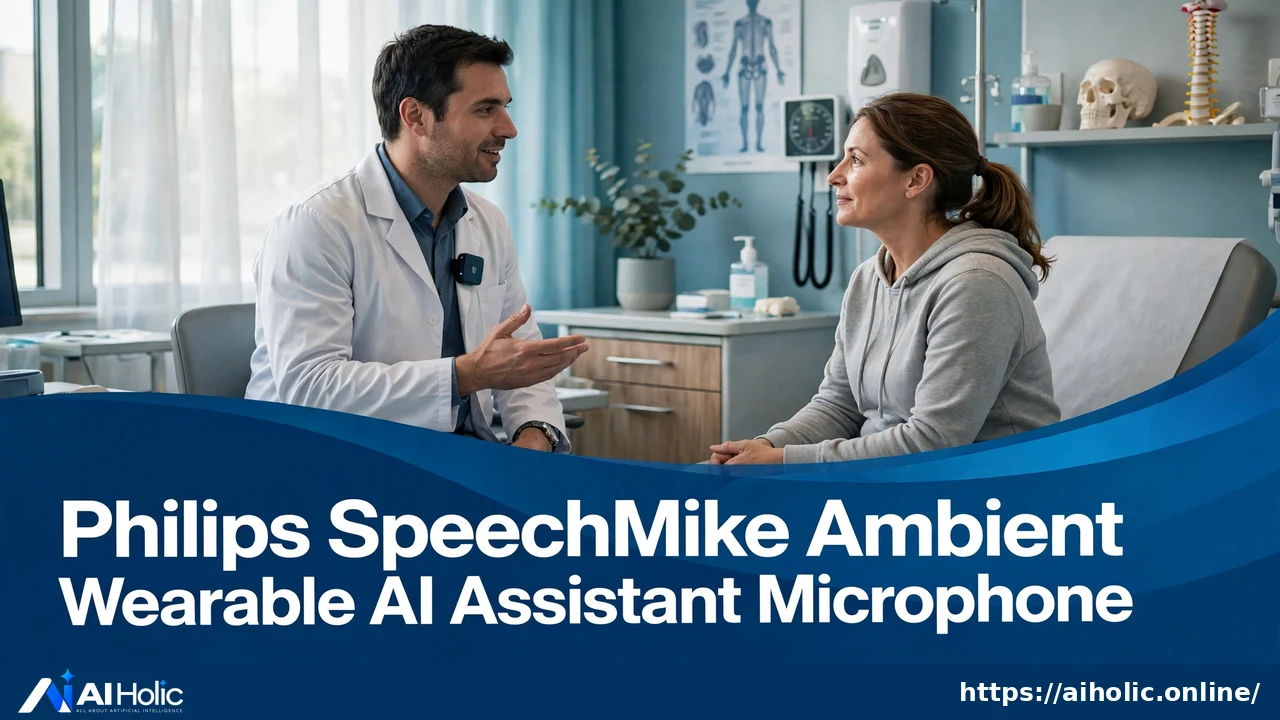
The philips speechmike ambient wearable ai assistant microphone is a dictation microphone you wear, not hold. It clips to a coat or hangs from a neck strap, listens to the conversation in the room, and feeds the audio to AI software that writes the note.
That makes it a different tool from the handheld dictation microphones Philips is known for. This guide explains what it does, how its speaker separation works, which software it pairs with, and what it costs.
At AI Holic, we explain AI hardware in plain words. Everything below comes from Philips and its launch coverage, and a price is stated only where a seller actually lists one.
What the SpeechMike Ambient Actually Is
The SpeechMike Ambient is the PSM5000 series from Speech Processing Solutions, the company behind Philips dictation products. It was launched in September 2025, with healthcare as the first target.
It does two jobs. In ambient use, it records a natural conversation for an AI scribe. In classic dictation, it works like a traditional speech recognition microphone for reports and notes.
That dual role is the point of the product. Clinics are adding ambient AI tools fast, but staff still dictate plenty of documents the older way.
The Specs That Matter
Here is the philips speechmike ambient wearable ai assistant microphone on paper. The full list is long, so this table keeps the numbers that shape daily use.
| Spec | Detail |
|---|---|
| Microphones | Four beamforming MEMS microphones |
| Frequency response | 200 to 8000 Hz |
| Weight | 42 g |
| Size | 32 x 104 x 15 mm |
| Battery | Up to 10 hours of talk time |
| Charging | Dock or USB-C, about 3 hours |
| Wireless | Encrypted 2.4 GHz Bluetooth LE, up to 25 m |
| Workstation profiles | Stores 10, auto-connects to the nearest one |
| Wearing options | Magnetic clip or neck strap |
Two numbers do most of the work here. At 42 grams, a clinician can wear it for a full shift without thinking about it. Ten hours of battery means it does not need a charge before the shift ends.
How It Separates Two Speakers in One Room
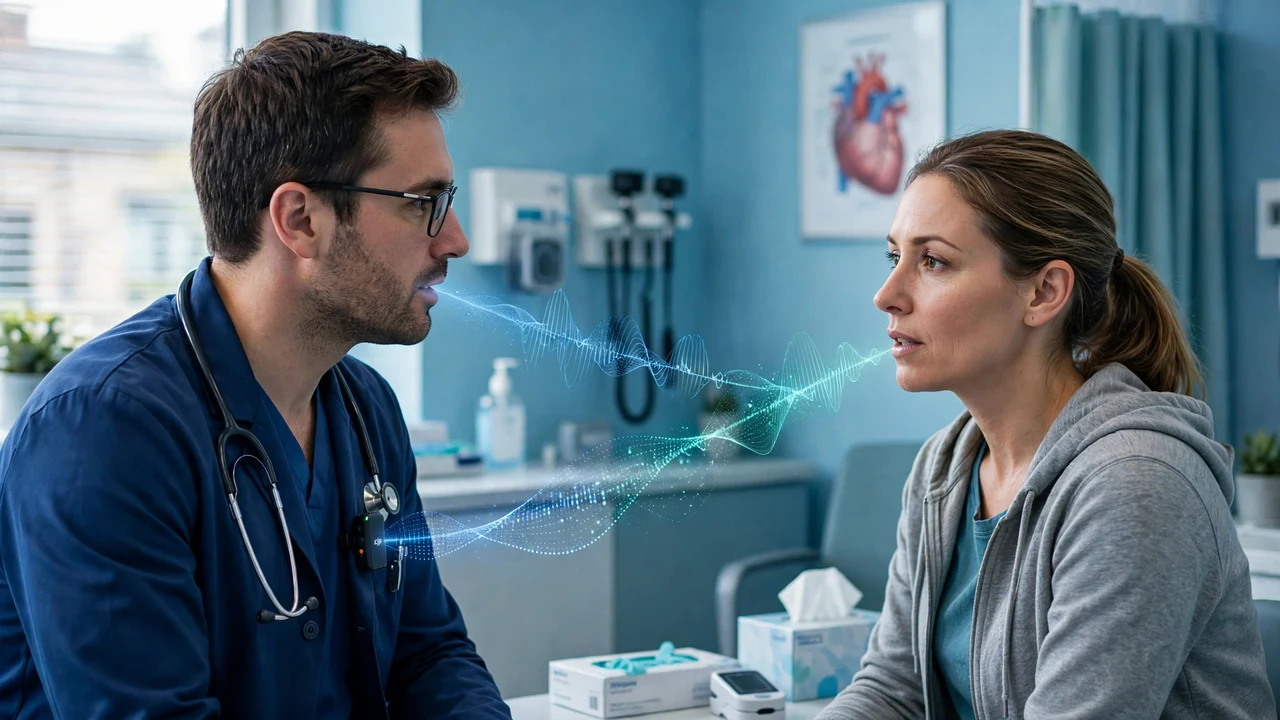
The headline feature is what Philips calls ambient sound intelligence. The microphone detects individual speakers and splits them into two distinct audio streams.
That split is what the AI software needs. A transcript that knows who said what is far more useful than one mixed stream. The distributor Northamber notes that the separation works even when two people speak at the same time.
Placement helps too. Because the microphone sits on the wearer, it stays close to at least one speaker at all times. Philips says this beats smartphones and generic microphones in noisy clinical settings, where a phone on a desk picks up the whole room.
Two Modes You Will Actually Use
On the philips speechmike ambient wearable ai assistant microphone, the mode decides what the microphones pay attention to. Ambient Mode keeps the natural sound of the room. It suits conversations and single-speaker recording, and it is the mode an AI scribe listens to.
Dictation Mode narrows the focus to the main speaker. Background voices are suppressed, which suits report dictation in a busy ward or a shared office.
Two further modes exist for software integrators. They hand the separated speaker streams to platforms that want to process the audio themselves.
The Microphone Records. The Software Does the Writing.
On its own, this microphone writes nothing. The writing happens in connected speech recognition software, which turns the audio into transcripts, clinical notes and other documents.
Philips lists supported platforms including Microsoft Dragon Copilot (Flex), Dragon Medical One and Dragon Legal 16. Philips SpeechLive, Solventum Fluency Direct, Dolbey Fusion Narrate and Tandem Health are also on the list.
With those platforms connected, the same audio can also support multilingual interpretation and virtual assistant functions. That list comes from the launch release published through Business Wire.
An SDK and API let software makers build the microphone into their own apps. The device is backwards compatible with existing SpeechMike setups, so an office does not start from zero.
Moving Room to Room: Profiles, Dock and Controls
A clinician rarely stays at one desk. The microphone stores up to 10 wireless profiles and connects on its own to the nearest workstation as you move.
Back at a desk, the docking station charges it and supports desktop recording. A built-in speaker plays audio back, which helps when you check a dictation before sending it.
Philips SpeechControl software manages the device settings on Windows 10 and Windows 11. Through the SDK, software makers can also control button mapping and audio routing inside their own apps.
Who It Is Built For
Philips aims the device first at healthcare. The named settings are emergency departments, inpatient rounds, outpatient clinics and home care.
The same hardware is also pitched at legal and business work. Meeting transcription, report creation and AI note generation are the named uses there.
The fit is any job where the speaker moves around and talks with people. A desk microphone cannot follow you from room to room. This one can.
Why Not Just Use a Phone?
A phone can run an ambient AI app, and many clinics start there. The problems show up in daily use. The phone sits far from the speakers, it can ring at the wrong moment, and its screen locks mid-conversation.
A handheld dictation microphone solves the audio quality problem but ties up one hand. It also listens to one speaker by design, not to a two-person conversation.
The wearable design is the middle path. Your hands stay free, the microphones stay close, and the device does one job only.
Security, Hygiene and the Consent Question
The wireless link is encrypted Bluetooth Low Energy. Pairing uses a Passkey method with no over-the-air pairing, and only one connection can be active at a time.
The body is built from medical-grade materials with a smooth, polished surface. That matters in clinical settings, where shared devices get cleaned often.
One honest caution. A microphone that listens to whole conversations raises a consent question, and the rules differ by workplace and by country. Any clinic using ambient recording needs a clear policy that patients and staff both understand.
PSM5000 or PSM5020: The Two Boxes
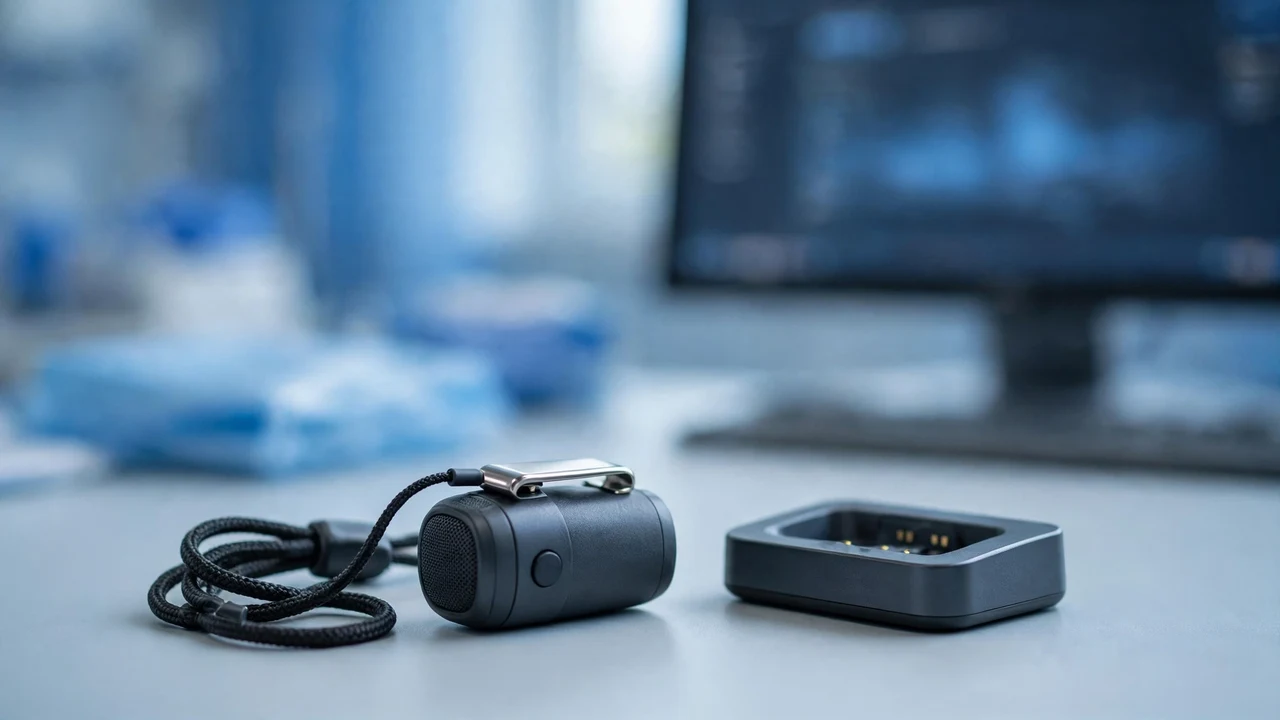
The PSM5000 box includes the microphone, a docking station, a wireless adapter, a mounting clip, a neck strap and a USB cable.
The PSM5020 box is simpler. It holds the microphone, the clip, the neck strap and the cable, with no dock and no adapter.
The dock (ACC5000) and the wireless adapter (ACC5100) are also sold as separate accessories. A buyer who skips the dock today can add it later.
What It Costs
Shoppers searching for a philips speechmike ambient wearable ai assistant microphone price will find that Philips does not print one. Its product pages send buyers to retailers instead.
US pricing was hard to pin down at the time of writing. The Amazon US listing showed no featured offer, and no US seller price could be confirmed.
Expect reseller-led pricing that varies by region and by which box you pick. Like any specialist hardware, from a wearable microphone to a turnkey AI server, the real question is what work it replaces.
Frequently Asked Questions
Does the SpeechMike Ambient transcribe on its own?
No. The microphone captures and separates the audio. Transcription and note writing happen in connected software such as Dragon Copilot or SpeechLive.
What is the difference between Ambient Mode and Dictation Mode?
Ambient Mode keeps the natural room sound for conversations. Dictation Mode focuses on the main speaker and suppresses background voices.
How long does the battery last?
Philips rates it at up to 10 hours of continuous talk time. A full charge takes about 3 hours, through the dock or a USB-C cable.
Which software works with it?
Philips lists Dragon Copilot (Flex), Dragon Medical One, Dragon Legal 16, SpeechLive, Solventum Fluency Direct, Dolbey Fusion Narrate and Tandem Health.
How much does the philips speechmike ambient wearable ai assistant microphone cost?
There is no single public price. Philips sells through resellers, and the price depends on the variant and your region.
Can it tell two speakers apart?
Yes, and that is its headline feature. Its ambient sound intelligence splits individual speakers into two separate audio streams, even when they overlap.
Conclusion
The philips speechmike ambient wearable ai assistant microphone is a small device with a specific job. It gives AI documentation software clean, separated audio from real conversations, without tying up your hands. If your clinic or office is adopting ambient AI tools, the microphone you feed them with is worth choosing on purpose.