Pocketpair Generative AI Game Publishing Stance: We Don’t Believe in It
If you don’t want to read the whole guide or have difficulty reading, you can listen to this guide instead.
Most game publishers are adding AI tools as fast as they can. Pocketpair, the Tokyo studio behind Palworld, has gone the other way, and the pocketpair generative ai game publishing stance is now one of the clearest in the industry.
The policy is simple. Pocketpair Publishing will not fund or publish a game that uses generative AI, and the same answer applies to Web3 and NFT games.
At AI Holic we went through the interviews and coverage behind the headlines. This article sets out what the studio said, why it said it, and why its own history makes the position hard to ignore.
The Stance, in the Studio’s Own Words
John “Bucky” Buckley is Pocketpair’s communications director and publishing manager. He set out the policy in an interview with Game Developer at Gamescom Asia, and he did not soften it.
“People are going to say I’m lying, but these are just the hard facts. We don’t believe in it. We’re very upfront about it.”
The rule covers any developer hoping Pocketpair will fund or publish their game. In Buckley’s words: “If you’re big on AI stuff or your game is Web3 or uses NFTs, there are lots of publishers out there who’ll talk to you, but we’re not the right partner for that.”
That makes the pocketpair generative ai game publishing stance a pitching rule, not a press line. If a project relies on generated assets, the conversation ends before it starts.
The Publishing Arm Behind the Policy
Pocketpair launched its publishing division in January 2025, after Palworld became one of the biggest hits of 2024. The division offers indie developers funding, development help and publishing support.
Interest was immediate. In its first week, the new arm received more than 400 emails, 150 pitches and over 2,000 LinkedIn requests, according to the company’s own update on X.
Its first signing was a horror game from Surgent Studios, the team behind Tales of Kenzera: ZAU. The project was later named Dead Take, a psychological horror game, and Surgent’s chief executive Abubakar Salim described it as short and weird.

Reason One: “Gamers Don’t Want It”
Buckley returned to the subject in 2026, speaking to GamesRadar+. His answer was even shorter this time: “Gamers don’t want it, and if the gamers don’t want it, I guess that’s it, right? Not much of a conversation to be had.”
He also says the push for generative AI in games feels driven by people outside game development chasing a trend. Working developers, in his telling, are far less keen than the executives talking about it.
Reason Two: The Artists Already on Staff
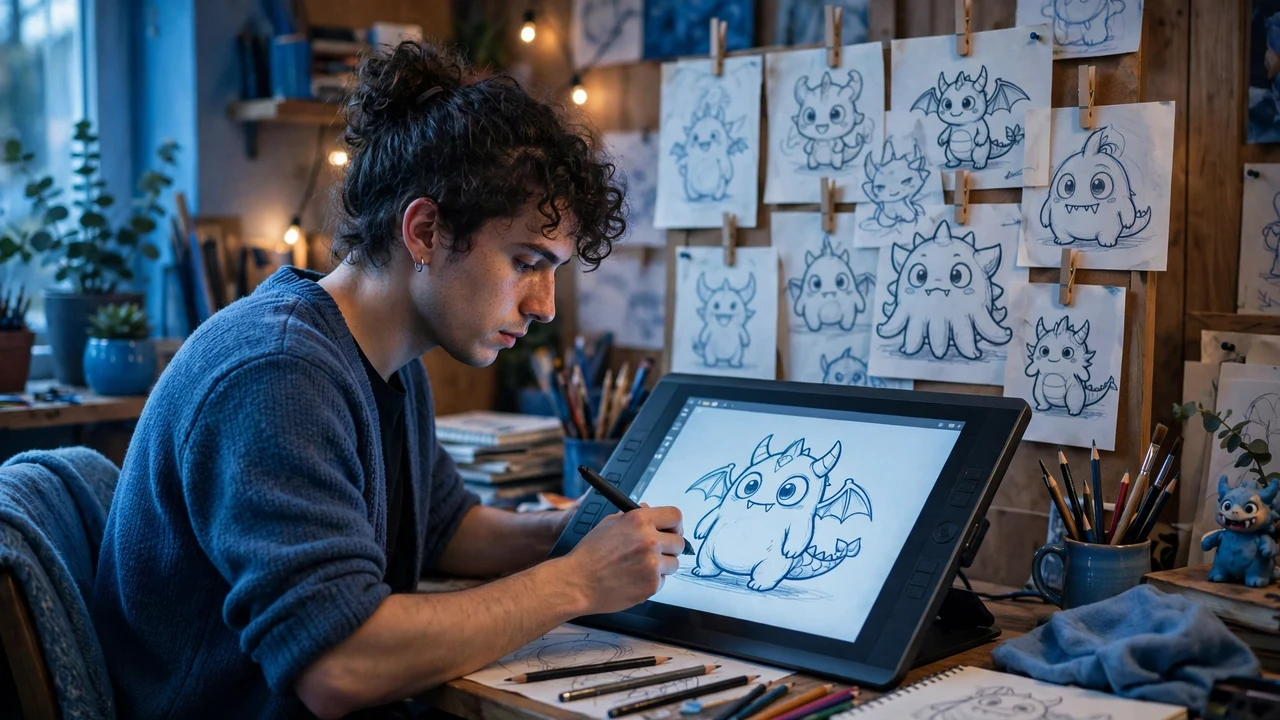
The second reason is practical. Pocketpair employs a large in-house art team, and Buckley says those artists like making things themselves.
“We have a lot of artists in-house. They like doing stuff themselves. There’s no reason to get rid of them for the sake of an AI doing it. Just seems pointless.”
On that logic, generated assets would not fill a gap at Pocketpair. They would replace people the studio already has and wants to keep.
Reason Three: The Flood He Expects on Steam
Buckley expects storefronts to fill with low-quality AI-made games over the next two or three years. He told Rock Paper Shotgun that Steam had been good at keeping such games out, but that this is now changing.
His counter-prediction is an “authenticity market”. As generated games multiply, players will start paying more attention to studios that are clearly making something by hand.
Steam already requires developers to disclose AI-generated content that ships in a game, and those disclosures appear on store pages. Buckley finds one result of that system bleak: honest developers now feel they must market their games as “100 percent human-made” just to be trusted.
The Irony: Palworld Was Accused of Using AI
Pocketpair knows this debate from the other side. Palworld launched in early access in January 2024, sold five million copies in three days, and was quickly accused online of being AI-generated “slop”.
Critics pointed at the creature designs, and at old posts in which chief executive Takuro Mizobe had experimented with AI-generated fake Pokémon designs. Pocketpair denied the claims then, and it still denies them now.
The studio says most of Palworld’s character designs come from a single artist who had been rejected by 100 companies before joining. It also points, with some humour, to its own 2022 party game AI: Art Impostor, a social deduction game about spotting AI fakes.
Buckley says arguing back tends to make things worse. “I can’t just come out and start fighting with these people who make the AI accusations, because that just fuels what’s going on.”
Later claims about AI translation were answered the same way. The studio says Palworld’s translations were done by human teams, and that the confusion started because individual translators had not been named in the credits.
A Position Repeated, Not Walked Back
The pocketpair generative ai game publishing stance has now been stated in 2025, repeated in mid-2026, and restated again around Palworld’s full 1.0 release in July 2026. Ahead of that launch, the studio again said it does not use generative AI in any way.
That repetition matters because the wider industry is moving the other way. Large publishers such as EA have been building AI into their operations, and other big studios have announced AI-first strategies.
Pocketpair is betting that players will reward the opposite choice. Whether that bet pays off will show in what its publishing arm signs next, and in how players treat the games it backs.
For more on how game studios are handling AI, see our AI News and Trends coverage, including the very different approach in our article asking is HoYoverse using AI, where a major studio uses the technology openly.
Frequently Asked Questions
Will Pocketpair publish a game that uses generative AI?
No. Pocketpair Publishing will not fund or publish games that use generative AI, and the same applies to Web3 and NFT games. Publishing manager John Buckley has said the studio does not believe in the technology and is upfront about it.
Did Palworld use generative AI?
Pocketpair says no, and it has denied the accusation since it first appeared after the game’s early access launch in 2024. The studio says its character designs were made by its own artists, and no proof of generated assets in the game has been produced.
Why does Pocketpair reject generative AI?
Buckley gives three main reasons. Players do not want it, the studio already employs artists who prefer to work by hand, and he expects a flood of low-quality AI-made games to push the market toward valuing human-made work.
When did Pocketpair Publishing launch?
Pocketpair Publishing launched in January 2025, after Palworld’s breakout success. It received more than 150 pitches in its first week, and its first signing was a Surgent Studios horror game that became Dead Take.
Does Steam allow AI-generated games?
Yes, with conditions. Since January 2024, Valve has required developers to disclose AI-generated content that ships in a game, and the disclosure appears on the game’s store page. Pocketpair’s complaint is about the culture that creates, not about a ban.
Conclusion
The pocketpair generative ai game publishing stance is a hard rule: no generated assets in the games Pocketpair funds, stated plainly and repeated for over a year. In an industry racing toward AI, the Palworld studio is betting its name on human-made games instead.