AI Agents for Cybersecurity Compliance Auditing Automation: What They Actually Do
If you don’t want to read the whole guide or have difficulty reading, you can listen to this guide instead.
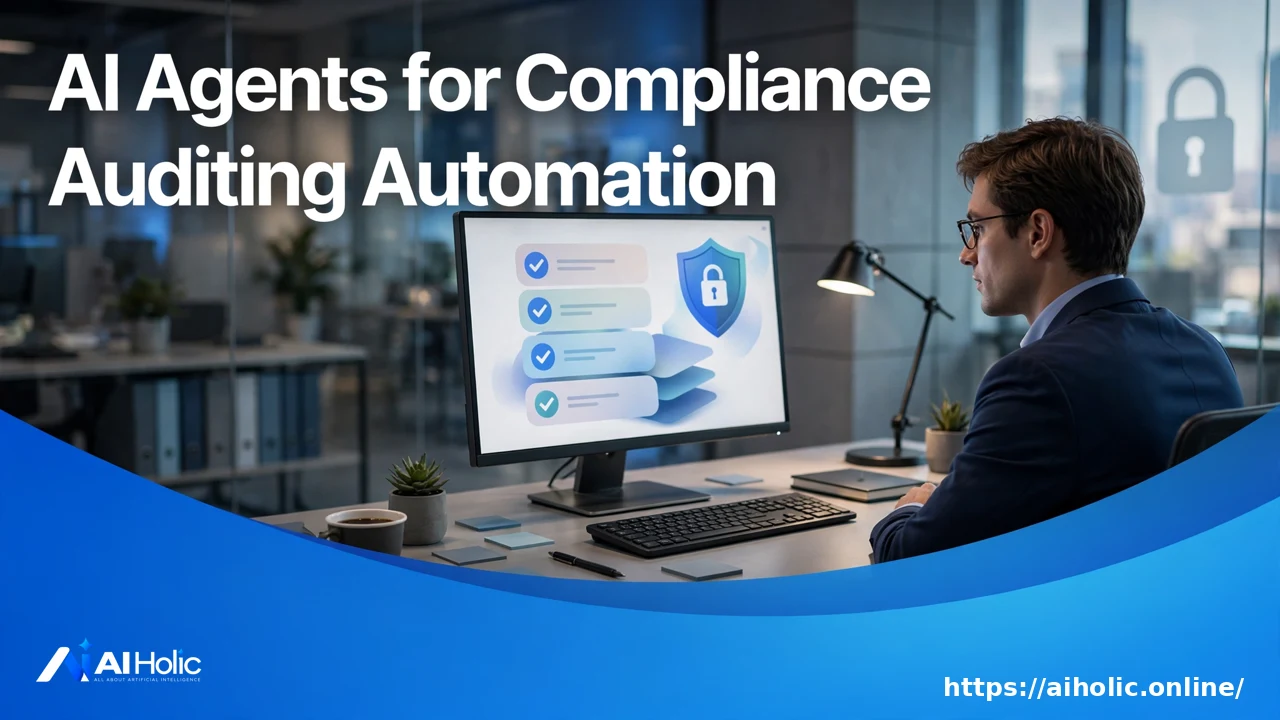
AI agents for cybersecurity compliance auditing automation is a long phrase for a simple shift. Software has started doing the evidence legwork of an audit, not just storing it. This guide explains what these agents actually do today.
One honest note first. Dedicated coverage of this topic is still thin, and most product evidence comes from vendor launches. Claims below are labelled as claims, and the limits are stated as plainly as the features.
AI Holic tracks agent deployments like these in our AI Agents & Automation section.
Agent, Automation, or Assistant? The Three Are Different
The clearest definition in current coverage comes from Commugen’s October 2026 launch release for its cyber GRC agents. It separates three things that vendors often blur. The distinction decides what you are actually buying.
| Type | How it starts | What it produces |
|---|---|---|
| Rule-based automation | A trigger or schedule, on a predefined path | A status change, ticket, or reminder |
| AI assistant or copilot | A person’s prompt | A draft answer |
| AI agent | A goal or event, such as a new vendor upload | A finding with a status, score, and explanation |
Per that release, the three approaches stack rather than compete. An agent chooses its next steps and tools from what it finds along the way. A person still reviews each finding before it counts.
What Compliance Auditing Agents Actually Do
The work clusters into four jobs. First, evidence review: reading supplier questionnaires and certificates, then flagging expired documents, inconsistent answers, and missing evidence. Second, control mapping: linking each finding to the control that covers it, against frameworks such as ISO/IEC 27001:2022 and the NIST Cybersecurity Framework 2.0.
Third, gap flagging: reviewing new evidence as it arrives and marking where it falls short of a framework requirement. Fourth, audit preparation: structuring audit reports into findings, drafting policies from controls, and turning recommendations into tasks with owners.
This sits inside the wider discipline of governance, risk management, and compliance. The agent handles collection and comparison. Judgement calls, such as accepting a risk or signing an attestation, stay with named people in every source reviewed for this guide.
Inside One Launch: Commugen’s Agent Set
Commugen’s release is the most detailed public example of the category, so it anchors this section. Everything here is the company’s own description of its product. Treat the figures as vendor claims, not measured results.
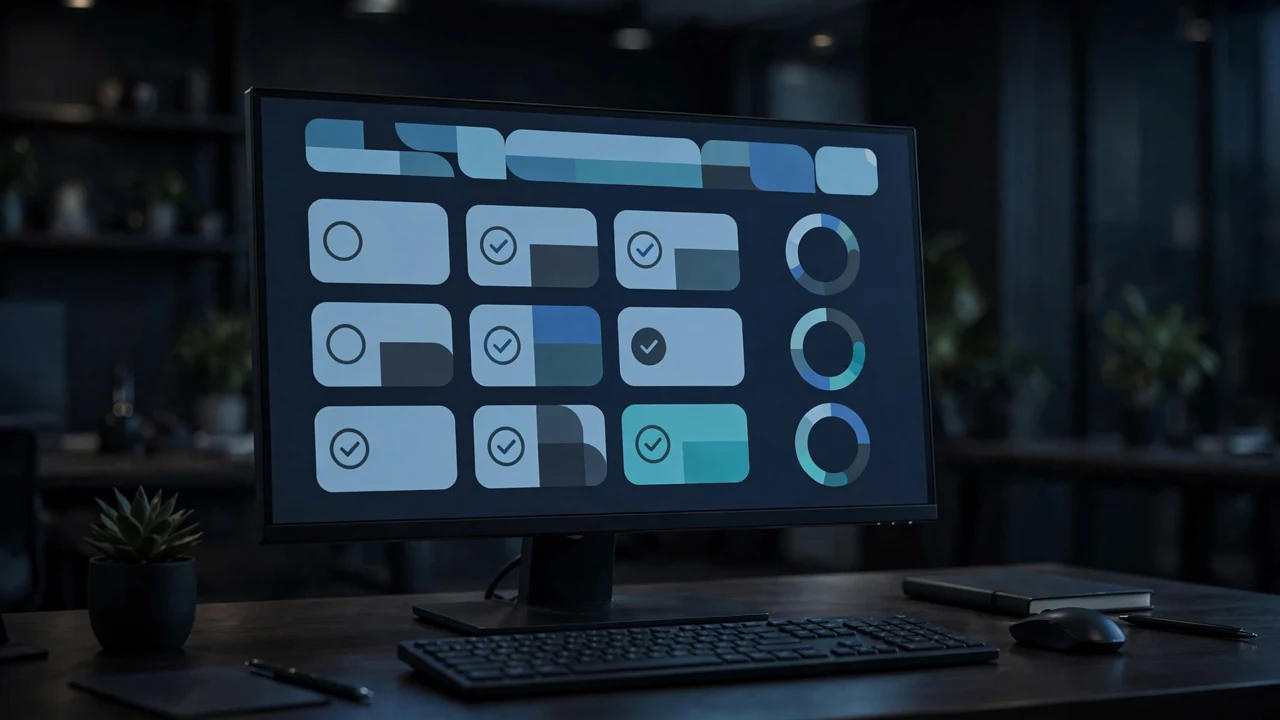
Its named agents include an Evidence Analysis agent for supplier reviews and a Compliance Auditor that recommends accept, accept with conditions, request clarification, or reject, with a numeric score. A Finding-to-Control Mapping agent links findings to controls and flags controls that exist on paper but do not operate. The company claims its evidence agent cuts supplier evidence review time by up to 70 percent.
The set spans six areas: third-party risk, compliance and policy, vulnerability management, risk management, internal audit, and contracts. The agents run as add-ons to its no-code platform, in the cloud or on the customer’s own systems. Commugen states it serves more than 150 enterprises and holds ISO 9001, ISO/IEC 27001, and SOC 2 Type 2 certifications.
The Crypto Lane Shows the Same Pattern
A different sector reached the same design. CertiK’s Intel3D report, summarized by KuCoin in October 2026, describes agentic AI in Web3 security and anti-money-laundering compliance. The listed uses are alert enrichment, cross-chain fund tracing, and screening under KYA and KYT rules.
Agents there also prepare suspicious activity report drafts, assembling histories and evidence for a human officer. The officer reviews and certifies the final filing. The report names Chainalysis as deploying blockchain intelligence agents from March 2026, with humans setting how much authority the agents receive.
The same report is blunt about risk. It names prompt injection, hallucinated findings, excessive permissions, and weak audit controls as the failure modes. Its controls list reads like an audit checklist for the agents themselves.

The Auditor’s Own Desk Is Changing Too
Code auditing shows where the human role lands. A SektionEins auditor’s account describes a baseline of roughly 10,000 lines of code reviewed per day, with larger projects sampled. By 2026, that auditor gives agents instruction sets called skills, splits sub-agents by flaw type, and validates findings with proof-of-concept attempts.
The account rates AI strong on injection flaws, access-control bugs, and secrets left in code history. It rates AI weak on business context. Risk rating and prioritisation still need the human, whose time shifts toward clients and process work.
Adjacent tooling follows the same rule. The code-audit tools compared in current coverage, from Claude Code’s security review command to OpenAI’s Codex Security, propose patches or findings for human approval. None of them replaces review, and no independent benchmark compares them on the same code.
The Controls That Keep Agents Auditable
Every serious source in this space lands on the same guardrails. Name a human approver for consequential decisions, such as risk acceptance and regulator filings. Define which actions an agent may take alone, and spot-check them on a schedule.
Log who approved each output, so a decision traces back to a person. Commugen’s release ties this to Article 14 of the EU AI Act, which requires human oversight of high-risk AI systems. The same release advises listing every agent in the risk register, with its owner, purpose, and the data it touches.
Readiness is the weak point. An ISACA 2026 survey of more than 1,800 professionals, cited in the CertiK summary, found only 8 percent of organisations regularly run AI-specific incident-response exercises. Nearly half had no AI incident playbook, or did not know if they had one.
For a neighbouring compliance workload, our transfer pricing agents guide covers tax compliance. Our phone ordering agents guide shows the same approval pattern in a very different trade.
Frequently Asked Questions
Can an AI agent sign off an audit?
No source reviewed for this guide describes that. Agents collect evidence, map controls, and draft findings. Sign-off, risk acceptance, and regulator filings stay with named humans, and vendor guidance says to log who approved each output.
Which frameworks do these agents check against?
The examples in current coverage name ISO/IEC 27001:2022 and the NIST Cybersecurity Framework 2.0 for gap flagging. Governance guidance in the same sources points to the NIST AI Risk Management Framework and ISO/IEC 42001 for assessing the agents themselves.
How much do compliance auditing agents cost?
No source in this guide’s research states a price for a compliance auditing agent. The one quantified benefit anywhere is Commugen’s own claim of up to 70 percent less supplier evidence review time. Treat both the missing prices and that figure with care.
What goes wrong with auditing agents?
The CertiK report summary names prompt injection, hallucinated findings, excessive permissions, and weak audit controls. Its recommended defences are least-privilege access, separate agent identities, full action logging, and an emergency shutdown path.
Conclusion
AI agents for cybersecurity compliance auditing automation now do real evidence work: review, mapping, and gap flagging. The sign-off still belongs to a person. Buy the logging and approval controls first, and the automation second.