
AI for 3D Asset Generation News 2026: The Launches That Matter
If you don’t want to read the whole guide or have difficulty reading, you can listen to this guide instead.
The ai for 3d asset generation news 2026 story is not one big launch. It is a steady run of smaller ones, and they point the same way. AI 3D tools stopped living on their own websites and moved inside the software artists already open every day.
This roundup covers the launches that matter from March to October 2026. A chat assistant gained a 3D studio, a character tool gained a model generator, and a 3D printing platform bundled five engines at once.
AI Holic tracks stories like these across our AI News & Trends section. Dates and details below come from the launch coverage named in each section, and company claims are labelled as claims.
The Launches at a Glance
| Date | Launch | What changed |
|---|---|---|
| 30 Oct 2026 | Moonshot 3D Make in Kimi | Prompt-to-3D inside a chat assistant |
| 29 Oct 2026 | Reallusion Character Creator 5.2 | Built-in AI 3D model generator in a free update |
| 28 Oct 2026 | Tripo EdenLive | Open-source real-time generative renderer |
| Late Oct 2026 | Bambu Lab Aimia | Five 3D engines bundled for 3D printing |
| 6 Oct 2026 | Bake3D | Image to rigged, animated 3D in one platform |
| Sep 2026 | Tripo P2.0 and Meshy 7.1 | New models with cleaner game-ready meshes |
| 6 Mar 2026 | Tencent and Maxon | Hunyuan 3D generation inside Cinema 4D |
The Pattern Behind This Year’s Launches
Two threads run through almost every story below. The first is placement: generation now sits inside chat assistants, character tools, 3D modeling software and printing platforms, instead of asking artists to visit a separate generator site.
The second is that 2026 has been a hosted year. One dated release tracker notes that the major 3D models now run as services, with downloadable weights rare. Microsoft’s TRELLIS.2, released under an MIT licence in December 2025, stands as the most recent big open release on that tracker.
Use is already normal in studios. GDC’s January 2026 survey of more than 2,300 game professionals found 36 percent use generative AI tools at work, per the coverage. The same coverage notes that 52 percent of surveyed developers view generative AI negatively, so adoption and unease are rising together.
Kimi Put a 3D Studio Inside a Chat Assistant
The freshest story landed on 30 October 2026. Moonshot AI added 3D Make to its Kimi assistant, per launch coverage on Lapaas Voice. The feature builds 3D models, game environments and objects for 3D printing from text prompts or reference images.
It runs on Moonshot’s Kimi K3.1 Pro model and works through Kimi.ai and Kimi Work. The model can write Python scripts to operate Blender and CAD software, and it can hand work off to Tripo, Meshy and Hyper3D for specialist generation.
The launch material showed a celestial palace built in Unreal Engine 5.8, and the tools also connect to Unity and Godot. Moonshot is plain about the limits: character rigging, physics and realistic materials remain hard for the system.
Character Tools Gained AI of Their Own
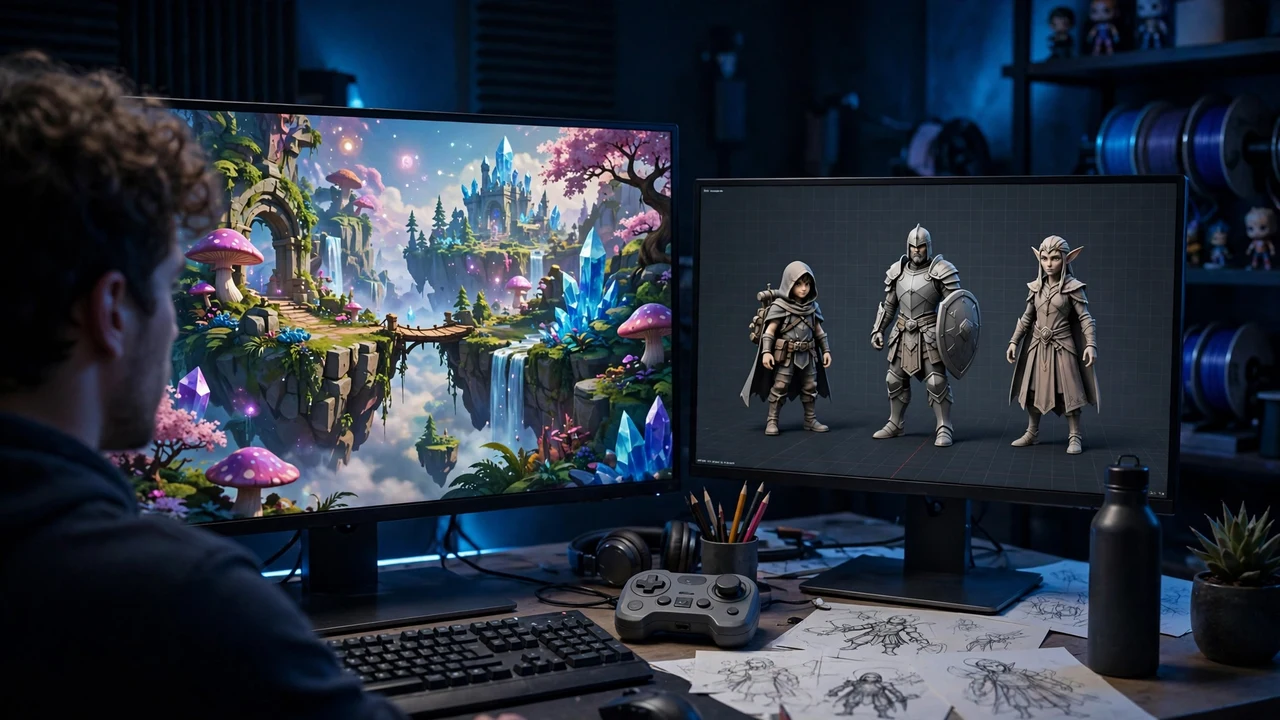
One day earlier, on 29 October 2026, Reallusion released the free Character Creator 5.2 update. It adds a built-in AI 3D Model Generator that turns text or images into full characters or modular assets such as hair, heads, clothing and props.
A Character Wrapping tool converts humanoid models into native CC topology, ready for rigging and animation. Existing CC5 users upgrade free and can claim 500 free AI Points, and the company’s AI services now sit under one credit system called Reallusion AI Cloud.
Bake3D launched on 6 October 2026 with a tighter promise, per its GlobeNewswire release. One still image becomes a textured 3D asset that is already rigged and ready to animate. It connects to Blender, Unity, Unreal Engine and Godot, and its API plus MCP connectivity let AI assistants create generation jobs on their own.
The Model Makers Kept Shipping
Tripo had the busiest autumn. Its P2.0 foundation model, shown at Gamescom and released in September 2026, generates native quad meshes and up to four variations from one concept. A Mesh Edit tool regenerates one region of a model without rebuilding the whole asset.
Tripo says a playable game was built in about four hours from its generated assets with OpenAI’s Astra workflow, in a company post covered by PR Newswire. Treat that as a company demonstration, not an independent test. On 28 October, Tripo also open-sourced EdenLive, a real-time generative renderer, per Auganix coverage.
Meshy 7.1 arrived on 10 September 2026 with exports for Unity, Unreal and Godot. A 3Dnatives Lab test of nine AI 3D models that month found each generated in about a minute or less with textures. Meshy’s Smart Topology mode aims at clean meshes under 15,000 triangles in about 10 seconds.
The longest-running story is Tencent’s. Maxon and Tencent announced on 6 March 2026 that Hunyuan 3D generation is coming inside Cinema 4D, starting on iPad in late 2026. Tencent presented the same technology at GDC as a way to build assets from text, images and sketches in minutes.
3D Printing Joined In
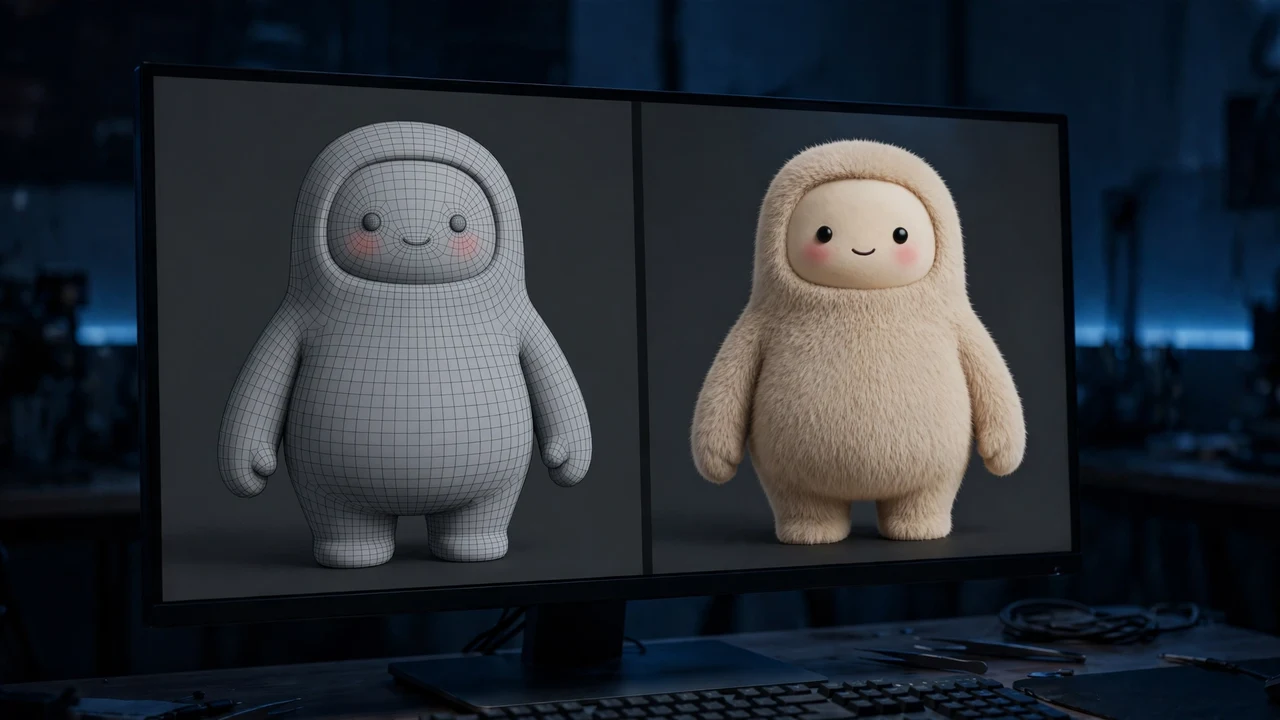
Bambu Lab closed the month by announcing Aimia on MakerWorld in late October 2026. Aimia turns text or images into print-ready models with no CAD skills, combining generation, editing and print preparation in one place.
Instead of building its own model, Bambu bundled five existing engines: Tripo, Meshy, Hi3D, Rodin and Hunyuan. Access is waitlist-only for now, with support declared for closed geometries and multicolour printing. It is the clearest sign that AI 3D generation is becoming a feature, not a destination.
What This Means for Asset Pipelines
For a working artist, the ai for 3d asset generation news 2026 cycle changes where the first draft comes from. Blocking out a character, prop or print now starts from a prompt inside a familiar tool, and the manual work shifts to cleanup, topology and taste.
Studios are still setting their own rules around it. Our report on Epic’s AI pivot in Unreal Engine 5 shows a major studio moving AI into production code, while Pocketpair’s publishing stance shows a publisher refusing generative AI outright. The tools are converging, and the policies are not.
Frequently Asked Questions
What is the biggest AI 3D asset generation story of 2026?
By reach, Moonshot’s 3D Make inside Kimi, launched 30 October 2026. It puts prompt-to-3D in front of a general chat audience instead of only 3D specialists. By workflow impact, Reallusion’s free CC 5.2 update and Tencent’s Cinema 4D deal run it close.
Can these tools produce game-ready assets?
Closer than before, with cleanup still expected. Tripo P2.0 outputs native quad meshes, Meshy’s Smart Topology targets low triangle counts, and Bake3D delivers rigged assets. Working artists still check topology, UVs and rigs before anything ships.
Are the 2026 3D models open source?
Mostly no. Release trackers describe 2026 as a hosted year, where the main models run as paid services. Tripo’s EdenLive renderer was open-sourced in October 2026, but it is a renderer, not an asset generator.
How many developers actually use these tools?
GDC’s January 2026 survey of more than 2,300 game professionals found 36 percent use generative AI tools at work. The same coverage reports that 52 percent of surveyed developers view the technology negatively, so use is running ahead of enthusiasm.
Conclusion
The ai for 3d asset generation news 2026 cycle has one message. Generation moved into the tools of the trade, from Kimi and Cinema 4D to Character Creator and MakerWorld. The next contest is not who generates a model, but whose output needs the least fixing.