
AI Vending Machine: How Smart Coolers Work, What They Cost, and What Operators Earn
If you don’t want to read the whole guide or have difficulty reading, you can listen to this guide instead.
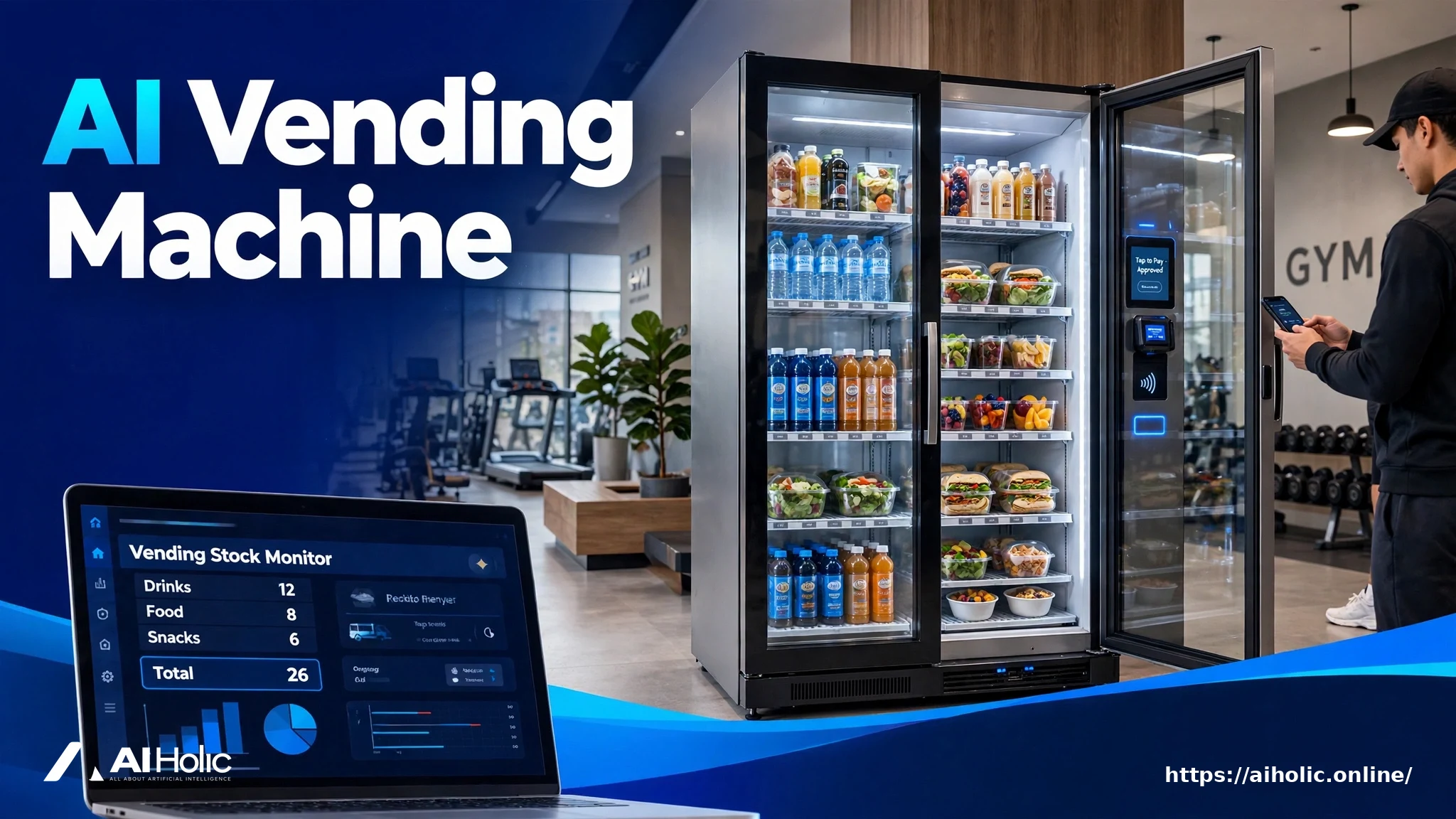
There are no coils, no keypad and no checkout button. You tap your card, the glass door opens, you take what you want, and the machine charges you for exactly what left the shelf. That is the whole shopping trip, and it takes about ten seconds.
At AI Holic, this guide explains how an ai vending machine works, what the main models cost, and what owners actually earn from one. You will see the purchase steps, the fees nobody puts on the sales page, and the honest limits of the profit claims. If you are weighing one for a gym, office or apartment building, start here.
What Is an AI Vending Machine?
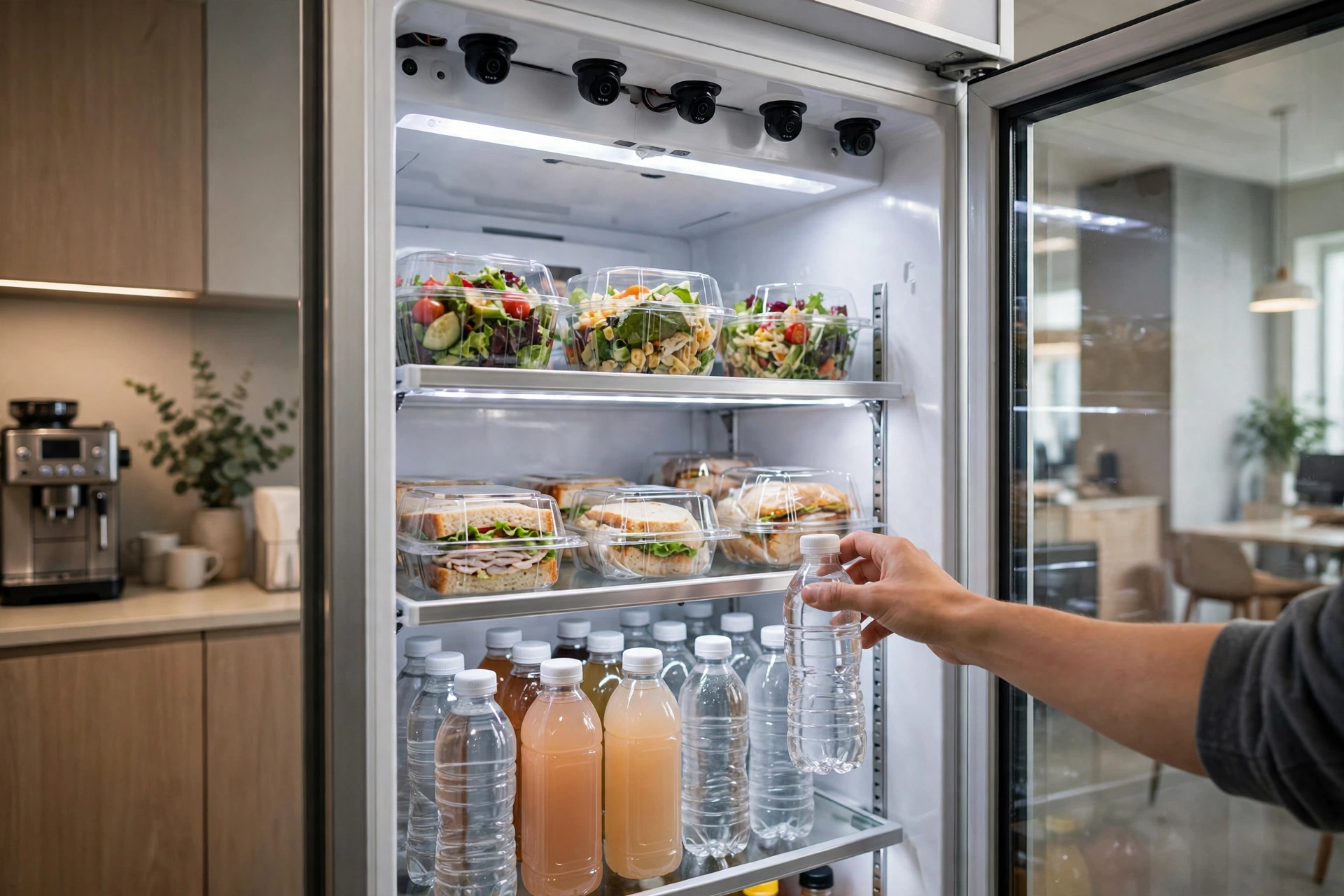
An ai vending machine is an unattended shop, usually a glass door cooler, that watches what you take instead of dispensing one item at a time. It replaces the coil and drop sensor of a traditional vending machine with cameras, shelf weight sensors and software. Because the door only opens after your payment is approved, the stock stays locked the rest of the time.
Most of the market is these smart coolers, sold for drinks, snacks and fresh food. A smaller second family works differently: machines where AI designs the product and a robot makes it on the spot, such as custom phone case printers and portrait drawing kiosks from makers like Sweet Robo. This guide focuses on the coolers, since they take nearly all of the buying interest.
How a Purchase Works, Step by Step
- You tap to open. A card, phone or payment app places a temporary hold on your account, and the door opens.
- Cameras watch the shelves. As you pick items up or put them back, the system tracks each product using computer vision, cross checked against weight sensors on the shelves.
- You close the door. The machine settles the list, charges your card for what actually left, and sends the receipt to your phone.
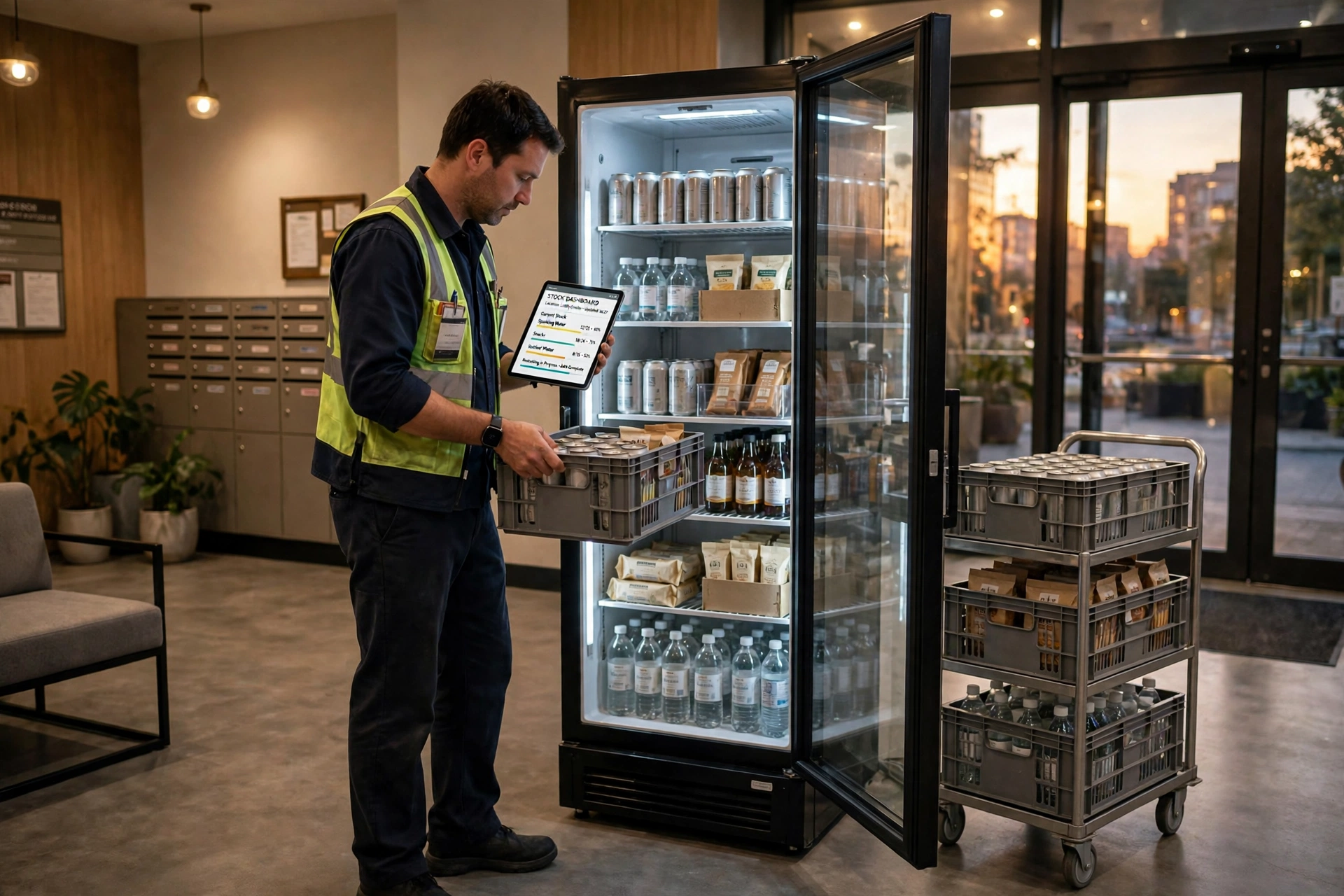
- The operator sees it live. Stock levels, sales and prices update in the owner’s app, so restocking trips happen when a machine needs them, not on a fixed route.
The same vision systems that count stock on shelves here are the ones factories use for inventory, which we covered in our guide to object detection for industrial inventory. One maker, SandStar, says its recognition runs above 99 percent accuracy with a checkout of about 10 seconds. Treat that as a vendor claim rather than a tested figure, because no independent test of these machines exists yet.
Machines also have to cope with real life. If the internet drops mid sale, at least one maker, Vending Concepts, says its machines queue the transaction and sync it when the connection returns. The door hold is the security model: no approved payment, no open door, which is why these coolers can sit in semi public places where an open shelf would be emptied.
What the Machines Cost
Prices below are starting prices listed by the named retailers when this guide was written, and the same models vary by a few hundred dollars between sellers. Compact coolers start near $3,400, family sized units sit in the middle, and large multi camera stores pass $7,000.
| Model | Type | Listed price |
|---|---|---|
| AI Smart Shop Ambient (Vending Concepts) | Room temperature snack cabinet | $3,395 |
| HAHA Mini 360 (Genius Vend) | Compact smart cooler | $3,449 |
| Vendera Core (Genius Vend) | Smart cooler, 3 cameras | $3,995 |
| HAHA Pro 542 (Genius Vend) | Mid size smart cooler | $4,699 |
| Grabot Prime (Genius Vend) | Smart cooler | $4,999 |
| HAHA Freezer 550 (Genius Vend) | Frozen food unit | $4,999 |
| Grabot Elite (Genius Vend) | Larger smart cooler | $5,999 |
| Micromart Fridge Store (Genius Vend) | Micro market unit, 4 cameras | $6,295 |
| HAHA Ultra 1200 (Genius Vend) | High capacity cooler | $7,199 |
| Smart Shop SRK2 (Vending Concepts) | Double door refrigerated | $7,995 |
Financing changes the maths for many buyers. Vending Concepts lists monthly finance from about $85 on its ambient unit and about $100 on a refurbished refrigerated model. Refurbished AI coolers are worth a look for a first machine, since the cameras and sensors carry the value rather than the cabinet.
The Costs After You Buy
The purchase price is not the whole cost of the business. The software runs on subscription: VMFS USA, one US seller, lists a software fee of $39.99 per month per machine, plus a small per sale recognition fee for the vision processing. Card processing charges apply on top, as they do in any retail business.
Then come the normal vending costs: stock, electricity, site rent or revenue share where the location charges one, and your time for restocking and cleaning. Live stock data cuts one traditional waste, the trip to a machine that did not need filling. It does not remove the trips themselves, and a cooler selling fresh food needs them often.
The Profit Question, Answered Honestly
Here is the honest picture. Seller pages list prices in detail but print no profit figures at all, and the one proper article in the search results, from Sweet Robo, refuses to publish earnings numbers because results vary so widely. Anyone quoting you a fixed monthly income from one machine is selling, not reporting.
What does exist is operator talk. Google’s own summary of Reddit’s vending community says owners of AI coolers costing roughly $3,250 to $4,000 landed report around $700 a month in profit in high traffic spots such as gyms and office buildings. Those are self reported forum figures that nobody has audited, so use them as a rough shape, not a promise.
Two things decide whether a machine earns. The first is placement: steady foot traffic with a reason to buy, such as a gym at closing time or an office far from shops. The second is the basket: an open cooler lets people take several items at once and lets you stock fresh meals with real margins, instead of single cans squeezed through a coil.
AI Cooler or Micro Market?
The closest alternative is a micro market: open shelves, a wider range, and a self checkout kiosk where customers scan their own items. The trade is simple. A micro market trusts people; an AI cooler does not have to.
| AI smart cooler | Micro market | |
|---|---|---|
| Space needed | One fridge sized footprint | A small room corner, 50 to 100 square feet |
| Theft risk | Low, door stays locked until payment is approved | High, open shelves run on trust |
| Checkout | Automatic, nothing to scan | Customer scans each item at a kiosk |
| Range | A few hundred items | As much as the shelves hold |
| Best setting | Gyms, lobbies, hospitals, smaller offices | Large secure offices with a known workforce |
Where They Work Best, and Where They Struggle
The proven spots share three traits: people pass all day, they stay a while, and food options nearby are weak. Gyms, apartment lobbies, hotels, hospitals and mid sized offices all fit. A machine also needs power and a decent mobile or Wi-Fi signal, since the payment hold happens before the door opens.
Struggles are just as predictable. Low traffic kills the economics, because the software fee runs whether you sell or not. Recognition mistakes, a swapped item or a blocked camera, create charge disputes that a human cashier would have caught.
And the technology is not magic. A widely shared news story about an AI agent put in charge of an office vending machine ended with it giving products away. That is a fair warning about trusting any system without oversight.
Before You Buy: A Short Checklist
- Count the traffic first. Spend a few days watching the spot at the hours you expect sales, not the hours you hope for.
- Check power and signal. The machine needs both, at the exact place it will stand, before the door can open for anyone.
- Get every fee in writing. Software subscription, per sale recognition fees and card charges, from the seller, before you sign.
- Start with one machine. Put it in your best location, learn its real sales for a month, and only then plan a second.
- Agree access in advance. Restocking hours, a contact at the site, and what happens if the site wants the machine moved.
Frequently Asked Questions
How much does an ai vending machine cost?
Most smart coolers list between about $3,400 and $7,200 at US retailers, with compact ambient units from $3,395 and double door or freezer models reaching about $8,000. Add a monthly software fee, per sale recognition fees and card processing on top of the hardware price.
Are AI vending machines profitable?
They can be, in the right spot, but nobody credible publishes a guaranteed figure. Operators in forum discussions report around $700 a month profit for a well placed cooler, unaudited. Placement and product margins decide the result far more than the machine model does.
What do AI vending machines do that normal ones cannot?
They let a customer open the door and take several items at once, including fresh and oddly shaped food that coils cannot hold. They also track stock in real time and charge automatically. A normal machine sells one item per transaction, in the order its coils allow.
Do AI vending machines need staff?
They need an operator, just not a cashier. Someone restocks, cleans, handles disputes and checks the app. Live stock data makes those visits better timed, but fresh food still means regular trips, often several a week for a busy cooler.
Do AI vending machines use facial recognition?
The cameras are aimed at products, not faces: the system identifies items taken and returned, and payment comes from your card hold. Makers publish privacy pages for their systems, and any buyer placing one in a workplace should read them, since camera policies differ by brand.
Conclusion
An ai vending machine earns its premium when the location is right: locked stock, fresh food margins and no cashier, in a place with steady hungry traffic. Budget past the sticker price for software and fees, treat profit claims as unverified until your own sales prove them, and let placement, not the brochure, make the decision.