AI for Qualitative Research 2026 New Tools: Interviews, Coding, and Focus Groups at Scale
If you don’t want to read the whole guide or have difficulty reading, you can listen to this guide instead.
New tools now run interviews, code transcripts, and sort themes while you watch the results come in. The exact phrase buyers search is ai for qualitative research 2026 new tools, and the market behind it changed fast in 2026. Seven AI-moderated platforms launched in April and May 2026 alone, so last year’s shortlist is already out of date.
At AI Holic, this guide sorts the new tools by the job they do, not by brand name. You will see which tools run interviews by themselves, which ones only code data you already have, and what each one costs. Prices here come from competitor reports checked in November 2026, so check the live pricing page before you buy.
You will also learn where the new tools fall short, how to protect participant privacy, and a short trial workflow to run before you sign a contract.
What AI for Qualitative Research Means in 2026
Qualitative research studies what people say, do, and mean, using interviews, focus groups, and open answers instead of numbers. A qualitative research project asks why people act the way they do, and it works from words, voice, and video. AI now helps at three points in that work: it runs the interview, it turns talk into text, and it groups the text into themes.
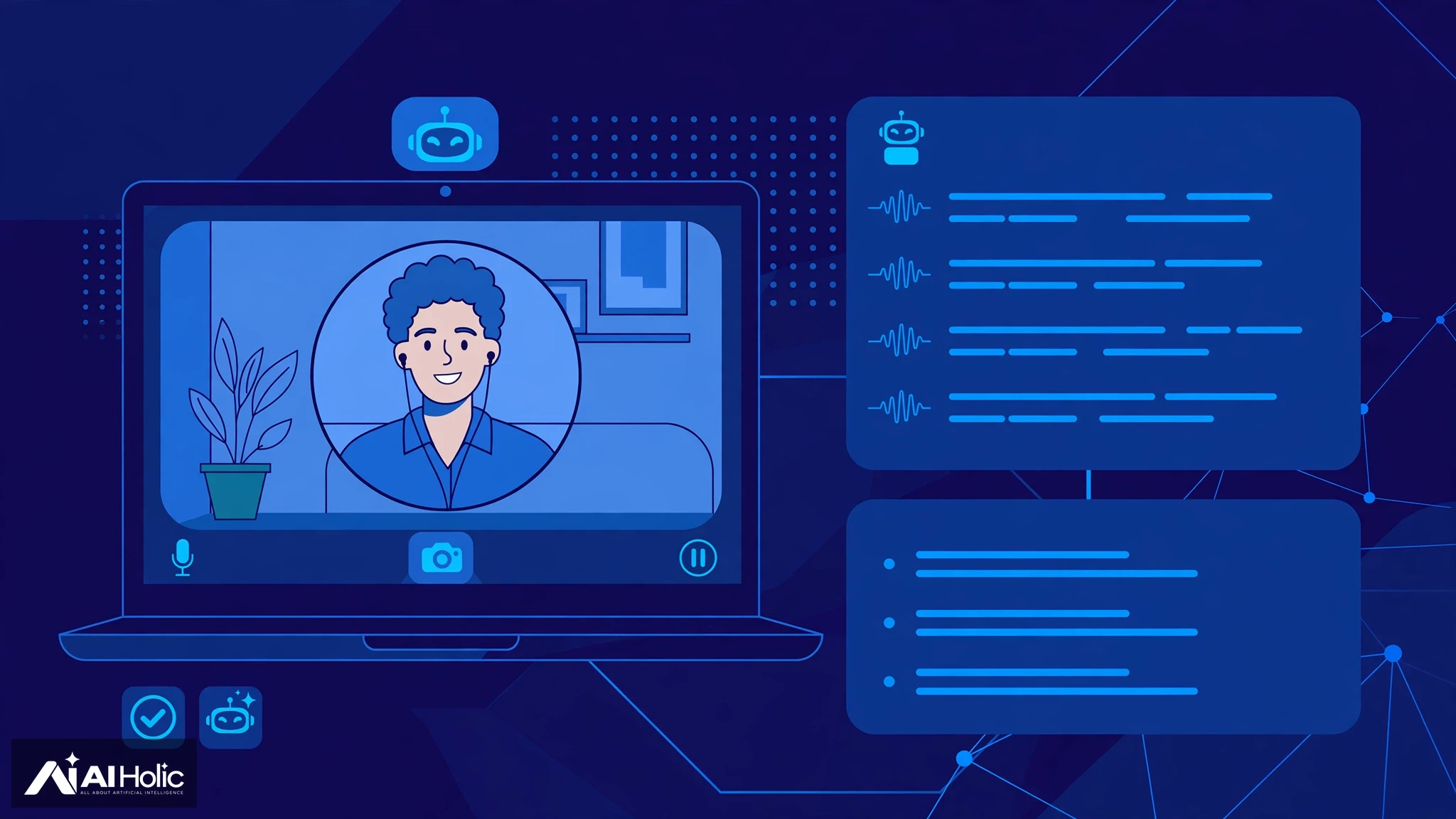
The change in 2026 is the first point. AI-moderated interviews let one researcher run hundreds of conversations at once, each one with follow-up questions that adapt to the answers. That speed is real, but it changes the skill a researcher needs, from running interviews to checking AI output for drift and thin answers.
A Maze survey of 800 professionals in 2025 found that 74 percent of research teams already use AI to analyze their data, and 58 percent use it for transcription. Those numbers come from a vendor survey, so treat them as a sign of the trend, not as a precise count for your field.
AI for Qualitative Research 2026 New Tools: The Three Types
Every entry in this round of ai for qualitative research 2026 new tools fits one of three types. Interview platforms run one-on-one talks with an AI moderator.
Group platforms run many people at once in a shared session. Coding and repository tools work on data you already collected, and they do not run interviews at all.
The type matters more than the brand. A team that needs 200 fresh interviews should not buy a coding tool, and a team with 300 hours of recordings should not buy an interview platform. Pick the type first, then compare tools inside that type.
| Type | What it does | Best for | Examples |
|---|---|---|---|
| AI interview platform | Runs one-on-one AI-moderated interviews | Fresh interviews at scale | Outset, Usercall, Listen Labs, Conveo |
| AI group platform | Moderates many people at once | Broad sentiment in one session | Remesh, Reveal AI |
| Coding and repository | Codes and stores data you already have | Analysis of past interviews | Dovetail, NVivo, ATLAS.ti, MAXQDA |
New AI Interview Platforms That Run One-on-One Conversations
Outset runs AI-moderated interviews by text, voice, and video, and its AI interviewer adapts its follow-up questions to each answer. It recruits through more than 25 panel partners that reach 85 or more countries, and it does not publish a price, so buying starts with a sales call. If you search for an outset ai researcher tool 2026 update, you will find the same product with its 2026 analysis features, not a separate new tool.
Usercall, also known as User Intuition, runs one-on-one interviews of 20 to 30 minutes with a structured laddering method that asks five to seven rounds of follow-up questions. It reports a price of 30 dollars per interview with studies from 150 dollars, and it claims a 4 million person panel and 98 percent participant satisfaction. Both numbers are vendor claims reported by competitors in November 2026, so confirm them on the live pricing page.
Listen Labs runs AI-moderated interviews in 120 or more languages, the widest coverage in this roundup, and it added a tracker called Pulse in August 2026. Salesforce agreed to buy Listen Labs on 29 September 2026, with the deal expected to close by the end of January 2027. A buyout can change pricing and support, so ask about the roadmap before you sign a long contract.
Conveo and Strella also run AI-moderated video and voice interviews, and Quals.ai offers text interviews with custom model tuning for technical teams. Tellet keeps the focus on simple voice interviews for teams that are new to this kind of research. These smaller names matter less than the pattern: the interview itself is now a product you can buy by the session.
AI-Moderated Focus Groups and Group Platforms
Group platforms trade depth for breadth. Remesh runs live group sessions with 50 to 1,000 or more people at once, and its AI reads the text replies in real time, groups opinions, and shows where people agree and disagree. Competitors report a price of 5,000 to 15,000 dollars per session, which puts it in the enterprise range.
That format fits a clear question: what does a large group think about one topic, right now. It does not fit the question of why one type of customer acts a certain way, because no single person gets 30 minutes of probing. Searches for an ai moderated focus group tool new 2026 point at this group format, so read the fine print before you expect interview depth from a group session.
Reveal AI works the same way, with AI-moderated text discussions for groups of 25 to 500 or more people. The human-plus-tech hybrid is the third option in this space: firms such as L and E Research use human moderators whose capacity is extended by software, so each moderator can run several text interviews at once. Hybrids cost more than pure AI sessions, but they keep a person in charge of the conversation.
AI Coding and Analysis Tools for Data You Already Have
If your main need is coding files you already have, the ai for qualitative research 2026 new tools in this section matter more than the interview platforms. Dovetail stores and tags interview highlights in a shared repository, and its AI groups findings into themes for the whole team. It does not run interviews, so most teams pair it with a separate interview tool.
NVivo is the veteran desktop coding tool, and version 15 adds AI Assist for coding and summaries next to its manual node coding. ATLAS.ti handles text, audio, video, and image data in desktop and web versions, with AI-suggested codes as a starting point. MAXQDA adds AI coding, code suggestions, and AI-drafted reports as of version 26.2 in 2026.
Insight7 says it can process and pull themes from more than 100 interviews at once, which suits teams with large backlogs of transcripts. Delve gives solo researchers a guided coding workflow, and Condens and Notably cover light tagging and fast synthesis. A search for an ai qualitative research tool new release 2026 will surface these names too, so check whether the tool collects new data or only analyzes old data before you shortlist it.
Thematic analysis sits at the center of most of this coding work. Thematic analysis means finding patterns of meaning across your data and grouping codes into themes, and the AI tools above speed up the first pass, not the judgment call. A researcher still decides which themes matter and which quotes prove them.
What the New Tools Cost in 2026
Prices change fast, and several vendors hide them behind a sales call. The table below lists what competitors reported in November 2026, and you should treat every figure as a starting point, not a quote. Check the live pricing page and ask what counts as one interview, one seat, or one session before you budget.
| Tool | Reported price (November 2026) | Pricing note |
|---|---|---|
| Usercall (subscription option) | 89 dollars per month or 899 dollars per year | Plus pay-as-you-go. First interview free (competitor report) |
| User Intuition (same product, per-interview pricing) | 30 dollars per interview | Studies from 150 dollars. No monthly fee (vendor claim) |
| Outset | Not published | Sales call and custom quote |
| Listen Labs | Not published | Subscription with credits per participant |
| Remesh | 5,000 to 15,000 dollars per session | Enterprise pricing by size and scope |
| Dovetail One Bronze | 4,800 dollars per year plus 0.15 dollar credits | Silver and Gold quoted. Gold lists a 30-day trial |
| NVivo, ATLAS.ti, MAXQDA | License or quote | Price set in the vendor shop. Academic pricing varies |
The cheapest way to start is usually a single paid study, not an annual plan. A 150 dollar study on a per-interview platform tells you more about output quality than any demo call. Keep the contract short until you have checked three full studies end to end.
How to Pick the Right Tool for Your Study
Match the job first, then pick from the ai for qualitative research 2026 new tools in the table below. Start with one question: do you need new interviews, or do you need to code data you already have. That single answer cuts the shortlist in half.
| Your job | Pick this type | First check |
|---|---|---|
| 100 or more fresh interviews, fast | AI interview platform | Ask for a sample transcript and check probing quality |
| One big group opinion check | AI group platform | Confirm how many people speak, not just attend |
| Code 50 or more past interviews | Coding and repository tool | Test auto-coding on 10 transcripts you already coded by hand |
| Ongoing research library | Repository with AI tagging | Check search across past studies, not just one project |
| Sensitive or clinical data | Human-led or hybrid | Check data handling, consent, and where data is stored |
Our guide to AI business context refinement covers a related problem: AI output is only as good as the context you give it, and the same rule applies to research prompts and codebooks. A vague brief gives you vague themes, whatever tool you buy.
Data quality matters just as much. Our guide to data quality for AI transformation explains why messy source data weakens every AI result, and interview transcripts are no exception. Clean audio, clear consent, and a short codebook will do more for your results than a pricier plan.
Limits, Privacy, and Accuracy Checks
AI coding matches human coders on structured coding with a clear codebook, but it misses nuance, sarcasm, and cultural context. A 2024 mapping study of large language models in qualitative research found the same split, so cross-check AI themes against a manual read of a sample. The Nielsen Norman Group warned in 2024 against using AI-made synthetic participants as a stand-in for real people, because models tend to give agreeable, plausible answers instead of genuine lived experience.
Privacy comes before price. Check whether the tool meets GDPR or HIPAA rules for your data, where recordings are stored, and who can see them.
Do not upload patient interviews, employee grievances, or children’s data to a tool until its data policy is in writing. Our case study on AI in higher education research design shows how method choices shape what a study can claim, and the same care applies to tool choice.
Watch for drift as outputs get cleaner. One research team noted in May 2026 that the hardest part of working with AI in research is the quiet drift that gets harder to spot as outputs get faster and more polished. Build a check into every study: a researcher reads 10 percent of transcripts by hand and compares the themes with the AI output.
A Short Trial Workflow Before You Buy
This short test uses the ai for qualitative research 2026 new tools above without a big contract. Run one small paid study of 10 to 20 interviews on one real question your team already cares about. Code 10 transcripts by hand first, then run the same 10 through the tool and compare the themes.
- Write the research question in one sentence and the codebook in one page.
- Run 10 to 20 interviews, then read 5 transcripts by hand.
- Compare AI themes with your hand codes and note what it missed.
- Check quote links: every theme should trace back to real words.
- Price the full study from the trial, not from the sales deck.
If the tool passes, scale up in steps of 50 interviews and re-check the sample each time. If it fails the hand-code comparison, try a different type of tool before you try a bigger plan. The trial costs a few hundred dollars at most, which is far less than a year of the wrong platform.
Frequently Asked Questions
Which ai for qualitative research 2026 new tools run interviews by themselves?
Outset, Usercall, Listen Labs, Conveo, Strella, Quals.ai, and Tellet run AI-moderated interviews with no human moderator in the room. Dovetail, NVivo, ATLAS.ti, and MAXQDA do not run interviews. They code and store data you already collected.
Group tools such as Remesh moderate many people at once instead of running one-on-one talks.
Are ai for qualitative research 2026 new tools safe for sensitive topics?
They can be, but only with the right checks. Confirm GDPR or HIPAA compliance, data storage location, and access controls before you upload anything. Keep a human in charge of consent, and never use synthetic participants as a stand-in for real people on sensitive topics.
How much do AI-moderated interviews cost?
Competitor reports from November 2026 list 30 dollars per interview on User Intuition, with studies from 150 dollars, and 89 dollars a month for Usercall.
Outset and Listen Labs do not publish prices. Group sessions on Remesh are reported at 5,000 to 15,000 dollars per session. Check the live pricing page before you budget.
Do I still need a human researcher?
Yes. AI handles the slow work of transcription, first-pass coding, and theme drafts.
A researcher still writes the questions, checks the themes against real quotes, and decides what the results mean. Teams that skip the human check get fast answers they cannot defend.
What is the best first tool for a small team?
Start with one small paid study on a per-interview platform, and code 10 transcripts by hand to compare. That trial tells you more than any feature list. If you already have recordings, start with a coding tool instead and test it on data you know well.
What about AI-moderated user interviews for product teams?
An ai moderated user interviews tool 2026 fits product teams that need fast answers during early product work and usability testing. Outset and Conveo both target that job, with adaptive follow-ups during the talk. Keep the study small at first, and check the transcripts before you act on the themes.
Conclusion
The ai for qualitative research 2026 new tools worth your time are the ones that match your job: interviews, group sessions, or coding. Run one small paid trial, compare the AI themes with hand coding, and check prices and privacy on the live vendor page before you buy.