Legrand AI in the AV Industry: Cloud Control, Speaker Tracking, and Predictive Maintenance
If you don’t want to read the whole guide or have difficulty reading, you can listen to this guide instead.
Legrand is a hardware company first, and its AI work in AV grows out of that fact. The firm makes the racks, power units, mounts, screens, and cameras that fill meeting rooms and lecture halls. This guide explains legrand ai in the av industry in plain terms, so you can tell real AI features from plain cloud management.
At AI Holic, we checked the launch release, the InfoComm 2026 session, and trade press coverage. You will find what the Unified Cloud Platform does, where speaker tracking fits, and what it still cannot do.
By the end, you will know if this platform fits your rooms, your team, and your budget.
Legrand AI in the AV Industry at a Glance
The table below gives the core facts in one place.
| Detail | What we found |
|---|---|
| Parent company | Legrand, a French electrical and digital building group based in Limoges |
| AV division | Legrand | AV, the connected AV arm of the Legrand group |
| AV brands | C2G, Chief, Connectrac, Da-Lite, Luxul, Middle Atlantic, On-Q, Vaddio, Wiremold |
| Parent sales 2024 | €8.6 billion (Legrand group, all divisions) |
| AV customers | Over 6,000 global customers (vendor figure) |
| AI platform | Unified Cloud Platform, powered by Xyte |
| Launch | October 20, 2026 (first shown at InfoComm 2026, June 2026) |
| AI help | Xyte AI Teammate: diagnostics, insights, guided fixes |
Two facts need care. The sales figure covers the whole Legrand group, not the AV division alone, and the customer count is a vendor figure that Legrand has repeated for years.
What Is Legrand | AV?
Legrand is a French group that makes electrical and digital building products. Its AV division, Legrand | AV, sells the mounts, racks, power units, screens, and cameras behind meeting rooms, classrooms, and control rooms.
The division sells through nine brands you may already know. C2G covers connectivity, Chief covers mounts, Da-Lite covers screens, Middle Atlantic covers racks and power, and Vaddio covers cameras and conferencing gear.
Legrand reported group sales of €8.6 billion in 2024, a figure that covers the whole group and says little about AV alone. The AV division says it serves over 6,000 global customers, a vendor figure that has stayed the same in releases for years.
That hardware base matters, because it shapes the AI story. That is the base that legrand ai in the av industry builds on. The company is not an AI software firm that added hardware later.
Our GetMint AI company overview uses the same shape for a different AI firm, so you can compare the two side by side.
Where AI Actually Sits in Legrand Products
The clearest public statement of Legrand’s AI view is its InfoComm 2026 session. On June 16, 2026, in Las Vegas, Blake Brubaker and Bob Griffin presented “Legrand: AI in the AV Industry” on foundations, applications, and impact. Both men are Technical Sales Application Engineers at Legrand.
The session covered four AI capabilities that now show up in pro AV work. Machine vision lets cameras and sensors read a room. Object-based programming lets a system react to things it sees, such as a person or a display.
Predictive analytics uses past device data to flag faults before they cause a failure. Edge computing runs that work on local hardware instead of sending everything to the cloud. Together, the four cover the full path from sensing a room to fixing a fault.
In practice, AI sits in two places in Legrand products today: the cloud platform, where it reads device data and guides fixes, and the meeting room, where it tracks speakers and frames the active talker.
That split matters for buyers: cloud AI helps your support team, while room AI helps the people in the meeting. If you want to see how a data-first AI firm differs, read our review of the data enrichment company Clay.
The Unified Cloud Platform Explained
Legrand | AV launched the Unified Cloud Platform on October 20, 2026. It is an AI-powered, vendor-agnostic AV management platform that grows out of RackLink Cloud, the older Middle Atlantic cloud service, and it first appeared at InfoComm 2026 in June.
The platform is built with Xyte, a device management firm Legrand has worked with since 2023. Xyte supplies the cloud software and the AI layer, while Legrand supplies the hardware. Legrand is also a founding member of OpenAV Cloud, an open standards effort for AV management.
At its core, the platform is a remote monitoring and management tool that watches supported devices from one dashboard, across every site you manage. In short, legrand ai in the av industry means AI diagnostics and automation layered on Legrand hardware, not a new AI model.
The AI part is called Xyte AI Teammate, and it gives context-aware diagnostics, actionable insights, and guided troubleshooting. In plain terms, it tells your team what broke, why it likely broke, and what to try first.
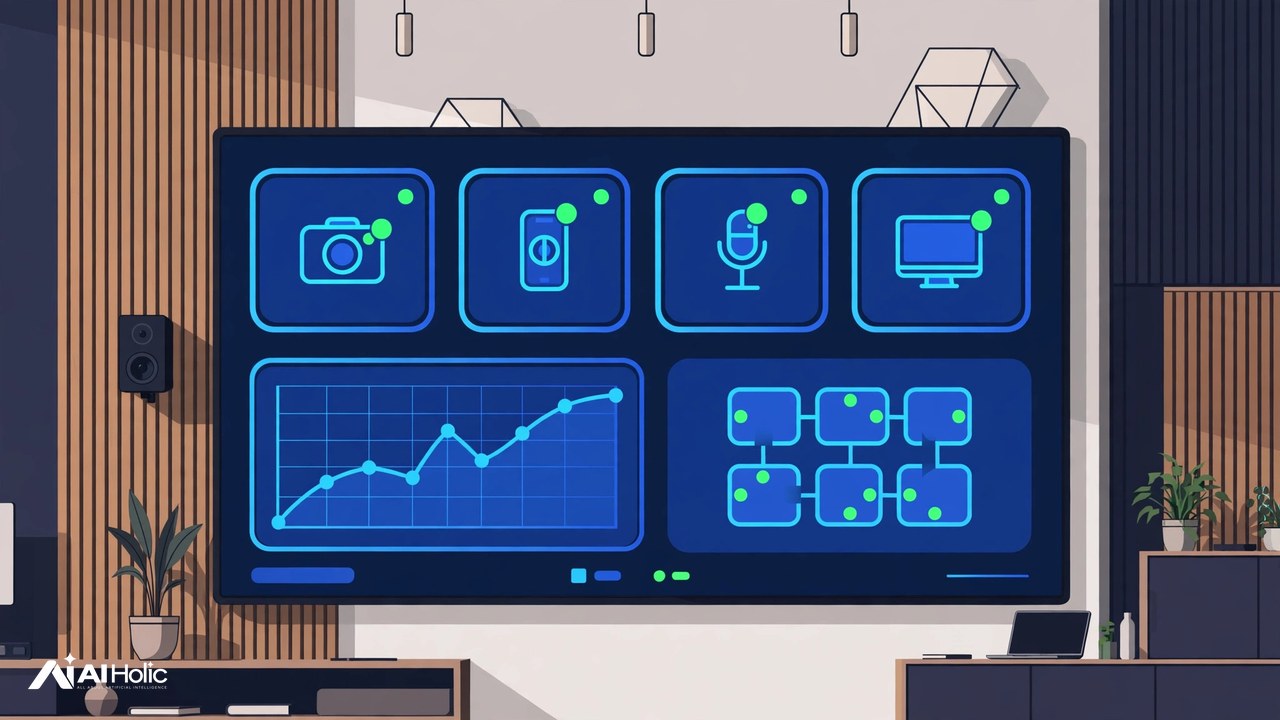
Event-driven workflows handle routine jobs on their own: a power cycle, an alert, or a fix can run when a set event fires. The platform also tracks device performance, usage, and energy, in real time and over past weeks and months.
One early user case comes from Middle Tennessee State University, where a three-person team manages more than 400 instructional spaces. The vendor says the team fixed 15 to 20 incidents fully remotely in the first two weeks of a semester, with no site visit. The same case reports a 15 percent cut in idle energy use, but treat both numbers as vendor-reported figures, not independent test results.
Vaddio SpeakerVIEW and AI in the Meeting Room
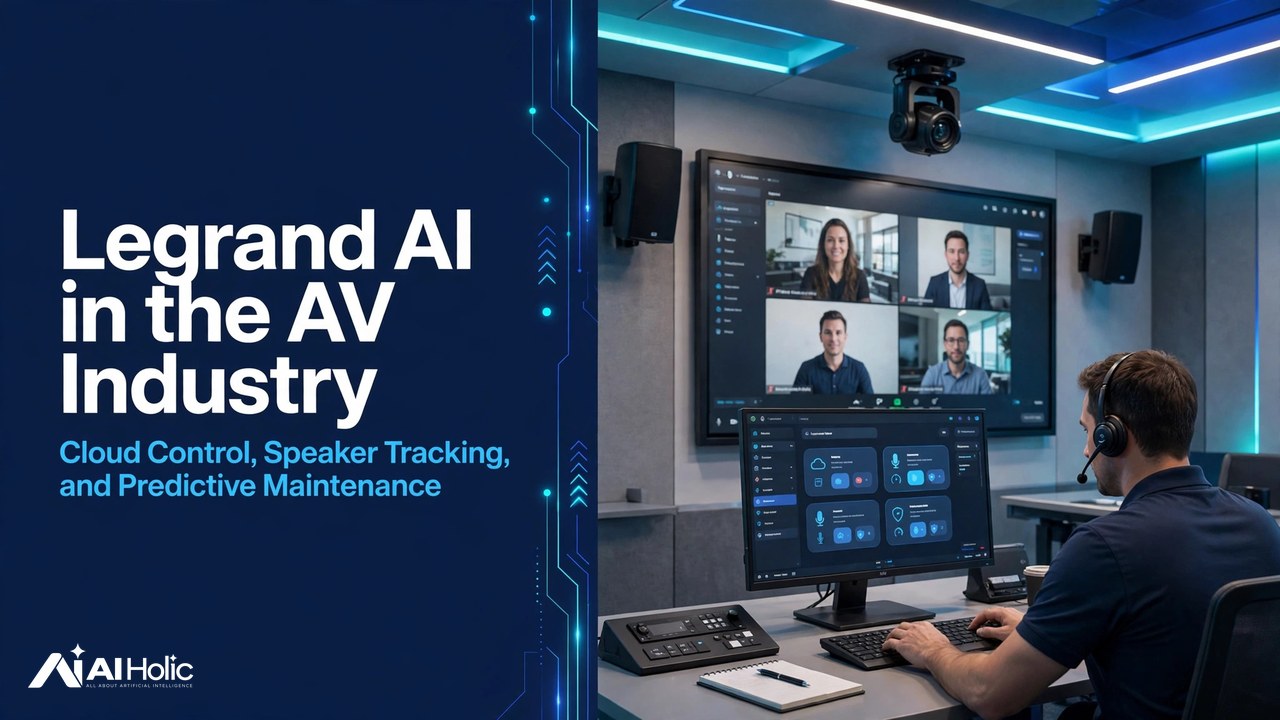
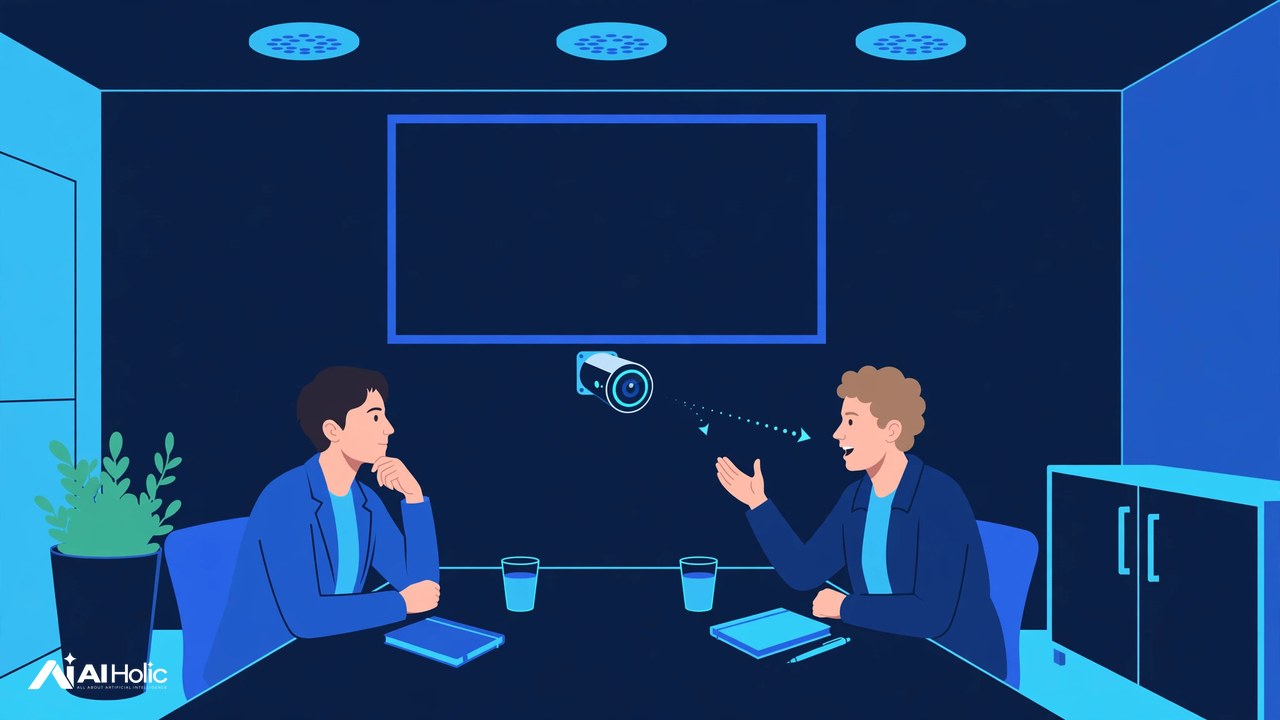
The most visible AI feature in a Legrand meeting room is Vaddio SpeakerVIEW. It pairs AI-powered active speaker tracking with high-end microphones from Sennheiser and Shure, and the camera frames the person who is speaking, without a dedicated operator.
SpeakerVIEW fits the hybrid meeting problem: remote callers need to see who is talking, not a wide shot of a whole table. The system switches the camera view as the talker changes, so remote staff can follow the talk.
Vaddio also sells the Venture VideoBAR, an all-in-one 4K video conferencing system for everyday rooms. One box covers small rooms, while SpeakerVIEW covers rooms that need tracking and automation.
Machine vision is the tech behind both products: the camera reads the room, finds faces and voices, and picks the right frame. That is the same idea from the InfoComm session, now sold as a room product.
Integrations and Security
The platform is vendor-agnostic by design, so it manages third-party AV devices as well as Legrand gear. It connects alongside Crestron XiO and Q-SYS Reflect, so a team can keep its current tools while adding one shared view above them.
Zoom Rooms and Microsoft Teams Rooms connect natively. Service tickets and asset data can flow into Salesforce, ServiceNow, Jira, Zendesk, and Slack, so AV faults land in the tools your team already checks.
Legrand holds ISO/IEC 27001:2013 certification for information security management, covering the software and firmware in its connected devices. The platform runs on Amazon Web Services, with data encrypted in transit and at rest.
Xyte holds SOC 2 Type 2 certification and is GDPR and CCPA compliant. That matters for schools, hospitals, and government buyers, who must approve a cloud tool before they use it.
Da-Lite screen controllers joined the platform on October 27, 2026, through firmware update 1.2.0. The update is software-only, with no new hardware needed.
What Integrators Should Expect
For most buyers, legrand ai in the av industry will stand or fall on device coverage. Check that your devices are supported before you plan a rollout. A dashboard that cannot see half your rooms will not save your team time.
| Area | What you get | What to check |
|---|---|---|
| Device monitoring | One dashboard for supported devices across sites | Are your models covered? |
| AI diagnostics | Xyte AI Teammate flags faults and guides fixes | Does it cover common faults? |
| Automation | Event-driven power cycles, alerts, and fixes | Which events can you set? |
| Analytics | Real-time and past data on performance, usage, and energy | Can you export the data? |
| Integrations | Crestron XiO, Q-SYS Reflect, Zoom Rooms, Teams Rooms, ticketing tools | Do current tools connect without extra cost? |
Pricing is not published, so treat the platform as quote-based. Ask for a price tied to your device count and site count. A pilot on a few rooms will tell you more than a sales call.
The platform took five honors at InfoComm 2026, including Best Cloud Platform at the Higher Ed AV Awards and Most Innovative AI-Powered Product in the SCN Installation Product Awards. It also won Best RMR-Generating Corporate AV Solution in the NSCA 2026 Excellence in Product Innovation Awards.
Awards do not prove it fits your rooms. Run your own pilot, count the faults it catches, and count the site visits it saves.
Strengths and Limits
The main strength is the hardware base. Legrand makes the racks, power units, and cameras the platform watches. That is why legrand ai in the av industry starts from device facts that a software-only tool cannot see.
The second strength is the open approach. Vendor-agnostic management plus links to Crestron XiO and Q-SYS Reflect means the platform fits mixed rooms, with no need to rip out gear you already own.
The third strength is the automation loop: monitoring, AI diagnosis, and event-driven fixes sit in one place. That cuts the gap between a fault and a fix, at least for faults the system knows.
The main limit is scope. AI diagnostics help only with supported devices and known fault types. A fault the system has never seen still needs a person on site.
The second limit is proof. Most public numbers come from the vendor, including the MTSU case figures, and independent reviews are still thin, since the platform launched in October 2026.
The third limit is cost opacity: with no public price list, you cannot compare it with rival tools on price alone. Get a written quote and a pilot before you commit.
Is Legrand Right for Your Project?
If your rooms run on Legrand racks, power units, and cameras, the platform fits your setup today. It adds cloud control and AI diagnosis to gear you already own.
If your rooms mix many brands, check the supported device list first: the vendor-agnostic claim only helps when your models are on it. A short pilot will show the gaps fast.
Ask these five questions before you buy.
- How many rooms and devices would you manage?
- Which of your devices are supported today?
- Does your team want AI-guided fixes, or plain monitoring?
- Can the platform replace a site visit often enough to pay for itself?
- Does the quote fit your device count and your budget?
Our list of AI companies in Mountain View shows how a software-first AI firm compares with a hardware-first one like Legrand. Read it if you are weighing a pure software tool against this platform.
Small teams with a few rooms may not need a cloud platform at all. Large teams with many sites gain the most from one dashboard and shared fixes.
Frequently Asked Questions
What is legrand ai in the av industry about?
It is the name for how Legrand uses AI across its AV products: the Unified Cloud Platform, Xyte AI Teammate, and Vaddio SpeakerVIEW. AI reads device and room data, then helps teams fix faults and run better meetings.
What does the Unified Cloud Platform do?
It monitors and manages AV devices from one cloud dashboard, across all your sites. It adds AI diagnostics, event-driven automation, and analytics on performance, usage, and energy.
What is Vaddio SpeakerVIEW?
SpeakerVIEW is an AI-powered automation system and controller from Vaddio. It tracks the active speaker with AI, pairs that tracking with Sennheiser and Shure microphones, and frames the talker with no operator needed.
Is the Unified Cloud Platform secure enough for schools and hospitals?
Legrand holds ISO/IEC 27001:2013 certification, and Xyte holds SOC 2 Type 2 certification with GDPR and CCPA compliance. The platform runs on AWS with data encrypted in transit and at rest, but ask for the current certs in writing before you approve it.
Does Legrand publish pricing for the platform?
No, Legrand does not publish a price list for the Unified Cloud Platform. Pricing is quote-based, tied to your device count and sites. Ask for a written quote and run a pilot on a few rooms before you commit.
Conclusion
legrand ai in the av industry is real but narrow: AI diagnostics in the cloud, speaker tracking in the room, and automation for known faults. The hardware base is its edge, and the thin public proof is its limit. Ask for a pilot, check your device list, and let your own fault counts decide.