Agentic AI Pindrop Anonybit: Building Trust With Agentic AI From Pindrop
If you don’t want to read the whole guide or have difficulty reading, you can listen to this guide instead.
Voice clones can now sound like a real customer, and AI agents can now act on that customer’s behalf. That combination breaks the oldest shortcut in security, which is trusting a familiar voice. Agentic ai pindrop anonybit is the name searchers give to a three-layer answer, one that checks the voice, checks the identity behind it, and lets an agent act only when both checks pass.
At AI Holic, we explain this stack in plain terms, including where it helps and where it falls short. This guide covers the three layers, the fraud trend behind them, a walkthrough of one risky call, and a checklist for trusted agents.
The Short Answer
The phrase describes a reference design, not a single product you can buy. Pindrop and Anonybit are separate companies with separate products, and no public evidence shows a joint product bundling them. In the agentic ai pindrop anonybit design, the agent layer decides on top of both, turning signals into allowing a call, asking for one more check, or blocking a transaction.
Each layer answers a different question. Pindrop-style voice analysis asks whether the audio sounds like a live human rather than a synthetic clone. Anonybit-style decentralized identity asks whether the person behind the voice is who they claim to be, without storing a full biometric record in one place.
The agent layer then asks what should happen next, and it acts without waiting for a human to review every call. That split is the whole point. A system that only checks the voice can still be fooled by a good clone of a real customer.
A system that only checks stored identity can still be fooled by a synthetic voice that matches stolen fragments. Checking both, and gating the agent’s actions on both, closes more gaps than either check alone.
Agentic AI Pindrop Anonybit: What the Three Layers Actually Do
Start with the agent itself. An agentic AI system is software that pursues a goal on its own, planning steps, calling tools, and adjusting when results change. That is different from a chatbot that only answers, and different from a fixed workflow that only follows a script.
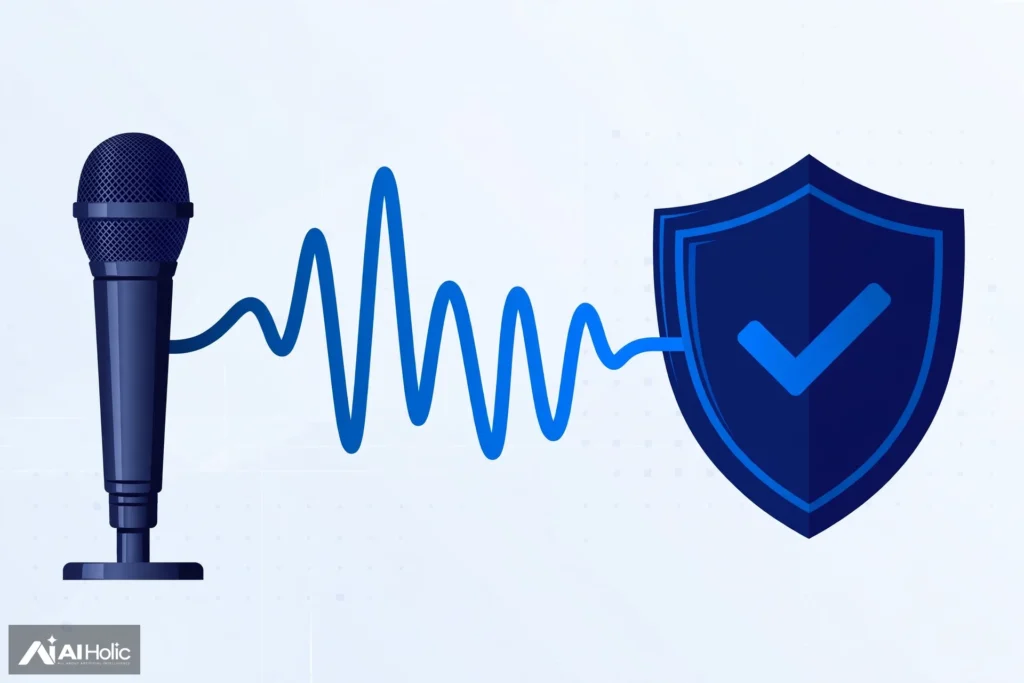
When such an agent can move money, change records, or speak to customers, every action needs an identity behind it. The voice layer comes first in a phone call. Pindrop is a voice security company whose products analyze audio, device, and behavior signals on live calls.
Its Pulse technology is described in coverage as detecting synthetic speech by finding acoustic traces that cloned voices leave behind. Reports describe its newer BotStopper product as answering a related question in about two seconds, namely whether the caller is a human or a machine at all.
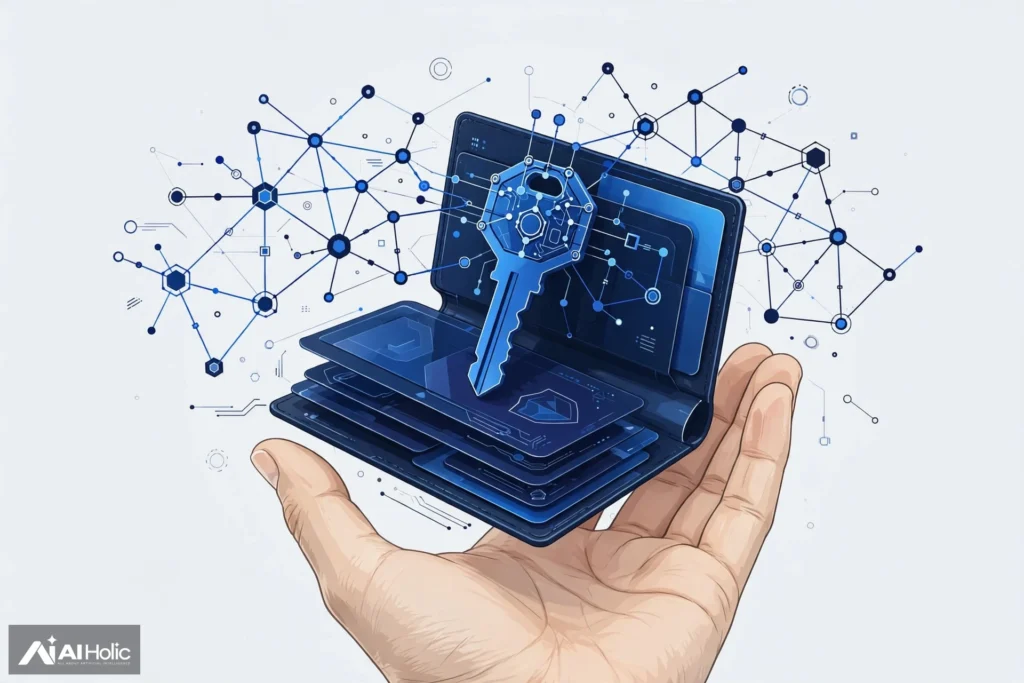
The identity layer answers the next question. Anonybit is a company focused on decentralized biometric identity, and its approach splits biometric data into encrypted fragments spread across separate locations. No single database holds a complete voiceprint or faceprint, so a breach of one store does not hand over usable identities.
Verification then happens without rebuilding the full record in one place. That choice is what makes the identity layer different from a conventional biometric database. The decision layer ties the two together, receiving a voice risk signal and an identity match result at the same time, then applying policy.
A low-risk call proceeds on its own. A mixed signal triggers a step-up check, such as a push notification to a registered device. A high-risk call is blocked or sent to a human, and that graduated response matters, because blocking every uncertain call would break legitimate service just as surely as letting fraud through.
| Layer | Question it answers | What it protects |
|---|---|---|
| Voice analysis (Pindrop-style) | Is this a live human voice or a clone | Against synthetic audio and agent callers |
| Decentralized identity (Anonybit-style) | Is this person who they claim to be | Against stolen biometric databases |
| Agentic decision layer | What should happen next | Against unchecked autonomous actions |
Why Voice Fraud Made This Stack Necessary
Contact center fraud was already expensive before voice cloning became easy. Coverage of Pindrop’s 2025 Voice Intelligence and Security Report puts one in every 599 calls as involving some fraud attempt by the end of 2024, with projected losses of 44.5 billion dollars for 2025. Those are vendor-reported figures, so treat them as one source’s measurement rather than a settled total.
Regulator data tells a similar story at a wider scale. The US Federal Trade Commission reported 12.5 billion dollars in total fraud losses for 2024, with imposter scams the most reported category. Voice fraud is only one slice of that total, but it is the slice where a cloned voice turns a routine call into a trusted channel for theft.
The newest pressure comes from agents calling agents. Pindrop’s BotStopper launch coverage reports AI-powered attacks against contact centers rising nearly 1,680 percent since late 2024, across more than 700 million interactions the company analyzed. That figure is again a vendor report, but the direction matches what security teams describe, a shift from human callers reading scripts to machines placing calls at machine scale.
That shift changes the question a contact center must answer. It is no longer only whether the voice sounds fake. It is whether the caller is a machine, which machine it is, whom it represents, and what it should be allowed to do, and that wider question is what agentic ai pindrop anonybit is built to answer.
How the Three Layers Work Together on One Risky Call
Picture a customer calling a bank to authorize a wire transfer. The caller sounds exactly like the account holder, because the voice was cloned from public audio. Nothing in the words raises suspicion, and the account details offered are correct.
A password check would pass, and a polite agent would proceed. In a layered design, the voice check runs the moment the call connects. Acoustic analysis looks for the physical traces of synthetic speech, such as resonance patterns and timing gaps that cloned audio struggles to reproduce.
If the voice fails that liveness test, the agent layer can block the transfer before any money moves. The identity layer never even needs to be consulted in that case. If the voice passes, the identity layer takes over, matching biometric fragments across distributed stores without assembling a complete voiceprint anywhere.
A match confirms that the person behind the call is the account holder, at least as far as the stored fragments can prove. A mismatch sends the call to a step-up path instead of straight through. The agent layer then makes the final call, and this is where agentic ai pindrop anonybit earns its name as a design rather than a product pitch.
It weighs both signals against policy for this transaction type, this amount, and this channel. A low-risk routine request proceeds without friction. A high-value transfer with any conflicting signal pauses for human approval.
Every decision is logged with the signals behind it, so the bank can show an auditor why this call was allowed and a similar one was not. Notice what the design does not do. It does not ask the customer to recite a password on a call that may already be compromised, and it does not store a single master voiceprint that becomes a prize for attackers.
Where the Model Falls Short
Honest coverage includes rough edges, and one independent-style test report makes the point well. The author ran the same voice recording through two tools and got two verdicts, one strongly human and one flagging possible synthetic manipulation. That gap is a warning, because a system that cannot explain why its layers disagree produces decisions that are hard to defend in an audit.
Latency is a second practical limit. The same test report notes that decentralized matching added roughly 400 milliseconds per call in that author’s setup. That is a small delay on its own, but on a live customer service line it adds up, and it competes with the real-time promise of the voice layer.
Teams should measure the full round trip on their own traffic rather than trusting a marketing page, since vendors rarely publish latency figures side by side. Integration effort is a third limit, and it is the one buyers most often underestimate.
Voice products built for enterprise phone systems assume infrastructure smaller teams may not run, such as session handling for large call volumes. Mapping concepts across platforms can consume days before a single real call is checked. A pilot on real traffic, not a vendor demo, is the only reliable way to size that effort.
Finally, the stack is only as strong as its policy layer. An agent that can act on its own needs limits written by humans, and those limits need owners, reviews, and expiry dates. A team that deploys voice checks and decentralized identity but lets agents run without approval thresholds has bought strong locks and left the door open.
Governance is the unglamorous layer that decides whether agentic ai pindrop anonybit matters in practice. Without it, strong checks produce confident decisions that nobody can explain, and that is worse than an honest admission that a call needs a human.
Building Trust: A Practical Checklist for Teams
Building trust with agentic ai from pindrop means starting from the trust problem rather than the product catalog. Before comparing vendors, write down which actions your agents may take, which of those actions move money or data, and which ones need a human in the loop no matter what the scores say. That list becomes the policy your decision layer enforces.
- Separate identity from reasoning. The agent plans and acts, while a separate trust boundary verifies identity, scores risk, and gates tools.
- Gate every tool call, not just login. A verified login says nothing about a risky action ten minutes later.
- Require approval for high-risk steps. Payments, record changes, and outbound messages need a human or a second factor above a set threshold.
- Log every decision with its signals. An auditor should be able to replay why an action was allowed, paused, or blocked.
- Never store a full biometric record in one place. Fragmented storage limits the damage if one store is breached.
- Measure on real traffic. Pilot with live calls, measure latency end to end, and record where the layers disagree.
Our guide to AI powered workflows shows the same discipline at smaller scale, where one clear workflow, one owner, and one measure of success beat five half-built systems. The same rule applies to agentic ai pindrop anonybit, since a trust layer that nobody owns will drift the same way an unowned workflow does.
Governance deserves its own line in the plan. Our explainer on a unified AI governance architecture puts policy, approval, monitoring, and evidence in one shared layer.
| Before you commit, ask | A good answer looks like |
|---|---|
| What happens when the layers disagree | A written rule, such as denial wins, plus an explanation the team can audit |
| What the full latency is on live calls | A measured number from your own pilot, not a sales deck |
| Where biometric data lives | Fragmented storage with no single complete record |
| Who owns the policy | A named owner, a review date, and an expiry rule |
| How a blocked legitimate caller recovers | A fast human path that does not punish real customers |
Frequently Asked Questions
Is this a product I can buy from one vendor?
No, and any pitch that sells agentic ai pindrop anonybit as one product deserves a second look. Pindrop sells voice security products, Anonybit sells decentralized identity infrastructure, and the agentic layer is software your team or your platform builds around them. Treat the phrase as a design pattern, then evaluate each layer on its own evidence.
What does agentic commerce have to do with this?
When agents buy and pay on behalf of people, trust becomes a transaction problem, not just a login problem. Agentic commerce describes autonomous agents executing purchases and payments with no direct human interaction, and that world needs exactly the identity, authorization, and audit trail this stack provides. The Open University glossary defines AI agents as software systems that perceive their environment, decide, and act toward goals on their own, which is why their actions need stronger proof than a password.
How should a small team start?
Start with one high-risk action, such as payment authorization or account recovery, and put a human approval step behind it. Add voice and identity checks to that single path, measure latency and false alarms on real traffic, and only then extend the pattern. Our comparison of agent development platforms is a useful reminder to separate similarly named tools before you commit, since names in this field mislead as often as they inform.
Conclusion
Agentic ai pindrop anonybit is best read as a discipline, not a purchase. Check the voice, check the identity without centralizing it, and gate every agent action on both signals with a policy humans own. Build that discipline one high-risk action at a time, and trust will follow the evidence rather than the pitch.