AI Search Marketing DC: How Washington Businesses Win in AI Answers
If you don’t want to read the whole guide or have difficulty reading, you can listen to this guide instead.
If you run a business in Washington, ai search marketing dc is the work of making sure AI answers mention you when nearby customers ask for help. More people now ask ChatGPT, Perplexity, or Google AI Overviews for a recommendation instead of scrolling through ten blue links. When the answer names three businesses and yours is missing, you never even get the click, and this guide explains what changed, what to fix first, and what to expect.
At AI Holic, we focus on practical steps a small team can actually finish. You do not need a new website or a large budget to start. You need accurate listings, clear service pages, honest reviews, and content that answers real customer questions, and the rest of this guide walks through each piece in order.
The Short Answer
In practice, ai search marketing dc rewards businesses that are easy to understand, easy to verify, and easy to trust. That means consistent business details everywhere, a website that states plainly what you do and where you do it, and reviews that confirm you do it well. If any of those three pieces is weak, AI answers will skip you in favor of a competitor that is clearer.
AI Search Marketing DC: What Changed for Local Discovery
Traditional search gave the customer a list of links and let them choose. AI search gives the customer an answer, and the answer often names only a few businesses. That shift is the whole story, because being tenth on a list still brought some visitors, while being left out of an answer brings none.
For a DC business, ai search marketing dc starts with understanding that customers now ask full questions instead of typing short keywords. They ask for the best plumber near Capitol Hill, a quiet cafe in Georgetown for working, or a dentist open on Saturday in Adams Morgan. The answer engine must match a real business to a real place and a real need.
The District adds its own twist, because neighborhood names carry real weight here. A customer in Dupont Circle and a customer in Anacostia are asking about different places, even when they use the same service words. Pages and listings that name the neighborhoods you truly serve help answer engines place you correctly.
How AI Answers Pick Local Businesses
AI answers are built from sources the system can find, read, and trust. Those sources include your website, your business listings, review sites, local directories, news mentions, and social profiles. When several sources agree about who you are and what you do, the system can name you with confidence.
When sources disagree, the system usually plays safe and picks someone else. A website that says you serve all of Virginia, a listing that says you are closed on Sundays, and a review page that lists an old phone number do not add up to a clear picture. Consistency across sources is not a small detail, since it is the evidence the answer is built on.
The practice of shaping content so AI systems can find it and cite it is often called generative engine optimization. Generative engine optimization covers the same idea under several names, including answer engine optimization and AI SEO. Google has said publicly that optimizing for generative AI search is still SEO at its core, which means the basics still matter most.
Local search has its own version of this story, and local search engine optimization explains how businesses appear for geographically constrained searches. The local pack, the map results, and the organic listings all draw on the same business details. AI answers then reuse those details when they recommend a nearby business.
Fix Your Local Foundations First
Before you spend on ai search marketing dc services or write a single new page, audit the facts that every system reads about you. Open your Google Business Profile, your website contact page, and your main directory listings side by side. Your business name, address, phone number, hours, and service area must match exactly on all of them.
Small mismatches cause real damage, because machines do not forgive them the way people do. A suite number missing on one listing, a different phone format on another, and an old address on a third can look like three different businesses. Fix the mismatches, then keep one master copy of your details for every future update.
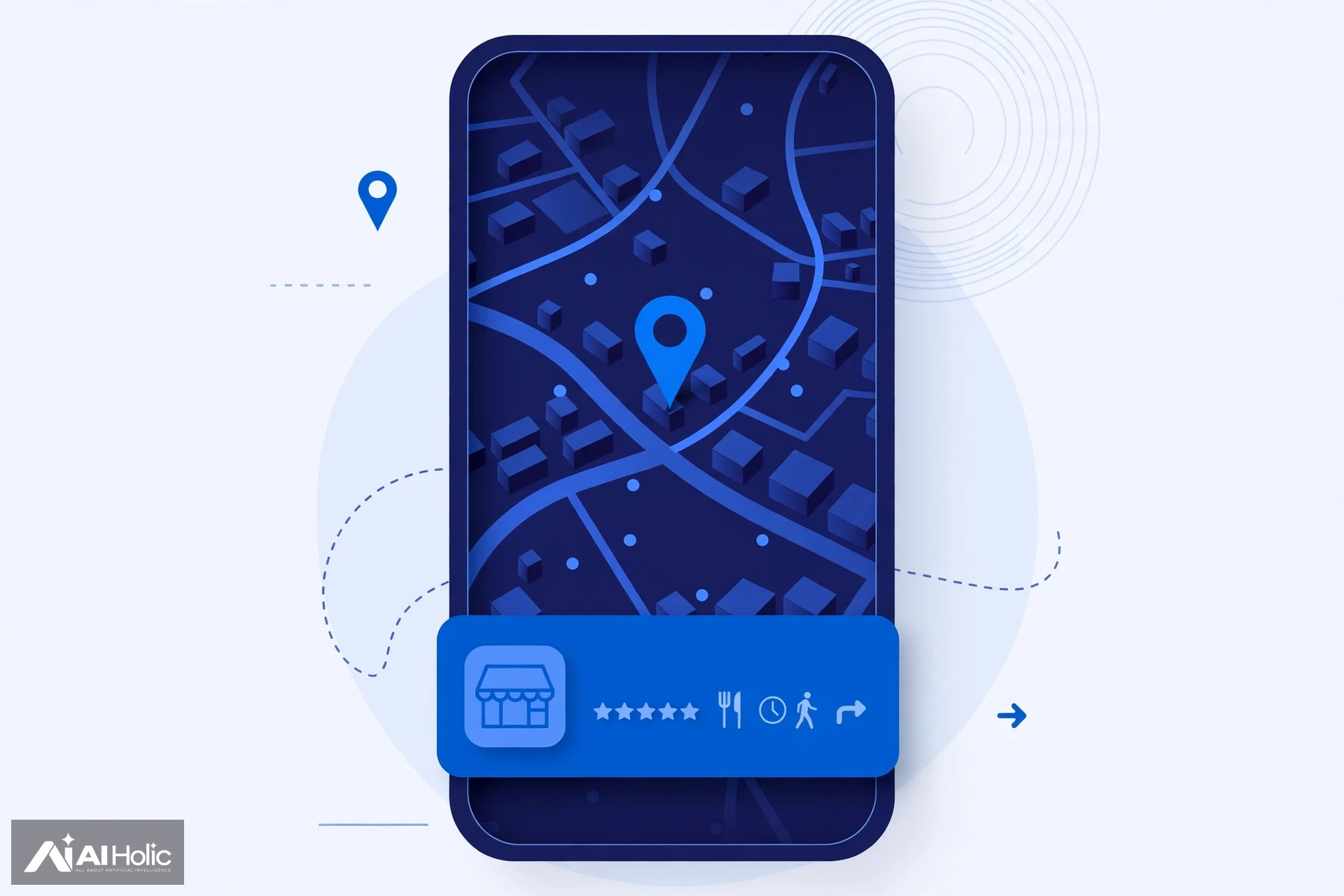
Your Google Business Profile deserves a full hour of attention, since it feeds maps, local results, and many AI answers. Fill in every section, including services, attributes, photos, and a clear business description. Add fresh photos of your real premises, your team, and your work, and post a short update at least once a month.
| Foundation item | What good looks like | Check how often |
|---|---|---|
| Business name and address | Identical on website, profile, and directories | Every quarter |
| Phone number and hours | Current, including holiday hours | Every month |
| Services list | Plain words customers actually use | Every quarter |
| Photos | Recent, real, and clearly labeled | Every month |
| Service area | Only neighborhoods and areas you truly serve | Every quarter |
| Website contact page | Same details plus a simple contact form | Every quarter |
Your website needs one clear page per core service, written in the words customers use when they ask for help. A single page that lists twenty services in bullet points helps nobody, since neither people nor AI systems can tell what you actually specialize in. Give each main service its own page with a plain description, the area served, and a clear next step.
Content That AI Answers Can Quote
AI systems quote pages that answer a question directly and back the answer with specifics. Start each service page and each article with a short, direct answer in the first paragraph. Then support it with details only a real local business would know, such as typical timelines, what a visit involves, and what affects the price range.
Write from the questions your customers already ask on the phone, in email, and at the counter. Those questions are your best content plan, because they match the way people now ask AI tools for help. A page that answers how long a job takes, what it costs, and what to prepare will always beat a page full of generic claims about quality.
Facts beat adjectives on every page. Instead of calling yourself the best in the city, show proof a reader can check, such as years in business, number of jobs completed, licenses held, or neighborhoods served. AI systems favor checkable detail, and customers do too, because anyone can claim quality while few can show it.
For DC businesses, ai search marketing dc also means writing about the city honestly. Mention real neighborhoods, real landmarks, and real local conditions only where they genuinely matter to the service. A plumber who explains how older rowhouses in Capitol Hill affect pipe work is giving useful local knowledge, while a page that stuffs neighborhood names into every sentence is not.
Reviews and Reputation in AI Answers
Reviews are one of the strongest trust signals an AI answer can read, because they come from customers rather than from you. A steady stream of recent, detailed reviews tells the system that your business is active and that real people are happy with it. A profile with no reviews from the last year looks dormant, even if the business is busy.
Ask for reviews at the moment customers are happiest, which is usually right after a job is finished or a problem is solved. Make the request simple, with one link and one sentence, and never offer payment or discounts in exchange for a review. Paid reviews break platform rules and damage trust when they are discovered.
Reply to every review, including the unhappy ones, in a calm and specific way. Thank happy customers by name where the platform allows it, and answer complaints with a concrete next step rather than a defensive reply. Future customers read your replies as closely as the reviews themselves, and AI systems read them too.
A Simple 30-Day Plan for DC Businesses
A plan works only if a busy owner can finish it, so this one keeps each week to a few clear tasks. Work through it in order, and do not skip the foundations to get to the more exciting content work. The later weeks depend on the earlier ones being true.
| Week | Tasks | Done when |
|---|---|---|
| Week 1 | Audit listings, fix mismatches, complete Google Business Profile | Every listing matches your master copy |
| Week 2 | Rewrite service pages with direct answers and real details | Each main service has its own clear page |
| Week 3 | Start review requests, reply to all recent reviews | Requests go out after every job |
| Week 4 | Publish two question-based pages, add one location page | New pages answer real customer questions |

Measuring AI Search Visibility Without Guesswork
Measurement is where most AI search advice falls apart, because there is no single dashboard that shows every AI answer. The honest approach is to combine several small checks into one monthly routine. Together, they show whether your visibility is moving in the right direction, even if no single number tells the whole story.
Start with a fixed list of ten questions your customers actually ask, including a few with neighborhood names. Ask each question to two or three AI tools once a month, in a fresh session, and record whether your business is named, cited, or missing.
Track your traditional signals alongside the AI checks, since they feed the same systems. Watch Google Business Profile views, calls, direction requests, and website visits from local searches. If AI mentions rise while calls stay flat, your listing details or your offer may need work rather than your visibility.
For DC businesses, ai search marketing dc measurement should separate neighborhood results, since a strong showing in one part of the city says nothing about another. Run your monthly questions with different neighborhood names included, and note where you appear and where you do not. That split shows you where to focus next.
Paid ads need the same measurement discipline. Our guide to ai advertising infrastructure explains the five layers behind every campaign — data, conversion signals, creative, bidding, and measurement — and how a creative ID links each result back to the ad that produced it. Read it before your next campaign, so your measurement habit covers paid ads as well as AI search.
Mistakes That Waste Money
The second mistake is publishing large volumes of generic AI-written content. Pages that repeat the same claims as every competitor add nothing a system can quote, and they dilute the strong pages you already have. One accurate page written from real experience beats fifty pages that say nothing specific.
Small businesses can learn from how other owners use AI day to day, and our guide on how to use AI to grow a photography business shows a practical weekly rhythm built on saved time. The same discipline applies here, since AI search rewards steady habits rather than occasional bursts of effort.
Growth also creates admin work that needs its own system, and our guide to AI invoicing for freelancers explains how solo operators keep billing clean as work increases. For founders weighing whether to hire, outsource, or lean on AI, our guide on hiring, outsourcing, or using AI for a startup lays out the trade-offs function by function.
Frequently Asked Questions
What is AI search marketing for a DC business?
In plain terms, ai search marketing dc is the work of making your business visible when AI tools answer local questions. That means accurate listings, clear service pages, honest reviews, and content that answers real customer questions. The goal is to be named in the answer, not just ranked on a list of links.
How is AI search different from traditional SEO?
Traditional SEO competes for a position on a results page, while AI search competes for a mention inside a written answer. The answer usually names only a few businesses, so clarity and trust matter even more. The foundations overlap heavily, since both draw on the same listings, pages, and reviews.
How long does it take to appear in AI answers?
There is no fixed timeline, and anyone promising one should be doubted. Most businesses see gradual movement over several weeks as listings, pages, and reviews align. Treat the first month as foundation work and judge progress from your second monthly check onward.
Can AI search replace my Google Business Profile work?
No, and the opposite is true, since your profile feeds many AI answers. A complete profile with current hours, services, photos, and reviews is one of the strongest inputs an answer engine can read. Neglecting it while chasing AI tactics is the fastest way to stay invisible.
What should I do if an AI tool describes my business wrongly?
Fix the source of the error first, since the answer usually repeats something it read somewhere. Check your website, your profile, and your directory listings for the wrong detail, and correct it everywhere. Then publish a clear, current page that states the correct facts in plain words.
Conclusion
For Washington businesses, ai search marketing dc comes down to being clear, consistent, and trusted across every source an answer engine reads. Fix your listings, sharpen your service pages, earn honest reviews, and measure monthly. Do that steadily, and you give AI answers every reason to name you.