AI Character Cards: What They Are and How to Make Your Own
If you don’t want to read the whole guide or have difficulty reading, you can listen to this guide instead.
You can think of ai character cards as short, structured profiles that tell an AI tool who a character is, how the character talks, and what the character should never do. You paste the profile into a chat, roleplay, story, or image tool, and the tool uses it as a steady reference for every reply. At AI Holic, this guide shows you how to write one that works, with fields, examples, and a checklist you can reuse.
You do not need special software to start. A plain text note works, and you can test it in any chat tool you already use. The rest of this guide covers the fields that matter, four worked examples, the mistakes that spoil good cards, and the limits you should accept before you rely on one.
What AI Character Cards Are
A character card is a profile, not a script. It does not list every line the character will say. It gives the tool enough fixed facts to stay in character across a long chat or story.
Cards work because AI tools follow the context you give them. When the same facts appear at the start of every session, the answers stay closer to the character you planned. When the facts are missing, the tool fills the gaps on its own, and the character drifts.
A card is a form of prompt engineering, the practice of shaping the input you give a model so its output matches your goal. The card itself is the input, and the replies are the output. That simple link explains why small changes to a card can change every reply that follows.
You will see cards used in four main places. Writers use them to keep a cast steady across chapters. Roleplayers use them to set a chat partner, game makers use them for non-player characters, and brands use them for mascots and support voices.
What a Good Card Contains
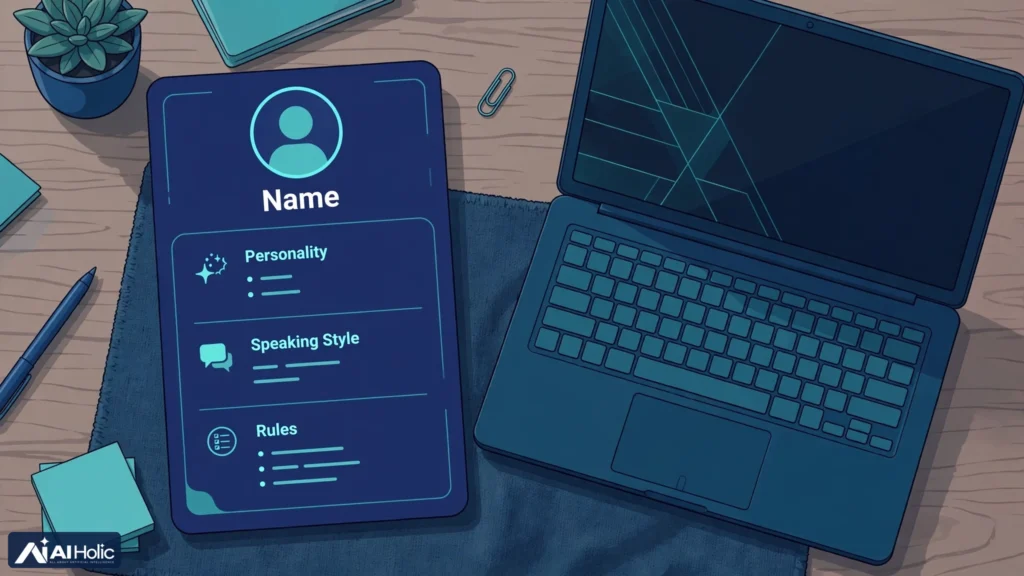
A good card answers six questions: who the character is, what the character wants, how the character talks, what the character knows, what the character will not do, and how the character relates to others. If a field does not help answer one of those questions, cut it. Long cards look complete, but tools follow short, clear facts more reliably than long essays.
| Field | What to write | Keep it short by |
|---|---|---|
| Name and role | One name and one job, such as a lighthouse keeper or a shop owner | One line only |
| Goal and drive | What the character wants most, in one sentence | Name a single want, not five |
| Voice and tone | How the character talks, with two or three rules | Short rules, not long essays |
| Backstory | Two or three lines of past that explain the present | Only facts that change behavior |
| Knowledge and limits | What the character knows and what it cannot do | Two short lists |
| Boundaries | Topics and actions that stay off limits | Plain no statements |
| Sample lines | Two lines the character might actually say | Real lines, not slogans |
Backstory deserves a warning. Two or three lines of history beat a full life story. A long past gives the tool more facts to mix up, and mixed-up facts break a character faster than missing facts do.
How to Write One, Step by Step
- State the job. Write one sentence that states the character’s job. If you cannot state the job in one sentence, the card is not ready yet.
- Add voice rules. Add three voice rules, such as short sentences, plain words, and one joke per reply at most.
- List knowledge and limits. List what the character knows and two things it cannot do. Limits shape a character as much as skills do.
- Set boundaries. Set two or three hard boundaries in plain words. A boundary like never give medical advice leaves no room for guessing.
- Add sample lines. Add two sample lines in the character’s voice. Sample lines teach tone faster than a paragraph of rules.
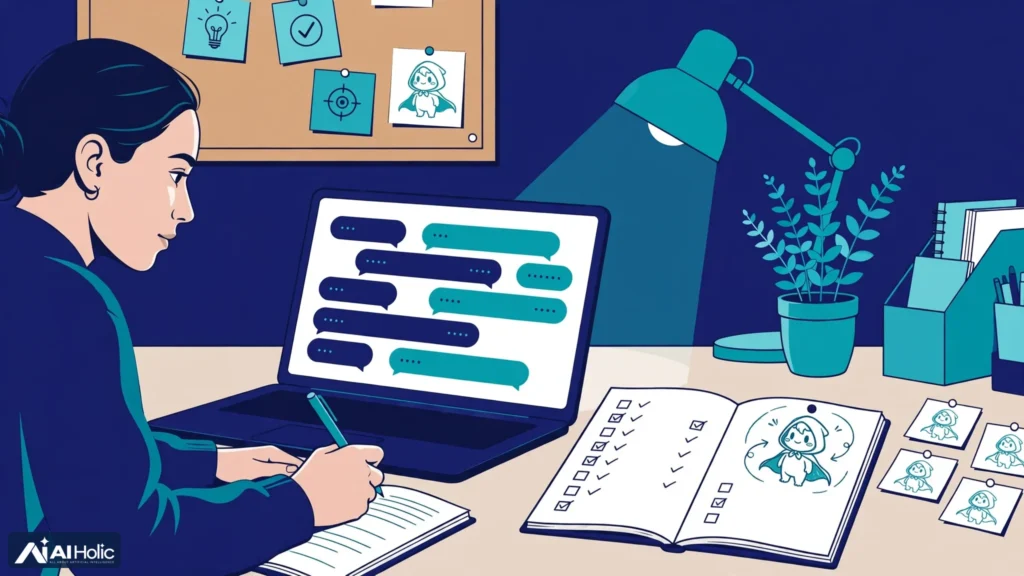
- Test with five prompts. Test the card with five prompts in a fresh session. Note every reply that breaks character, then fix one field and test again.
- Keep change notes. Keep a short note of each change you make. Notes stop you from re-testing a fix that already failed.
If a sample line sounds stiff, the checks in our ai sentence rewriter guide help you tighten it without changing its meaning. Short lines test better than long ones, so trim before you blame the tool.
Examples by Use
The four examples below show how ai character cards change with the job. The core fields stay the same, but the weight of each field shifts. A game card needs hard rules, while a story card needs voice and past.
Story writing
Mara is a lighthouse keeper who fears the sea she guards. Her card lists her job, her fear, her blunt voice, and one rule: she never leaves the light unmanned. Her backstory is two lines about a storm that took her brother, and that past explains her fear in every scene.
For a full manuscript, our guide to book analysis tools for authors shows how to check your cast notes against the whole draft. A card keeps one character steady, while a full check keeps the whole cast steady.
Roleplay chat
A roleplay tutor card names the tutor, the subject, and the age of the learner. Its voice rules call for short answers, one question at a time, and praise for effort rather than speed. Its boundary is firm: it never gives test answers, and it explains the steps instead.
Games
A shopkeeper card for a game lists goods, prices in the game world, and lines for greeting, haggling, and closing. Its hard rule is that the shopkeeper never leaves the shop and never talks about the world outside the town. Those limits keep the player in the game world, and they stop the character from inventing places that do not exist. If you want a companion that watches your game as well as chats, our questie ai alternative guide compares the seven best options.
Brand mascots
A mascot card for a bakery names the mascot, its cheerful voice, and its job of greeting visitors. Its boundaries say it never talks about prices it does not know and never gives health advice. A mascot card protects a brand because every reply stays inside lines the brand approved.
Common Mistakes
Most weak cards fail in the same five ways, and each one is easy to fix. Read the list before you test, and you will save yourself a round of rework.
- Writing a life story instead of a card. Cut every fact that does not change an answer.
- Using vague voice words like friendly with no rules behind them. Add rules such as short sentences and plain words.
- Leaving out boundaries and hoping the tool guesses them. Tools do not guess well, so state each limit in plain words.
- Contradicting yourself across fields. A shy character with loud sample lines will break fast, so read the card once for clashes before you test it.
- Copying a card you found online without testing it in your own tool. A card that works in one tool can fail in another.
A card does not hide machine-written text, and our ai detection tool guide explains why detector scores stay unreliable. Use the card to shape your own writing, not to pass it off as something it is not.
Template and Checklist
Copy this template each time you start a new set of ai character cards. Fill every line before you test, and leave a line blank only when it truly does not apply. A half-filled card tests badly, and you will blame the tool for a gap you left yourself.
| Check | What good looks like |
|---|---|
| One-sentence job | You can say the character’s job in a single line |
| Three voice rules | Tone rules a stranger could follow |
| Goal stated | One want, written in plain words |
| Boundaries listed | Two or three plain no statements |
| Two sample lines | Lines that sound like the character, not like you |
| Five test prompts run | Notes kept on every break in character |
| One fix per round | Only one field changed between tests |
Use this blank template for your next card:
- Name:
- Role:
- Goal:
- Voice (three rules):
- Backstory (two lines):
- Knows:
- Will not:
- Sample line 1:
- Sample line 2:
Honest Limits
A card does not guarantee steady output. Models still drift in long chats, forget facts, and blend traits from two characters. Treat the card as a strong nudge, not a lock.
Test each card before you trust it. Run the same five prompts in a fresh session and note where the character breaks. Fix one field, test again, and keep notes on what changed.
If a card fails the same test three times, rewrite it from scratch instead of patching it again. A fresh card often beats a patched one, because patches add clashes the tool cannot resolve.
Cards also carry a safety duty. A card that tells a tool to act as a real person, give medical advice, or hide its nature can cause real harm. State the limits in plain words, and never use a card to trick someone into thinking a machine is human.
Frequently Asked Questions
Do ai character cards work in every AI tool?
Most chat, story, and image tools accept pasted text, so a plain text card works in most of them. Some tools have a fixed card format or a field limit, so check the tool’s own guide first. Keep a short version of your card for tools with tight limits, and a full version for tools that accept longer input.
How long should a card be?
Aim for 150 to 300 words. Shorter cards get followed more closely, while longer cards give the tool more room to mix facts up. If your card passes 400 words, cut the weakest third and test again.
Can I reuse one card for stories and games?
Yes, if you adjust the fields that change. The name, voice, and goal can stay the same, but the setting, knowledge, and boundaries must match the new use. Test the reused card in the new setting before you rely on it.
Do I need to pay for a card maker?
No, a plain text file works as well as any paid maker for most uses. Paid tools can help with portraits or large casts, but the card itself is just text. Start free, and pay only when a tool saves you real time.
Conclusion
Start with one short card, test it with five prompts, and fix one field at a time. That loop turns ai character cards from a nice idea into a tool you can trust for stories, chats, games, and mascots. Keep the card short, keep the boundaries clear, and let the tests decide what stays.
If you want to build a character before you chat, our guide to AI character cards explains the fields that shape how a character replies and the same ideas apply when you create a character in hammer ai.