AI Supply Chain Risk Monitoring Cybersecurity Third Party: A Practical Guide for 2026
If you don’t want to read the whole guide or have difficulty reading, you can listen to this guide instead.
Your own security can be strong while a supplier lets attackers in. That is the problem behind ai supply chain risk monitoring cybersecurity third party work: watching the vendors, cloud services, and software providers your business depends on, around the clock, for signs of cyber risk. This guide explains how AI does that watching, what the scores and alerts mean, and how a small team can start.
At AI Holic, we read the guides, vendor pages, and official frameworks behind this topic so you do not have to. You will get a plain definition, the shift from yearly questionnaires to live monitoring, the main tools and scores, the rules that drive adoption, and a short starter plan. No security background is needed.
AI Supply Chain Risk Monitoring Cybersecurity Third Party: The Short Answer
Third-party risk management, often called TPRM, is the work of checking the security of outside firms you rely on. That includes software vendors, cloud providers, payment processors, and parts suppliers. When one of them is breached, your data and your systems can be hit too.
In plain words, ai supply chain risk monitoring cybersecurity third party means using AI to watch those outside firms all the time instead of checking them once a year. The AI pulls in signals such as open ports, leaked passwords, expired certificates, and breach news, then turns them into scores and alerts. Your team acts on the worst signals first and leaves the rest for later.
What Third-Party Risk Actually Covers
Third-party risk is wider than hacking alone. Third-party management covers information security, compliance, operations, finance, reputation, and legal risk from outside firms. A vendor can hurt you by getting breached, by breaking a rule, by going out of business, or by simply stopping work.
The chain also runs further than your direct vendors. Your vendor’s own suppliers and subcontractors are called fourth parties, and a weakness there can still reach you. Mapping the chain matters because a risk you cannot see is a risk you cannot fix.
The Main Risk Types
| Risk Type | Example | What AI Watches |
|---|---|---|
| Cyber risk | Vendor server with an open port | Outside scans and patch timing |
| Compliance risk | Vendor loses an ISO 27001 certificate | Certificate and audit feeds |
| Operational risk | Key supplier stops deliveries | News and service signals |
| Financial risk | Vendor runs out of cash | Credit and payment signals |
From Annual Questionnaires to Continuous Monitoring
The old way was a long security questionnaire once a year, plus a review of whatever papers the vendor sent. That check went stale the next day, since a vendor can change settings, miss a patch, or lose a certificate at any time. ai supply chain risk monitoring cybersecurity third party replaces that single snapshot with a live feed that updates as signals change.
Only 34 percent of IT security professionals are confident that vendors would tell them about a breach, according to a figure cited by CyberSierra from IronNet. That trust gap is the core reason teams move to outside checks they can verify themselves. A score built from public signals does not depend on a vendor’s word.
The numbers behind the shift are stark: one industry report put the 2025 share of breaches involving a third-party supplier at nearly 30 percent, about double the year before. Another report, the Verizon 2026 Data Breach Investigations Report cited by Cranium AI, puts the figure at 48 percent. The two numbers come from different data sets, so read them as a range, not as one settled fact.
How Security Ratings Work
A security rating grades a vendor from the outside, much like a credit score grades a borrower. The platform scans public signals such as open ports, DNS settings, certificate health, patch timing, and leaked credentials, then rolls them into one number. The score answers a narrow question: how likely is this vendor to be breached, and how fast would that affect you.
The three best-known rating platforms use different scales, so their numbers cannot be compared directly. BitSight scores from 250 to 900, SecurityScorecard scores from 0 to 100 with A to F letter grades, and UpGuard scores from 0 to 950. Pick one scale for your whole program and track how each vendor moves over time, not the raw number alone.
| Platform | Scale | Known For |
|---|---|---|
| BitSight | 250 to 900 | Ratings used by insurers and large banks |
| SecurityScorecard | 0 to 100, A to F grades | Ten risk factors with weekly updates |
| UpGuard | 0 to 950 | Ratings plus questionnaires and breach detection |
Unauthorized access accounts for over 40 percent of third-party breaches, according to CyberSierra, citing Black Kite. That is why ratings weigh access signals so heavily: open remote logins, leaked staff passwords, and weak email settings. A vendor that fixes those signals fast will see its score rise, which gives you a clear fact to discuss with them.
What AI Does With Questionnaires and Audit Reports
Questionnaires have not gone away, but ai supply chain risk monitoring cybersecurity third party changes how teams handle them. AI can send out standard forms such as SIG or CAIQ, pre-fill answers from past data, and score replies as they arrive. It can also read a vendor’s SOC 2 report and pull out the key risks in plain words.
The same check works in reverse. When a vendor says all data is encrypted, AI can look for proof in the audit report or in an outside scan, and flag answers that do not match the evidence. One article cites Gartner research that found AI-assisted questionnaires cut assessment times by around 65 percent and found nearly 50 percent more problem areas, so treat that as a vendor-cited claim, not as a tested fact.
This is also where AI agents for cybersecurity compliance auditing fit in, since much of the same reading and checking work applies to audit evidence. The goal is the same in both cases: spend human time on real risks, not on paperwork.
Attack-Surface and Dark-Web Monitoring
Attack-surface monitoring maps what a vendor exposes to the internet: domains, servers, cloud storage, and login pages. A new exposed port or an unpatched service shows up as a change in that map, often within hours. That speed is the point, since a hole found in hours can be fixed before it is used.
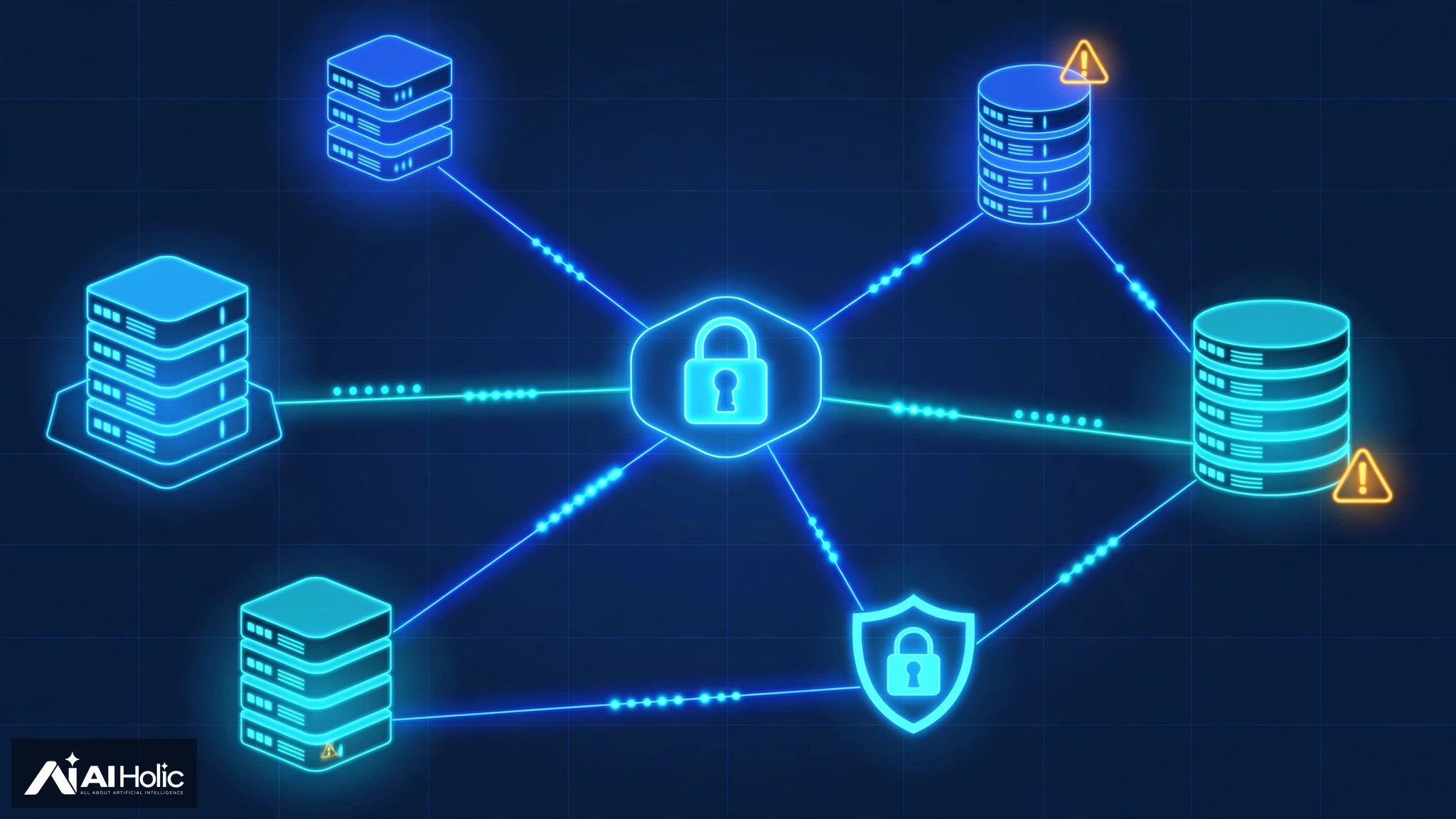
Dark-web monitoring adds a second feed. AI scans breach dumps and hacker forums for passwords, email addresses, and data tied to a vendor’s domain. If a vendor employee’s password appears in a leak, your team can ask for a reset the same day instead of learning about it months later.
Fourth-Party Risk: Your Vendor’s Vendors
A fourth party is a firm your vendor depends on, such as a cloud host, a payment processor, or a software library the vendor builds on. ai supply chain risk monitoring cybersecurity third party has to reach this layer, because an attack on a fourth party can shut down your vendor and hit you next. CyberSierra points to the 2022 Uber breach, carried out through a third-party vendor, as a reminder that the chain is only as strong as its weakest link.
Full visibility here is hard, since your vendor may not list its own suppliers. AI helps by mapping public links between firms, such as shared infrastructure, DNS records, and sub-processor lists. Start with your most critical vendors and ask each one to name its own key suppliers in the contract.
Rules That Push Teams Toward Continuous Monitoring
ai supply chain risk monitoring cybersecurity third party is not only a security choice, since several rules now expect it. In the EU, the Digital Operational Resilience Act (DORA) has applied since 17 January 2025 to financial firms and their ICT third-party providers. It asks firms to manage ICT third-party risk, keep a register of contracts, and set exit plans for critical providers.
In the US, the main guide is NIST SP 800-161, published in May 2022 and updated in November 2024. It sets out cybersecurity supply chain risk management in three tiers, from the whole organization down to single systems. ISO 27001 adds supplier controls of its own, and many contracts now ask vendors to show ISO 27001 or SOC 2 proof.
Rules keep changing, so check the current text before you rely on any summary here. The pattern is steady, though: regulators want proof of ongoing oversight, not a once-a-year form. That is why continuous monitoring has moved from a nice extra to a core part of the job.
How to Start in Six Steps
- List every vendor that touches your data or systems, then sort them by how much harm a failure would cause.
- Pull a security rating for your top ten vendors and record the scores in one sheet.
- Turn on alerts for big changes, such as a score drop, a leaked password, or an expired certificate.
- Automate your questionnaire for new vendors and set a review date for each one.
- Ask critical vendors to name their key suppliers and to tell you fast about any breach.
- Review the list every three months and drop vendors you no longer use.
That plan fits a small team with no TPRM tool yet, and it still works if you buy one later. The tool then takes over the scanning and the scoring, while your team keeps the decisions. This kind of staged plan fits the same pattern as a unified AI governance architecture, where small controls add up to one clear picture.
What AI Still Gets Wrong
AI is not magic, and its limits matter. Its scores depend on the data it can see, so a vendor with little public footprint gets a thin score, and a wrong feed can cause false alarms. A score can also miss what happens inside a vendor, such as weak staff training or poor code review, since no outside scan can see those.
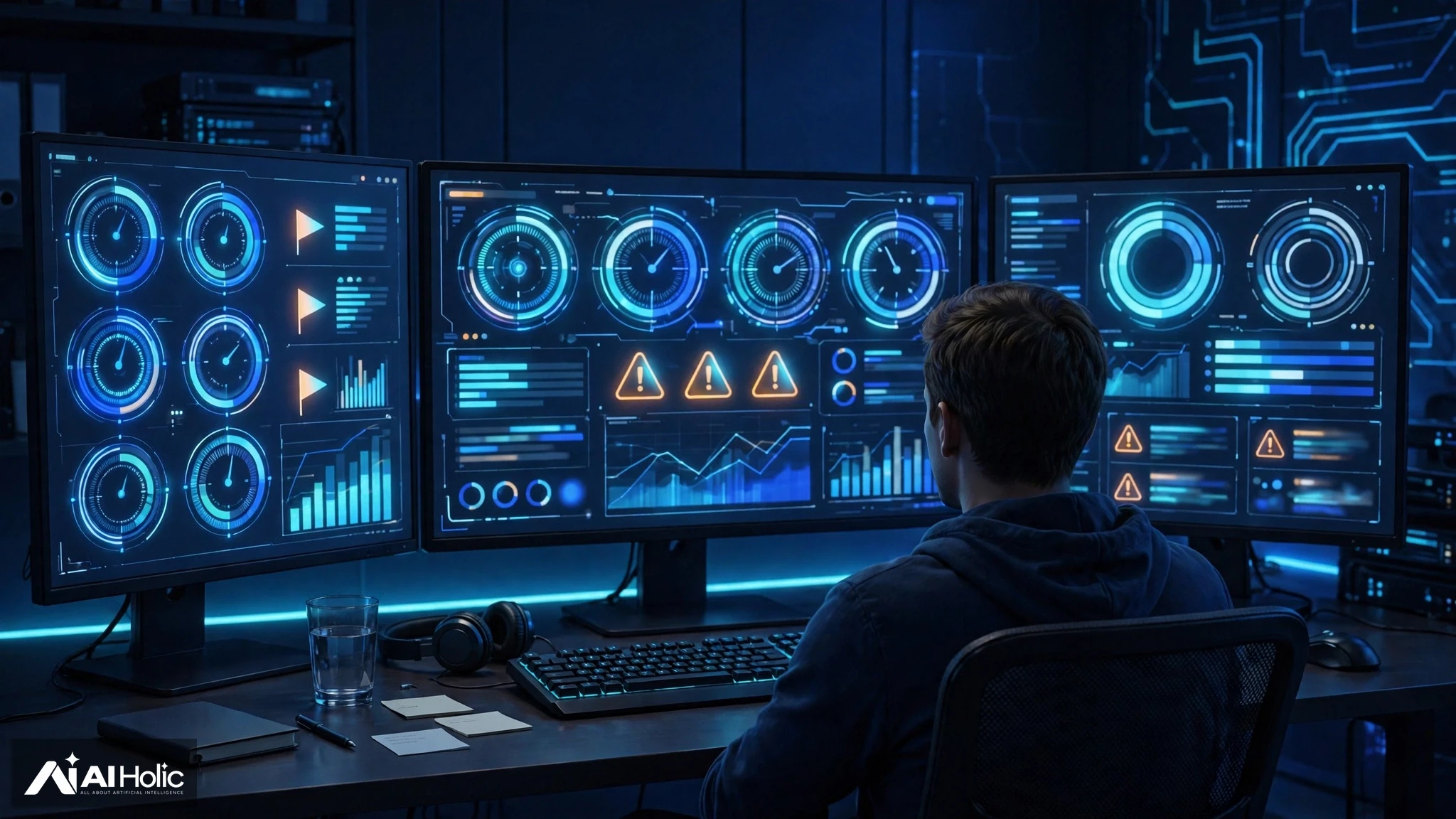
People still have to judge the alerts. A score that jumps 20 points needs a person to decide if it means a call to the vendor, a contract talk, or nothing at all. Weak oversight has real costs, and our look at AI governance failures shows how small gaps can turn into large incidents.
Frequently Asked Questions
What is AI supply chain risk monitoring?
It is the use of AI to watch vendors, suppliers, and service providers for cyber risk around the clock. The AI scans public signals such as open ports, leaked passwords, and breach news, then turns them into scores and alerts. It replaces a once-a-year questionnaire with a live picture of each vendor’s security health.
How are security ratings different from questionnaires?
A questionnaire asks a vendor to describe its own controls, so it shows what the vendor claims. A security rating measures what can be seen from the outside, such as patch timing and exposed services, so it shows what is true in public. Strong programs use both: ratings for live signals and questionnaires for the controls no scan can see.
What is fourth-party risk?
Fourth-party risk is the risk from your vendor’s own suppliers, such as the cloud host or payment processor your vendor relies on. You have no direct deal with these firms, yet their failure can shut down your vendor and reach you next. Good programs ask critical vendors to name their key suppliers and to report breaches fast.
Does ai supply chain risk monitoring cybersecurity third party replace security staff?
No, since AI handles the scanning, the reading, and the first pass at scoring, which is work no small team could do by hand for hundreds of vendors. People still decide what an alert means, when to call a vendor, and when to end a contract. Think of AI as a smoke alarm: it finds the smoke, but a person still has to act.
How much does a TPRM tool cost?
Prices vary widely and most vendors quote per vendor monitored, so there is no single number to give. One 2026 comparison lists UpGuard’s Standard tier at 1,750 dollars per month billed annually, while BitSight and SecurityScorecard are quote-based. Ask for a quote based on your vendor count, and check what is included before you compare prices.
Conclusion
In short, ai supply chain risk monitoring cybersecurity third party turns vendor security from a yearly form into a live watch. Start with your riskiest vendors, track their scores, and act on the worst signals first. The tools help, but the habit of checking is what keeps you safe.