Actors AI Explained: Synthetic Performers, SAG-AFTRA Rules, and AI Video Actors
If you don’t want to read the whole guide or have difficulty reading, you can listen to this guide instead.
A face you have never seen can now carry a whole scene. Software can build a performer from scratch, give it a voice and a walk, and put it on screen next to real people. actors ai is the short name for this kind of synthetic performer, and it sits at the center of a loud debate in Hollywood.
At AI Holic, this guide explains the idea in plain words. You will learn how these performers are made, why the Tilly Norwood story made news, what the actors union actually says, and how brands use synthetic faces in ads.
It is written for curious readers, not for engineers. No coding skill is needed to follow it, and every fact here comes from a named source.
| Question | Short answer |
|---|---|
| What is it | A performer built fully by software, with no human on screen |
| Who made the famous one | Particle6 built Tilly Norwood after about 2,000 tries |
| What the union says | Creativity should stay human centered, and synthetic performers must not replace people |
| Does the 2026 contract ban them | No, a producer must give notice and bargain first |
| Where brands use them | Script to video ads and short clips |
What Actors AI Means
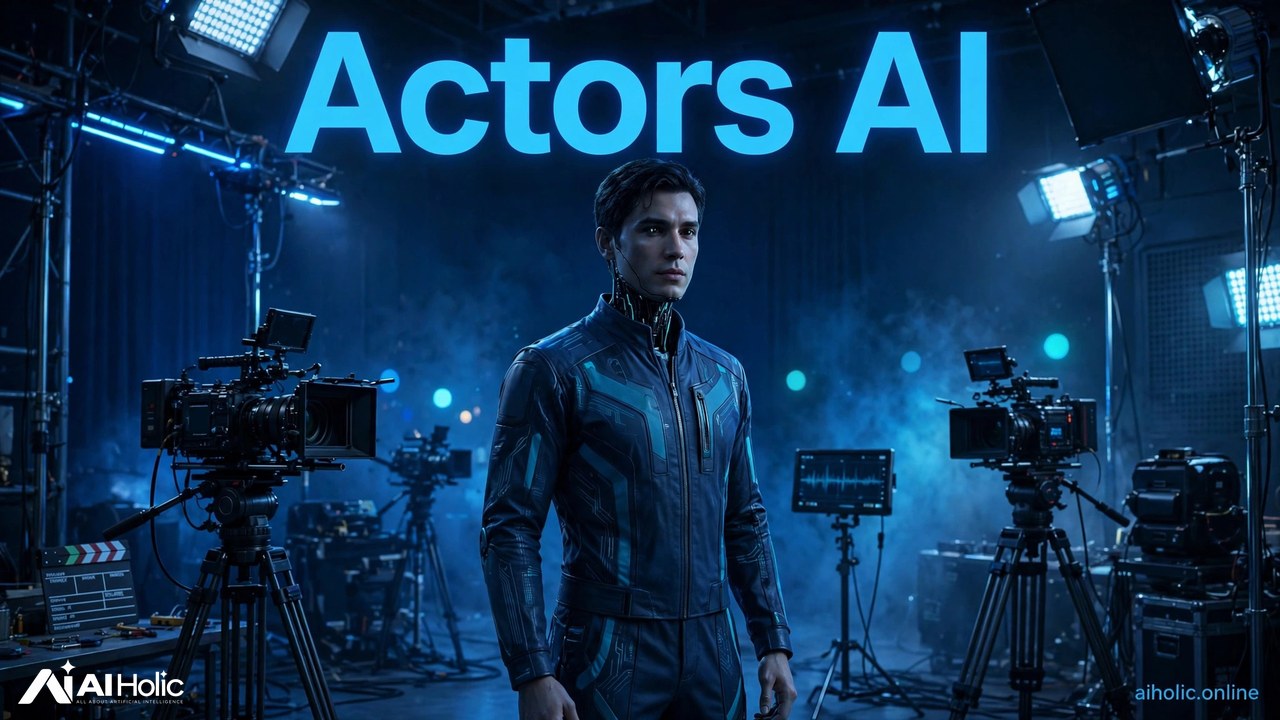
An AI actor is a performer that software builds from scratch. It has a face, a voice, and a way of moving, but no human stands in front of the camera. The result looks like a person on screen, yet every part of it comes from a computer.
SAG-AFTRA draws a clear line here. A synthetic performer is wholly synthetic and is not based on an actual performer. It is an AI made human role where no natural performer was hired, and it is not a digital copy of a real person.
That line matters because a copy of a real actor raises different questions. A copy needs that actor’s consent and pay, since it uses their face and voice. A wholly synthetic face raises questions about jobs, credit, and trust instead.
In October 2026, one actor appeared on screen next to his own AI double, and the stunt fed the same debate about what counts as a real performance.
How Actors AI Works
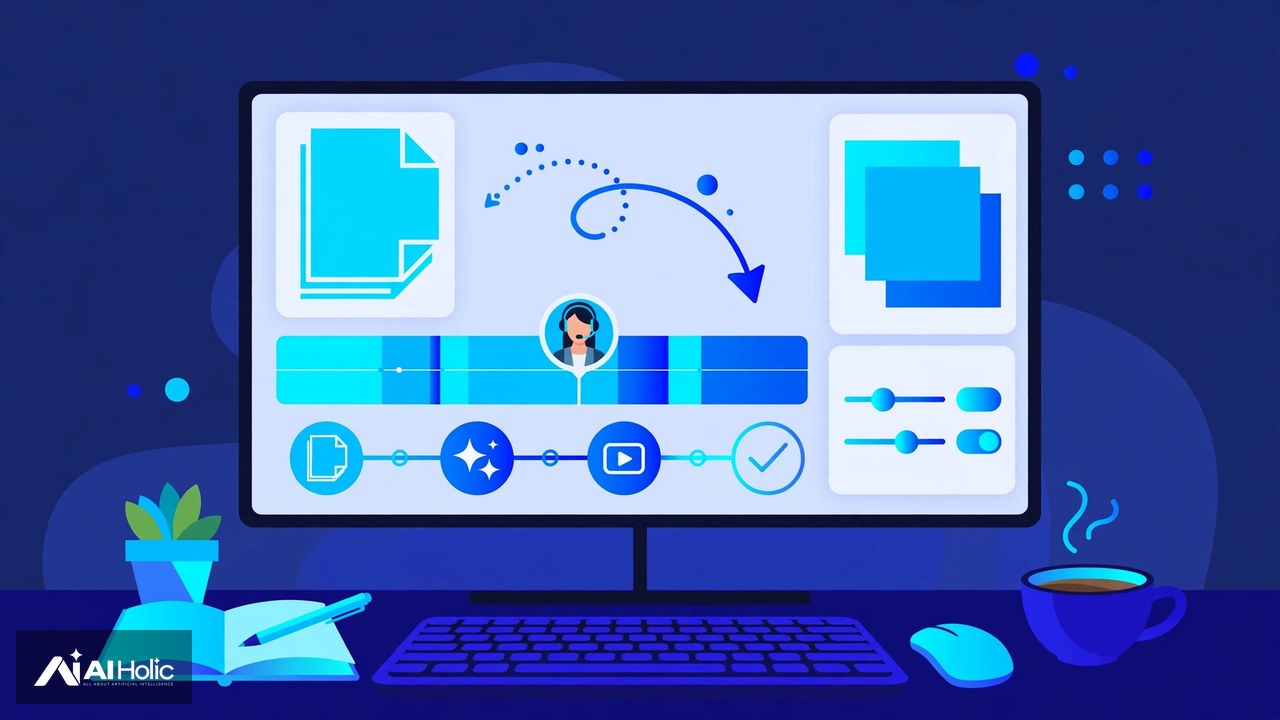
Most AI actors start with a script, not a camera. A writer types the lines, picks a face and a voice, and sets the tone for the scene. The software then builds the video frame by frame, matching lips, gaze, and gesture to the words.
Script to Screen in Four Steps
- Write the script and pick the lines the actor will say.
- Choose a face, a voice, and a style that fit the scene.
- Let the software build the video and check the lips and timing.
- Review the result, fix what looks wrong, and export the final cut.
Training sits behind all of this. Models learn from large sets of video and speech, and they learn how faces move when people talk. Consent for that training material is still a live dispute.
Quality comes down to small details. Good lip sync, natural blinks, and steady eye contact sell the shot, while stiff hands and flat tone give it away. Our guide to Chinese AI video generators shows how the same video tools build whole scenes from a short prompt.
What Makes One Look Real
The best results hide the seams. Skin texture, hair movement, and light on the face must match the room, or the eye spots the trick at once. Voice matters just as much, since a flat read breaks the spell faster than a stiff face.
Bad ones fail in the same few ways. Hands look wrong, teeth blur, and the actor stares a beat too long. If you watch for those tells, you can spot most synthetic clips in seconds.
The Tilly Norwood Story
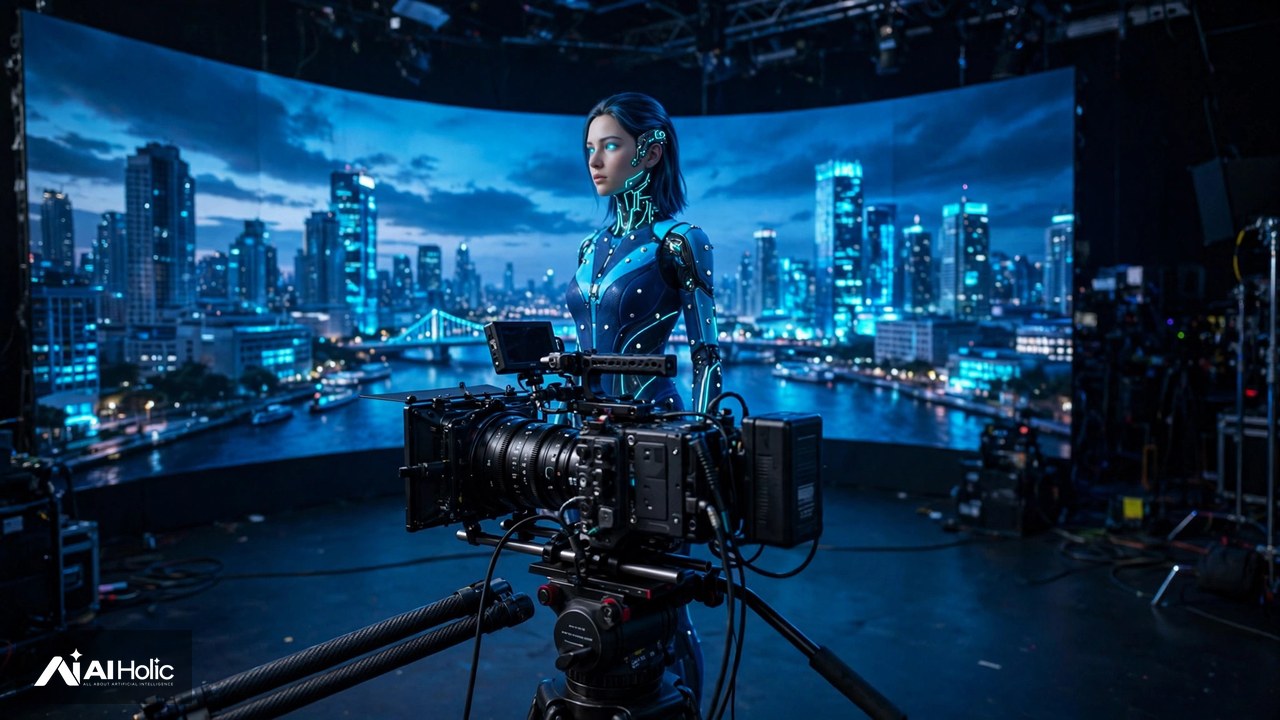
Tilly Norwood is the name most people link with actors ai. She is an AI made character from Particle6, built by Eline van der Velden after about 2,000 tries. In a July 2025 interview, van der Velden said she wanted Tilly to be the next Scarlett Johansson.
CBS News covered the backlash in a report on December 7, 2025. The piece showed a Hollywood split, with some stars alarmed and others open to the idea. You can read the full report on CBS News.
Tilly is not a real person, and her own makers say so. Her page on Wikipedia traces her build, her first sketch, and the row that followed. In July 2026, Particle6 said she would star in a feature film called Misaligned.
The story stuck because it made the abstract real. A synthetic face with a name, a look, and a film deal forced actors to ask what their own work is worth.
Why Hollywood Pushed Back
The pushback was fast and loud. SAG-AFTRA issued a statement on September 30, 2025, and its words were blunt.
“SAG-AFTRA believes creativity is, and should remain, human-centered. The union is opposed to the replacement of human performers by synthetics.”
Actors on Reddit shared the same worry in plain terms. In the r/acting forum, performers talked about synthetic faces taking work that once paid rent. More than 40 comments piled up on one thread, and the mood was fear, not excitement.
Stars split in public too. Downey and Johansson pushed back, while Chalamet and Zendaya sounded more open. Sean Astin, the SAG-AFTRA president, said actress was the wrong label for Tilly, and that she will not replace union members.
This fight did not start with Tilly. AI protections were a major point of contention in the 2023 strike, and the deal guarded a performer’s name, image, and likeness.
SAG-AFTRA Rules in Plain Words
The rules sound complex, but the core is simple. A synthetic performer is not a copy of a real actor, and it is not voiced by a real person. It is a wholly made character that only looks like a natural performer.
The 2026 TV and theatrical contract does not ban actors ai. A producer who wants one in a human role must justify the choice, tell the union first, and bargain over the terms. That notice and bargain step is the main guardrail.
Consent works differently for copies of real people. A digital replica uses a real actor’s face or voice, so the actor must agree to the use and must be paid for it. A wholly synthetic face needs no single actor’s consent, which is why the union wants notice and a bargain instead.
The rules keep changing, so check the union’s own pages before you sign anything. This guide gives the shape of the rules, not legal advice.
The Other Meaning of AI Actors
The same two words mean something else in policy papers. In AI governance, AI actors are the people and groups who take part in the AI lifecycle, such as builders, users, and overseers. That meaning comes from NIST guidance, and it has nothing to do with faces on screen.
If you land here from a policy search, you want the governance pages, not this guide. The rest of this article is about synthetic performers in film, TV, and ads.
Actors AI for Ads and Short Video
Ads are where synthetic performers already work every day. A brand writes a script, picks a face from a cast list, and gets a finished clip without a shoot. CraftStory lists more than 100 actors who speak more than 30 languages.
The format fits short video best. Product demos, UGC style ads, and social clips all suit a presenter who never tires. A small brand can test ten versions of one ad in a day, which no human shoot can match for speed.
Our guide to Creatify AI shows the same idea from the product side, where a product link turns into a video ad that sells. The pattern is the same in both cases: script in, video out, with a face that never needs a studio.
The risk in ads is trust. Viewers who learn a friendly face was never real may feel tricked, and that feeling sticks to the brand. Label synthetic ads clearly, and keep the claims in them true.
Synthetic Performers vs Human Creators
Neither side wins every job. A synthetic actor can be rerun and changed fast, while a human brings timing, warmth, and a real story.
Our guide to AI generated television looks at the same split on the big screen, where AI made shows now sit next to human made drama. The lesson is the same: the tool is ready, but the audience still decides what feels real.
| Point | Synthetic performer | Human creator |
|---|---|---|
| Speed | A new cut in minutes, once the script is set | Needs a shoot, a crew, and a schedule |
| Cost of changes | Lines can change with no reshoot | Each change can mean a new shoot day |
| Trust | Viewers may doubt a face that was never real | A real face carries real credit |
| Best use | Short ads, demos, and test clips | Drama, interviews, and brand stories |
What to Ask Before You Pick One
Start with consent and rights. Ask who owns the face, the voice, and the final video, and get the answer in writing. If the face copies a real person, ask for proof of that person’s consent.
- Ask how the training clips were sourced and whether any real actor’s work went into them.
- Ask who pays if a union or an actor objects after the video goes live.
- Ask for a test clip in your own script before you pay for a full run.
- Ask how the vendor labels synthetic work, so your viewers are never misled.
If a vendor cannot answer these four, walk away. A clear answer now is worth far more than a cheap fix after a complaint.
How to Spot a Synthetic Performer
Watch the hands first. Fingers bend wrong, objects pass through palms, and gestures repeat on a loop. Teeth and hair are the next tell, since both blur or shimmer when the model strains.
Listen as well as look. A voice that stays flat through a joke or a sad line is a strong sign, and lips that lag the words by a beat give the game away. Real speech has small pauses and breaths that software still struggles to fake.
- Check the source and ask who made the clip.
- Look for a label that says the video is AI made.
- Watch the eyes, since long unblinking stares are common in synthetic clips.
No single tell proves a clip is fake. Use two or three checks at once, and treat any video with no clear source as unproven.
Frequently Asked Questions
What is actors ai?
Actors ai is the short name for synthetic performers built fully by software. Each one has a face, a voice, and a way of moving, but no human stands in front of a camera. Brands use them for ads and short video, while film makers test them for small roles, and the union term for them is synthetic performer, which means a wholly made character that is not based on a real person.
Are AI actors legal?
Yes, in most cases, but the rules depend on the job and the place. A wholly synthetic face needs no single actor’s consent, yet a union shoot adds notice and bargain duties. A copy of a real person always needs that person’s consent and pay, and the 2026 SAG-AFTRA contract does not ban synthetic performers, yet it sets steps a producer must follow first.
Will AI actors replace human actors?
Not in the near term, and the union is pushing hard to keep it that way. Sean Astin has said a synthetic face will not replace union members, and the 2026 contract leans the same way. Synthetic faces suit short ads and test clips, while drama and interviews still need a real person, and the risk is real for background and extra work, so actors watch every new deal with care.
How much does an AI actor cost?
No fixed price exists, since the price depends on the vendor, the length, and the rights you buy. Ask for a written quote that lists the face, the voice, and the rights in plain words. Compare two or three quotes before you pay, read the rights clause with care, and pick another vendor if one will not quote in writing.
How can I tell if an actor is AI made?
Watch the hands, the teeth, and the eyes, since those parts still give the trick away. Listen for a flat voice and lips that lag the words by a beat. Check the source of the clip, look for a label that says it is AI made, and use two or three checks at once, since no single tell proves a clip is fake.
Conclusion
Actors ai will keep improving, and the rules will keep shifting with it. Learn the tells, get consent in writing, and label synthetic work clearly. Then you can use the tool without misleading the people who watch it.