AI Generated Television: How AI Is Changing What We Watch
If you don’t want to read the whole guide or have difficulty reading, you can listen to this guide instead.
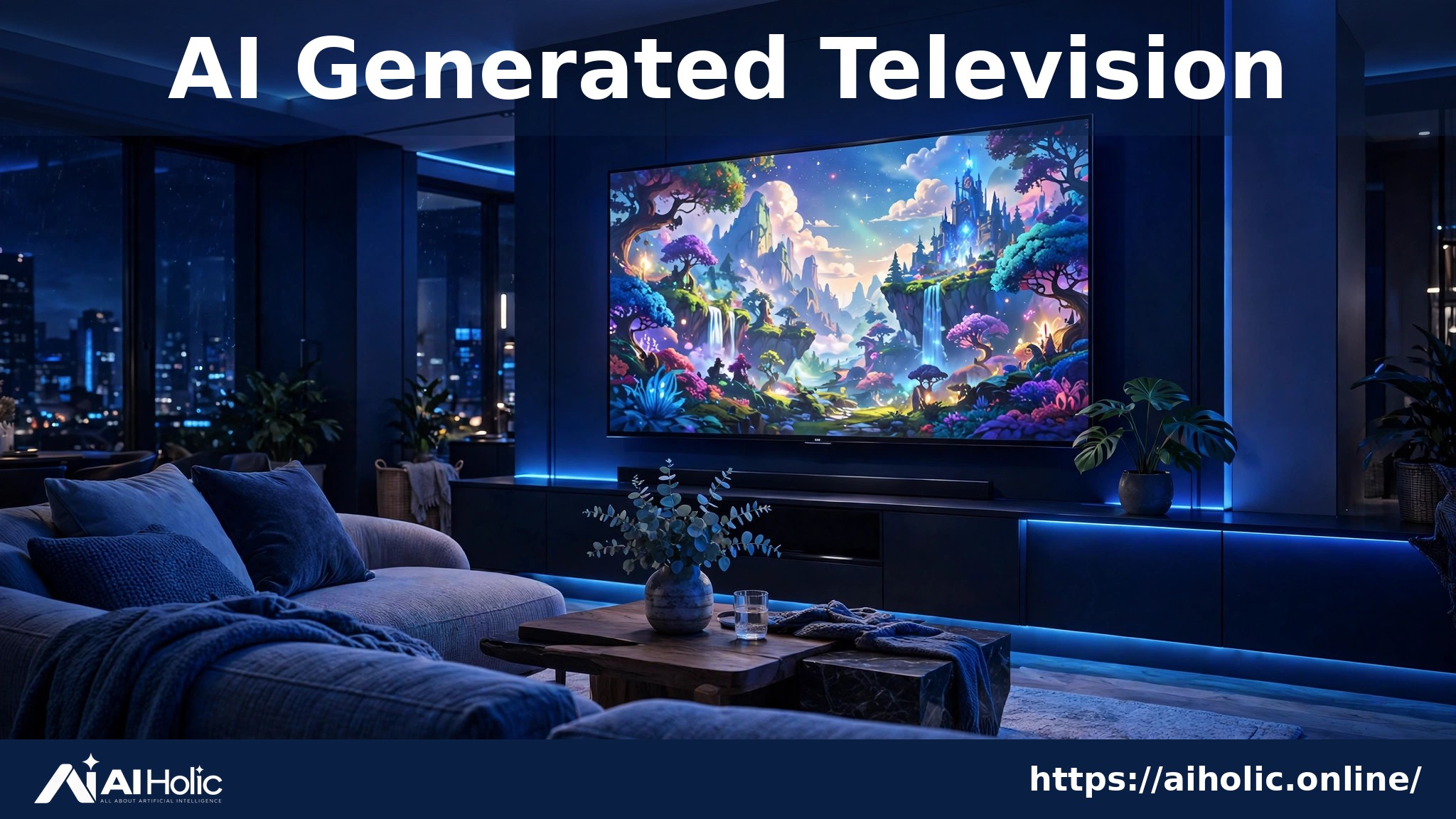
Television no longer needs a camera crew for every scene. ai generated television is TV programming in which AI models write, draw, voice, and edit some or all of the show, and the result plays like a normal program on your screen.
Some of these shows run around the clock. Others arrive as short episodes on a streaming service.
At AI Holic, we read the current coverage so you get a clear picture without the hype. This guide explains what the term means, how these shows are made, which ones you can watch now, and where the quality still falls short.
What AI Generated Television Means
The phrase means TV shows and channels made with AI models doing a large share of the creative work. A script model can draft dialogue. An image model can draw the characters and sets.
A video model can turn still frames into moving scenes, and a voice model can read the lines. The parts are then cut into episodes that play like any other show.
The key point is the mix. Some shows use AI for nearly every step, from script to final cut. Most use AI for parts of the job and keep humans in charge of the story, the edit, and the final check.
When you hear the phrase, ask how much of the show AI actually made, because the answer varies a lot. Our guide to the different types of AI shows how these models differ from each other.
The term also covers channels, not just single shows. A channel can run AI-made programs all day, the way a normal TV channel runs a schedule.
How These Shows Are Made
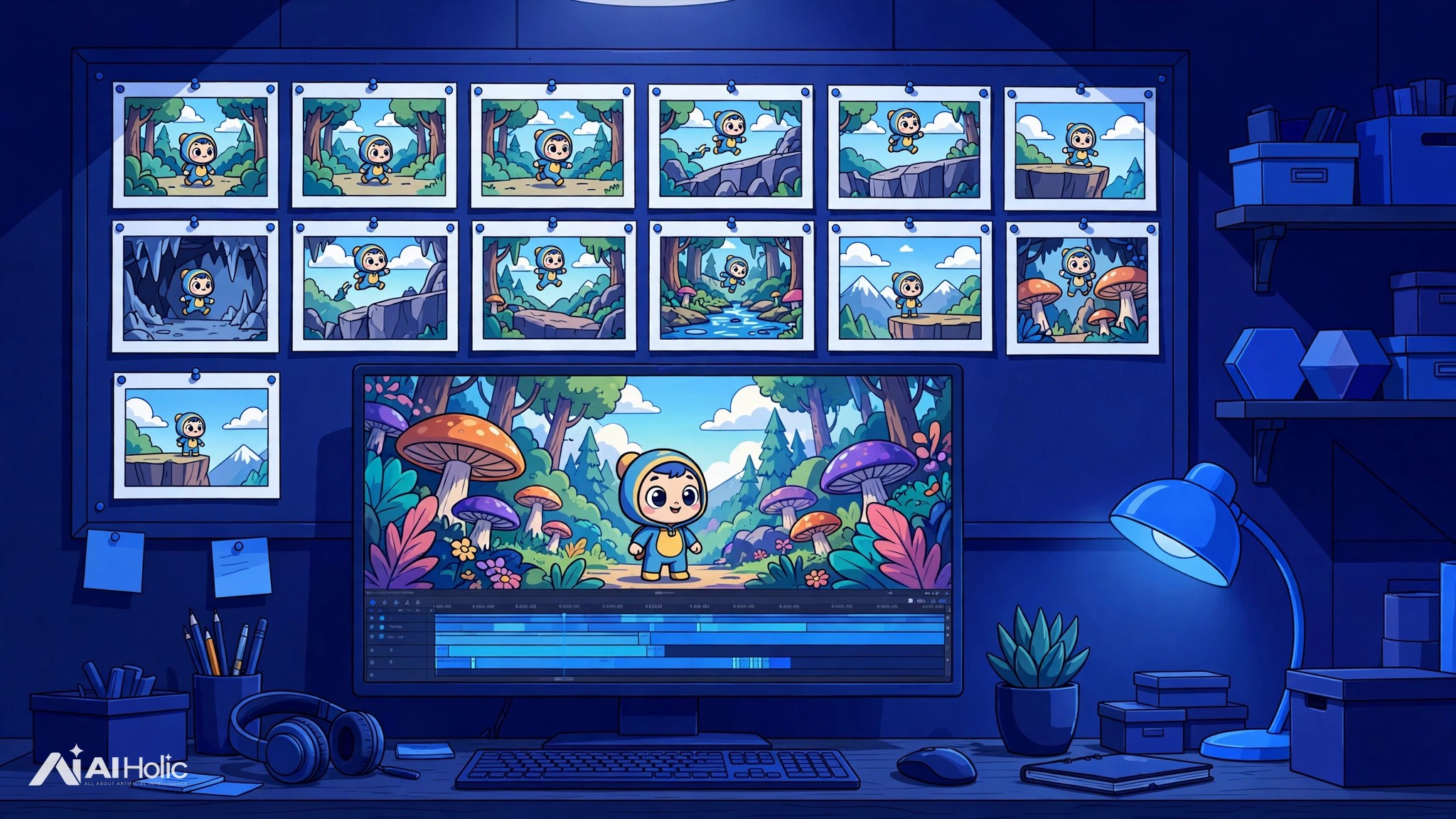
A typical AI show starts with a written idea. A human or a script model turns that idea into a short plot, scene notes, and dialogue. The team then fixes the look of each character, so the same face shows up in every scene.
Next, image and video models build the scenes. They work from text prompts and reference images, and they produce short clips a few seconds long.
Voice models record the dialogue, music tools add a score, and an editor stitches the clips into a full episode. Each generated clip is a piece of AI-made media, and our guide to what an AI artifact is explains how such outputs are saved and shared.
Long shows need extra care. Models forget details between clips, so teams keep a style sheet with character faces, colors, and settings.
They rework any clip where a face changes or a hand looks wrong. That review step is where most of the human work now sits.
| Step | What happens | Who checks it |
|---|---|---|
| Idea and script | Plot, scene notes, and dialogue are drafted | Writer or showrunner |
| Characters and look | Faces, clothes, and settings are fixed in a style sheet | Art lead |
| Scenes and motion | Video models turn prompts into short clips | Editor |
| Voices and sound | Voice models read lines and music tools add a score | Sound editor |
| Edit and review | Clips are cut into episodes and bad shots are redone | Director and editor |
Three Ways AI TV Reaches Viewers
AI TV reaches viewers in three main formats, and the difference matters. Live generated channels make scenes while you watch, so the audience can vote on what happens next.
AI linear channels play finished AI programs on a set schedule, like normal TV. On-demand catalogs let you pick a single film or episode and watch it when you want.
Live generated channels feel closest to a game. Viewers send prompts or votes in chat, and the next scene follows the winning idea. The trade-off is quality, since scenes made in seconds can look rough.
AI linear channels feel most like normal TV. A team picks the programs, sets the schedule, and fills prime time with its best work.
Fairground AI Creator TV works this way, and it runs as a free ad-supported streaming television (FAST) channel. On-demand catalogs sit in the middle, since you choose what to watch but the content is finished before you press play.
Real Examples You Can Watch Today
Castle Walls is the clearest example of ai generated television on a major service. Trade outlet TodoTV News reported that the Turkish studio Ay Yapim launched the historical drama on Prime Video on August 12, 2026, with two episodes of 15 minutes each.
The outlet called it the first fully AI-generated long-form TV production to premiere on a major global streaming platform. Human voice artists dubbed it in every language, and the acting itself was not AI-made.
China has its own entry. The Later Journey to the West, a fantasy adventure from Hunan TV, began airing on August 31, 2026, with 30 episodes of about 40 minutes planned.
Coverage by Metatalks reported that the show was made with ByteDance Seedance models and a crew of about 100 people. The first two finished episodes were scrapped and remade when the story logic felt wrong, which shows how much human review still matters.
Fairground AI Creator TV took a different path. PYMNTS reported in August 2026 that the channel runs AI-generated video 24 hours a day on The Roku Channel, with programs from more than 100 AI creators. Its lineup covers science fiction, drama, animation, true crime, and comedy, plus AI versions of public-domain stories such as Dracula and Robin Hood.
Shorter formats came first. Showrunner, a platform from The Simulation, turns short text prompts into full episodes of two to 16 minutes, with AI handling script, voices, animation, and sound.
Amazon also announced three AI-animated series for Prime Video through its Project Nara platform, though no release dates were announced at the time of the report. And on fal.live, audience-voted channels run sitcoms, soap operas, anime, and wildlife shows that are made live while viewers watch.
Older examples show how fast this moved. Sunspring, a short science-fiction film from 2016, used a script written by an AI program trained on science-fiction scripts. In 2023, the opening titles of Secret Invasion used AI-made imagery.
The new wave is different because whole episodes, not just titles or backgrounds, now come from AI tools. You can read more about the wider field in the Wikipedia overview of AI-generated art.
How Much of a Show AI Really Makes
AI does the heavy lifting on first drafts and short clips. It can write a scene in seconds, draw a consistent character, and voice a line in a steady tone. That speed lets small teams make shows that once needed a full studio.
Humans still lead on story, taste, and final quality. A model can write dialogue, but it struggles to hold a plot together across a full season.
It can draw a face, but that face can shift from shot to shot. Editors, writers, and directors fix those gaps, and they decide what stays in the final cut.
| Task | AI handles it | Human still needed |
|---|---|---|
| Draft scripts | Yes, fast first drafts | Story, jokes, and final lines |
| Character looks | Yes, from prompts and references | Keeping faces steady across scenes |
| Short clips | Yes, a few seconds at a time | Cutting clips into a full episode |
| Long story arcs | No, plots drift and repeat | Planning the season and the payoff |
| Emotion and humor | Partly, tone often sounds flat | Judging what feels real to viewers |
| Final quality check | No, models miss their own errors | Approving every shot before release |
A useful rule is to ask who made the final call. If a human picked the story, fixed the bad clips, and approved the edit, the show is AI-assisted.
If models made nearly every choice with little review, it is closer to fully AI-made. Most shows on air today sit in the first group.
Quality Limits to Know Before You Watch
AI video still has clear limits, and you will spot them fast. Faces can change between shots. Hands and small details can look wrong.
Dialogue can sound flat, and a joke can land badly because the model missed the tone. Long scenes are the hardest part, since errors build up the longer a clip runs.
Story is the bigger limit. AI can write a funny scene, but it often loses track of why a character acts a certain way.
Plots can loop, repeat a gag, or end without a payoff. That is why the strongest AI shows so far are short episodes or simple formats, where a weak plot has less room to fail.
The same pattern shows up in other AI tools. Our guide to AI assistant capabilities and limits explains where current models stop and human judgment starts. Treat ai generated television the same way: enjoy what works, and keep your bar low for long stories.
What AI TV Means for Creators
For creators, AI TV lowers the cost of a first episode. A small team can test an idea in days instead of months, and a single creator can make a pilot without a studio.
The risks are real too. AI-made shows raise hard questions about jobs, credit, and who owns a style built from other work. Actors and writers have pushed back on AI use in several productions.
Some viewers avoid AI shows on principle. Creators who use these tools should say so plainly and give humans credit for their part.
If you want to try it, start small. Make one short scene, not a season. Learn how prompts, reference images, and style sheets keep characters steady.
Share the result and listen to what viewers say before you invest in more.
What Viewers Should Expect Next
Expect more ai generated television, but not a sudden takeover of TV. The tools improve every few months, and the gap between AI clips and filmed scenes keeps shrinking.
Expect labels and rules to grow too. Viewers want to know when a show is AI-made, and some platforms already mark AI content.
The best move for viewers is simple. Watch a short episode first and judge the show on its own terms.
If the story holds up and the look stays steady, it is worth your time. If it falls apart after five minutes, move on, since the next AI show is never far behind.
Frequently Asked Questions
What is ai generated television?
ai generated television is TV programming in which AI models make a large share of the show, from script and images to voices and editing. The result plays like a normal program, either as episodes on demand or as a channel with a set schedule. Some shows are fully AI-made, but most still use humans for story and final checks.
Can I watch AI generated TV shows today?
Yes. Fairground AI Creator TV runs AI programs around the clock on The Roku Channel, and Castle Walls streams on Prime Video.
Short AI shows also run on live channels such as fal.live, where viewers vote on the next scene. Availability varies by country and platform, so check your own streaming apps first.
Are AI generated shows as good as human-made shows?
Not yet for long stories. Short episodes and simple formats can look and sound strong, but AI still struggles with steady faces, natural dialogue, and plots that hold together over a season.
Human-made shows still lead on story and emotion. Judge each AI show on its own, and start with a short episode.
Do AI generated shows replace actors and writers?
They change the work more than they erase it. AI can draft scripts and voice lines, but humans still write the story, direct the edit, and fix what the models get wrong.
Some productions use AI voices and images in place of human performers, which has drawn pushback from actors and writers. Expect the roles to shift rather than vanish.
Is AI TV free to watch?
Some of it is. Free ad-supported channels such as Fairground AI Creator TV cost nothing beyond watching ads, and some live channels stream free on the web.
Other AI shows sit inside paid services such as Prime Video, so you need a subscription. Check the platform before you plan a watch night.
Conclusion
AI generated television is real, watchable, and still rough around the edges. Start with a short episode, look for steady characters and a story that holds together. The tools will keep improving, and the best shows will be the ones where humans stay in charge of the story.