Different Types of AI: A Simple Guide to Narrow, General, and Generative AI
If you don’t want to read the whole guide or have difficulty reading, you can listen to this guide instead.
AI is not one single tool. It is a family of systems that learn, predict, and create in very different ways, and the different types of ai confuse many beginners because the same names get used for different ideas. This guide sorts them out in plain words.
At AI Holic, we checked the standard classifications used by IBM and other trusted sources. The three lenses in this guide are capability, function, and technology, and each one answers a different question about a system.
You will learn which types exist today and which are still theory, what each type does best, and how to pick the right one for a job you have in mind. A short answer comes first, then the three maps, then a table you can keep.
The Short Answer
The short answer is that the different types of ai fall into three groups. By capability, AI is narrow, general, or super. By function, it is reactive, limited memory, theory of mind, or self-aware.
By technology, it is built from machine learning, deep learning, generative models, language processing, computer vision, and robotics. Only narrow AI exists today. General AI, super AI, theory of mind, and self-aware AI are still theory.
That last point matters most. When you hear about a new AI tool, it is narrow AI doing one job well, even when the job looks clever. The rest of this guide explains each group with a real example, so you can place any tool you meet.
The Three Ways to Sort AI
Think of the three lenses as three questions about the different types of ai. Capability asks how smart the system is, and function asks how it works with memory and other minds.
Technology asks what the system is built from. One system can sit in all three groups at once, and that overlap is why the names feel confusing at first. ChatGPT is narrow by capability, limited memory by function, and a language model by technology.
The Different Types of AI by Capability
Capability is the simplest lens for sorting artificial intelligence by how wide its skill is, from one task to every task a human can do. Only the first level exists today, and the other two are goals for research, not products you can buy.
Narrow AI (ANI)
Narrow AI does one job or a small set of jobs very well. Voice assistants, spam filters, chess programs, and chatbots are all narrow AI. The different types of ai all start here, because every system you can use today is narrow.
A narrow system can beat a human at its own task and still fail at a task next door. A chess program cannot drive a car, and a translation app cannot write a legal contract. That limit is normal, not a flaw, because the system was trained for one job.
General AI (AGI)
General AI would learn and reason across any task a human can do, the way you can switch from cooking to driving to writing without retraining. It would take what it learned in one area and use it in a new one. No such system exists today, and researchers disagree on how far away it is.
Super AI (ASI)
Super AI would go past human skill in every area, from science to art to social judgment. It would have its own goals, needs, and beliefs, which is why it sits in research papers and science fiction, not in products. For now, treat it as an idea to understand, not a tool to plan around.
| Capability type | Exists today? | What it does | Everyday example |
|---|---|---|---|
| Narrow AI (ANI) | Yes | One task or a small set of tasks, done very well | Siri, Alexa, ChatGPT, spam filters |
| General AI (AGI) | No, theoretical | Any intellectual task a human can do | None yet |
| Super AI (ASI) | No, theoretical | Skill beyond humans in every area | None yet |
The Four Types of AI by Function
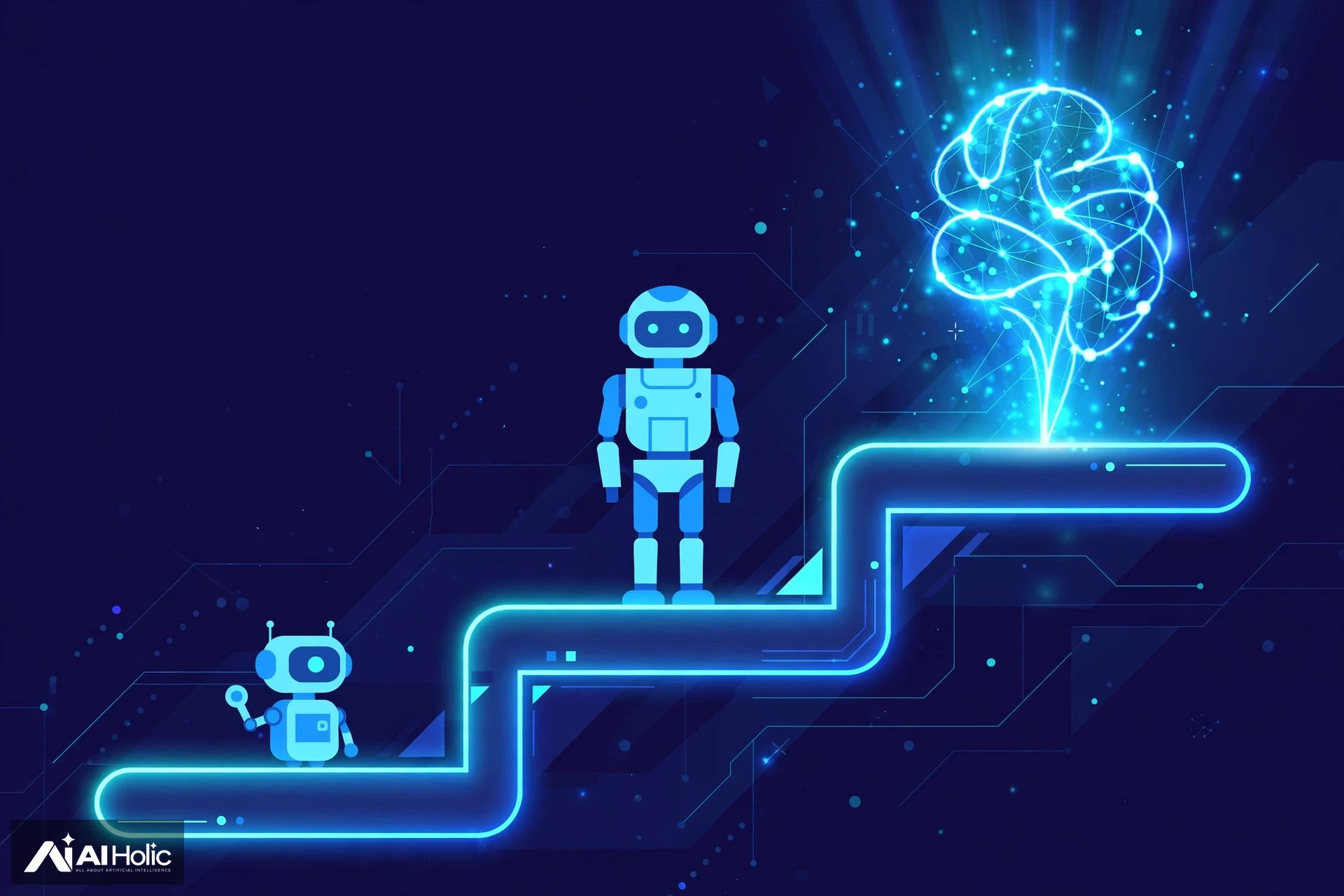
Function looks at how a system handles memory and other minds. This ladder has four rungs, and the first two are real while the last two are still theory. The order runs from the simplest system to the most aware one.
Reactive Machines
A reactive machine sees only the present moment. It takes the input in front of it, applies fixed rules, and gives an answer, with no memory of what happened before. IBM Deep Blue, the chess computer that beat Garry Kasparov in the late 1990s, worked this way, reading the board and weighing each move as if it were the first.
Limited Memory AI
Limited memory AI keeps recent data and uses it to decide what to do next. Self-driving cars watch the speed and position of nearby cars, and chatbots remember the last few lines of a talk. Almost every AI tool you use today sits in this group. Driverless trains use the same idea at a larger scale, and the ai requirements for goa3 goa4 driverless trains explains how perception, positioning and safety cases work when no driver is on board.
The memory is short term, not a life story. A limited memory system improves as it sees more data, but it does not build a lasting store of past experience the way you do. That is the key difference from the next two levels.
Theory of Mind AI
Theory of mind AI would read the beliefs, feelings, and plans of other people and adjust its own behavior to match. It would know when you are upset, not just that your words sound upset. Researchers are working on early emotion-sensing systems, but no system today truly understands another mind.
Self-Aware AI
Self-aware AI would know it exists, with its own feelings, needs, and beliefs. It would understand itself as well as it understands others. This is the most speculative type of all, and many experts doubt it will ever be built.
| Function type | Memory | What it does | Example |
|---|---|---|---|
| Reactive machines | None | Responds to the present input with fixed rules | Deep Blue chess computer |
| Limited memory | Short term | Uses recent data to guide the next action | Self-driving cars, chatbots |
| Theory of mind | Would read minds | Understands beliefs and feelings of others | None yet, early research only |
| Self-aware | Would know itself | Has its own feelings, needs, and beliefs | None yet, purely theoretical |
The Different Types of AI by Technology
Technology is the third lens, and it is the one that names the tools you actually use. The different types of ai in this group are not ranked by smartness. They are grouped by what they do: learn from data, create new content, read language, or see the world.
Machine Learning and Deep Learning
Machine learning lets a system learn patterns from data instead of following rules a person wrote. A spam filter learns what junk mail looks like from thousands of labeled examples. Deep learning is a form of machine learning that uses layered networks, and it powers the big gains in image and language tools since 2012.
Machine learning comes in three common styles. Supervised learning trains on labeled examples, unsupervised learning finds hidden groups in unlabeled data, and reinforcement learning learns by trial and reward. If you train a model yourself, our guide to good practices for training AI models with prompts shows where to start.
Generative AI
Generative AI creates new content from what it learned in training. It writes text, draws images, writes code, and makes music or video from a short prompt. ChatGPT and image tools like Midjourney are the best-known examples, and they sit on top of limited memory AI.
The output is new, but it is built from patterns in old data. That is why a generative tool can write a smooth paragraph that still holds a wrong fact. If you want to try one with images, our guide shows how to send pictures to an AI assistant step by step.
Generative models now go further than single images or clips: they can write, voice, and edit whole TV programs, as our guide to ai generated television explains.
Predictive AI
Predictive AI looks at past data and guesses what comes next. It scores credit risk, forecasts sales, and flags machines that may fail soon. It does not create anything new, so it pairs well with generative tools that draft the message once the prediction is made.
A prediction is only as good as its data. Old bias in the data shows up in the forecast, and a shift in the world can break a model trained on the past. Check the results against real outcomes on a regular basis, and keep a person in charge of the final call.
Natural Language Processing
Natural language processing, or NLP, lets machines read, write, and answer in human language. It breaks text into tokens, tags the parts of speech, and reads tone, which is how chatbots, translators, and voice assistants work. Every chatbot you have used runs on NLP, plus a language model behind it.
Computer Vision and Robotics
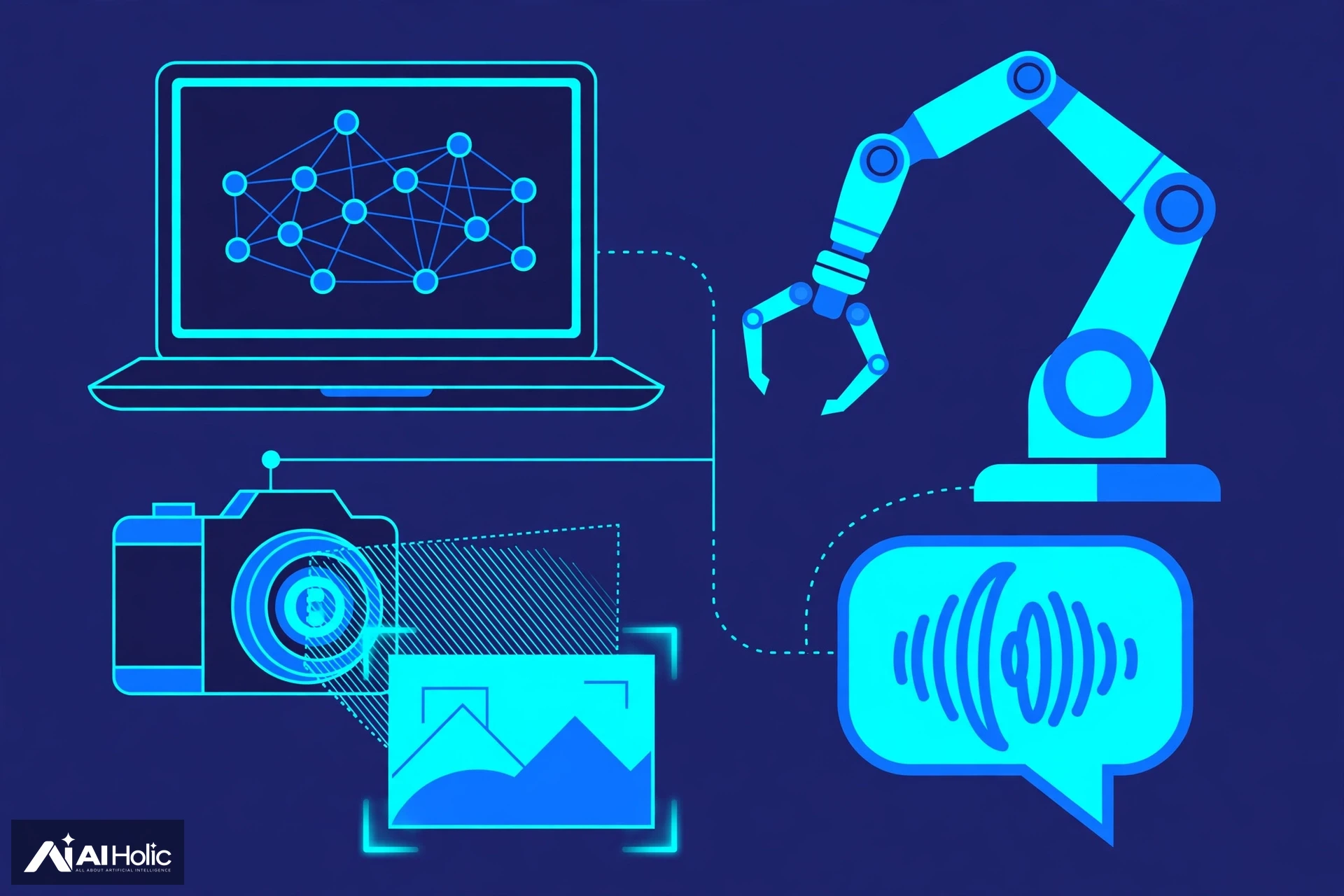
Computer vision lets machines read images and video. It spots faces, reads plates, checks products on a factory line, and helps cars see the road. Robots add a body to that sight, so a warehouse robot can pick a box and a vacuum can map your rooms. For a deeper look at how this works today, see our guide to AI vision technology 2026 for the full picture.
Quantum AI is the newest type on this list, and our plain-words guide explains why is ‘quantum ai’ trending explanation
Where You Meet Each Type Every Day
You meet narrow AI before breakfast. Your phone sorts spam, your music app picks the next song, and your map reroutes you around traffic. Each tool does one job, and each one is limited memory AI working quietly in the background.
At work, the same types show up in bigger clothes. A bank scores credit risk with predictive models, a shop forecasts stock with past sales, and a support team answers routine questions with a chatbot. None of these systems understands the business the way a person does, but each one saves real time.
Generative tools are the newest face you meet. They draft emails, write product lines, and make images for a post. Use them for a first draft, then edit with your own judgment, because the draft is only as good as the data behind it.
Most of the types above reach you through the cloud, not through software on your own device, so it helps to know how cloud AI works before you pick a tool for the job.
How to Pick the Right Type for Your Needs
Start from the job, not from the label. The different types of ai matter only when they change what you pick, so match the task to the tool: prediction for forecasts, generative tools for drafts, vision for images, and language tools for text.
Ask three questions before you commit. Does the tool keep your data safe, does it explain its answers, and does it work for the people who will use it? Fairness matters here too, and our guide to what fairness measures do in AI product development explains why checks belong in the build, not after it.
Common Mistakes When People Talk About AI Types
The most common mistake is calling a chatbot general AI. A chatbot is narrow AI with a wide task, not a mind that can do any job. The second mistake is treating generative AI as a higher level of smartness, when it is only a different job: creating instead of predicting.
A third mistake is trusting the output without a check. Generative tools sound sure of themselves even when they are wrong, so check dates, names, and numbers before you use them. A fourth mistake is buying a tool for the label instead of the task, which wastes money and time.
Frequently Asked Questions
What are the main types of AI?
The different types of ai are sorted three ways: by capability they are narrow, general, and super AI, by function they are reactive machines, limited memory, theory of mind, and self-aware AI, and by technology they include machine learning, deep learning, generative AI, language processing, computer vision, and robotics. Only narrow AI and the first two functional types exist today.
Is ChatGPT general AI?
No, ChatGPT is narrow AI. It does one job, text chat, and it does that job well, but it cannot drive a car, run a lab, or learn a new field on its own. General AI would handle any task a human can, and no system today can do that, so the label matters because it sets honest hopes for what the tool can do.
What is the difference between machine learning and deep learning?
Machine learning is the wider idea: a system learns patterns from data instead of following rules a person wrote. Deep learning is one form of machine learning that uses layered networks to learn from raw data such as images and text. Deep learning powers the biggest recent gains, but it still needs large amounts of data and careful checks.
Which type of AI is used most today?
Limited memory AI is the most used type today, and it sits inside narrow AI. It powers chatbots, recommendation feeds, spam filters, self-driving cars, and voice assistants. These systems remember recent data and use it to guide the next action, which is enough for most real jobs, while reactive machines still serve simple fixed tasks as well.
Which type of AI should I learn first?
Start with machine learning, since it sits behind most tools you will meet. Learn how training data, labels, and testing work, then try a small project such as a spam filter or a simple chatbot. Once that feels clear, move on to deep learning and generative tools, which build on the same base ideas.
Conclusion
AI comes in many forms, but the map is simple: only narrow AI exists today, and the different types of ai are best sorted by capability, function, and technology. Pick the type that fits your task, check its output, and start with one small project this week. If you want pages that truly discuss one of these types in their main text, not just in a headline, our guide to allintext:ai shows how to search inside page text for AI topics.