AI Requirements for GoA3 GoA4 Driverless Trains: Safety, Perception and Certification Explained
If you don’t want to read the whole guide or have difficulty reading, you can listen to this guide instead.
A train with no driver still needs eyes, judgment, and a plan for trouble. The ai requirements for goa3 goa4 driverless trains describe what the software must do before a train can run without a driver, and what it must do before it can run with no staff on board at all. GoA3 keeps an attendant on the train, while GoA4 removes all on-board staff, and that one change raises the bar for AI in a big way.
At AI Holic, we read the rail automation research for you. This guide explains the five grades of automation, the four core AI jobs, the safety rules that govern them, and where GoA4 works today and where it still waits for approval.
What GoA3 and GoA4 Mean
GoA stands for Grade of Automation. The scale comes from the standard IEC 62290-1:2014, which covers urban guided transport such as metros and light rail. It has five grades, and each grade moves one more job from people to the system.
GoA0 is line-of-sight driving with no automation. GoA1 adds train protection that watches speed and stops the train if the driver misses a limit. GoA2 is semi-automated, since automatic train operation handles starting, speed, and braking while a driver stays in the cab.
GoA3 is driverless train operation, known as DTO. The train drives itself, but an attendant stays on board to work the doors and take over in an emergency.
GoA4 is unattended train operation, known as UTO. No driver and no attendant ride the train, so the system must handle doors, emergencies, and faults on its own.
| Grade | Name | Who is on board | What the system does |
|---|---|---|---|
| GoA0 | Line of sight | Driver | Nothing is automated |
| GoA1 | Non-automated | Driver | Train protection watches speed |
| GoA2 | Semi-automated | Driver | Automatic driving, driver works doors |
| GoA3 | Driverless (DTO) | Attendant | Automatic driving, attendant works doors |
| GoA4 | Unattended (UTO) | No staff | Driving, doors, and emergencies are automatic |
The grades of automation give buyers, builders, and regulators one shared language. When a city says it wants a GoA4 metro, every supplier knows the train must run with no staff on board.
Why Driverless Trains Need AI
A driver does more than steer. A driver watches the track ahead, spots a person or a fallen branch, and judges when something looks wrong. Fixed rules can cover part of that work, but not all of it.
That gap is where machine learning comes in. Cameras, radar, and lidar feed models that spot obstacles, watch level crossings, and build a live picture of the world around the train.
The research is clear on this point: fixed deterministic automation alone is not enough for GoA4 on open rail lines, since the world outside a closed metro is too varied for fixed rules.
The safety bar is simple to state and hard to meet. A driverless train must be at least as safe as a train run by a person, and the proof must hold up before regulators, not just in a demo.
AI Requirements for GoA3 GoA4 Driverless Trains: The Four Core Jobs
Meeting the ai requirements for goa3 goa4 driverless trains means covering four jobs at once. Perception sees the world, positioning knows where the train is, communication links the train to the track and the control room, and control turns all of it into safe speed and braking.
Perception: Seeing the Track Ahead
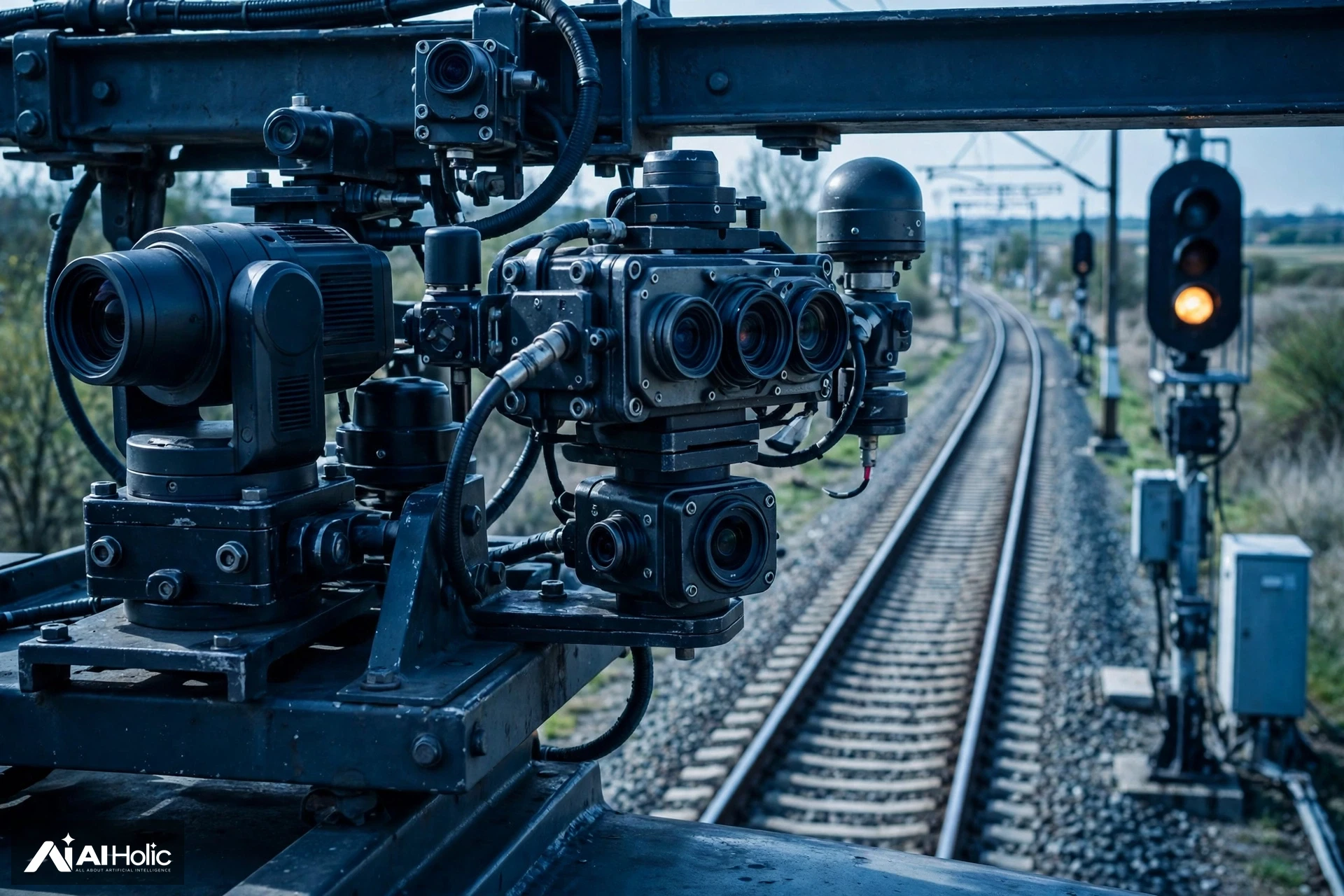
Perception is the hardest of the four jobs, and it is the one that needs AI the most. The train must spot people, vehicles, animals, and objects on the track in rain, snow, glare, and darkness, and watch level crossings, where a stuck car changes the whole picture in seconds.
GoA3 systems already use trackside devices to spot obstacles and watch platform doors. The train also maps the track ahead and sets protection zones around danger points. For GoA4, the same job must run with no attendant to double-check what the sensors report.
Positioning: Knowing Exactly Where the Train Is
A driverless train must know its position to within a few metres at all times. Radio links, trackside beacons, and on-board sensors work together to fix the train on the map. Edge AI cameras add to this picture by reading the world right at the train, which helps when a radio link drops for a moment.
Good positioning also keeps trains spaced safely. The control system sets a movement limit for each train, and the train must never pass it. If the position fix weakens, the train slows down or stops.
Communication: Linking Train, Track and Control Room
Most GoA3 and GoA4 metros run on communications-based train control, known as CBTC. The train reports its position by radio, and the trackside system sends back the speed and the point the train must not pass. The CBTC system is the basic enabler for high grades of automation.
The link must stay up in tunnels, cuttings, and bad weather. When the radio link fails, the train falls back to a slower and safer mode until the link returns.
Control: Driving, Doors and Emergencies
Control covers starting, stopping, door work, and the emergency stop. At GoA3, the attendant still works the doors and takes the controls in an emergency. At GoA4, the system must do all of it, including spotting a trapped passenger.
The control software runs on safety-rated hardware, and its most safety-critical parts must meet the highest safety integrity level, SIL4. AI models sit beside that core, and their outputs must pass safety checks before they can touch speed or brakes.
GoA3 vs GoA4: What Changes for AI
The step from GoA3 to GoA4 looks small on paper, since only one staff member leaves the train. In practice it changes the AI job in every part. The attendant is the backup for perception, doors, and emergencies, and GoA4 must replace that backup with software and hardware.
| AI job | GoA3 (driverless) | GoA4 (unattended) |
|---|---|---|
| Obstacle detection | System spots obstacles, attendant confirms | System must decide alone, with a clear unsure state |
| Door control | Attendant works doors and checks the platform | System monitors doors and platform on its own |
| Emergencies | Attendant takes over and helps passengers | System stops safely and guides evacuation |
| Depot moves | Staff move trains in the yard | Trains move from depot to main line alone |
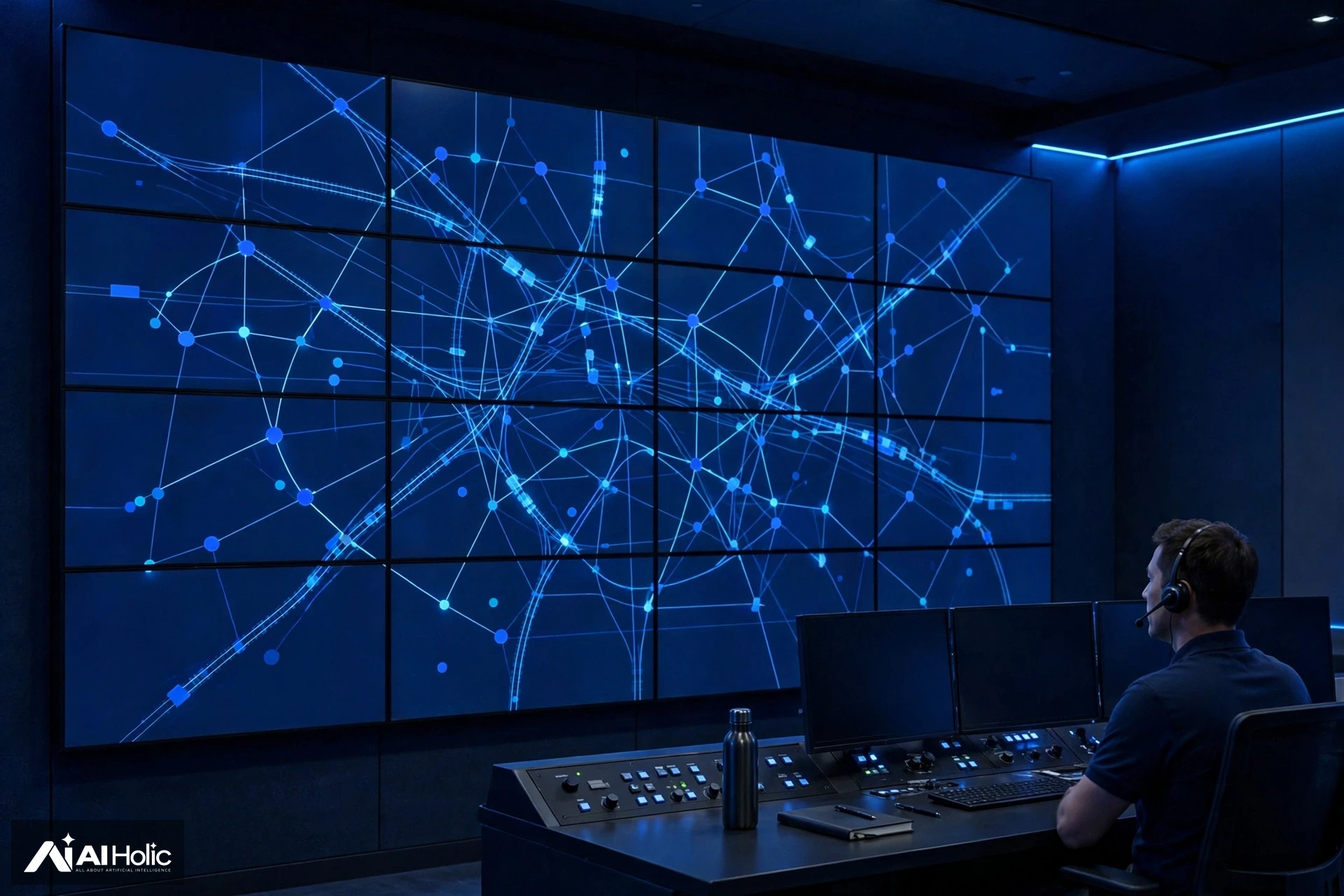
| Control room role | Staff watch and step in at times | Operators only watch and step in on failure |
GoA4 also extends automation into the yard and depot. Trains must move from the depot to the main line with no staff on board, which adds slow-speed driving, tight turns, and workers on foot near the track.
Most CBTC systems in service today are GoA3, since that is the grade most operators ask for. GoA4 needs more sensors, more proof, and more work on the safety case, so it costs more to build and to certify.
Safety, Standards and Certification
The ai requirements for goa3 goa4 driverless trains sit inside a strict safety framework. Rail has used the standards EN 50126, EN 50128, and EN 50129 for years, along with IEC 61508 for safety-related systems. These rules cover hardware and classic software, but they do not cover machine learning development and assurance.
EN 50716:2023 is the newer software standard for rail. Even so, it does not settle how to certify a learning model. ANSI/UL 4600 is the first fairly complete pre-standard for system-level safety of autonomous systems, and its use for rail is still under study.
One method that rail teams now use is AMLAS, a process that flows safety needs from the whole system down to the machine learning model. It sets performance needs and limits for the model, then covers data management, model learning, model verification, and model deployment.
Machine learning brings two hard problems that classic software does not have. First, safety rests on the training data being complete and fair, not just on the code being correct.
Second, a model can change after certification through learning or updates, so its behavior cannot be fully fixed at the time the type is certified. Regulators are still working out how to handle that fact.
Training Data, Testing and Updates
Data is the raw material of train AI, and bad data means a bad safety case. The training set must cover the full range of scenes the train will meet, including rare ones such as a person in dark clothes at night or a car half on the crossing. Different types of AI learn in different ways, and the safety case must say which kind is in use.
The safe.trAIn project in Germany works on exactly this problem. It builds a safety case for AI-based obstacle detection on a driverless regional train.
It covers data quality, model strength, uncertainty, explainability, and a safe MLOps cycle for continuous development. Its goal is a method that other rail projects can reuse.
Testing must go past the training set. Teams run the model on new scenes it has never seen, on bad weather, on sensor faults, and on odd cases that break normal rules.
Updates need the same care as the first release. A model that learns from new data can drift from the version that was certified, so each update needs its own checks before it reaches a live train.
Where GoA4 Works Today and Where It Does Not
GoA4 has run for years in closed metro settings, where protected tracks, platform screen doors, radio signalling, and precise positioning make the world the AI must read far simpler. The Delhi Metro, the Vancouver SkyTrain, Paris Metro Line 14, and the Sydney Metro all run at GoA4.
Open railways are a different story. The ai requirements for goa3 goa4 driverless trains grow much harder when anyone can walk onto the track, when there are no screen doors, and when signals are visual rather than radio-based. Research from Peleska and colleagues in 2022 states that GoA4 in such open settings has no full type certification yet, though prototypes exist.
The gap is not a lack of interest. Regional lines want driverless trains to cut costs and run more services, and research projects are testing AI perception on real regional tracks.
For now, the pattern is clear. Closed metros can run GoA4 today with the right kit and proof, while open railways stay at GoA2 or GoA3 until the perception and certification problems are solved. The pattern matches AI assistant capabilities and limits in other fields, where tools work well inside clear bounds.
Frequently Asked Questions
What are the ai requirements for goa3 goa4 driverless trains?
The ai requirements for goa3 goa4 driverless trains cover four jobs: perception, positioning, communication, and control. The system must spot obstacles, know its exact place on the track, stay in radio contact with the control room, and drive, stop, and work the doors safely. GoA4 adds the hardest part, since no attendant is on board to check the system or take over.
What is the difference between GoA3 and GoA4?
GoA3 is driverless train operation with an attendant on board, while GoA4 is unattended train operation with no staff on board at all. The attendant at GoA3 works the doors and takes over in an emergency. At GoA4, the system must do all of that itself, including depot moves and guiding passengers when something goes wrong.
Why does GoA4 need AI instead of fixed rules?
Fixed rules work well in a closed metro with screen doors and fences, but they cannot cover the varied scenes on an open line. AI models read camera, radar, and lidar data to spot people, vehicles, and objects. Research states that fixed automation alone is not enough for GoA4 outside restricted infrastructure.
Which standards govern AI safety for driverless trains?
The classic rail standards are EN 50126, EN 50128, and EN 50129, plus IEC 61508, and EN 50716:2023 is the newer software standard. None of these fully covers machine learning, so teams also use the AMLAS process to flow safety needs down to the model. ANSI/UL 4600 is a pre-standard for autonomous system safety, and its rail use is still under study.
Is GoA4 running anywhere today?
Yes, GoA4 runs in closed metro systems such as the Delhi Metro, the Vancouver SkyTrain, Paris Metro Line 14, and the Sydney Metro. These lines use protected tracks, platform screen doors, and radio signalling. GoA4 on open railways has no full type certification yet, though prototypes are being tested on regional lines.
Conclusion
The ai requirements for goa3 goa4 driverless trains come down to four jobs done well: see the track, know the position, stay connected, and act safely. GoA3 is proven, GoA4 is proven in closed metros, and open lines still wait on proof. Follow the standards work and the live trials to see what changes next.