
Edge AI Camera News: What Changed, What Ships Next, and Why It Matters
If you don’t want to read the whole guide or have difficulty reading, you can listen to this guide instead.
A camera that thinks for itself is no longer a lab demo. The latest edge ai camera news shows new models that spot people, read plates, and flag trouble in milliseconds, all without sending your video to a faraway server.
At AI Holic, we follow these launches so you don’t have to sort press releases yourself. This guide explains what an edge AI camera is, what changed in the last few weeks, where the tech is used, and what to watch next.
You will also see a plain comparison with cloud cameras, a short table of the newest announcements, and honest answers to the questions readers ask most.
The Short Answer
An edge AI camera runs its AI model on a chip inside the camera, or on a small box near it. It spots people, cars, or movement and acts on what it sees, right where the video is captured.
That is the whole idea. The camera sends a short alert or a clip, not a constant stream of raw video to a distant server.
November 2026 brought three clear signs of growth in edge ai camera news. New cameras now reach remote fields, fleet vehicles, and tight indoor spaces, and more models ship in early 2027.
What Is an Edge AI Camera
Edge computing means running computer programs close to where the data is made, instead of in a faraway data center. An edge AI camera applies that idea to video: the model lives in the camera and reads each frame on the spot.
The camera still records video like a normal camera. The difference is the extra step before the video leaves the device, a quick check that turns pixels into a simple result such as “person at the door” or “car in the lane”.
This shift matters because cameras now sit at the center of a much bigger build-out of chips, networks, and data centers. Our AI infrastructure news coverage follows that build-out week by week, and cameras are one of its fastest-moving parts, which is why edge ai camera news keeps growing as a beat of its own.
Edge AI Camera News: The Latest Announcements
The newest edge ai camera news comes from three announcements in October and November 2026. Each one targets a different gap: range, vehicles, and tight spaces.
Long-Range Cameras Reach Remote Sites
On November 13, 2026, Morse Micro and CamThink said Wi-Fi HaLow is now built into the CamThink NeoEyes camera line. The models named were the NE101, NE301, and NE302.
Wi-Fi HaLow is a long-range, low-power form of Wi-Fi built for devices far from a router. The NE101 suits wide open areas such as farm fields, while the NE301 and NE302 suit remote sites with little or no fixed network.
The point is simple. A camera that can send its alerts over a long distance needs less extra gear, so it can work in places where normal Wi-Fi cannot reach.
Fleets Get a New Edge AI Dashcam
On November 10, 2026, Xirgo Technologies announced the XVD-302, an edge AI dashcam built for commercial fleets. It runs driver-assistance and driver-monitoring models at the same time on an 8-core AI processor.
The device pairs with a smart cable that joins video and vehicle data on one unit and one SIM card. It offers six camera setups, from road-only views to driver-facing and backup views.
It is on sale now in North America, with EMEA sales planned for early 2027. For fleet owners, the pitch is fewer installs and faster alerts when something goes wrong on the road.
A Modular Camera for Tight Spaces
In mid-October 2026, i-PRO announced a remote head camera that splits the lens from the processing unit. The small camera head fits where a full camera cannot, while the processor sits nearby.
It is built on the i-PRO S-Series platform, with a wide view of about 135 degrees and strong handling of bright and dark areas in one frame. It also carries FIPS 140-3 Level 3 security certification, a standard used for protected government and business systems.
The camera is expected to reach buyers in January 2027. Prices and full setup options were not shared in the announcement, so buyers will need to check the details closer to launch.
How On-Device Processing Works
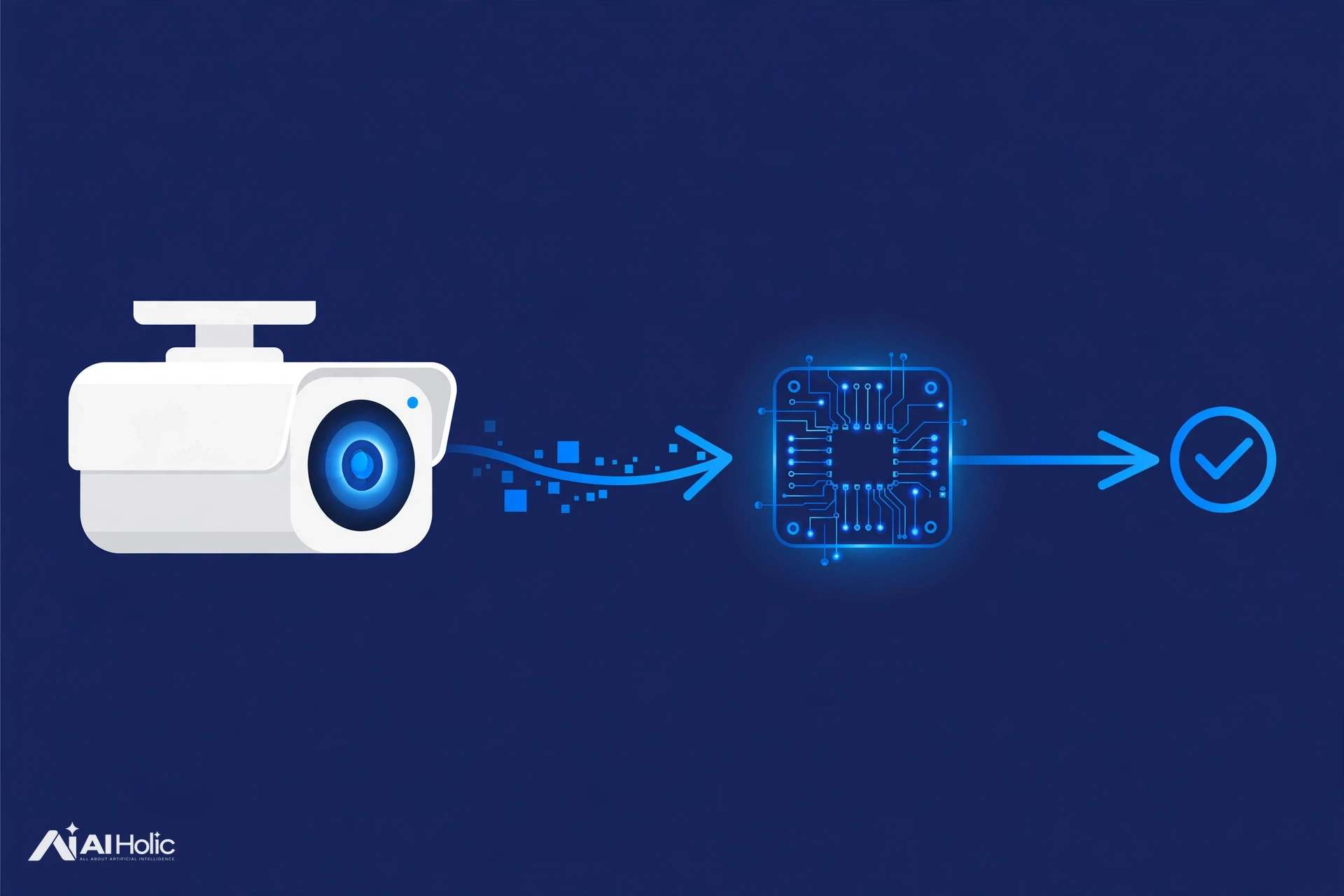
A normal camera captures a frame and sends it on. An edge AI camera adds three quick steps before anything leaves the device.
- Capture: the sensor records the frame and the image processor cleans it up.
- Inference: a small AI chip, often called a neural processing unit, runs the model and reads the frame.
- Decision: the camera turns the result into an alert, a short clip, or a note in a log.
The whole loop takes tens of milliseconds, fast enough for a live alert. Only the result travels, so the network carries far less video than a cloud camera would send.
The models behind this step come from computer vision, the field that teaches machines to read images and video. Its core tasks include object detection and tracking, which is what lets a camera tell a person from a passing shadow.
Edge AI Cameras vs Cloud Cameras
The two designs answer the same need in different ways. The table below shows the trade-offs in plain terms.
| Edge AI camera | Cloud camera | |
|---|---|---|
| Where video is analyzed | In the camera or nearby | On remote servers |
| Speed of alerts | Tens of milliseconds | Depends on the network |
| Works without internet | Yes, for on-device alerts | No, analysis stops |
| Video sent over the network | Short alerts and clips only | Full video streams |
| Best for | Remote sites, fleets, live alerts | Searching weeks of video across many cameras |
Neither design wins on every point. Edge cameras act fast and use less bandwidth, while cloud systems can search weeks of video from many cameras at once.
Many real setups mix the two. The camera handles the fast alerts, and the cloud handles the long-term search and storage.
Where Edge AI Cameras Are Used
Security is the first use most people know. Shops, offices, and homes use these cameras to spot people and cars and to cut false alarms from rain, shadows, and pets.
One example is the Amcrest 5 megapixel wedge IP PoE AI camera, a dome camera with on-device AI for indoor spaces. It shows how the tech now fits into a normal ceiling camera, not just a special install.
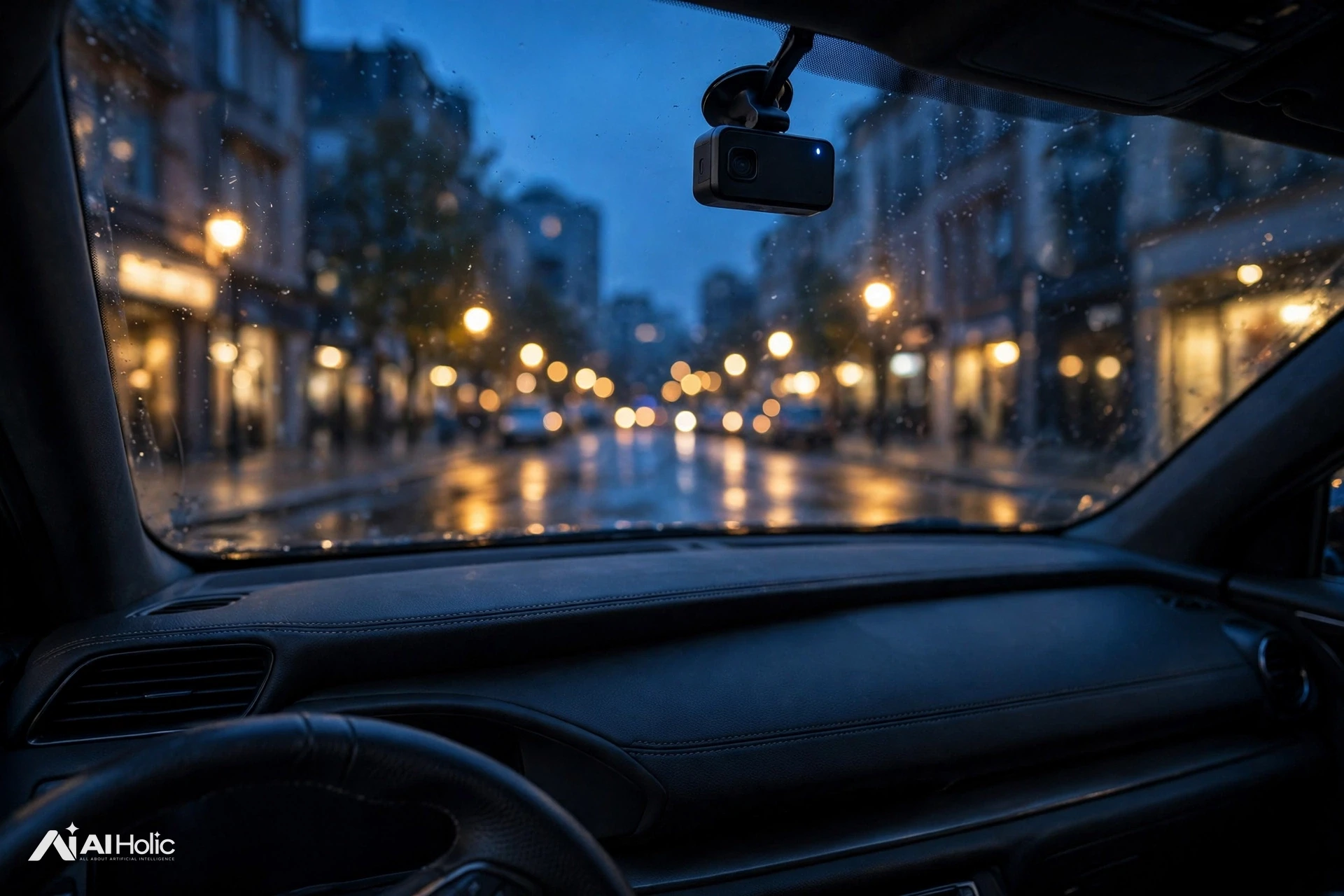
Fleets are the second big use. A dashcam that reads the road and the driver at once can warn about lane drift and tired driving without waiting for a server.
Farms and wild areas are third. Trail cameras with on-device AI can filter out empty frames and send only the photos that matter, which saves battery and data. One 2026 trail camera model, for example, filters false triggers on the device and sends only useful photos to the hunter’s phone.
Shops and factories round out the list. Stores count foot traffic and watch shelves, while plants check that workers keep clear of unsafe zones.
Privacy: What Stays on the Camera
Edge AI can help privacy, but it does not promise it. A camera can still store video in the cloud, send clips to a server, or share data with a third party, so the word “edge” alone tells you little.
Before you buy, check four facts. Ask where video is stored, what leaves the site, what happens when the internet drops, and which features need a paid plan.
Rules add another layer. Laws on face recognition and AI use differ by country and by setting, and they keep changing. Our AI regulation news page tracks the latest moves, so you can check the rules that apply to you.
What to Watch Next
The next few months will test whether these launches sell. The i-PRO remote head camera reaches buyers in January 2027, and the Xirgo dashcam reaches EMEA in early 2027.
Watch three things as the new models reach buyers. First, whether Wi-Fi HaLow cameras spread beyond farms and remote sites, and second, whether fleet dashcams add more driver-safety features. Third, whether prices drop as more chip makers ship camera-ready AI chips, since fresh edge ai camera news will likely track all three.
| Date | Announcement | Status |
|---|---|---|
| November 13, 2026 | Morse Micro and CamThink add Wi-Fi HaLow to NeoEyes cameras | On sale now |
| November 10, 2026 | Xirgo XVD-302 edge AI dashcam for fleets | On sale in North America |
| October 2026 | i-PRO remote head camera announced | Expected January 2027 |
| Early 2027 | Xirgo XVD-302 in EMEA | Planned |
The same month brought AI news in other fields too, including our AI for 3D asset generation news roundup for creators. Cameras are only one part of a much wider story. For another example, see our guide to the Tony Robbins AI Summit, which covers a free three-day event that drew more than 630,000 registered viewers in April 2026.
Frequently Asked Questions
What is an edge AI camera?
It is a camera that runs an AI model on a chip inside the camera, or on a small box near it. It reads video on the spot and sends alerts or short clips, instead of streaming all its video to a remote server. The result is faster alerts and less video crossing the network.
Do edge AI cameras work without the internet?
Yes, for the jobs that run on the device. A camera can keep spotting people and saving video to local storage while the internet is down, though phone alerts will wait until the link returns. Check the product page before you buy, since each model handles offline use in its own way.
Are edge AI cameras more private than cloud cameras?
They can be, but the label alone does not prove it. Privacy depends on where video is stored, what leaves the site, and who can see it, so read the privacy settings and the maker’s policy before you trust any camera with a private space. A local-only setup keeps more video at home, while a cloud-linked setup shares more by design.
What is the newest edge ai camera news?
The newest edge ai camera news covers three launches from October and November 2026. Morse Micro and CamThink added long-range Wi-Fi HaLow to the NeoEyes camera line, Xirgo shipped an edge AI dashcam for fleets, and i-PRO announced a modular remote head camera due in January 2027. This guide will be updated as more models ship.
Should I buy an edge AI camera now?
Buy one if you need fast alerts, low bandwidth use, or a camera that works in a remote spot. Pick a model with clear privacy settings and local storage if those matter to you. If you only need to search old video from many cameras, a cloud setup may still fit better.
Where can I follow more AI news?
Start with our AI infrastructure news coverage for the chips and data centers behind these cameras, and our AI regulation news page for the rules that shape how cameras can be used. Both pages are updated as new stories land, and you can also browse the news category on our site for the full list.
Conclusion
The latest edge ai camera news points one way: the brains are moving into the camera, with new models now covering remote fields, fleet vehicles, and tight indoor spaces and more shipping in early 2027. Before you buy, check where video is stored and what leaves the device. Pick the camera that fits your place, not the loudest launch. For the wider picture, read our guide to edge ai trends and see where on-device AI is heading next.