Definable AI: Multi-Agent Workflows Without Code or Flowcharts
If you don’t want to read the whole guide or have difficulty reading, you can listen to this guide instead.
Describe a job in plain words, and a team of AI agents starts work on it. A definable ai workflow splits that job into steps, gives each step to a specialist agent, and checks the result before it moves on. This guide explains what the platform does, how its four parts fit together, and what the free tier covers.
You will learn how the no-code workflow builder works, what the Studio, Assistant, Agents, and Code modules offer, and how the pricing is set out. You will also see how it compares with agent frameworks such as LangChain and CrewAI, so you can judge which path fits your team.
At AI Holic, we explain AI tools in plain words so you can start fast. This guide keeps the same style, with short steps and clear facts.
What It Is
Definable AI is a multi-model AI platform from India that puts chat, creative tools, agents, and coding tools under one subscription. It launched on 7 April 2026, and the company behind it is based in India. The platform runs on Indian servers and is priced in rupees, which suits its home market first.
The idea is simple. Instead of paying for five separate AI tools, you use one workspace that covers writing, images, video, research, and automation. The platform gives access to more than 50 leading language models under that one subscription, and you can switch models inside the same conversation.
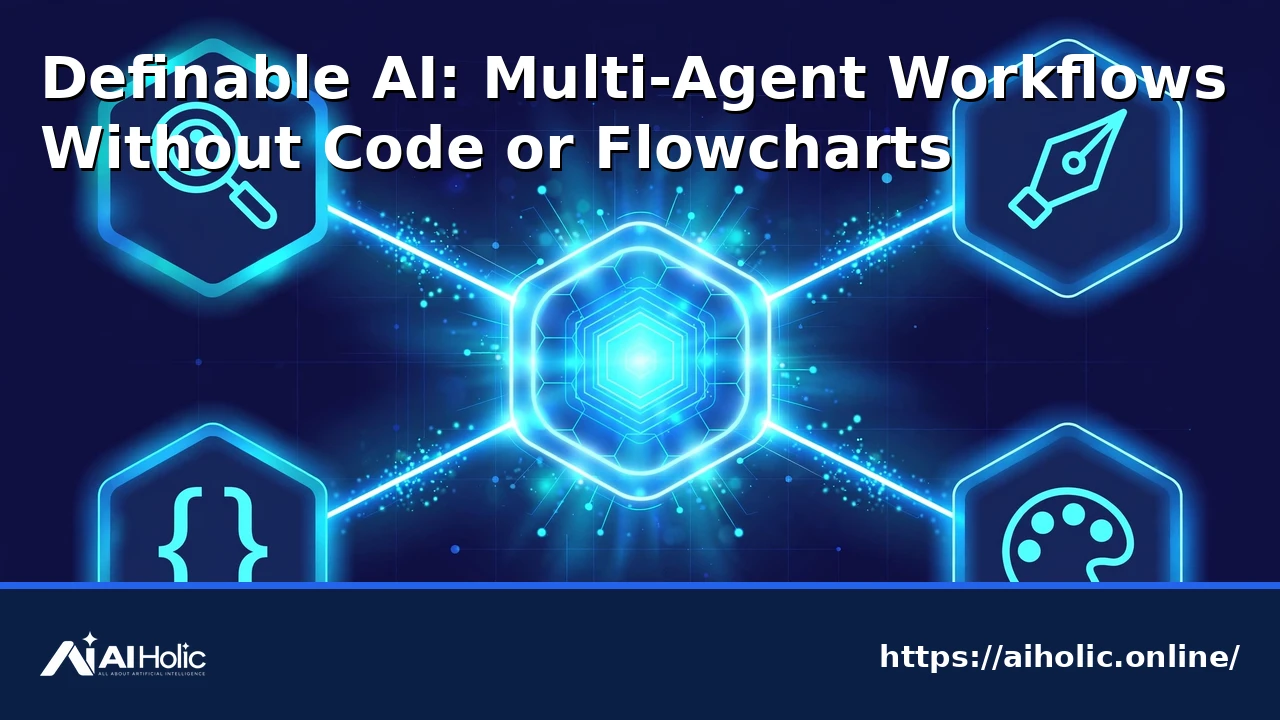
A multi-agent system is a setup where several AI agents work together, each handling part of a task. The platform builds on that idea. You describe an outcome in plain English, and it assembles specialist agents for research, writing, design, engineering, and distribution.
| Detail | What it is |
|---|---|
| What it does | Multi-model AI platform with chat, creative tools, agents, and coding tools |
| Launched | 7 April 2026 |
| Based in | India, hosted on Indian servers |
| Models | More than 50 leading language models under one subscription |
| Main modules | Studio, Assistant, Agents, Code |
| Free tier | Starter plan with 5,000 monthly credits, as reported in the launch release |
| Developer side | Open-source Python framework, SDK, and CLI |
How the Workflow Builder Works
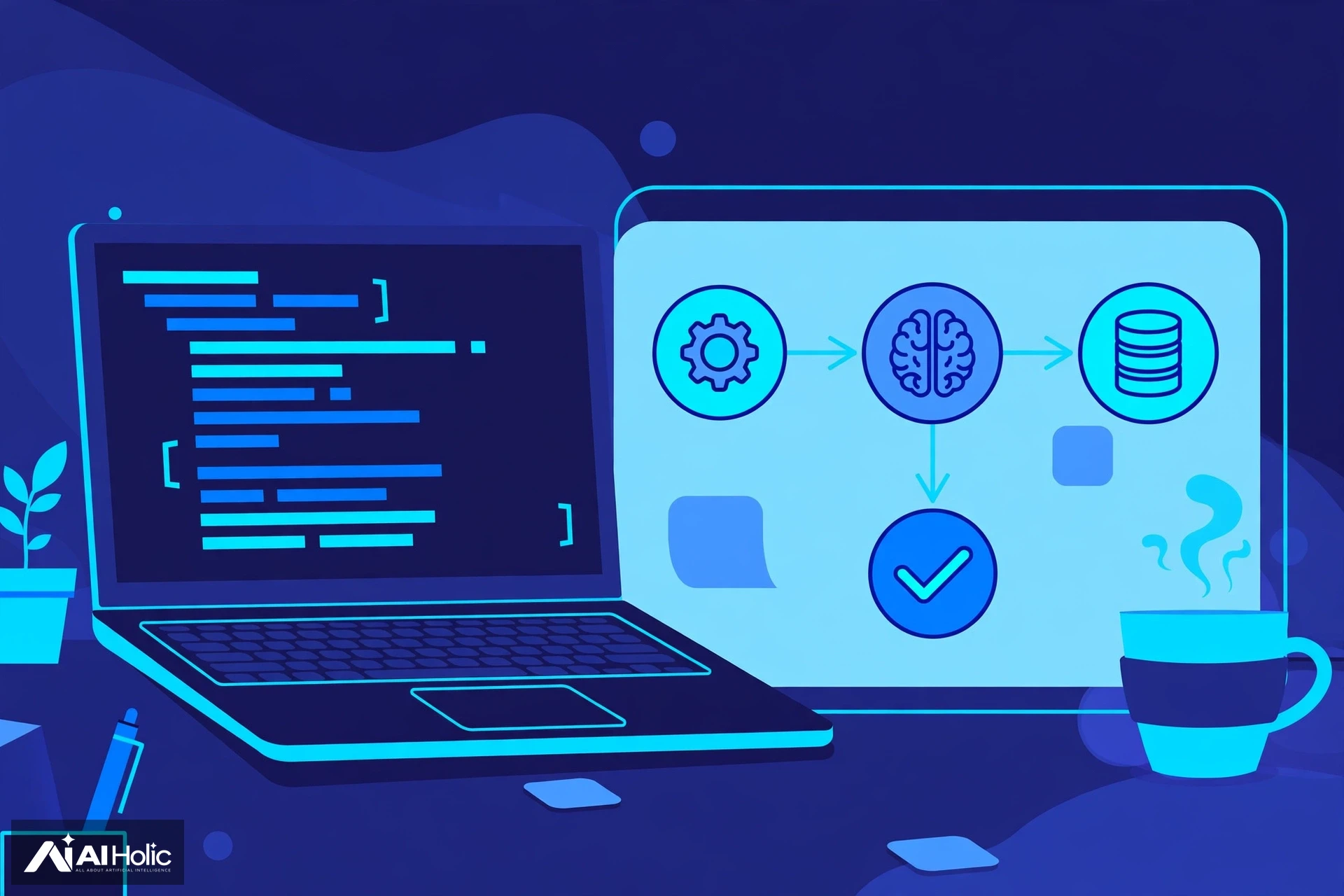
Most automation tools ask you to draw a flowchart. This platform takes a different path. You type the outcome you want in plain English, and it builds the workflow for you.
Each step goes to a specialist agent. A research agent can gather facts, a writing agent can draft the text, and a design agent can prepare the visuals. The agents pass work to each other until the job is done.
definable ai checks each step as the work runs. The vendor reports that a verification layer can retry a step or send it down a different path when an output changes or an API fails. That check matters because a multi-step job can fail at any point, and a silent failure can waste the whole run.
Our guide to what backend means in agentic AI explains the parts that run behind the scenes in this kind of setup. The front end takes your words, while the back end runs the agents, the checks, and the tools.
You can also test a workflow in a safe mode before you run it live. The launch release calls this a playground automation mode. It lets you try a complex workflow without touching your live apps or data.
- Sign in and open the workflow builder.
- Describe the outcome you want in one or two plain sentences.
- Review the agents the platform assembles for each step.
- Connect the apps the workflow needs, such as Gmail or Slack.
- Run the workflow in playground mode and check each step.
- Run it live and watch the verification layer handle any failed step.
Start with a small job, such as a weekly report or a support reply draft. A small job shows you how the agents split the work and where the checks sit. Once you trust the flow, move to a bigger job.
The Four Parts of the Platform
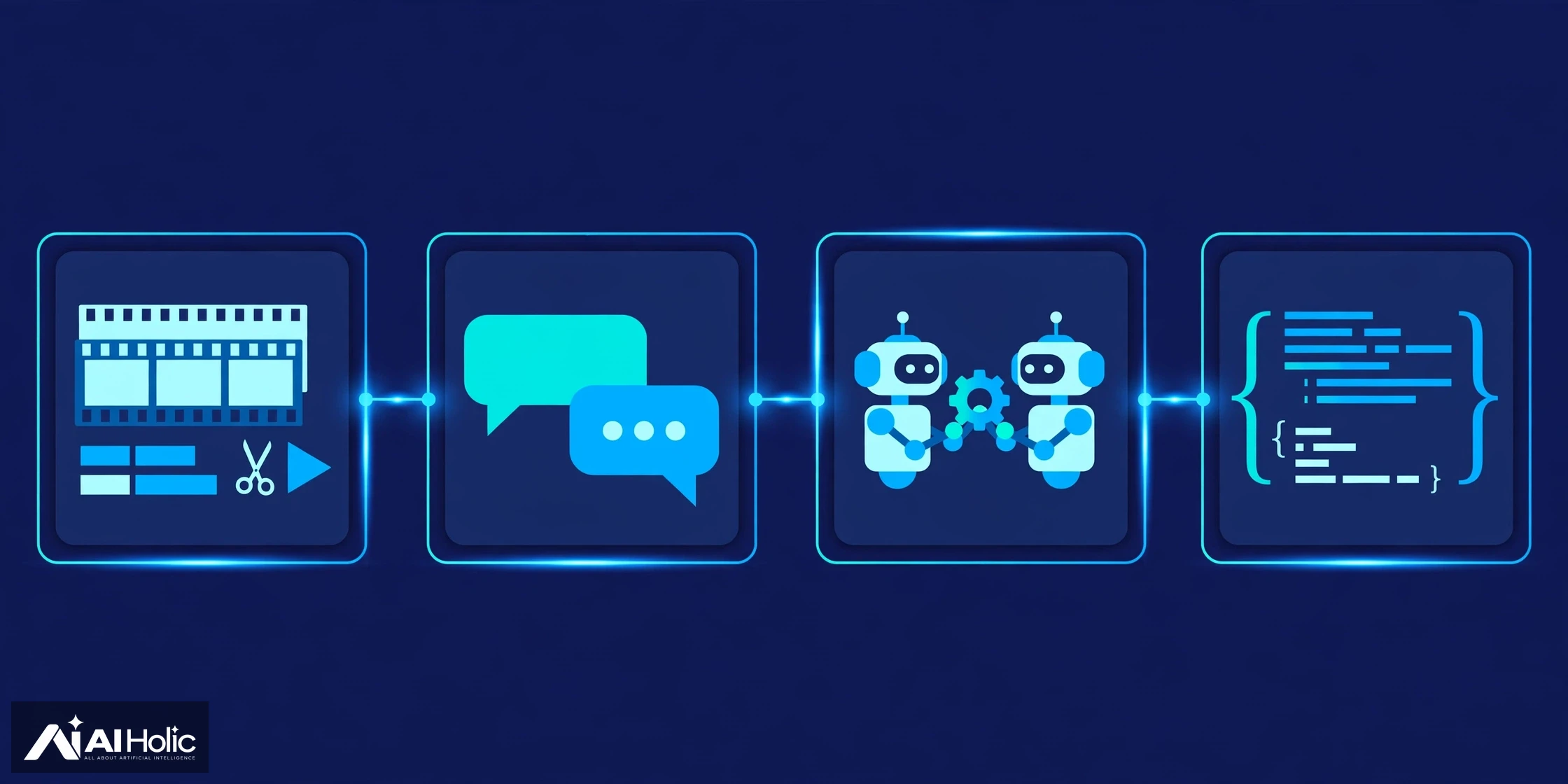
The platform has four parts, and each one covers a different kind of work. You can use one part on its own, or you can mix them in a single workflow. The parts below are how the vendor describes them in its launch release.
Definable Studio
Studio is the creative suite. Video Studio turns a written prompt into video with a multi-track timeline editor, scene transitions, and 1080p export for social media. Photo Studio offers more than 12 image tools, including relighting, inpainting, face swap, and object removal, for campaign visuals and product shots.
Definable Assistant
Assistant is the chat workspace. It puts more than 50 models in one place, with 500+ prompt templates and prompt boosters that tune your prompts for you. You can also upload documents, PDFs, and web pages into a knowledge base, so the assistant answers from your own data with citations.
The knowledge base keeps a memory of your data across chats, and visual knowledge maps show how your facts link together. That helps when you ask the same assistant about the same project over weeks, not just once.
Definable Agents
Agents is the automation side. A customer support agent can answer routine questions all day and night, trained on your company documents. Custom agents cover jobs such as legal and financial tasks, health knowledge help, and sales automation.
Definable Code
Code is the developer side. DefCode IDE covers planning, building, testing, and debugging in one place, with 500+ coding templates and GitHub support for pull requests. A Python and TypeScript SDK lets developers build and deploy agents of their own.
Pricing: Free Tier and Paid Plans
definable ai lists three plans in its launch release. The Starter plan is free and gives 5,000 monthly credits, basic text generation, limited models, and a 1M-token knowledge base. The Plus plan costs Rs.399 per month, and the Pro plan costs Rs.1,899 per month.
Prices come from the 7 April 2026 launch release, so check the current pricing page before you pay. Plans and credit limits can change after launch, and the rupee prices suit buyers in India first.
| Plan | Price | What you get |
|---|---|---|
| Starter | Free | 5,000 monthly credits, basic text generation, limited models, 1M-token knowledge base |
| Plus | Rs.399 per month | 25,000 credits, pro models, 5 MCP integrations, 15 knowledge bases, up to 50 custom AI apps |
| Pro | Rs.1,899 per month | 100,000+ credits, full Claude and Gemini access, unlimited knowledge bases and deployments, API and MCP tools |
The free plan needs no credit card, according to software directory listings. That makes it easy to test the workspace before you pay. Start on the free tier, and move up only when you hit a credit or model limit.
The Developer Side: The Open-Source Python Framework
definable ai also ships an open-source Python framework for developers. You install it with pip install definable, then build agents with tools, RAG, persistent memory, guardrails, and skills. It works with OpenAI, DeepSeek, Moonshot, xAI, and any OpenAI-compatible provider, so you can switch models without rewriting agent code.
The framework covers the full agent loop. It handles multi-turn chats, structured output, retries, and parallel tool calls, and it can serve an agent over HTTP with webhooks and cron triggers. It also connects to Telegram, Discord, and Signal, so one agent can serve several chat apps at once.
The Model Context Protocol (MCP) is the open standard that links AI systems to outside tools and data. The framework supports MCP, and the platform uses it to connect with apps such as Gmail, Slack, Notion, and GitHub. That shared standard is why the same agent skills work across the no-code platform and the code framework.
Our guide to building agentic AI applications with a problem-first approach explains how to start from the problem, not the tool. That advice fits here too, since the framework is only useful when the job behind it is clear.
You do not need the framework to use the platform. The no-code workflow builder suits teams that want results without code, while the framework suits developers who want full control. Pick the path that matches your skills.
Definable AI vs Agent Frameworks
Agent frameworks such as LangChain and CrewAI give developers libraries to code agents by hand. They offer full control, and they expect you to write the orchestration yourself. The platform takes the other path, with a managed workspace where you describe the outcome and the agents assemble themselves.
That trade is the real choice. A framework suits a team that wants to own every line of agent logic and run it on its own servers. A managed platform suits a team that wants a working workflow this week, with governance, checks, and app links built in.
Our roundup of AutoGenAI competitors covers other AI development platforms you can compare. Read it before you commit to one stack, since switching agent platforms later costs time.
Price also splits the two paths. Frameworks are often free to install, while a managed platform charges a subscription. Weigh the subscription against the hours your team would spend building the same checks, links, and dashboards by hand.
One more point matters. The platform still gives developers a code path through its SDK and the open-source framework. That mix lets a team start with no code and move to code later, without leaving the same product family.
Who It Suits Best
The platform suits startups and small business teams that want to automate cross-team work without hiring developers. A team can draft content, answer support tickets, and prep sales notes in one workspace. It also suits Indian teams first, since the pricing, servers, and support are built for that market.
It suits creators too. Studio covers video and image work, while Assistant covers research and writing. A solo creator can run a whole content flow, from idea to finished post, without five subscriptions.
Pick a code framework instead when you need full control over agent logic, your own servers, or a custom setup. Pick this platform when speed matters more than control, and when a checked, managed workflow beats a hand-built one.
Students can use the free tier to learn how multi-agent work feels in practice. A small project, such as a research summary with citations, shows the pattern fast. That hands-on test tells you more than any feature list.
Frequently Asked Questions
Is definable ai free?
Yes, for basic use. The Starter plan costs nothing and gives 5,000 monthly credits, basic text generation, and limited models. Paid plans start at Rs.399 per month when you need more credits, pro models, or more integrations.
What is the difference between this platform and Defensible AI?
They are two different ideas with similar names. This platform builds multi-agent workflows from plain English, while Defensible AI is a quality standard for AI outputs that can be explained, traced to source evidence, and checked under audit. Do not mix the two up when you search.
Can I use it for customer support?
Yes. The Agents module covers customer support, and the vendor reports it can handle routine questions all day and night. Train it on your company documents first, and check its answers on real tickets before you let it reply on its own.
Do I need to code to use it?
No. The workflow builder takes plain English and assembles the agents for you. Code is only needed when you use the open-source framework or the SDK, which are built for developers.
Which models does it support?
The vendor reports access to more than 50 leading language models under one subscription. You can switch models inside the same conversation and compare outputs side by side. The launch release names pro models on the Plus plan, but the full list can change, so check the current model list on the platform.
Conclusion
If you want multi-agent workflows without code, definable ai is worth a try. Start on the free tier, test one small workflow, and check the verification layer on a real job. Judge the result yourself before you pay for a plan.