Backend in Agentic AI Means: The Server-Side System That Makes Agents Work
If you don’t want to read the whole guide or have difficulty reading, you can listen to this guide instead.
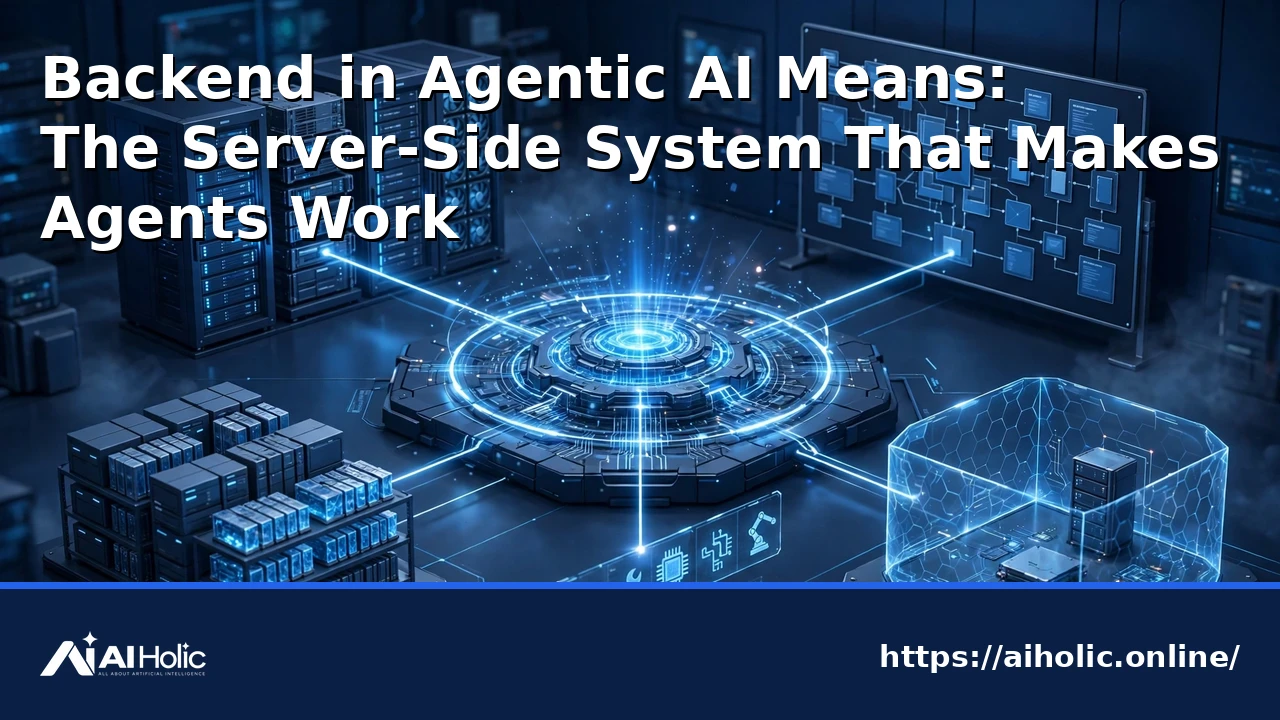
If you have read about AI agents that plan work, call tools, and finish tasks on their own, you may wonder what runs behind them. The short answer is that backend in agentic ai means the server-side system that plans, equips, and checks everything an agent does. It is the part you never see, and it decides whether an agent is useful or just a demo.
At AI Holic, we read the top guides on agent backends and compared what they agree on. This guide explains the parts in plain words, shows how a request flows through them, and helps you judge whether your own project needs one.
You will learn what each layer does, what breaks when a layer is missing, and how to choose between building your own backend and adopting one.
Backend in Agentic AI Means: The Short Answer
Backend in agentic ai means the server-side system that turns a user request into finished, checked agent work. A language model on its own can only write text. The backend gives it a plan, tools to act with, memory of what happened, and rules about what it may touch.
Think of a restaurant kitchen. The model is the chef who decides what to cook.
The backend is everything else: the recipes, the pantry, the timers, the safety rules, and the pass where each dish is checked before it reaches the table. Without that system, even a great chef serves chaos.
A chatbot only needs a model and a text box. An agent needs the whole kitchen, because it takes real actions in real systems. That is why teams that move from a demo to production almost always end up building or buying a backend.
| Job | Traditional backend | Agent backend |
|---|---|---|
| Requests | Short request and response cycles | Multi-step workflows that can run for hours |
| State | Product data in tables | Agent state, memory, and half-finished work |
| Access | Checks the user once | Checks the user, the agent, and each tool |
| Actions | Calls services directly | Lets the agent call tools under strict rules |
| Records | Logs API requests | Traces prompts, tool calls, retries, and cost |
| End of work | Returns a response | Pauses, resumes, retries, or asks for approval |
The Nine Parts of an Agent Backend
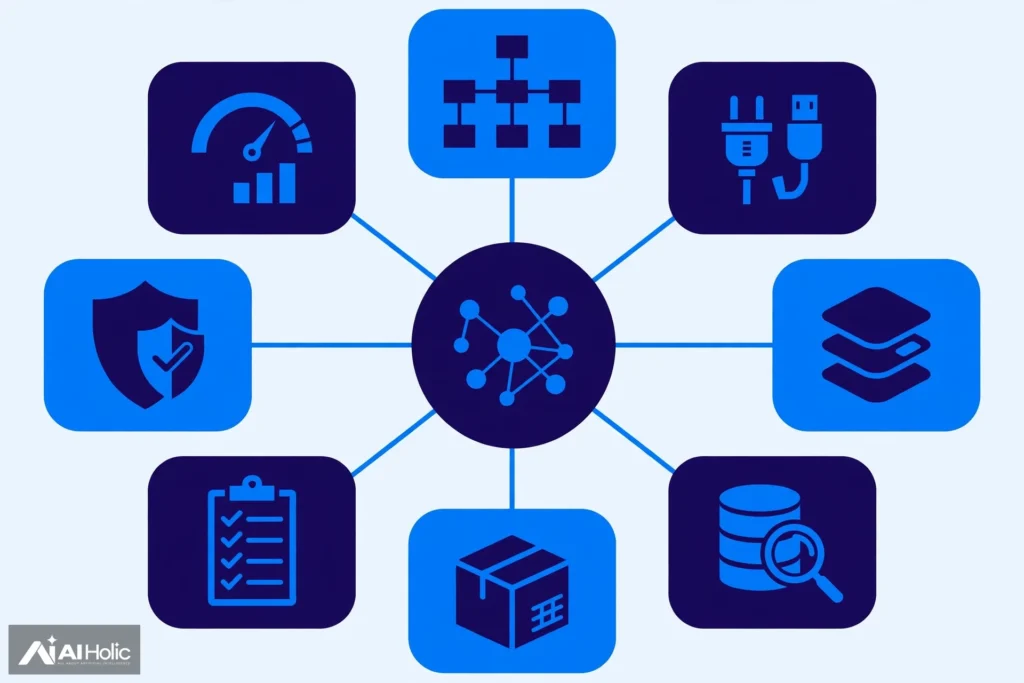
An agent backend does nine jobs, and each one answers a question the model cannot answer alone. The list below is the full set. Small projects may skip a layer, but they should know what they gave up.
- Orchestrator: runs the agent loop and routes each step to the right sub-task.
- Planner: breaks a goal into steps, picks tools, and checks progress.
- Tool layer: exposes safe, typed functions the agent may call, such as search, file read, or a test run.
- Retrieval: fetches facts from your documents and code so the agent answers from real data.
- Memory: keeps short-term task state and long-term facts across sessions.
- Execution sandbox: runs code and commands in an isolated space with limits on time and resources.
- Verification loop: tests, linters, and checks that confirm the work before it ships.
- Policy engine: sets who and what the agent may touch, with budgets and timeouts per tool.
- Observability: logs prompts, tool calls, costs, and outcomes so you can trace every run.
The planner and the orchestrator work as a pair. The planner decides what to do next, and the orchestrator keeps the loop moving, handles retries, and stops the run when it goes in circles.
Without a planner, the agent reacts to each step with no sense of the goal. Without an orchestrator, a failed step kills the whole run.
Memory is the part most demos fake. A software agent is a program that acts for a user or another program, and it needs to remember what it already did.
Short-term memory holds the current task, such as which files it already checked. Long-term memory holds facts across sessions, such as user preferences and past actions.
That memory layer is part of what backend in agentic ai means in practice. Workflow state should live in the backend, not only in the model prompt, so the agent can pick up where it left off.
To see what that memory layer changes inside real businesses, read our guide to ai agent memory enterprise vertical use cases, which maps memory to finance, healthcare, retail, legal work, and support.
Retrieval gives the agent facts it was never trained on. With retrieval-augmented generation, the system searches your documents first and hands the best passages to the model with the question.
The term was introduced in a 2020 research paper, and it is now the standard way to ground an agent in private data. Without it, the agent guesses from training data that may be old or wrong.
How a Request Flows Through the Backend
One user request can trigger a long chain of backend work. The steps below show the normal flow, from the moment the request arrives to the moment the result is checked and returned.
- Receive the goal. The backend takes the request, checks who sent it, and opens a session with a clear scope.
- Plan the work. The planner breaks the goal into steps and picks the tools each step needs.
- Fetch context. Retrieval pulls the right documents, code, or records and hands them to the model.
- Call tools. The agent runs each step through the tool layer, inside the sandbox, under the policy rules.
- Check the result. The verification loop runs tests or compares the output against the spec.
- Ask a human when it matters. Risky steps pause for approval instead of running on their own.
- Log everything. Every prompt, tool call, and outcome is stored so the run can be traced later.
Notice how much of this has nothing to do with the model. The model writes the plan and picks the next action, but the backend owns the session, the tools, the checks, and the record. That split is the whole point of what backend in agentic ai means: the model reasons, and the backend makes the reasoning safe to run.
Long runs are where the backend earns its keep. A chatbot answers in seconds, but an agent workflow can run for minutes, hours, or even days while it waits on a system, a file, or a human. The backend keeps the workflow alive through all of that, so a pause or a failure never means starting over.
What Breaks When a Layer Is Missing
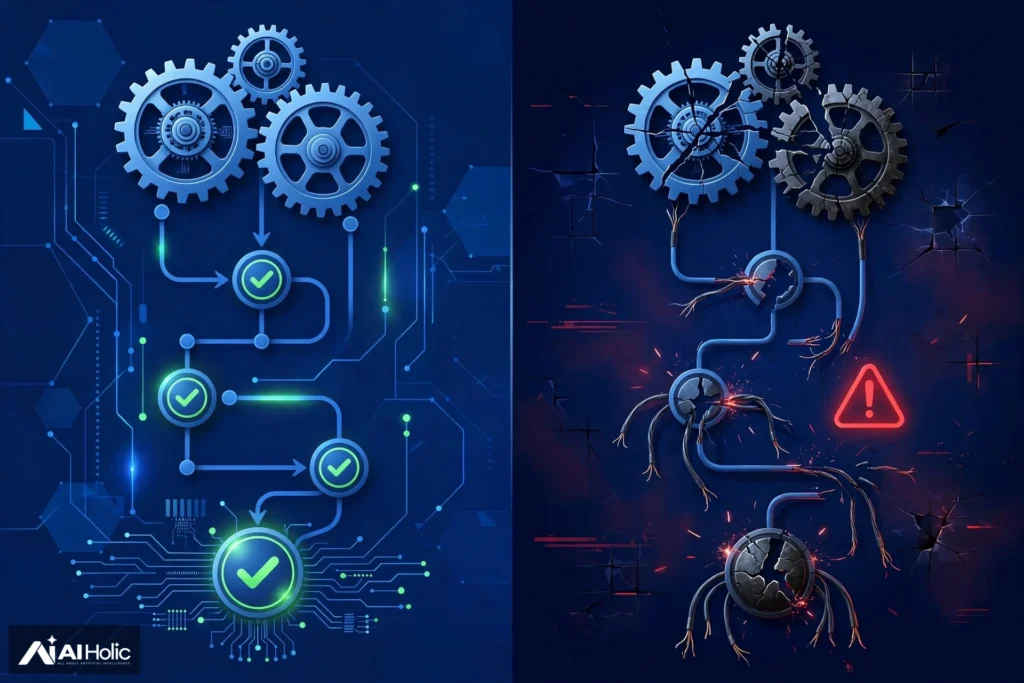
Each missing layer fails in its own way, and the failure often looks like a model problem when it is really a backend problem. The table below maps each gap to the symptom you will see in production. Every gap below is a piece of what backend in agentic ai means going missing.
| Missing layer | What you see | What it costs you |
|---|---|---|
| No planner | The agent wanders and repeats steps | Wasted tokens and unfinished tasks |
| No memory | The agent asks for the same facts twice | Slow runs and annoyed users |
| No retrieval | Confident answers from old data | Wrong results you cannot trace |
| No sandbox | Agent code touches live systems | Real damage from a bad command |
| No verification | Broken code ships as finished work | Trust lost with the first bad output |
| No policy engine | The agent reads data it should not see | Privacy and security failures |
| No observability | Nobody can explain a wrong answer | Bugs you cannot fix or repeat |
The most common trap is the sandbox-first mistake. Teams start with isolation, which is a real need, and then assume the backend is nearly done.
Isolation is only one layer. Sessions, streaming, file intake, retries, and metering still have to be built, and they surface the moment real users touch the feature.
Agent as a Backend: A Second Meaning
The phrase has a second meaning worth knowing. In the Agent as a Backend pattern, the agent itself becomes the backend. Instead of calling a fixed endpoint for each job, the client sends a goal, and the agent decides which databases to query, which scripts to run, and how to shape the answer.
This trades fixed, predictable computing for reasoning that adapts to each request. A normal endpoint can only answer the questions it was built for.
An agent backend can take a request nobody planned for, such as linking news articles to match stats, and work out the steps on its own. That freedom is the benefit, and it is also the risk.
The pattern fits systems that need reasoning and adaptive decisions more than fixed endpoints. It fits poorly where the work is simple and fixed.
If the steps never change, the inputs are clean, and the output has one right answer, a script or a workflow tool will beat an agent on speed, cost, and reliability.
Our guide to AI-powered workflows shows the fixed-workflow side of that choice.
Do You Need an Agent Backend
Not every project needs one. A single chatbot on your help pages can run on a model call and a small script.
The need appears when the agent starts doing real work in real systems. Each item below is a sign that backend in agentic ai means something real for your project, not just a demo pattern.
- Your agent calls tools or writes to systems such as a CRM, a database, or email.
- Work takes more than one step, or it must pause and resume later.
- More than one person uses it, so permissions and audit logs matter.
- A wrong action would cost money, leak data, or reach a customer.
- You need to know why an answer was wrong, not just that it was wrong.
If you checked none of these, keep it simple and revisit the question later. If you checked two or more, start with the smallest backend that covers those needs. A small team can begin with a planner, a tool layer, a sandbox, and logs, then add memory, retrieval, and policy rules as the agent takes on more work.
An online store is one place where those layers pay off fast. Our guide to ai agents ecommerce automation latest shows which store jobs agents handle now, from order status and refunds to stock and ads, and where a person still has to approve the work.
Start from the problem, not from the model. Our guide to building agentic AI applications with a problem-first approach shows how to name one clear job, split fixed work from reasoning work, and set metrics before you write code. That method keeps the backend small, because the agent only earns the layers its job truly needs.
Guardrails: Keeping an Agent Safe
An agent that can act needs limits set before launch, not after a mistake. The policy engine enforces least privilege: each tool gets a narrow scope, each file path gets a clear rule, and each network call gets an allow list. If a user cannot see certain data, the agent acting for that user cannot see it either.
Prompt injection is the attack to plan for first. An attacker can hide instructions inside data the agent reads, such as a PDF or an email, and the agent may follow them as if they came from you.
OWASP ranks prompt injection as the number one risk in its Top 10 for LLM applications. The fix is input screening, least-privilege tool access, and approval gates enforced in code, not just in the system prompt.
A system prompt alone is not an access-control boundary. It can state the rules, but only application code can enforce them.
Human approval belongs on the risky list too: money moves, data deletion, and messages to customers should pause for a person to confirm. That one gate stops most of the damage a confused agent can cause.
Build It or Adopt It
Two paths lead to the same seven jobs. You can assemble the backend from primitives, picking a sandbox and wiring an agent framework into it, then building the lifecycle, streaming, file, and routing layers yourself. Either way, backend in agentic ai means the same set of jobs, and only the owner changes.
Or you can adopt a complete backend behind one contract, where one integration covers the harness, the sandbox, sessions, streaming, file intake, and metering. That path fits when agents power features inside your product and the backend is plumbing, not the product. The two paths also mix: a sandbox can sit under a complete backend, and a team can adopt the complete path for product features while keeping a primitive stack for special work.
Decide layer by layer, not all at once. Ask which layers your first feature will use in its first week, who owns sessions and file intake, and what switching harnesses would cost you.
If most of the list is plumbing for your team, adopting saves months. If the runtime is your edge, building is the honest choice.
Our guide to Clay automation templates for lead routing shows the adopt side of this thinking in a smaller form: clear triggers and rules doing one defined job well.
Frequently Asked Questions
What Does Backend in Agentic AI Mean in Plain Terms?
Backend in agentic ai means the server-side system that plans, equips, and governs an agent built on a language model. It holds the orchestrator, the planner, the tools, retrieval, memory, the sandbox, the verification loop, the policy engine, and observability. The model thinks, and the backend makes that thinking safe to run in the real world.
How Is an Agent Backend Different From a Normal Backend?
A normal backend answers short requests and returns a response. An agent backend runs multi-step workflows that can pause and resume, keeps agent state and memory, enforces permissions for users and tools, and traces every prompt and tool call. It is built for work that takes time and judgment, not for single clicks.
Do Small Teams Need an Agent Backend?
Only when the agent starts doing real work. If it only answers questions, a model call is enough.
If it calls tools, writes to systems, or acts for users, you need at least a planner, a tool layer, a sandbox, and logs. Add memory, retrieval, and policy rules as the agent takes on more.
What Is the Most Important Layer to Build First?
Start with the sandbox and the policy engine, because they limit damage. Then add the verification loop so bad work never ships as finished. Those two layers are the core of what backend in agentic ai means for a team shipping its first agent.
Can One Agent Backend Serve Many Agents?
Yes. A shared backend can run many agents, each with its own session, tools, and permissions.
The orchestrator routes work to the right agent, the policy engine keeps each one in its own scope, and observability tracks them all. That shared layer is what turns a set of demos into a system you can run.
Conclusion
Backend in agentic ai means the server-side system that plans, tools, verifies, and governs agent work. Start with a sandbox, a policy engine, and a verification loop, then add the rest as your agent earns more trust. Build small, measure each run, and let the backend grow with the job.