
AI Agent Memory Enterprise Vertical Use Cases: How Memory Changes Agents in Finance, Healthcare and Retail
If you don’t want to read the whole guide or have difficulty reading, you can listen to this guide instead.
An agent that forgets is a new hire every morning. It asks the same questions, repeats the same mistakes, and starts each job from zero. That is why ai agent memory enterprise vertical use cases matter so much: memory is what turns a one-off chatbot into an agent that learns how your business works.
At AI Holic, we read the top guides on agent memory and vertical agents and compared what they agree on. This guide explains the four memory types in plain terms, then walks through finance, healthcare, retail, legal work, and support, so you can see where memory pays and where it needs a guardrail.
- The Short Answer
- What Agent Memory Is
- Finance: Memory That Knows the Client File
- Healthcare: Memory That Keeps the Patient Story Straight
- Retail and Ecommerce: Memory That Remembers the Shopper
- Legal and Professional Services: Memory That Builds on Past Matters
- Sales and Support: Memory That Carries the Conversation
- Which Memory Type Fits Each Vertical
- How to Plan Memory Before You Build
- Costs, Speed, and Trade-Offs
- What Can Go Wrong With Agent Memory
- Frequently Asked Questions
- Conclusion
AI Agent Memory Enterprise Vertical Use Cases: The Short Answer
ai agent memory enterprise vertical use cases describe one idea: an agent that remembers past work and uses it in the next job.
In finance, that means a client file that carries forward. In healthcare, it means a patient history the agent does not ask for twice. In retail, it means a shopper the agent already knows.
Memory works because most enterprise work repeats with small changes. The agent stores facts, decisions, and outcomes, then pulls back only what fits the current task. Without that store, every session starts blank, and the business pays for the same work again.
What Agent Memory Is
Agent memory is the set of systems that store what an agent learns, retrieve it when it fits, and apply it to the next task. A model on its own has no memory past its current context window. The memory layer sits outside the model and keeps facts alive between sessions.
An agentic AI system pursues a goal, uses tools, and takes actions with some freedom. Memory is what lets it carry lessons from one task to the next.
Think of a new employee with full access to project notes and client history, next to one who forgets everything each night. Both may be skilled in the moment. Only one can act on past context, avoid repeat mistakes, and build trust over time.
| Memory type | What it stores | What limits it |
|---|---|---|
| In-context memory | The live task, recent turns, and current files | The context window, about 128K to 1M tokens |
| External memory | Past sessions, facts, and documents in a store outside the model | Retrieval quality and upkeep of the store |
| In-weights memory | Knowledge baked into the model by training or fine-tuning | Fixed once training ends, hard to update |
| In-cache memory | Reuse of past inference work for repeated context | GPU memory pressure on long sessions |
Most production setups combine at least two types, usually in-context memory for the live task plus an external store for history. That mix is what makes ai agent memory enterprise vertical use cases work in practice, because each vertical stores a different kind of fact.
A bank stores case files. A clinic stores visit notes. A store stores order history.
Retrieval-augmented generation, or RAG, is the pattern most teams use for the external store. The agent searches a set of documents, adds the best passages to its prompt, and then answers.
Wikipedia describes retrieval-augmented generation as a technique that lets a model pull in new information from outside sources before it responds. The idea dates to a 2020 paper that paired a language model with a searchable index of passages.
Stanford researchers showed in 2023 that agents with structured memory could stay coherent over long stretches of work. Their agents stored observations, wrote short reflective summaries, and retrieved memories by relevance and recency. That paper, often called Generative Agents, is still the clearest proof that memory changes agent behaviour over time.
Finance: Memory That Knows the Client File
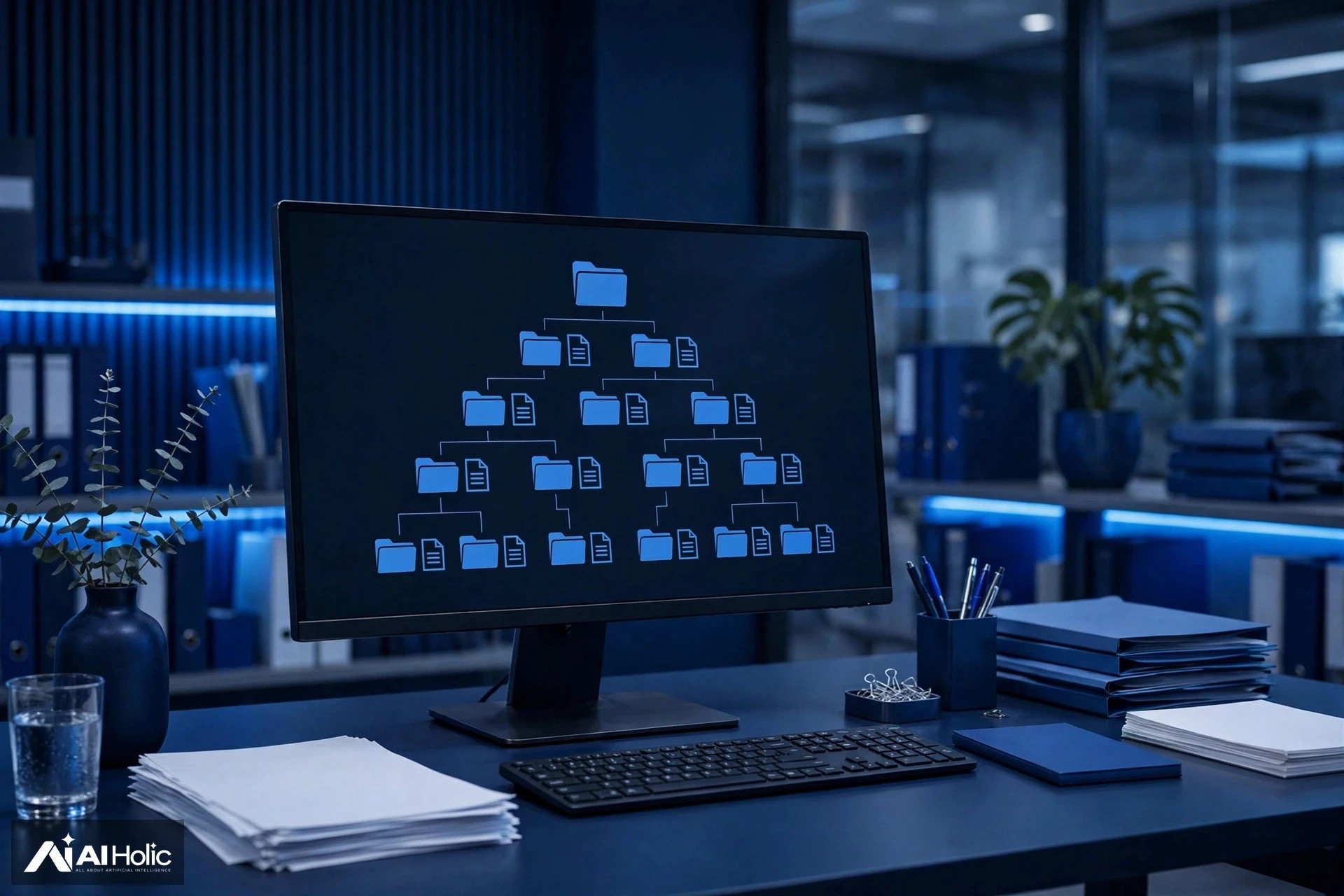
In finance, ai agent memory enterprise vertical use cases start with the client file. A compliance agent keeps one folder per customer with identity documents, ownership filings, sanctions checks, and past decisions with reasons. When a new alert arrives, the agent reads that folder before it acts.
That history is what cuts repeat work. The agent can see that a similar alert was cleared last month, with the same evidence, and clear it again with a note.
It can also see the one case that was escalated, and send the new alert straight to a person. The audit trail comes free, because the folder is the record.
The risk here is stale memory. A sanctions list changes, a client changes owners, and an old fact becomes wrong. Finance teams need expiry dates on stored facts and a rule that the agent re-checks live lists before any decision that moves money.
One vendor guide reports that banks using this pattern cut false-positive alerts by 30 to 50 percent. Treat that as the vendor’s own report, not a tested fact, and measure your own queue before and after a pilot. Your numbers are the ones that count.
Healthcare: Memory That Keeps the Patient Story Straight
In healthcare, ai agent memory enterprise vertical use cases centre on the visit. A documentation agent keeps the patient history, past visit notes, and the clinic’s own rules in one place. During a visit it pulls the right history, checks it against current guidance, and drafts notes that match how the clinic works.
The gain is time. Clinicians spend nearly as much time on notes as on care, and an agent that already knows the patient cuts the re-asking.
The risk is just as clear: health data is sensitive, and memory that crosses patients or clinics is a breach, not a feature. Access rules must sit in the memory layer itself, not in a policy document.
Start with one clinic and one note type. Let the agent draft, let a clinician approve, and check the drafts each week for facts the agent carried over wrongly. Only widen the scope when the error rate stays low for a full month.
Retail and Ecommerce: Memory That Remembers the Shopper
In retail, ai agent memory enterprise vertical use cases show up in support first. An agent that knows the shopper’s orders, past issues, and stated likes can answer without asking for an order number twice. It can also tell a loyal buyer from a first-time visitor and change its tone to fit.
Our guide to AI agents ecommerce automation latest covers the store jobs that automate well now, and support sits at the top of that list. Memory is what makes those support agents feel personal instead of scripted.
Memory also helps with sales. An agent that recalls what a shopper looked at, what they bought, and what they returned can suggest items that fit. Keep the line clear, though: the agent should use only data the shopper gave you, and it should never share one shopper’s history with another.
Legal and Professional Services: Memory That Builds on Past Matters
A legal agent with memory keeps past matters, clause choices, and client likes in a store it can search. When it drafts a standard agreement, it starts from the clause the client accepted last time, not from a blank page. That shortens partner review, because the first draft lands closer to the final form.
The guardrail here is privilege. Matter files hold client secrets, and the memory store must keep each client’s facts apart.
One shared store with no walls is a risk no firm should take. Test the wall before the first real matter goes in.
Tax and compliance teams gain the same way. An agent that recalls how a prior filing was treated, which clauses drew questions, and what the regulator accepted can draft the next filing with fewer gaps. The human still signs, but the draft starts from real history.
Sales and Support: Memory That Carries the Conversation
A sales agent with memory builds a full picture before a meeting. It pulls call notes, past emails, and deal history into one brief, so the rep walks in knowing what was promised and what is still open. A support agent does the same for tickets, so a customer never repeats their story to a new agent. An ai executive assistant puts that same memory to work on your inbox and calendar, turning past emails and meeting notes into prep briefs and follow-ups.
Reporting agents gain the same way. An agent that recalls which numbers you track, which format you like, and when you want the report can draft the weekly update with little input. It compares this week with last week from its own store, instead of asking you to restate the baseline each time.
Databricks research, as reported by Yodaplus, found one agent’s accuracy rose from 2.5 percent to over 50 percent after it had stored 62 past records. The point is simple: memory compounds, and each stored record makes the next job easier. Treat the number as one reported test, and run your own pilot to see your own gain.
Which Memory Type Fits Each Vertical
No single memory type fits every vertical. The right choice follows the work: fast recall for support, exact records for finance, and strict walls for health and legal data. Use the table below as a starting point, then test it against your own workflow.
| Vertical | Main memory type | First job to pilot |
|---|---|---|
| Finance and banking | External store with case folders | Alert triage with a human check |
| Healthcare | External store with strict access walls | Visit-note drafting with clinician approval |
| Retail and ecommerce | External store plus in-context recall | Order-status support for repeat shoppers |
| Legal services | External store split by client | First drafts of standard agreements |
| Sales and support | External store plus procedural routines | Meeting briefs and weekly reports |
Procedural memory deserves a note here. It stores how to do a job, not just facts about it.
An agent that has run the same KYC check fifty times can reuse the steps instead of planning them fresh each time. That is where the time saving grows, because the routine itself is remembered.
How to Plan Memory Before You Build
The best time to plan memory is before you pick a model or a framework. Most ai agent memory enterprise vertical use cases fail on retrieval quality and upkeep, not on the model itself. Decide what gets stored, how it is indexed, how stale facts are removed, and who can see each record.
- Pick one workflow. Choose a job that repeats and has a clear pass mark.
- Name what the agent may store. List the facts, the source, and the expiry for each one.
- Set the read, draft, and act rules. The agent reads history, drafts from it, and only acts inside limits you wrote.
- Build the delete path first. If a person asks to be forgotten, the store must forget them on request.
- Measure before you widen. Track handle time, error rate, and escalation rate for four weeks.
Our guide to backend in agentic ai means explains the server-side parts that make this work: the planner, the tools, the checks, and the logs. Memory plugs into that backend, it does not replace it. If the backend cannot log what the agent recalled, you cannot audit what it did.
Our guide to building agentic AI applications with a problem-first approach shows how to name one clear job before you build. Start there, and let memory serve that job, not the other way round.

Costs, Speed, and Trade-Offs
Memory is not free. Long sessions hold a large cache in GPU memory, and a session of half a million tokens can take a visible share of one GPU.
VAST Data chief technology officer Alon Horev explained in a 2026 interview that moving that cache to tiered storage avoids paying to recompute it. That trade is now part of enterprise planning, not a detail for later.
Retrieval adds a small delay to each answer, because the agent must search before it writes. The cost is worth it when the retrieved fact stops a wrong answer.
It is not worth it for a one-off question with no history behind it. Match the memory depth to the job, and keep short questions light.
Upkeep is the quiet cost. Someone must review stored facts, remove what is stale, and fix what the agent recorded wrongly.
Plan that review as a weekly job with a named owner. A memory store with no owner drifts, and a drifting store teaches the agent bad habits.
What Can Go Wrong With Agent Memory
Stale memory is the first failure. A fact that was true in March can be wrong by June, and an agent that trusts old notes will act on them. Give every stored fact a date and a review rule, and let the agent flag facts it has not seen confirmed in a while.
Wrong-person memory is the second. An agent that mixes up two clients, two patients, or two shoppers will say the wrong thing to the wrong person. Keep memory scoped to one person or one account, and test the scope with lookalike records before launch.
The third failure is memory with no off switch. People change their minds, withdraw consent, or ask to be forgotten.
Your store needs a delete path that works, and a log that proves the delete happened. If you cannot delete a memory, do not store it.
Interest in this area is rising fast. In McKinsey’s 2025 State of AI survey, 23 percent of respondents said their firms were scaling an agentic AI system, while 39 percent had begun testing AI agents. Memory is now a budget line for those teams, and governance is part of that budget, not an extra.
Frequently Asked Questions
What Is Agent Memory in Simple Terms?
It is the store an agent uses to keep facts, choices, and past work between sessions. The model itself forgets when the session ends. Memory lets the next session start with what the last one learned.
How Is Agent Memory Different From RAG?
RAG is one way to build memory: the agent searches documents and adds the best passages to its prompt. Memory is the wider idea, and it also covers short-term context, stored facts, learned routines, and cached work. RAG is a tool inside the memory layer, not the whole layer.
Which Vertical Gains Most From Agent Memory?
Finance and healthcare gain most, because their work is case-based and evidence-heavy. A bank reuses client files, and a clinic reuses patient history. Retail support follows close behind, because repeat shoppers reward an agent that knows them.
Is Agent Memory Safe for Regulated Work?
It can be, if the rules sit in the memory layer: one scope per client, expiry dates on facts, a delete path, and a log of what the agent recalled. ai agent memory enterprise vertical use cases in banks and clinics only work in practice when those rules are tested, not just written down.
How Do I Start With Agent Memory?
Pick one workflow, name what the agent may store, and set read, draft, and act limits. Run a four-week pilot with a person checking the work. Widen the scope only when the error rate stays low.
Does Agent Memory Make Agents More Expensive to Run?
It adds storage and upkeep costs, and retrieval adds a small delay to each answer. It can still save money, because the agent stops redoing work it already did. Measure handle time and error rate in your pilot, and judge the cost on those numbers.
Conclusion
ai agent memory enterprise vertical use cases all point the same way: memory turns a forgetful agent into one that learns your business. Pick one workflow, store only what you can govern, and let a person check the work. Start small, measure for a month, and let memory earn a wider role.