AI Vision Technology 2026: How Machines See, Learn, and Act
If you don’t want to read the whole guide or have difficulty reading, you can listen to this guide instead.
Cameras now read labels, count products, spot faults on a factory line, and help cars stay in lane. The phrase ai vision technology 2026 covers all of that, and this guide explains it in plain words. You will learn what the technology is, how it works step by step, and what changed this year.
At AI Holic, we read the research and the trend reports so you do not have to. This guide gives you a short answer first, then the five-step pipeline, the main uses, the limits, the rules for camera use, and a short list of ways to try it yourself.
The Short Answer
AI vision is the part of artificial intelligence that lets machines make sense of images and video. A camera records pixels, and software turns those pixels into meaning: that shape is a person, that part has a crack, that sign says stop. The big change in ai vision technology 2026 is that one general model can now do many of those jobs, where older systems needed a separate trained model for each job.
Three shifts drive the change. First, large vision models trained on huge sets of images and text can answer plain-language questions about a scene. Second, cheaper chips run those models on the camera itself, so video no longer has to travel to the cloud.
Third, systems now act on what they see, by sending an alert or stopping a line.
What AI Vision Technology 2026 Is
AI vision, also called computer vision, is the field of AI that helps machines read visual information from the world. It covers photos, live video, scans, and sensor data. The machine does not see the way you do.
It measures light, color, and shape as numbers, then uses learned patterns to name what is in front of it.
It is one of the main types of AI, and it sits beside language tools and chatbots rather than above them. Language tools work with words, while vision tools work with pictures. The two now meet in multimodal models, which take in both an image and a question in words, then answer in words.
That pairing is why a phone can now describe a photo or read a menu.
The Five Jobs of AI Vision
Five jobs sit at the heart of the field. Classification gives a whole image one label, such as cat or dog. Detection finds objects and marks where they are with boxes.
Segmentation marks exactly which pixels belong to each object. Reading text from images is called OCR. Tracking follows an object across video frames.
Most real products mix two or more of these jobs.
| Job | What It Does | Everyday Example |
|---|---|---|
| Classification | Labels a whole image | Sorting photos by what they show |
| Detection | Finds objects and their place | Face sign-in on your phone |
| Segmentation | Marks each pixel by object | Outlining a tumor on a scan |
| Text reading (OCR) | Reads words from images | Scanning a receipt into text |
| Tracking | Follows objects over time | Counting cars at a junction |
How It Works
Every vision system follows the same five steps, from light to a decision. The hard work sits inside step three, where the model learns patterns. If you grasp these five steps, every product in ai vision technology 2026 becomes easier to judge.
1. Capture
A camera, scanner, or sensor turns light into a grid of pixels. Each pixel holds numbers for brightness and color. A color photo stores red, green, and blue values for every point, so a small image already holds thousands of numbers.
Computer vision starts with this grid, and nothing else.
2. Clean and Prepare
Raw pixels are messy. The system resizes the image, fixes brightness, and removes noise before it looks for meaning. This step matters more than it sounds.
A model trained on clear daylight photos can fail on a dim, rainy frame, so good preparation keeps results steady.
3. Find Patterns
The model scans the grid for patterns it learned from training. Early layers pick up edges and corners. Middle layers pick up textures and shapes.
Later layers join those parts into full objects. Older systems used convolutional neural networks for this work. In 2026, vision transformers are the standard backbone, because they cut an image into patches and weigh how each patch relates to the rest.
4. Decide and Act
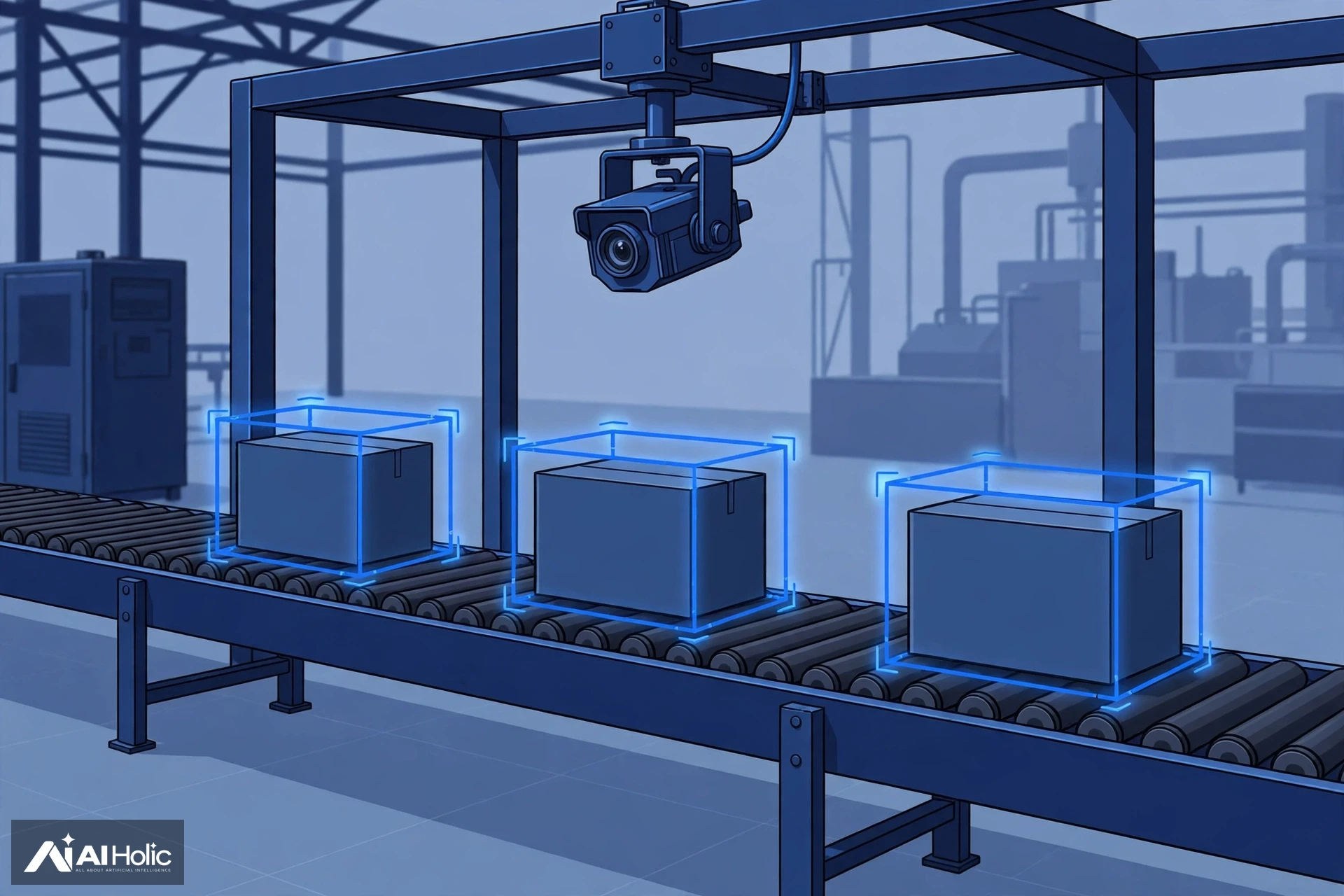
The model turns its findings into an output: a label, a box, a count, or a written answer. Newer systems go one step further and act. A safety system can route an alert to the right supervisor with a photo attached.
What Changed in 2026
The year 2026 did not bring one single invention. Several shifts arrived together and changed how teams build and buy vision systems. The table below lists the main changes in ai vision technology 2026, with the source for each claim.
| Change in 2026 | What It Means | Source |
|---|---|---|
| General vision models | One model answers many visual questions without retraining | viso.ai trends 2026 |
| Agentic vision | Systems act on what they see, not just flag it | viso.ai trends 2026 |
| Edge AI as standard | Models run on the camera, so video stays on site | viso.ai trends 2026 |
| Synthetic training data | Computer-made images fill gaps where real photos are rare | viso.ai trends 2026 |
| Faster inspection hardware | Cognex In-Sight 3900 launched May 2026, up to 4x speed | Meticulous Research |
| EU AI Act enforcement | Workplace vision uses face new duties and checks | viso.ai trends 2026 |
The market figures show the same story. The computer vision market is projected to reach 32.88 billion dollars in 2026, growing to 68.38 billion by 2031 at a yearly rate of 15.77 percent, according to figures from Mordor Intelligence cited by viso.ai.
Hardware moved too. Cognex launched its In-Sight 3900 camera system in May 2026, with up to four times the processing speed of earlier systems and resolution up to 25 megapixels. Its OneVision platform also went generally available in May 2026, with more than 100 customers already using it.
At VISION 2026 in Stuttgart in October, firms showed smart sensors with on-device learning.
Physical AI is the most visible new use. Tesla Optimus humanoid robots began production in January 2026, and Agility Robotics Digit robots work in Amazon fulfilment centres, according to viso.ai. Both rely on real-time vision to move safely around people.
Where It Is Used Now
Vision systems now work in places most people never see, and in tools they use each day. The table below gives the main uses in ai vision technology 2026, and the paragraphs after it add the detail. One useful way to think about it is this: where a person once had to watch a screen or check a part by eye, a vision system now does the first pass.
| Area | What Vision Does There |
|---|---|
| Factories | Spots defects, checks labels, reads codes on fast lines |
| Health care | Helps read scans, plans surgery, watches patients |
| Shops and stores | Tracks shelves, runs smart checkout, stops losses |
| Roads and cars | Reads lanes and signs, watches drivers, guides robots |
| Farms | Checks crops, counts animals, guides machines |
| Phones and photos | Signs in by face, sorts photos, reads text live |
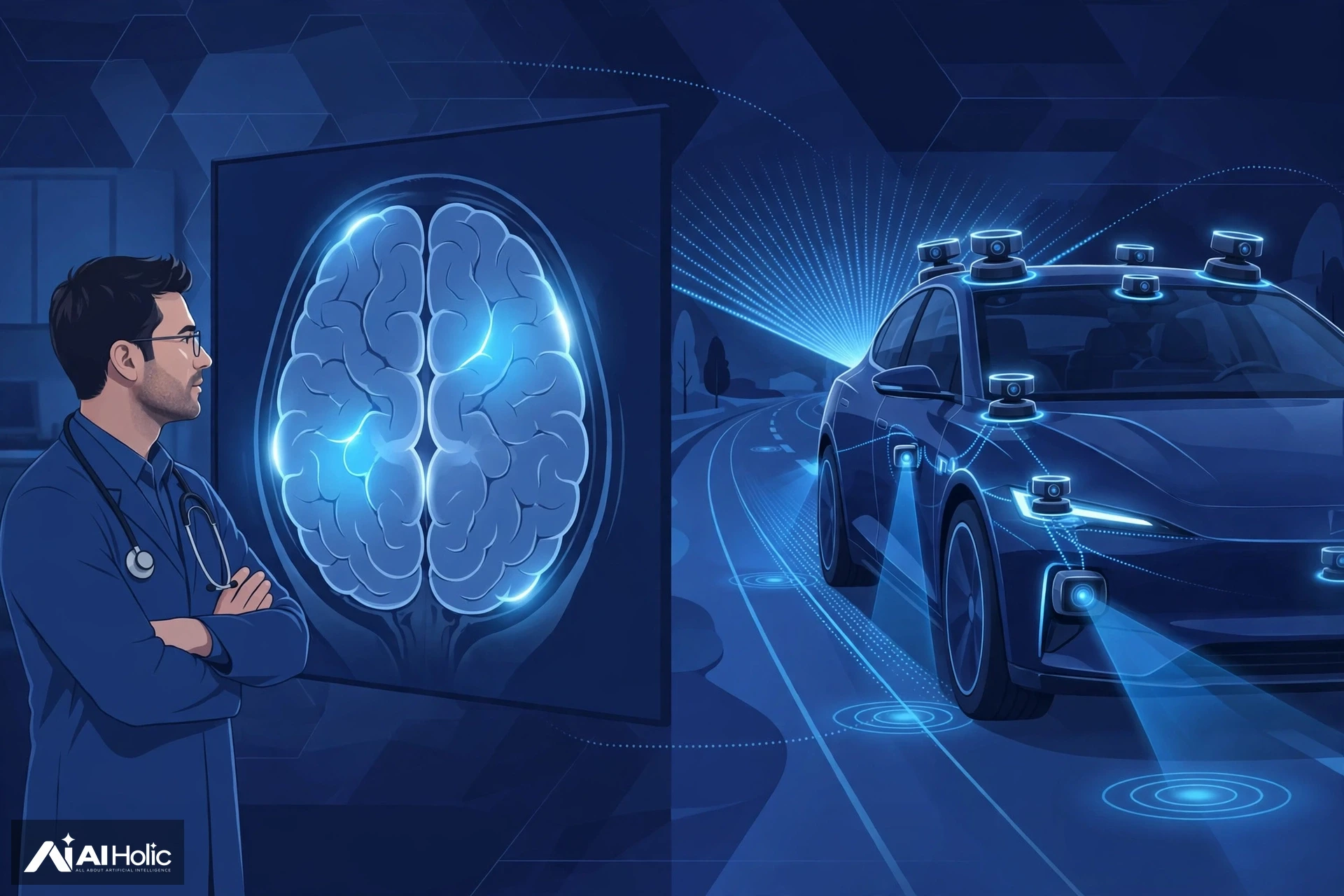
Factories remain the largest use. Quality checks spot surface faults, wrong labels, and missing parts at speeds no human team can match. In health care, vision models help radiologists find and mark problems in scans, and they help plan surgery.
The doctor still makes the final call.
Shops use vision to watch shelves, count stock, and run checkout without a till. Roads use it for lane keeping, sign reading, and driver checks. Phones use it for face sign-in, photo search, and live text translation from the camera. For the store side of this technology, see our guide to retail ai vision systems.
If you have used visual search from videos, you have already met this technology in a search box. Security teams use it to watch perimeters and crowds.
What It Still Gets Wrong
Vision models are strong, but they fail in ways that matter. They can miscount large groups of similar objects, misread tiny text, and lose track of exact positions in a scene. They can also invent details, a problem called hallucination, when they answer questions about an image.
These limits come from the assisters.io explainer, updated 13 November 2026, so test them before you trust a system with a real job.
Lighting, rain, dust, and odd angles still cause errors. A model trained on clear photos can miss a fault on a dirty part. Small changes to pixels that a person cannot see can fool a model into a wrong answer.
Bias is a real risk too: a model trained mostly on one group of people or one kind of scene will work worse for everyone else.
- Test counts by hand before you trust them for stock or safety.
- Check small text with a second method, such as a barcode.
- Keep a human in charge of medical, legal, and safety calls.
- Retest after any change to cameras, light, or layout.
Costs, Privacy, and Rules
Cost depends on scale. A phone app that uses a ready-made vision model can cost little to start, while a factory system with many cameras and custom training costs far more. The old path needed months of work to collect and label photos for each job.
The new path, with general models and plain-language prompts, can cut that setup time from months to minutes for many common jobs, according to viso.ai. High-precision jobs still need custom training.
Privacy rules now shape every deployment. Under the EU AI Act, systems used for face identification, worker monitoring, and decisions about people at work count as high-risk, and they need risk checks, clear records, human oversight, and audit trails. The UK, Canada, Australia, and several US states are building similar rules.
Edge AI cameras help here, because they process video on the device and keep footage on site instead of sending it to the cloud.
How to Start Using It
You do not need to build a model to start with ai vision technology 2026. Most people begin with a tool that already has vision built in, such as a photo app or a document scanner. If you run a team, start with one small job that is easy to check, such as reading labels.
Measure the result by hand for a week before you trust it.
- Pick one clear job with a right answer you can check.
- Try a general vision model first, before paying for custom training.
- Test it on your own photos and video, not on demo clips.
- Write down where it fails, and fix the worst case first.
- Check the privacy rules for your country before you point a camera at people.
Frequently Asked Questions
What is AI vision in simple words?
AI vision is software that makes sense of images and video. A camera turns light into numbers, and a trained model reads them to name objects, read text, or spot problems. Your phone uses it for face sign-in, and factories use it to check parts on a line.
How is AI vision different from a normal camera?
A normal camera only records pixels and stores them. A vision system reads those pixels and acts on them, so it can count, label, warn, or stop a process.
The camera is the eye. The model understands what the eye sees.
What changed in AI vision in 2026?
The main change is that general vision models now handle many jobs without retraining, and they run on the camera itself instead of in the cloud. Systems also act on what they see. The 2026 shift in ai vision technology 2026 is from narrow trained models to general systems that work from a plain-language prompt.
Do I need to code to use AI vision?
No. Most people use vision through apps that already have it built in, such as photo search and document scanners. Teams that want a custom job can now describe it in plain words on some platforms, and the platform builds a first version to test.
Is AI vision safe for privacy?
It depends on how it is set up. Cameras that watch people raise real privacy questions, and the EU AI Act now treats face identification and worker monitoring as high-risk uses. Edge processing, clear signs, and short storage times help.
Check the rules where you live before you install cameras that watch people.
Conclusion
In short, ai vision technology 2026 is about machines that see, understand, and act, using general models, on-device chips, and plain-language prompts. Start with one small job you can check, test it on your own footage, and keep a human in charge of the calls that matter.