Brand Name Normalization Rules AI: Keep One Name Everywhere It Matters
If you don’t want to read the whole guide or have difficulty reading, you can listen to this guide instead.
Ask three AI tools about your company and you may get three slightly different names, three different descriptions, and at least one fact that belongs to another firm. That confusion is why brand name normalization rules ai matter, because AI search has to match scattered mentions to one brand before it can cite that brand with confidence. This guide gives you a simple rule set for one canonical name, one short form, and one set of facts used everywhere, with an audit checklist you can run in a week and clear rules for suffixes, profiles, and structured data that keep your brand intact across AI search.
Normalization here does not mean database design, and it does not mean rewriting your legal name on every page. It means choosing one standard written form for your brand and applying it in the same way across your site, your profiles, and your mentions. You can find more business guides at AI Holic, and the ideas below pair well with any plan to grow with automation.
What Brand Name Normalization Means
Brand name normalization is the practice of reducing every variant of a brand name to one canonical form. Variants creep in through typos, old names, legal suffixes, abbreviations, product names, and partner copy that no one checked. Each variant can look like a separate brand to a machine that reads text and links, so the same company can split into several weak identities.
AI search makes that split cost more than it used to. An answer engine pulls passages from many sources, weighs how cleanly they map to one entity, and then writes an answer from the passages that survived. When your mentions disagree, the engine may hedge, pick a rival, or leave you out, even if your own site is strong.
The fix is not more content, and it is not a louder claim about your brand. The fix is agreement, because every place that names you should name you in the same way. That agreement is what brand name normalization rules ai are built to create, and it starts with one written standard that your whole team can follow.
Why AI Search Punishes Name Variants
Search engines and AI tools do not read your brand the way a person does. A person sees Acme, ACME, and Acme Inc and knows they are one company, while a machine may treat each string as a different signal. Small differences in case, spacing, punctuation, and suffixes therefore weaken the link between your mentions.
That weakness shows up in three ways. First, your mentions split across entities, so no single identity gathers full credit.
Second, answers about you mix facts from different variants, so an old price or an old founder can resurface. Third, a similar brand with cleaner signals can win the citation, even when your product is the better fit.
Consistency does not guarantee a citation, and no honest guide should promise one. Consistency only removes a needless obstacle, so your real strengths can be weighed on their own terms. Think of it as clearing static from a call, because the message still has to be worth hearing.
Rule 1: Pick One Canonical Name
Write your canonical name once, in a short internal fact sheet, and treat that sheet as the single source of truth for brand name normalization rules ai. Record the exact spelling, the exact capitalization, and the exact spacing, and use that form in every headline, bio, profile, and press mention you control. If your brand is DataHive, then Datahive and DATAHIVE are errors, not harmless style choices.
That fact sheet should also hold your one sentence description, your website address, your main location, and your main products. Keep it short enough that a new hire, a partner, or an agency can follow it without a meeting. When the fact sheet changes, update it first, and then update every place that repeats it.
Do not keep two canonical names for different channels. A short social handle is fine, but the written brand name in bios, posts, and listings should still match the canonical form. Handles are constrained by each platform, while your displayed name usually is not, so use the display name field to restore the correct form.
Rule 2: Settle Suffixes And Short Forms
Legal suffixes are the most common source of variants, because Acme Inc, Acme Inc with a period, Acme Incorporated, and Acme with a comma and Inc can all appear for one firm. Choose one form for public copy, and reserve the full legal name for legal pages, contracts, and structured data. The public form should be the one customers actually use and search for.
Short forms need the same discipline. If you allow an abbreviation, write it down, state where it may be used, and never let it replace the full name on first mention in important pages. An abbreviation that appears without its full form can drift into a separate identity, especially when other firms share the same letters.
Product names follow the same rule, and they deserve their own lines in the fact sheet. A product called CloudSync Pro must not appear as Cloudsync Pro in a press release and as cloud sync pro in a support article. Each slip creates a new branch, and support articles are often the pages AI tools read most.
Rule 3: Fix Your Own Site First
Start the audit for brand name normalization rules ai on pages you control, because those are the fastest to fix and the easiest to prove. Check your homepage, your About page, your footer, your author bios, your product pages, and your contact page against the fact sheet. Fix the name, the description, and the contact facts in one pass, and keep a list of every page you changed.
Your About page deserves extra care, because it is often the page an AI tool lifts for a brand definition. State the brand name, what the company does, who it serves, and where it operates in plain sentences near the top. Avoid a clever tagline as the only definition, because a tagline rarely tells a machine what the company actually is.
Then check templates, not only articles. A wrong name in a footer, a sidebar, or an email signature can repeat across hundreds of pages, and one template fix can clear more variants than a month of article edits. Search your own site for old names and common misspellings, and fix the template first when you find them.
Rule 4: Align Profiles And Listings
After your own site, the next step in brand name normalization rules ai is profiles and listings, because those are the independent sources that corroborate your identity. Use the same displayed name, the same core description, and the same website link on social profiles, business directories, and review sites. You do not need identical copy everywhere, but the core facts must agree.
Prioritize the profiles that AI tools and search engines read most for your sector, and fix those first. A directory page with an old name can outrank your own correction for months, so record each listing, what was wrong, and who can fix it. Ask partners and publishers to use your canonical form in anchor text and in citations, because third party wording carries weight.
When a listing cannot be changed, add a correct source nearby instead of fighting a form you do not control. A current About page, a current press page, and a current directory entry that agree with each other can outweigh one stale listing. Note the stale listing in your audit, and check it again at the next review, because ownership and forms change over time.
Rule 5: Use Structured Data To Say It Plainly
Structured data gives machines a clean statement of your identity for brand name normalization rules ai, in addition to your prose. Add Organization markup to your homepage or About page with your canonical name, your website address, your logo, and your official profile links. The sameAs field links those profiles to your entity, so a machine can see that the accounts across platforms belong to one brand.
Use legalName only when it differs from your public name, and use alternateName only for a real alias that people actually use. Filling those fields with guesses, old names, or keyword variants will add noise, not clarity. You can check the field definitions on the Organization type page on Schema.org, which defines sameAs as a reference page that identifies the item.
Test the markup after you add it, and test it again after any rebrand or domain change. A broken link, a wrong logo, or a profile that no longer exists will weaken the statement you just made. Keep the markup in step with the fact sheet, because a fact sheet and markup that disagree will confuse the very systems you are trying to help.
| Field | What to put | What to avoid |
|---|---|---|
| name | Canonical public brand name | Taglines or keyword phrases |
| legalName | Registered name, when it differs | Repeating the public name for no reason |
| alternateName | Real alias people use | Old names and invented variants |
| sameAs | Official profile links you run | Dead accounts and fan pages |
| url | Official website address | Campaign links with tracking codes |
That table is a checklist, not a ranking trick, and it works best when every row matches your fact sheet. When a field has no true value, leave it out, because an empty field is safer than a guessed one.
Rule 6: Clean Lists Without Inventing Facts
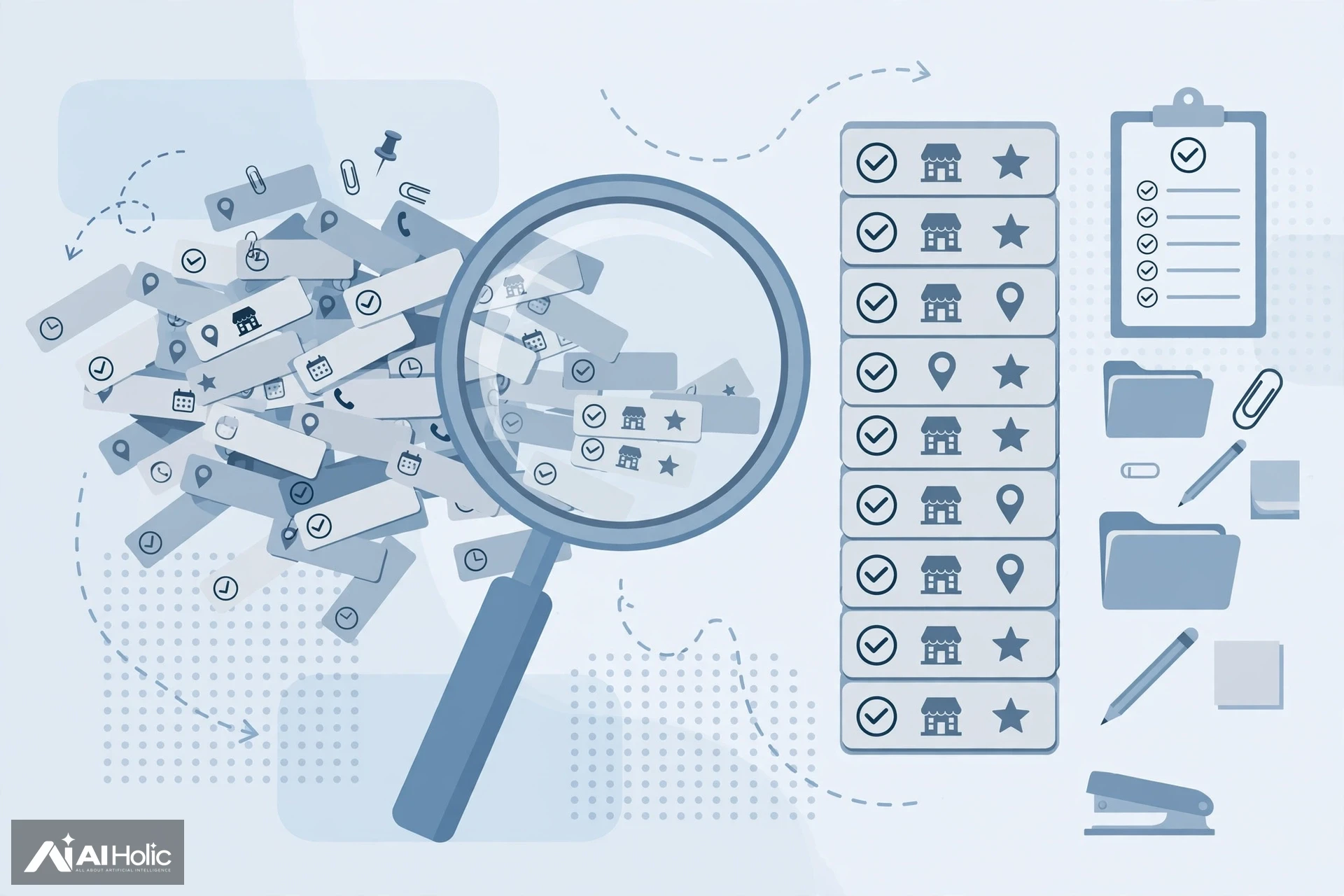
Brand name normalization rules ai also apply to data work, such as cleaning a list of company names before outreach or analysis. Define the output first, remove a legal suffix only when it sits apart from the brand, fix spacing and capitalization, and keep words that may belong to the brand. Keep the original name in its own column, so you can compare and correct the result before you use it. For the platform-specific side of this work, see our guide to BrandRank.ai normalization transformation rules, which applies these same ideas to AI brand monitoring data.
Leave uncertain names for manual review instead of guessing an identity. A name with a tagline, a city, a second language version, or a parenthetical note needs a person, because an automated rule can strip the very word that makes the brand recognizable. Guessing feels fast, and it creates bad outreach, bad matches, and bad citations.
That caution applies to AI cleaning as well. AI can help with messy lists, but it should work from your written rules and your exception list, and its output should be checked on a sample before it touches the full list. A clean list is a list you can defend row by row, not a list that merely looks tidy.
Rule 7: Handle Rebrands, Mergers, And Similar Names
Real changes need a plan, because a rebrand that only changes the homepage will leave the old name alive in profiles, listings, and old articles. Announce the change on your About page, state the old name once in plain text for clarity, and then update profiles, listings, and markup in the same order as the first audit. Keep the old name out of new copy, so the new name can gather the mentions.
Mergers and acquisitions need the same care, with one extra step. State which brand survives, which products move, and which pages redirect, and do not let both old brands keep publishing as if nothing changed. Conflicting claims after a merger are a fast route to mixed AI answers, and customers will feel the confusion before any tool does.
Similar names need a differentiator that you use every time. Add your location, your sector, or your main product to the core description, and use that differentiator in your About page, your profiles, and your structured data. When two firms share a name, the firm with the clearer, more consistent description is the firm an AI tool can describe with confidence.
Brand Name Normalization Rules AI: Audit Checklist And Measuring Progress
Run the audit for brand name normalization rules ai in a fixed order, and keep the results in a simple sheet. List every place, what it says now, what the fact sheet says, and who fixed it. That sheet becomes your proof of progress, and it stops the same variants from returning when a new team member or agency takes over.
- Write the fact sheet and lock the canonical name and short form
- Fix your homepage, About page, footer, and templates first
- Align social profiles, directories, and review listings next
- Add Organization markup and test it after every change
- Ask partners to use the canonical form in new mentions
- Re-audit every quarter and after any rebrand or merger
Measure progress by asking AI tools about your brand with a fixed set of prompts, and by recording how they name you, what facts they get right, and where they hedge. Test monthly, use the same prompts, and keep the answers in your sheet. A single good answer proves little, while a steady trend across prompts proves that your signals are lining up.
That routine also fits a wider growth plan, because consistent identity supports every other channel. Our guide to business automation and AI solutions shows how automation can carry consistent facts across operations, and our guide to SaaS startup hiring versus outsourcing versus AI shows how small teams weigh outside help against in house work. In both cases, a clear brand name makes the rest of the work easier to trust.
Common Mistakes To Avoid
The most common mistake in brand name normalization rules ai is fixing the website and ignoring everything else, because AI tools read the wider web, not only your homepage. The second mistake is adding every old name to structured data as an alias, which tells machines that all variants are equally valid. The third mistake is changing the name in marketing copy while leaving legal pages, invoices, and directories on the old form.
Another mistake is chasing a perfect score from a single tool, instead of fixing the underlying agreement. Tools can help you find variants, but they cannot decide your canonical name, and they cannot force a partner to update a listing. Use tools for finding variants, use your fact sheet for decisions, and use your audit sheet to track what actually changed.
If you run a small business with a personal brand, the same rules apply at a smaller scale. Our guide on how to use AI to grow a photography business is a good example, because a photographer brand lives or dies on consistent name, portfolio, and contact facts across profiles. One name, one description, and one set of links will serve that business better than a dozen clever variants.
Watch And Learn More
For a clear explanation of generative engine optimization, including entity clarity as one of its core principles, watch the video below.
Frequently Asked Questions
What are brand name normalization rules ai? They are rules for using one canonical brand name, one short form, and one set of facts everywhere, so AI search can match every mention to the same brand. The rules cover spelling, suffixes, profiles, and structured data.
Does normalization improve rankings directly? No, cleaner data does not raise a ranking on its own, but it makes your identity easier to recognize and cite. Rankings still depend on content quality, relevance, and trust.
Should I list every old name as an alias? No, list only a real alias that people still use, and keep old names out of new copy. A long alias list tells machines that many variants are valid, which defeats the point.
How often should I audit my brand name? Audit every quarter, and audit again after a rebrand, a merger, or a domain change. Check your site, your profiles, and your structured data in the same order each time.
Conclusion
Pick one name, write it down, fix your site and profiles to match, and back it with clean structured data. That is how brand name normalization rules ai turn scattered mentions into one brand AI search can trust.