BrandRank.ai Normalization Transformation Rules: A Plain Guide to Clean Brand Data for AI Search
If you don’t want to read the whole guide or have difficulty reading, you can listen to this guide instead.
Brand names show up in AI answers in many forms, and each form can split one brand into several weak records. The phrase brandrank.ai normalization transformation rules describes the working rules that turn those scattered versions into one clean record that AI systems can read, compare, and cite with confidence.
At AI Holic, we checked the phrase against the platform it names and against the data practices behind it. This guide gives you the plain meaning of the rules, the nine rules that matter, the order they should run in, and an honest note about what BrandRank.ai actually documents.
You will also see a six-stage pipeline you can run on your own data, a short table for each rule, and the mistakes that quietly break brand records. The aim is simple: one name, one record, and reports you can trust.
- What Are BrandRank.ai Normalization Transformation Rules?
- Normalization vs Transformation: The Difference That Matters
- Why These Rules Matter for AI Search
- The Nine Core Rules
- In What Order Should the Rules Run?
- The Six-Stage Pipeline
- Score Scaling: Turning Clean Data Into Numbers
- What BrandRank.ai Actually Measures
- Common Mistakes to Avoid
- Frequently Asked Questions
- Conclusion
What Are BrandRank.ai Normalization Transformation Rules?
BrandRank.ai normalization transformation rules are a working set of conditions and actions that turn inconsistent brand data into one standard form, then reshape that form for AI analysis. Each rule has a pattern that says what to match, a replacement that says what to write instead, and a scope that says where the rule applies.
Normalization picks one canonical value for each brand, product, or field. Transformation then changes the format of raw values so systems can compare them without guessing.
Say the name plainly first, because the phrase itself causes confusion. BrandRank.ai has not publicly documented an official framework called normalization transformation rules, and the nine rules in this guide are general data practice, not a disclosed BrandRank.ai feature. The phrase is industry shorthand for the data cleaning work that sits under AI brand visibility tools.
BrandRank.ai is a real platform, and it helps to know what it does. It is an AI brand monitoring platform, and it tracks how brands appear in AI answers across seven answer engines, including ChatGPT, Gemini, and Claude. Its own pages describe scores for AI search visibility, Recommendation Share, brand vulnerability, and content readiness.
Normalization vs Transformation: The Difference That Matters
Normalization chooses the canonical value, while transformation changes the shape of a value so systems can compare it. Mapping ABC Solutions Ltd. to ABC Solutions is normalization, and rewriting 07/01/26 as 2026-07-01 is transformation.
Both steps run inside the same pipeline, which is why people treat them as one task. Keeping them separate in your rule files makes debugging easier, because a wrong report then points at either a bad mapping or a bad format, not both at once.
| Type of normalization | What it changes | Typical use |
|---|---|---|
| Brand and entity normalization | Names, aliases, metadata, and formats of business records | AI visibility tracking, CRM cleanup, product catalogs |
| Database normalization (1NF to BCNF) | How tables are split to remove redundancy | Relational database design |
| Statistical normalization | The scale of numeric values, such as min-max or z-score | Machine learning features, cross-category metrics |
The word normalization carries three meanings in data work, and mixing them up leads to the wrong fix. This guide covers brand and entity normalization only, so database normal forms and statistical scaling stay out of scope except where scaling turns clean data into scores.
Why These Rules Matter for AI Search
AI search engines identify entities, connect relationships, and summarize structured information instead of simply matching keywords. When your brand data disagrees across sources, the engine may hedge, pick a rival, or leave you out, even if your own site is strong.
A customer database holding Microsoft Corp, Microsoft Corporation, and Microsoft Inc. as separate rows shows the cost clearly. A visibility report built on that data shows three mid-sized companies where one large company exists, and the reverse failure is just as damaging when two unrelated businesses with similar names get merged into one record.
Three problems repeat in most messy brand data. Split counts spread one brand across several rows, false merges let one brand absorb another’s mentions, and stale aliases keep collecting mentions for an old name after a rebrand. That split is the problem brandrank.ai normalization transformation rules are built to fix, and the fix starts with one written standard your whole team can follow.
Search engines rely on the same consistency. Google Search Central explains that Organization markup helps Google tell one company apart from another, with separate fields for the brand name, an alternate name, and the registered legal name. Our guide to brand name normalization rules covers the name side of this work in plain language, with a checklist you can run in a week.
The Nine Core Rules
The nine rules in brandrank.ai normalization transformation rules fall into three groups: character rules, token rules, and entity and format rules. Each rule handles one type of variation, which keeps the logic testable and the failures easy to trace.
Character Rules: Rules 1 to 3
Rule 1 picks a Unicode form, and Normalization Form C (NFC) is the safe default for brand text. The same visible character can be stored as different code point sequences, so two identical-looking names can fail to match until both are normalized.
Compatibility forms such as NFKC remove meaning, turning 8½ into 81/2, so use NFKC only on a match key and never on the value you display. The four Unicode normalization forms are defined in the Unicode Standard, and Wikipedia explains how NFC and NFD differ in plain terms in its page on Unicode normalization forms.
Rule 2 cleans whitespace and punctuation splits. Collapse repeated spaces, convert non-breaking spaces to regular spaces, and strip zero-width characters that scrapers pick up from web pages. Then build a compact match key with spaces and hyphens removed, and compare keys instead of raw strings.
Rule 3 resolves homoglyphs, which are look-alike characters from different scripts. A Cyrillic Р looks identical to a Latin P in most fonts, yet Unicode normalization does not fold them together, so the rule runs after Unicode normalization and before casing. Flag mixed-script brand names for review, since they are a common sign of spoofed listings.
Token Rules: Rules 4 to 7
Rule 4 protects acronym casing. Match on a case-folded key, but display the canonical casing from your exceptions registry, because blanket title-casing turns IBM into Ibm and eBay into Ebay. Keep a protected list of brand names with intentional casing, and check that list before any default casing rule runs.
Rule 5 strips legal suffixes from the match key. Remove Inc., Corp., Corporation, LLC, Ltd., and Limited, then store the full registered name in a separate legal name field. Each entity record should hold three name fields: the canonical brand name used in reports, the registered legal name, and a dated list of former names kept for rebrands.
Rule 6 folds diacritics in the match key while keeping the accented form for display. Café Lumière and Cafe Lumiere should find each other, so fold accents in the key and keep the accent in the display name. Keep an exceptions registry for names where the accent changes identity, and keep letters from every script in the key, since a filter that keeps only a to z turns a Japanese name into an empty key.
Rule 7 expands abbreviations only when the context clears a confidence gate. Intl can safely become International inside a company name field, while MSFT should map to Microsoft only in a stock-ticker context and never in free text. Job titles follow the same logic, so VP Sales becomes Vice President of Sales when the field is known to hold titles.
Entity and Format Rules: Rules 8 and 9
Rule 8 merges aliases, but only with a second signal. Map every confirmed alias to a canonical entity ID, and require a matching domain, address, product line, or verified profile before merging. Delta Air Lines and Delta Faucet share a first word, which is why name similarity alone never justifies a merge.
Rule 9 standardizes formats for dates, currencies, addresses, and URLs. Write dates in ISO 8601, currencies as ISO 4217 codes, and US mailing addresses under USPS Publication 28, while URLs follow the normalization steps in RFC 3986 with lowercase hosts and one choice between the www and bare domain. The ISO 8601 standard gives dates a fixed shape that no reader can misread, and locale differences still need care, since 1.200 means one thousand two hundred in many European formats but one point two in US formats.
| Rule | Raw input | Normalized output |
|---|---|---|
| Unicode form | Café stored as e plus combining accent | Café in NFC |
| Whitespace | ABC Solutions with a non-breaking space | ABC Solutions |
| Homoglyph | Рro Wireless with a Cyrillic Р | Flagged, then Pro Wireless |
| Acronym case | ibm corporation | IBM |
| Legal suffix | ABC Solutions Limited | ABC Solutions plus legal name field |
| Diacritics | Cafe Lumiere | Match key cafelumiere, display Café Lumière |
| Abbreviation | VP Sales | Vice President of Sales |
| Alias merge | Microsoft Corp | Entity ID for Microsoft |
| Format | July 1, 2026 | 2026-07-01 |
In What Order Should the Rules Run?
The order of brandrank.ai normalization transformation rules matters because rules interact, and a correct rule in the wrong position can still corrupt clean data. Run character rules first, then token rules, then entity rules, then format rules, with validation at the end.
- Convert every source to UTF-8, then apply NFC.
- Clean whitespace, invisible characters, and punctuation splits.
- Resolve homoglyphs and flag mixed-script names.
- Check the exceptions registry for protected casing and accents.
- Apply default casing, suffix stripping, and diacritic folding to the match key.
- Expand abbreviations that pass their confidence gate, then look up aliases.
- Standardize formats, then validate every merge against a second signal.
Two ordering traps catch teams often. Default casing applied before the exceptions check breaks names like eBay, and alias lookup run before suffix stripping misses every Ltd. variant in the alias table.
The W3C guidance explains why normalization should come before case folding, since folding text that is not yet normalized can produce mismatches.
The Six-Stage Pipeline
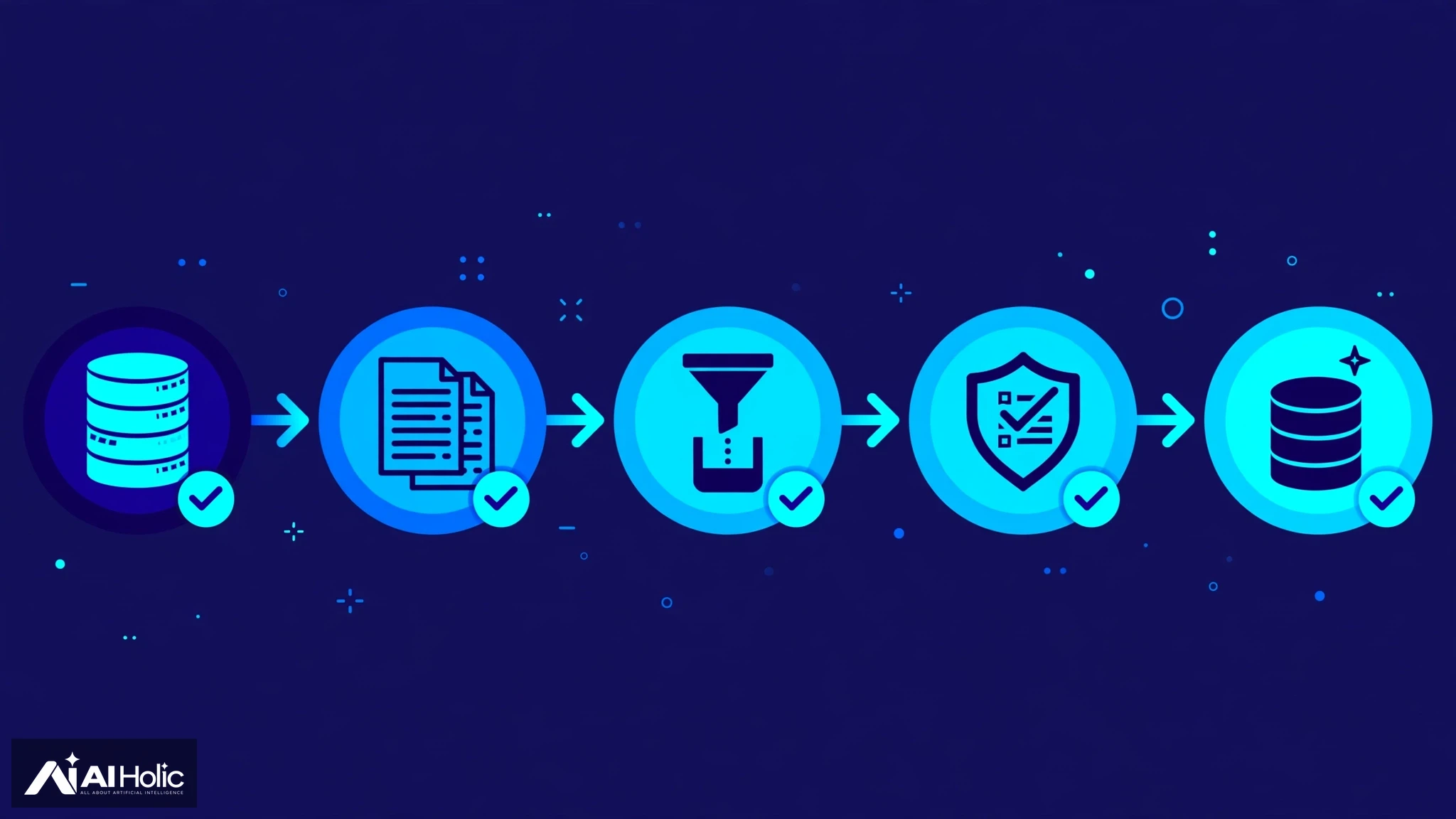
The brandrank.ai normalization transformation rules pipeline runs in six stages: collect, profile, transform, resolve, validate, and publish. Each stage has its own output, so problems can be traced to the stage that caused them.
- Collect records from website pages, CRM systems, product databases, analytics tools, and AI answer logs, attaching the source and collection date to each record.
- Profile the data to count duplicate names, mixed casing, missing values, and odd characters before writing any rule.
- Transform values with the rule set, writing the result to a new column instead of overwriting the original.
- Resolve entities by matching cleaned keys against the canonical entity table, sending uncertain matches to a review queue.
- Validate the output through sample checks and merge audits, then confirm that related records stayed connected.
- Publish the clean dataset to dashboards, schema markup, and reporting tools, while keeping the raw layer intact.
Ownership works best when data engineering runs the rule files and the pipeline. Marketing operations should own the alias table plus the review queue, since that team knows which names belong together. Whenever a rule changes, rerun it on a stored sample and compare the result, because a rollback check closes the loop and stops a bad rule from reaching your reports.
A random sample of 100 to 200 merges per rule release gives reviewers enough cases to spot a pattern of false merges. Fuzzy name matches below your tested similarity score belong in the review queue, as do name matches with no second signal. Start with the two sources that feed the most reports, which is usually the CRM and the product database.
Score Scaling: Turning Clean Data Into Numbers
Once brandrank.ai normalization transformation rules have cleaned the data, scaling turns the clean values into scores. Min-max scaling rescales values to a fixed range, usually 0 to 100, using the formula of value minus minimum divided by maximum minus minimum.
Z-score scaling measures how many standard deviations a value sits from the mean, and log scaling helps when the data is heavily skewed. Clipping tames outliers by capping values at a chosen maximum or minimum.
Scaling changes the shape of numbers, not their order, so it never fixes a bad merge. Google’s guide to numerical data normalization walks through linear scaling, z-score scaling, log scaling, and clipping with examples, and it is a useful check before you pick a scale for your own scores.
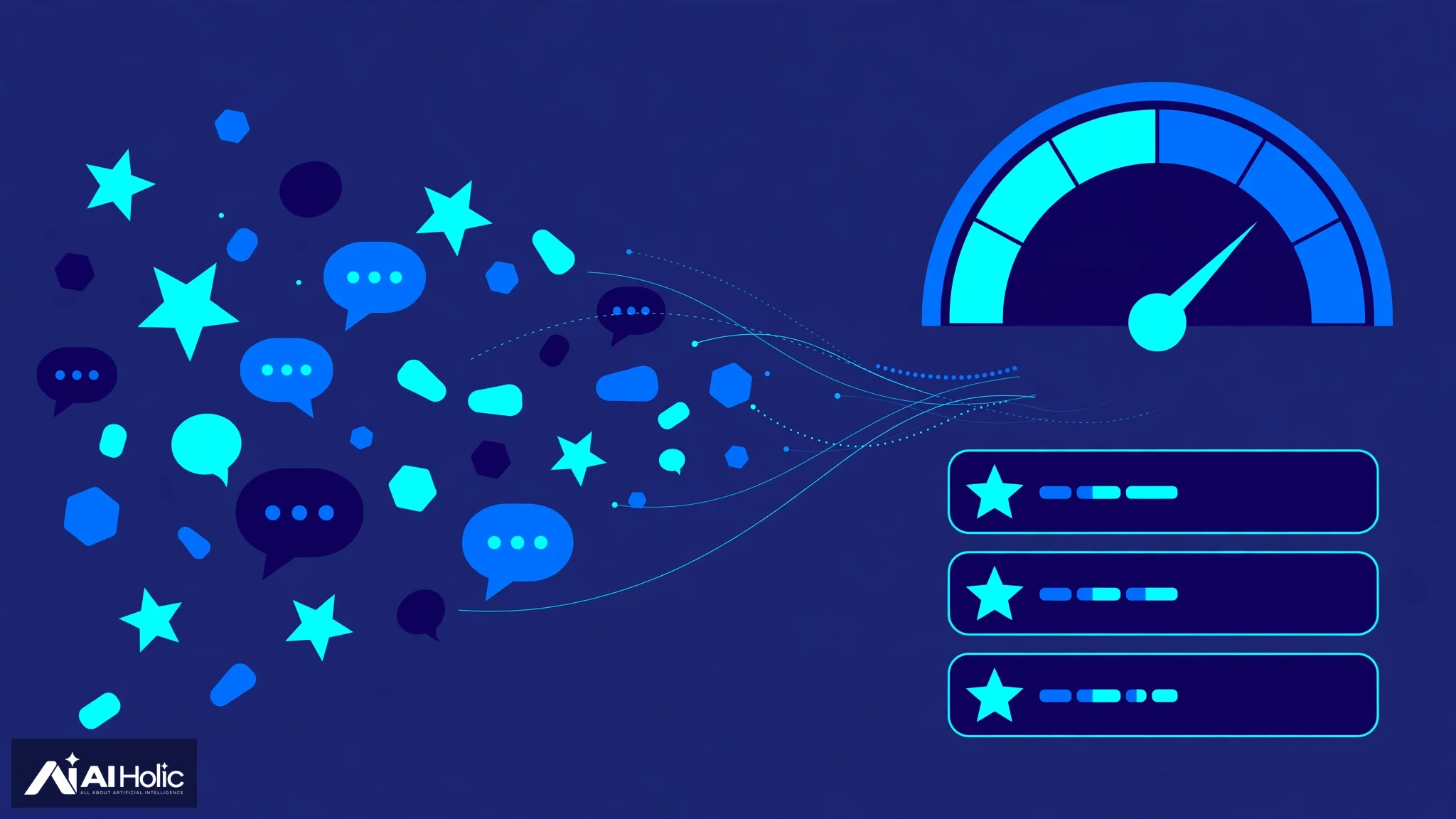
Run the rules first, check the merges, and only then scale the scores for display. A score built on merged names looks precise while it quietly counts two brands as one, and no scale can fix that after the fact.
What BrandRank.ai Actually Measures
It helps to say plainly that brandrank.ai normalization transformation rules are not an official BrandRank.ai feature. The company measures brand health through its Brand Health and Trust framework, which covers three areas: Visibility, Vulnerability, and Content Readiness. Visibility counts how often a brand is cited across AI answers, Vulnerability flags misinformation and competitor risk, and Content Readiness checks whether content is structured clearly enough for AI systems to trust it.
The company also uses the trademarked term Recommendation Share for how visible a brand is relative to competitors inside AI recommendations. Its 2026 Holiday AI Recommendation Share Index, published in October 2026, tested six leading engines and scored 950 AI-generated responses to holiday gift questions. That study shows what Recommendation Share looks like in practice, and its overview video sits below.
Clean, normalized data gives AI systems a clearer picture to reference, but no platform can promise that an AI model will cite a specific brand in a given answer. Treat the rule set as part of your unified AI governance architecture, not as a one-time cleanup, and keep the raw values stored next to the clean ones so every change stays reversible.
When you check AI answers for your brand, an AI detection tool shows which model wrote a passage. It does not check whether the brand name inside that passage matches your canonical form, so use it for authorship checks and use your rule set for the name checks.
Common Mistakes to Avoid
Most teams break brandrank.ai normalization transformation rules in the same few ways, and each mistake is easy to make and hard to spot later. A short audit of 100 to 200 merges per rule release catches most of them before they reach a dashboard.
- Merging two names on similarity alone, without a second signal.
- Overwriting raw values instead of writing clean values to a new column.
- Running default casing before the exceptions check, which breaks names like eBay.
- Running alias lookup before suffix stripping, which misses Ltd. variants.
- Treating the phrase as an official BrandRank.ai feature instead of working practice.
- Assuming clean data guarantees a citation in AI answers.
- Forgetting rebrands, so old names keep collecting mentions.
Frequently Asked Questions
Are brandrank.ai normalization transformation rules an official BrandRank.ai feature?
No. The phrase does not appear as a named, documented feature on BrandRank.ai’s own public pages. It is industry shorthand for the data cleaning work that sits under AI brand visibility tools, and the rules in this guide are general data practice, not the company’s disclosed methods.
What is the difference between normalization and transformation?
Normalization picks one canonical value for each brand, product, or field. Transformation changes the format of raw values, such as dates and prices, so systems can compare them without guessing.
Which rule should run first?
Character rules run first, starting with UTF-8 conversion and NFC normalization. Token rules follow, then entity rules, then format rules, with validation last.
Do these rules improve AI rankings directly?
No. The rules improve measurement consistency, so reports count each brand once and scores compare like with like. They do not raise rankings, and no platform can promise a citation in a specific AI answer.
How do I start with brandrank.ai normalization transformation rules?
Profile your data first, and count duplicate names, mixed casing, missing values, and odd characters before you write any rule. Start with the two sources that feed the most reports, keep your raw values intact, and send uncertain matches to a review queue.
Conclusion
Brandrank.ai normalization transformation rules turn messy brand data into one clean record, and the order of the rules matters as much as the rules themselves. Start with a profile of your data, write the rules down, and check a sample of merges before you publish. One name, one record, and reports you can trust is the whole point.