
Omega AI Hearing Aids: What Starkey Omega AI 24 and Lace AI Pro Actually Do
If you don’t want to read the whole guide or have difficulty reading, you can listen to this guide instead.
omega ai hearing aids are Starkey’s flagship hearing aids, launched in October 2025. They use a dedicated AI chip to sort speech from background noise in real time, so voices stay clear in a busy cafe or a crowded shop.
At AI Holic, we read the provider guides and the independent hearing press behind this range.
You will learn what the range is, how its DNN 360 system works, what the top model Starkey Omega AI 24 does, which styles exist, what they cost, and where LACE AI Pro fits in. LACE AI Pro is not a hearing aid at all, and the difference matters.
What Are Omega AI Hearing Aids?
Omega AI is the name Starkey gave to its newest hearing aid range. The range is built around a new chip, the G3 Neuro Processor, and a sound system called DNN 360.
A hearing aid is a medical device that makes sound audible for a person with hearing loss. It is fitted to the wearer’s hearing test and programmed by frequency. That fitting step still applies here, and no AI feature removes it.
The simple way to think about omega ai hearing aids is this: the chip listens to the room, decides what is speech and what is noise, and adjusts the sound many times a second. Older aids mostly turned everything up or down together. These aids try to lift the voice you want and push the rest down.
| Detail | Omega AI at a glance |
|---|---|
| Maker | Starkey |
| Launched | October 2025 |
| Chip | G3 Neuro Processor |
| Sound system | DNN 360 |
| Top model | Starkey Omega AI 24 |
| Other levels | Omega AI 20 and Omega AI 16 |
| Replaces | Edge AI |
One warning before you read further. Starkey launched a newer range called Omega AI+ in October 2026, one year later.
The two names look almost the same, and several shop pages mix them up. This guide covers the original Omega AI range first and keeps the newer range in its own section near the end.
How DNN 360 Works
DNN 360 is the heart of the range. DNN stands for deep neural network, a type of AI trained on large sets of real sound. The 360 means the system listens in every direction around you, not just in front of you.
In plain terms, the chip watches the sound around you and sorts it. Speech gets lifted, steady background noise gets pushed down, and the system keeps track of where each sound comes from.
Starkey says the G3 chip runs six times faster than the previous generation and analyses up to 80 million sound data points per hour. Those are Starkey’s own figures, reported by independent hearing clinics.
Starkey also states that omega ai hearing aids deliver up to 28 percent better speech understanding and up to 8 dB better signal-to-noise ratio in noisy settings than its previous technology. Again, these are Starkey’s figures. What you will actually notice depends on your hearing loss, your fitting, and the rooms you spend time in.

Starkey Omega AI 24: The Top Model
The Starkey Omega AI 24 is the top model in the range. The number 24 is the technology level, and it is the only level that carries the full DNN 360 system.
The 24 also carries the full set of extras. Edge Mode+ is the on-demand boost for noisy places, switched on through the My Starkey app or a button on the aid.
The Gen AI Smart Assistant answers questions and helps with settings through the app. Health tracking covers steps, balance, and breathing rate.
Below the 24 sit the Omega AI 20 and the Omega AI 16. They share the same G3 chip and the same basic design, but they drop some features.
The 20 keeps a simpler version of Edge Mode+ and less strong noise reduction. The 16 is the everyday model for calmer days.
| Level | Who it fits | What it drops |
|---|---|---|
| Omega AI 24 (premium) | People who struggle most in noise | Nothing, full DNN 360 and full extras |
| Omega AI 20 (advanced) | Busy days, moderate noise | Full DNN 360 direction finding, strongest noise reduction |
| Omega AI 16 (standard) | Calmer days, everyday listening | Top-level AI features and the smart assistant |
Styles and Fitting
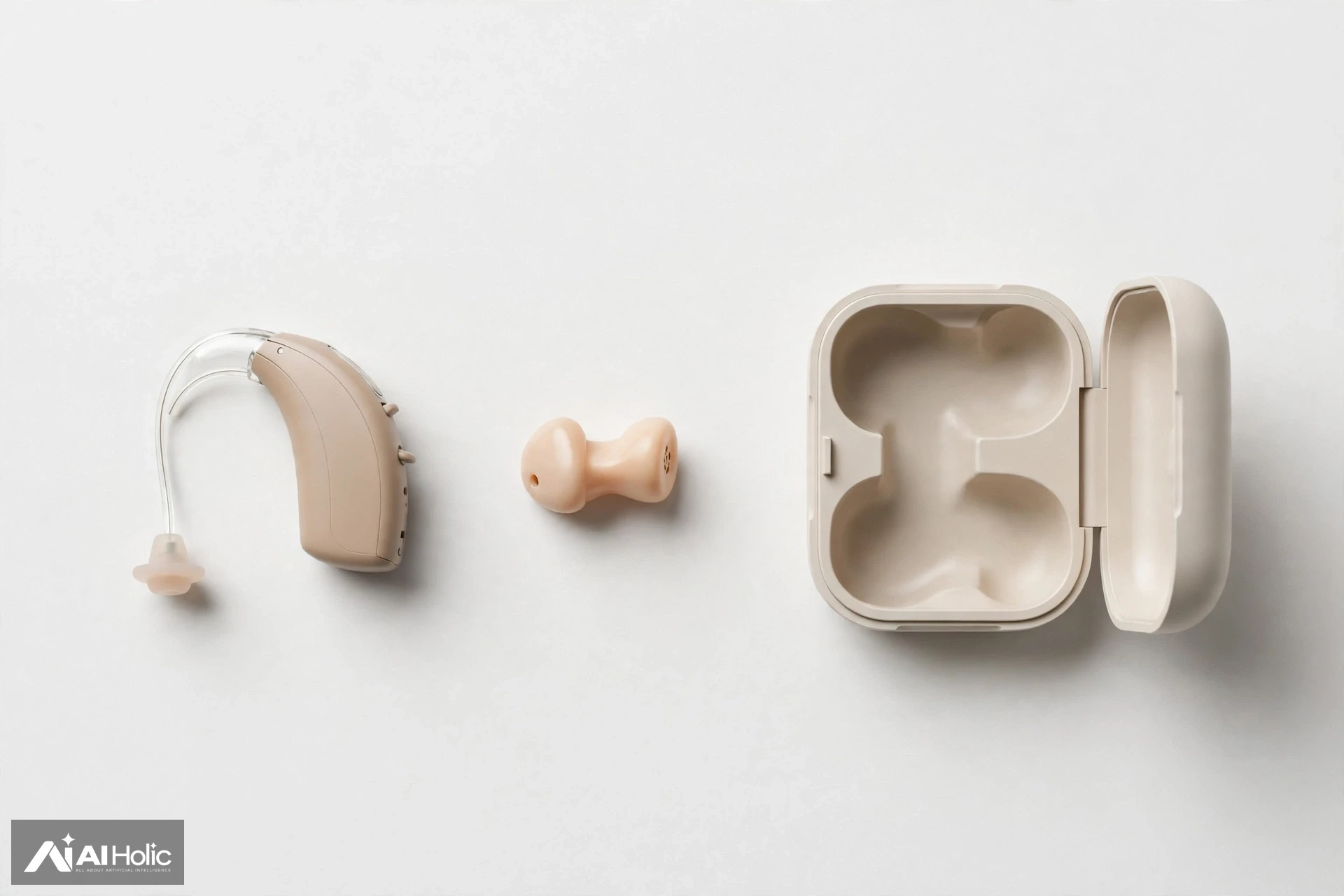
omega ai hearing aids come in several styles, and the style matters as much as the chip. Receiver-in-canal (RIC) models sit behind the ear with a thin wire carrying sound into the ear canal. Custom in-ear models are built from an impression of your ear and sit inside it, with nothing behind the ear.
The RIC range has three main models. The RIC RT is the rechargeable model with the longest battery life.
The mRIC R is a smaller rechargeable model. The RIC 312 runs on a size 312 battery instead of a rechargeable cell.
Custom styles include the ITE R and ITC R, both rechargeable, and the CIC, which sits deep in the canal. The CIC is the most discreet style, and the wireless CIC is the only wireless invisible in-canal model Starkey lists in this range. There is also a CROS and BiCROS version for single-sided deafness, which sends sound from the deaf side to the hearing ear.
RIC models suit mild to severe hearing loss, while custom in-ear models generally suit mild to moderately severe loss.
Fitting is not optional. The aids are programmed to your audiogram, the chart of your hearing at each frequency, and the fit is checked in person.
Remote fine-tuning through the app can adjust settings later, but it does not replace the first fitting. If a seller offers these aids with no hearing test at all, walk away.
Battery Life and Charging
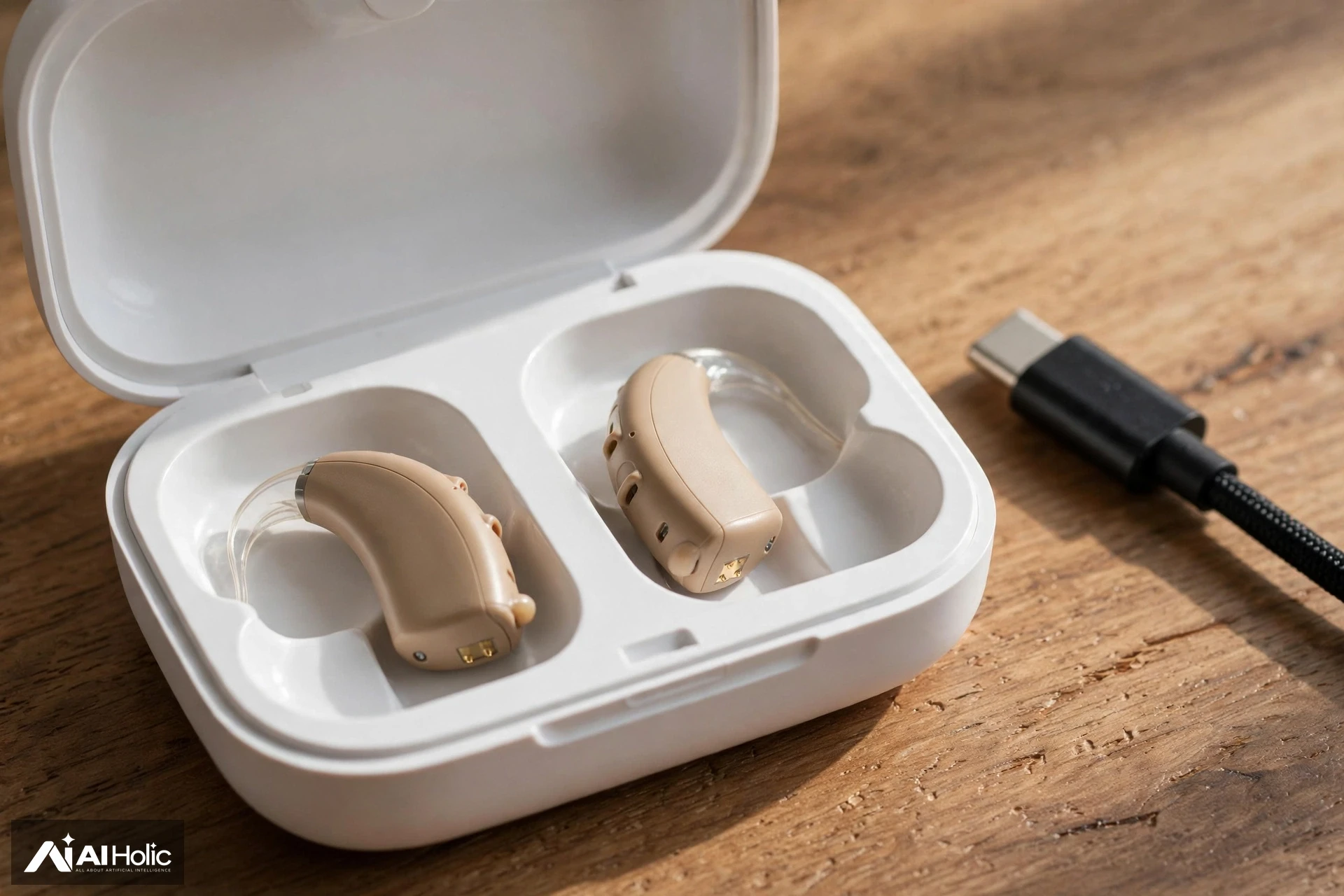
Battery life is one of the strongest points of omega ai hearing aids. Starkey says the rechargeable RIC RT gives up to 51 hours from a single charge, including streaming.
The smaller mRIC R gives around 31 hours. Those figures come from Starkey and are reported the same way by several independent clinics.
Rechargeable models use lithium-ion cells that Starkey rates for over 1,000 full charge cycles. A portable StarLink Charger+ case recharges on the go and dries the aids to guard against moisture while you travel.
One figure to ignore: a few pages list 29 hours for the RIC RT. That number conflicts with Starkey’s own 51-hour figure and with the other provider pages, so this guide does not use it.
Connectivity and the My Starkey App
Wireless models use Bluetooth LE Audio, and they are Auracast ready. That means calls, music, and TV stream straight into the aids, and public Auracast broadcasts in places like airports and theatres can reach them too. Hands-free calling works on compatible iPhone and Android phones, so you can take a call without touching your phone.
The My Starkey app is the control centre. It adjusts volume and programs, finds a lost aid with the Find My Hearing Aid feature, and sends fine-tuning updates from your audiologist.
Connectivity is also where hearing aids meet the wider world of wearable AI. A wearable microphone that feeds speech to AI software is a different kind of device, but it shows the same idea at work. Our guide to the Philips SpeechMike ambient wearable AI assistant microphone explains how one such wearable listens to a room and turns speech into notes.

Health and Wellness Features
Omega AI 24 carries sensors that track motion, balance, and breathing rate. The My Starkey app logs steps, social engagement, and breathing rate, and it offers Balance Builder exercises built on balance and coordination research. Fall detection can send an alert to chosen contacts if the wearer falls.
Here is the line that matters: these are lifestyle and wellness features, not medical or diagnostic tools. They do not replace advice from your doctor or audiologist if you have balance, mobility, or breathing concerns. A fall alert is a safety net, not a diagnosis, and a breathing-rate reading is not a medical test.
That said, the features have real value for the right person. Fall alerts bring peace of mind for older wearers and for family members.
Step and balance tracking can show whether someone is moving less than usual. Treat them as a bonus on top of hearing, not as the reason to buy a premium aid.
LACE AI Pro: Brain Training, Not a Hearing Aid
LACE AI Pro is the part of this cluster that confuses people most, because the name sounds like a hearing aid model. It is not.
LACE stands for Listening and Communication Enhancement, and it is an auditory training program made by Neurotone. It trains your brain to process sound better, while a hearing aid makes sound louder and clearer.
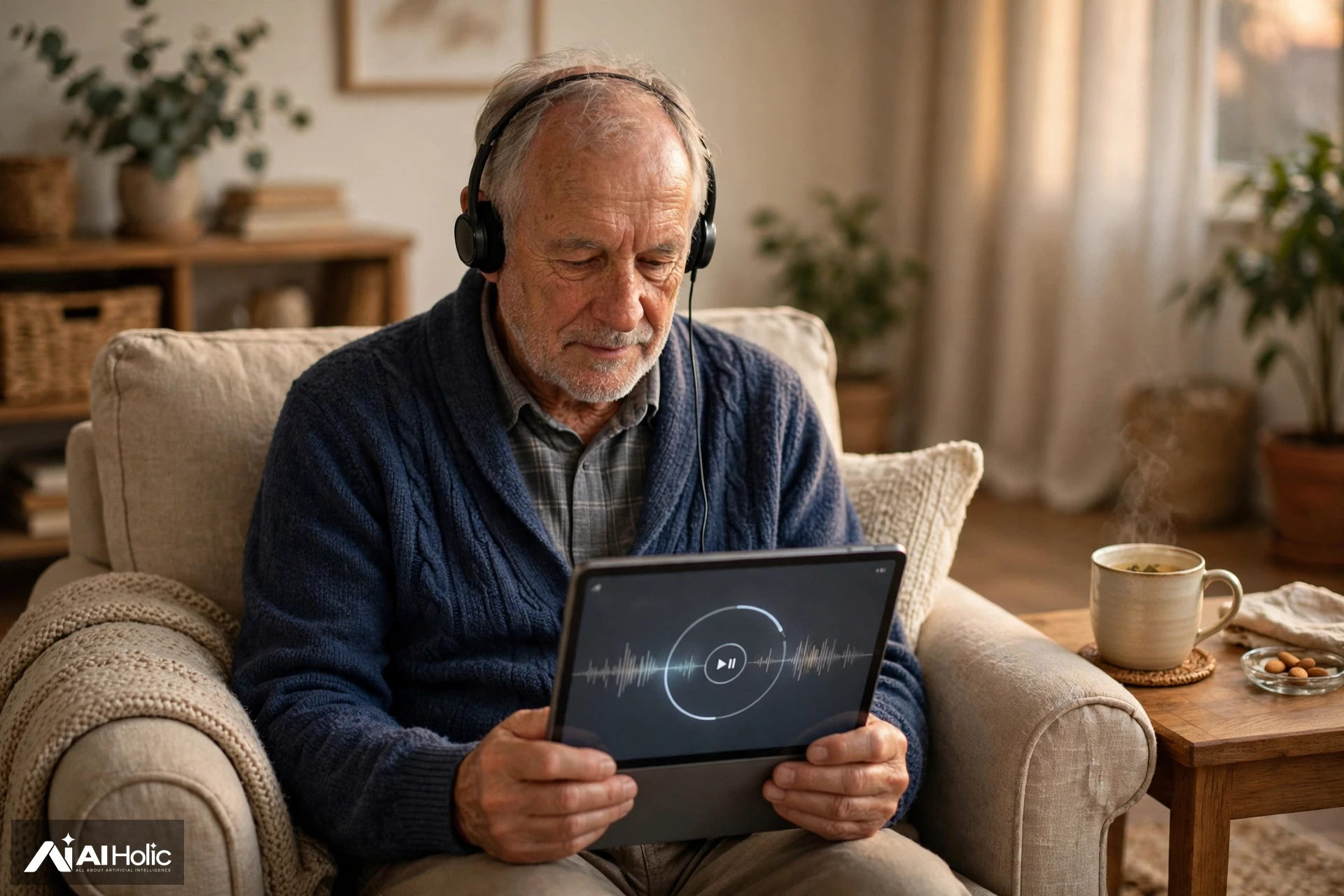
The program runs as an app on your phone, tablet, or computer. You train about 15 minutes a day, usually for at least 30 days.
The exercises cover speech in background noise, working memory, rapid speech, missing words, and speech reading.
The idea behind it is simple. Hearing aids fix the ears, but understanding speech also happens in the brain.
If your brain has spent years getting a weak signal, it needs practice to use the clearer signal a new aid gives it. That is why clinics pair LACE AI Pro with a new fitting, and why some clinics include it in their rehabilitation program.
The program rests on over 20 years of auditory training research and more than 10 published clinical trials, according to the clinics that offer it. This guide prints no improvement percentage for it, because the clinics disagree: one quotes up to 40 percent better speech understanding in noise, another quotes up to 20 percent.
LACE AI Pro is sold as a one-time purchase through audiology clinics, and the price varies by provider, so this guide prints no price for it either. It suits new hearing aid wearers who still struggle in noise, and people with mild hearing trouble who are not ready for aids. It does not replace a hearing test, a fitting, or medical care.
Think of omega ai hearing aids and LACE AI Pro as a pair: the aids give your brain a better signal, and the training teaches your brain to use it. Neither one does the other’s job.
Omega AI vs Omega AI+: Do Not Mix Them Up
Starkey launched Omega AI+ on 1 October 2026, a year after the original Omega AI. The newer range runs on a new chip, the G4 Gen AI Neuro Processor, and uses four neural networks working side by side instead of the original range’s approach. Starkey calls this the Quad DNN Architecture.
Omega AI+ also adds a DNN Dual Compressor, which Starkey describes as the first neural-network compressor of its kind, and an Edge Mode+ that can stay on all the time. Sleep tracking arrives too, with a nightly sleep score and sleep stages, offered in the United States as a wellness feature, not a medical diagnostic.
Battery life stays familiar: up to 51 hours on the RIC RT, according to Starkey. The newer range also brings DNN 360 direction finding to rechargeable custom in-ear models, which the original range did not offer. If a page promises you Quad DNN or sleep tracking in an Omega AI aid, it is describing the AI+ range, not the original.
Which one should you buy? The original omega ai hearing aids are still sold and usually cost less, while Omega AI+ is the current flagship.
Ask your audiologist which range they fit and what the price difference buys you in your daily life.
Who Omega AI Hearing Aids Suit
These aids suit people whose hearing loss sits in the moderate to severe range and whose days mix quiet mornings with noisy afternoons. They fit people who eat out, shop in busy stores, and sit in group conversations, and who are tired of fiddling with settings every time the room changes.
Hearing loss is usually managed rather than cured, and the Wikipedia guide to the management of hearing loss sets out the options. They also suit people who want long battery life and strong streaming.
If you take calls through your aids, watch TV through them, and want to charge every second night, the RIC RT covers that day. The health features add value if you live alone or if family want a fall alert.
They may not suit you if your budget matters more than top-level noise separation. A mid-level aid from Starkey or another maker may serve you just as well for everyday listening. They may also be more than you need if most of your talking happens in quiet one-to-one chats, or if you have no interest in wellness tracking and would be paying for features you never open.
Single-sided deafness is a special case. The CROS and BiCROS versions of omega ai hearing aids are built for people with little or no usable hearing in one ear and normal hearing in the other. They pick up sound on the deaf side and send it to the hearing ear.
What They Cost
This guide prints no single price for omega ai hearing aids, because there is no single price. The cost changes by country, by technology level, by style, and by whether fitting, follow-up care, and a warranty are included in the figure you are quoted.
To give you a sense of the range, US retailer pages list the newer Omega AI+ 24 at around $2,250 per aid for the device alone, without services. UK clinic pages list Omega AI models from about £1,290 per aid, with fitting included,.
Always ask what the quote covers. A good quote lists the devices, the hearing test, the fitting, the follow-up appointments, and the warranty as separate lines.
Some clinics include LACE AI Pro training in the package, and some charge for it on its own. Get the breakdown in writing before you commit.
The same check-before-you-buy habit applies to any gadget listing, not just hearing aids. Our guide to the Droven.io new gadgets 2026 coverage shows how to read gadget news without treating an editorial page as a shop, and our guide to the Haha Mini 360 AI smart cooler shows what to do when listings for one device disagree on the figures.
Three Mistakes People Make About Omega AI
- “Omega AI and Omega AI+ are the same thing.” They are not. Omega AI launched in October 2025 on the G3 chip, and Omega AI+ launched in October 2026 on the G4 chip with four neural networks and sleep tracking.
- “LACE AI Pro is a hearing aid.” It is not. It is a brain-training app that works with hearing aids. Buying it does not replace a hearing test or a fitting.
- “The battery figure is a promise.” It is a maximum from Starkey. Streaming, noisy rooms, and battery age all pull the real figure down, so ask for the figure that matches how you will actually use the aids.
Frequently Asked Questions
What Are Omega AI Hearing Aids?
They are Starkey’s flagship hearing aid range, launched in October 2025. They run on the G3 Neuro Processor with DNN 360, an AI system that sorts speech from noise in every direction around you. The top model is the Starkey Omega AI 24, with the 20 and 16 levels below it.
How Long Does the Battery Last?
Starkey says the rechargeable RIC RT gives up to 51 hours per charge, including streaming, and the smaller mRIC R gives around 31 hours. Those are maximums, so heavy streaming and noisy days will shorten them. Rechargeable models use lithium-ion cells rated for over 1,000 full charge cycles.
Are They Waterproof?
They carry an IP68 rating for water and dust resistance, so light rain and sweaty workouts should not worry you. That does not mean you should swim or shower in them.
Is LACE AI Pro a Hearing Aid?
No. LACE AI Pro is an auditory training program by Neurotone that trains your brain to process speech better, usually in 15-minute daily sessions. It works with hearing aids, and clinics often pair it with a new fitting, but it does not amplify sound and it does not replace a hearing test.
Should I Buy Omega AI or Omega AI+?
It depends on your budget and your needs. Omega AI+ is the newer flagship with the G4 chip, four neural networks, and sleep tracking, while the original Omega AI range usually costs less and still carries DNN 360 on the 24 level. Ask your audiologist what the price gap buys you, and get the quote in writing.
Conclusion
omega ai hearing aids pair a fast AI chip with a fitting that is still done by a person. Learn the range, keep Omega AI and Omega AI+ apart, and ask your audiologist which level and style fit your hearing and your days.