Southwest General AI Patient Engagement Partnership: HOPE Voice AI, Results, and What Comes Next
If you don’t want to read the whole guide or have difficulty reading, you can listen to this guide instead.
A 368-bed community hospital in Ohio now answers insurance questions in the middle of the night with an AI voice assistant, and it books patients for overdue cancer screenings before they ever reach the front desk. The southwest general ai patient engagement partnership is the deal behind that change, and it pairs Southwest General Health Center with the healthcare AI company Notable. This guide explains what the deal covers, what it has delivered so far, and where its limits sit.
At AI Holic, we read the press release, the vendor case study, and the hospital’s own statements so you can see which claims carry numbers and which do not. You will find a short timeline, the verified results, and the open questions that still need answers.
What the Partnership Is
Southwest General Health Center is a private, not-for-profit, 368-bed acute care hospital in Middleburg Heights, Ohio. It was founded in 1920 and serves communities southwest of Greater Cleveland. The hospital says its goal is to be its community’s first choice for advanced medicine and a strong patient experience.
The southwest general ai patient engagement partnership was announced on June 10, 2025, in San Mateo, California. Notable, the healthcare AI company behind the deal, says its platform runs at more than 12,000 sites of care. The hospital planned to use Notable’s AI agents to automate registration, intake, and care gap outreach.
Jae Zayed, the hospital’s chief information officer, said the deal fits a community hospital’s duty to make care easy to reach. He said, “Our partnership with Notable allows us to make care more accessible and personalized.” Pranay Kapadia, chief executive at Notable, said the platform aims to cut manual work so staff can focus on patients.
What the Southwest General AI Patient Engagement Partnership Covers
The deal covers the steps around a visit, not the visit itself. AI agents handle appointment reminders, check-in details, and outreach for care that patients have missed. The aim is to catch problems early, when a phone call or a text can still fix them.
- Send reminders to confirm, cancel, or reschedule appointments.
- Verify and collect the information needed for a smooth check-in.
- Reach out to patients in their preferred language and method to book overdue care.
- Help patients find their way through the system when they need care.
Care gap outreach is the part with the clearest health value. Staff reach out to patients who are due for screenings, such as colon cancer, breast cancer, or heart disease checks. These calls used to sit in long worklists, and many patients never got them in time.
| Detail | What We Verified |
|---|---|
| Hospital | Southwest General Health Center, Middleburg Heights, Ohio |
| Size and status | 368 beds, private, not-for-profit, founded 1920 |
| AI partner | Notable, healthcare AI platform |
| Announced | June 10, 2025 |
| Main tools | Notable AI Agents and HOPE voice assistant |
| First jobs | Registration, intake, care gap outreach, insurance FAQs |
HOPE AI Voice: The First Real Test
HOPE stands for Hospital Outreach and Patient Engagement. The hospital’s own team helped shape the voice and tone of the assistant, then gave it that name. It runs on the hospital’s central phone line for insurance questions, so it serves patients across the whole system.
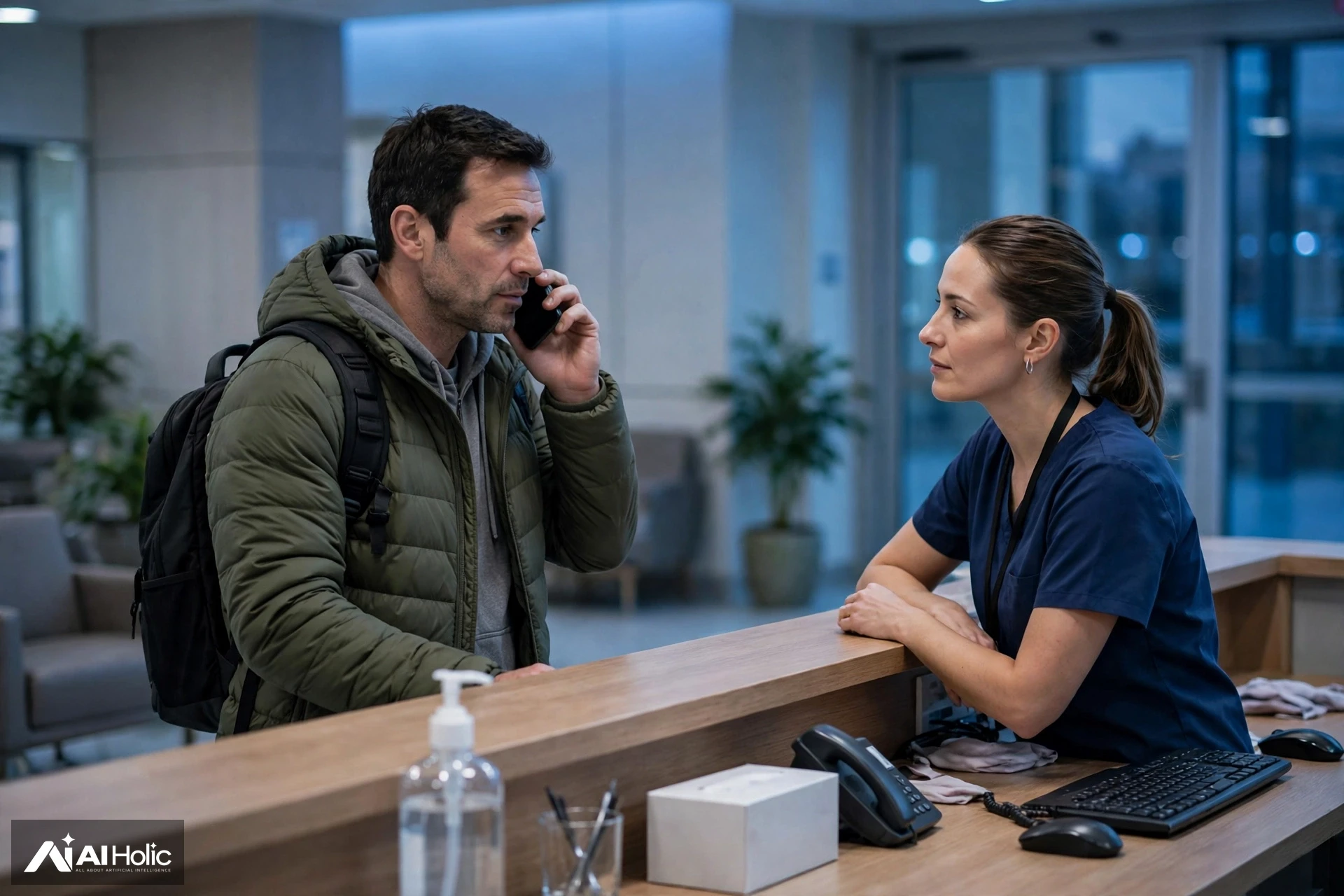
The test came during payer contract talks, when worried patients called in large numbers about billing, coverage, and network status. The contact center took 82,263 inbound calls a year, handled by 8 to 11 schedulers or live agents. Hold times were long, and answers sometimes went out of date as the talks moved.
HOPE answers insurance questions around the clock, using approved answers only. It stays in simple, voice-friendly language, and it hands the call to a person when that fits better. Staff tested it with set scripts and checked that follow-up tasks landed with the right people.
The first public results from the southwest general ai patient engagement partnership come from Notable’s case study, updated on November 10, 2026. HOPE handled 40 to 60 percent of inbound insurance inquiries and settled many calls with no live agent. Notable puts the saving at $4 per call at full scale, and the hospital now plans to extend voice AI into scheduling and general inbound calls.
“HOPE helps patients get the information they need while easing pressure on our call center staff,” said Jae Zayed, the hospital’s chief information officer. “It has become an important part of how we deliver the patient experience.”
Southwest General is not alone in testing this idea. Our report on AI automation in revenue cycle work at Southcoast Health covers a similar rollout, with the same focus on routine calls and staff time.
The Oracle Side of the Story
Southwest General runs more than one AI program, and the Oracle work sits beside the southwest general ai patient engagement partnership rather than inside it. Oracle supplies the hospital’s electronic health record system, and its AI tools work inside that record. The two deals share one goal, which is less admin work and more time with patients.
In April 2026, Oracle said the hospital had rolled out its Clinical AI Agent for notes across 18 ambulatory specialties. The tool listens to a visit and drafts a structured note within seconds, so the doctor can check it and move on. An electronic health record holds the full digital file for each patient, from history and tests to billing, and the agent writes directly into it.
The numbers come from Oracle’s own analysis of its record data. Clinicians wrote about 81,800 notes in the year after rollout, and average time in the record per patient fell 18.6 percent. After-hours work fell 14.15 percent over the same period, and Oracle says its note tool has now saved doctors more than 200,000 hours across all providers in the United States.
On October 21, 2026, the hospital said it would widen the Oracle deal further. It plans to adopt Oracle Health Patient Accounting, Oracle Health Data Intelligence, and the full Oracle Fusion Cloud Applications suite. That suite covers finance, planning, staffing, supply chain, and customer experience, and the hospital has published no targets for what the wider rollout should deliver.
The money side matters here, since billing and claims shape what patients pay and how fast questions get answered. Our report on Conifer Health’s AI revenue cycle work with Google Cloud covers a similar push to automate the same tasks.
Seema Verma, who leads Oracle Health, put the clinical case plainly: “No one becomes a doctor to click boxes on a drop-down menu.”
| Date | Event |
|---|---|
| June 10, 2025 | Notable patient engagement partnership announced |
| January 9, 2026 | Hospital leaders share rollout lessons at Notable’s summit |
| April 7, 2026 | Oracle reports Clinical AI Agent results across 18 specialties |
| October 21, 2026 | Oracle deal widened to finance, data, and cloud applications |
| November 10, 2026 | Notable updates the HOPE case study with first results |

What It Means for Patients
For patients, the change shows up in small moments. A call at night gets an answer instead of a queue, and a reminder arrives before a screening slips. Patient experience covers every contact a person has with the health system, from booking to billing, and this deal targets the contacts that used to fail first.
The design choices matter as much as the tech. HOPE uses approved answers only, so patients hear the same facts staff would give. It speaks in plain language and passes the call to a person when the question needs one, which matters most for older patients and people with complex needs.
There are limits to what a voice agent can do. It cannot judge a medical problem, and it cannot fix a wrong bill on its own. Patients still need a clear route to a person, and the hospital says that route stays open.
Risks and Open Questions
The southwest general ai patient engagement partnership still leaves open questions, and honest reporting should name them. No patient satisfaction scores have been published for HOPE, and no accuracy rate for its answers. The $4 saving per call is a projection at full scale, not a measured result, and it comes from the vendor.
Privacy and safety sit at the center of any hospital AI deal. Voice calls carry personal health details, so the hospital must control who can hear them and how long they are kept. AI-written clinical notes need a doctor’s check before they enter the record, and the hospital must own mistakes when they slip through.
The wider Oracle rollout carries the same caution, since its press release sets no targets. A hospital can buy a full cloud suite and still move slowly if staff do not adopt it or data stays messy. The Mayo Clinic AI lawsuit shows how fast a hospital AI story can turn into a court case when patients feel misled, so clear patient notice matters.
None of this means the deal has failed. It means the public record so far proves a working voice agent and a busy rollout, not a finished result. Watch for the next case study update, and for patient scores rather than vendor figures.
What Other Hospitals Can Learn
The southwest general ai patient engagement partnership also shows how a small hospital can start without a big team. Southwest General picked one painful job, insurance calls, and proved the tool there before it talked about scale. That order, one job first, then a wider rollout, is the lesson other community hospitals can copy.
Zayed named two habits that made the rollout work. First, take a platform view, so tools share data instead of forming separate silos. Second, set baseline measures at the start of each project, then track them and change course when the numbers say so.
Staff trust came from early involvement, not from a launch memo. The team helped shape HOPE’s voice and tone, and executives joined the project so decisions did not stall. Leaders who use the tools themselves, and who teach patients what AI does and does not do, build the trust that keeps a rollout alive.
Frequently Asked Questions
What is the Southwest General AI patient engagement partnership?
It is the June 10, 2025 deal between Southwest General Health Center in Middleburg Heights, Ohio, and Notable. The hospital uses Notable’s AI agents for registration, intake, and care gap outreach, plus the HOPE voice assistant for insurance calls. The aim is easier access to care and less manual work for staff.
What is HOPE AI?
HOPE stands for Hospital Outreach and Patient Engagement. It is an AI voice assistant that answers insurance questions on the hospital’s central phone line, day and night. It uses approved answers only, passes calls to staff when needed, and Notable reports it handled 40 to 60 percent of inbound insurance inquiries.
How much money has the partnership saved?
Notable reports savings of $4 per call at full scale, based on HOPE handling 40 to 60 percent of insurance inquiries. That figure is a projection, not a measured saving, and it comes from the vendor. No audited saving or contract value has been published.
Is Southwest General also working with Oracle on AI?
Yes, and the hospital uses Oracle Health Clinical AI Agent for clinical notes across 18 specialties, with about 81,800 notes reported in the first year. On October 21, 2026, the hospital widened its Oracle deal to billing, data, and cloud applications. That work is separate from the Notable patient engagement deal.
Can patients still reach a human at Southwest General?
Yes. HOPE is built to hand calls to staff when a question needs a person, and the hospital says that route stays open. The voice agent answers routine insurance questions, while staff handle complex cases, urgent needs, and anything the approved answers do not cover.
Watch: Has the AI Doctor Arrived?
For a wider view of AI in healthcare, with a human still in the loop, watch this Healthusiasm Podcast episode on whether the AI doctor has arrived.
Conclusion
In short, the southwest general ai patient engagement partnership gives one community hospital a working voice agent, real early numbers, and a clear next step in scheduling. Its value will show in patient scores and wider rollout results, not in press releases. If you run a small hospital, start with one painful job, measure it, and let the result decide what comes next.