Why Choose Ziptie AI Search Performance Tool: Measurable AI Visibility, Not Guesswork
If you don’t want to read the whole guide or have difficulty reading, you can listen to this guide instead.
Your page can rank first on Google and still lose the click. An AI answer now sits above the blue links and gives the user the answer at once. Why choose Ziptie AI search performance tool is the question teams ask when they want to know if their brand shows up inside those answers.
At AI Holic, we read the leading guides and reviews for 2026 and compared what they agree on. This guide turns that reading into plain steps you can use.
You will see what Ziptie measures, what it costs, where it falls short, and how to test it in a week. By the end, you will know if it fits your team.
For a second tracker to compare it with, see our guide to the rankshift ai tool.
Why Choose Ziptie AI Search Performance Tool: The Short Answer
In short, you choose it when AI answers decide who gets seen in your market. The tool tracks whether your brand is named, cited, or recommended inside Google AI Overviews, ChatGPT, and Perplexity. It then scores each query and tells you which pages to fix first.
That is the gap it fills. Your rank tracker can show position one while an AI answer sends the user to a rival.
Ziptie watches the answer itself, not just the ranking list. If your buyers ask AI tools before they visit a website, that view is worth having. That is why teams ask why choose Ziptie AI search performance tool before they buy.
The short answer has one condition. Ziptie is a measurement and guidance tool, not a writer.
It shows you the gap and ranks the fixes, but your team still has to make the content changes. If you can act on what it shows, it earns its place.
| Question | Quick answer |
|---|---|
| What does it track? | Brand mentions, citations, and sentiment inside AI answers |
| Which engines? | Google AI Overviews, ChatGPT, Perplexity, plus four more on newer pages |
| Main score | AI Success Score, from 0 to 100 per query |
| Who is it for? | SEO teams, agencies, and brands whose buyers ask AI first |
| What it is not | A rank tracker, a writer, or a revenue tracker |
| How to test it | 14-day free trial on your own brand and prompts |
What Is Ziptie AI?
Ziptie is a cloud platform that watches how AI search tools talk about your brand. It runs your chosen prompts through AI engines and records the full answer each one gives. You see the exact words, the cited sources, and whether your brand was named at all.
It was built by Tomasz Rudzki, Bartosz Goralewicz, and Sebastian Skowron, the team behind Onely, a technical SEO agency. That background matters to buyers, because the tool was built by people who work on search problems every day. SEO figures Lily Ray and Aleyda Solis have publicly recommended it, as reported in the guides we read.
The older guides describe three engines: Google AI Overviews, ChatGPT, and Perplexity. A review of the product pages from September 2026 reports seven: those three plus Google AI Mode, Microsoft Copilot, Bing AI Overview, and Google Gemini. Check the current engine list on the vendor page before you buy, since older reviews still list only three.
The shift behind the tool is simple. Classic search engine optimization chased a place in a list of links. The new practice, called generative engine optimization, chases a place inside the answer itself.
A study from Princeton, Georgia Tech, the Allen Institute, and IIT Delhi, presented at KDD 2024, found that the right content edits can lift visibility in AI answers by up to 40 percent. Ziptie is a tool for measuring that visibility, not a guarantee of it.
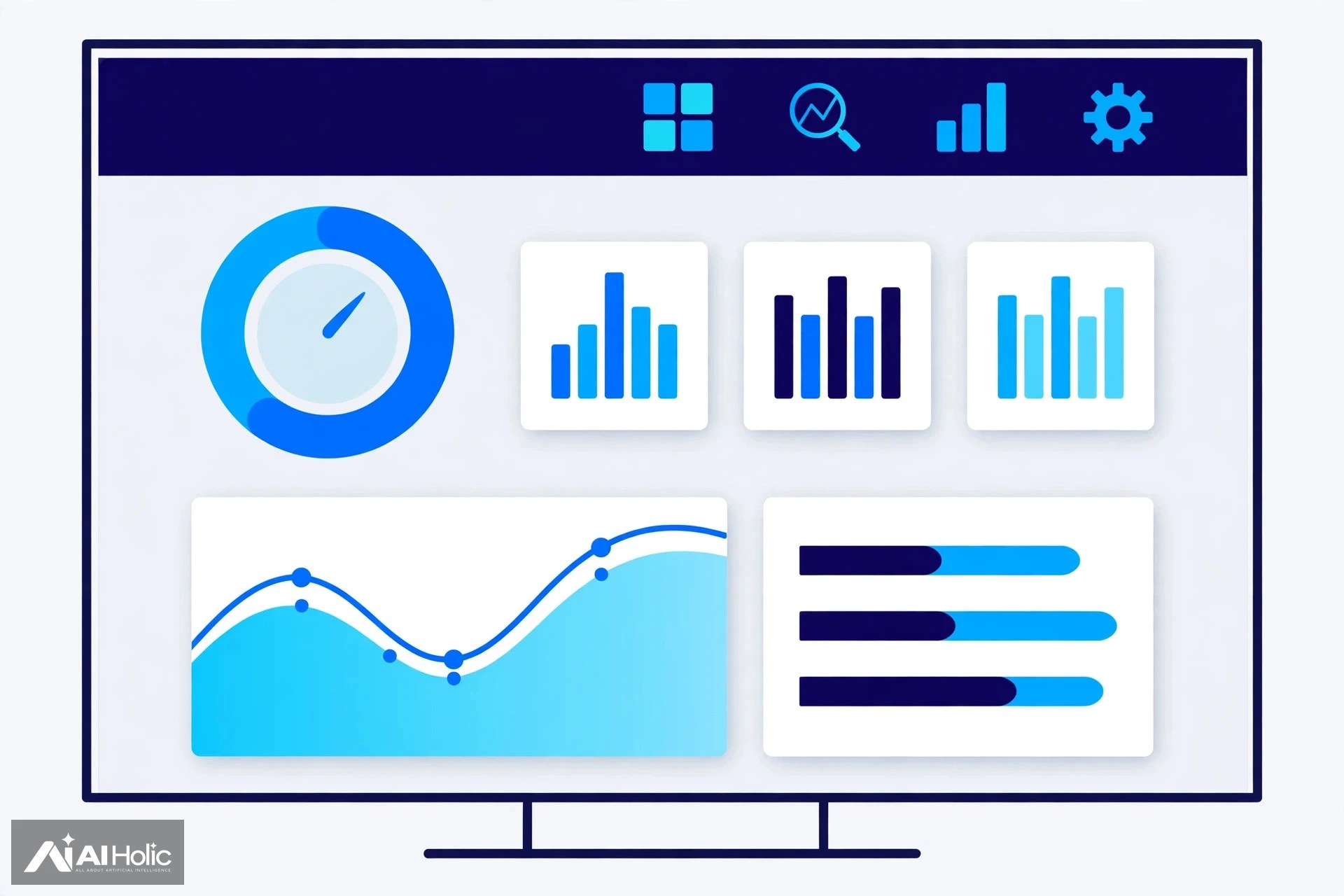
Ziptie organizes its work into three parts: AI search monitoring, content optimization, and insights with recommendations. Monitoring captures the answers.
Content optimization compares winning pages with yours. Insights turn the gap into a ranked list of fixes.
Why Choose Ziptie AI Search Performance Tool: The Core Benefits
Teams pick Ziptie for one reason: it gives proof they can show to a client or a manager. A rank report says where a page sits.
A Ziptie report shows the actual answer a buyer saw, with a screenshot to back it up. That proof is what makes the benefits below worth reading in full.
The AI Success Score Turns Hundreds Of Prompts Into A Priority List
The AI Success Score is the flagship metric, and every guide we read puts it first. It blends four signals for each tracked query: how often your brand is mentioned, whether your domain is cited as a source, where your brand sits inside the answer, and the sentiment of the mention.
The score runs from 0 to 100 per query. A low score on a high-value query tells you where to start.
A rising score after a content fix tells you the fix worked. That turns a long list of prompts into a short list of jobs.
Sentiment is the signal most buyers miss. An AI answer can name your brand while framing it as a warning or a poor example.
Without sentiment in the score, you would see the mention and think all was well. Ziptie catches that nuance and counts it against the score.
Real Browser Capture Shows What Users Actually See
Ziptie queries the live consumer products with real browser sessions instead of asking a model API for a simulated answer. It saves the full answer text and a screenshot of the result. That matters, because the answer a real user sees can differ from what an API call returns.
A benchmark from Onely, cited in a May 2026 review, makes the point in numbers. As reported, Ziptie detected AI Overviews on 28 percent of tracked keywords, while some API-based tools caught as little as 1.6 percent of the same set. Treat that as a vendor-linked benchmark, not an independent test, but the method behind it is the real point.
When you show a client that their brand did not appear in an AI Overview, a screenshot ends the debate. You are not quoting a score from a black box. You are showing the answer itself.
Citation Share Shows Your Authority In AI Answers
Citation Share is the share of relevant AI answers that cite your domain as a source. It is a single number that says a lot about your standing. The guides report two rough markers: above 35 percent in your niche signals strong visibility, while below 15 percent signals a real risk of being pushed aside by rivals.
One reviewer found a client sitting at 8 percent and used that one number to win approval for a content overhaul. That is the practical value of the metric. It turns a vague worry about AI search into a number a manager can act on.
Pages with unique data points that rivals lack have a 68 percent higher probability of being cited as a primary source in AI answers, as reported across the guides we read. Citation Share is the number that tells you whether your pages have that edge or not.
Competitive Benchmarking Shows Who AI Prefers Instead Of You
Ziptie shows which rivals appear in AI answers for your tracked queries and which of their pages get cited. You can see if a rival wins in ChatGPT answers but not in Google AI Overviews, or the other way round. That split tells you where to focus first.
This is intelligence that classic rank trackers do not give you. A rival can outrank you in AI answers while sitting below you in organic results.
Our Capital One AI talent investment comparison shows the same lesson in a different market: a big investment in one area does not guarantee the lead in every area. You need to see each race on its own terms.
Share of voice across AI engines is the headline number here. It answers the only question that matters in a competitive review: when buyers ask AI about our category, does it talk about us or about them?
Content Optimization Briefs Tell Writers Exactly What To Fix
Most tools hand you generic advice, such as adding more detail or improving quality. Ziptie compares the pages that win AI citations for your tracked queries against your own pages. It then flags missing entities, thin explanations, and weak evidence sections.
The result is a page-specific brief for your writers, not a checklist. It names the section to fix and the facts to add. A writer who gets that brief can start work at once, without guessing what the tool wants.
The briefs also tie back to the score. When a fix goes live, the next monitoring cycle shows whether the score moved. That loop from diagnosis to fix to re-check is the core workflow of the tool, and it is what separates it from a dashboard that only reports.
Query Tools Find The Prompts Your Buyers Really Ask
You do not have to write every tracked prompt by hand. Ziptie expands your seed keywords into conversational questions that match how people talk to AI tools. A seed term such as cloud migration services can grow into dozens of natural questions from buyers at different stages.
You can also import keywords from Google Search Console, which speeds up setup for sites with search history. New domains with no search history get less from that import, so they should start with seed terms from sales calls and support tickets instead.
Good prompts are the foundation of the whole system. If you track the wrong questions, every score and report that follows will be built on sand. Spend time on the prompt list before you judge the tool.
How Ziptie Works In Practice
The workflow is a short loop that repeats every cycle. First, you set up a project with your brand, your site, and the prompts your buyers ask. The Project Wizard reads your site and suggests prompts, then you edit the list until it matches real buyer questions.
Second, Ziptie runs each prompt across the engines you track, on a daily, weekly, or monthly schedule. It records the full answer, the cited domains, the sentiment, and a screenshot. Third, it scores every prompt and ranks the gaps worth closing first.
Fourth, you pick the top gaps and fix the pages the briefs point to. Fifth, the next cycle shows whether the scores moved. That loop is the honest answer to why choose Ziptie AI search performance tool for a working SEO team: it connects a measurement to a fix and then checks the fix, instead of leaving you with a report and no next step.
- Set up the project and pick 30 to 100 prompts that match real buyer questions
- Run the first cycle and record the baseline scores for every prompt
- Read the top gaps and the page briefs behind them
- Fix the pages, add the missing facts, and publish
- Mark the fix date on the trend and watch the next cycle
- Repeat the loop each week for the prompts that matter most
Take a concrete case from the guides. An IT services firm tracks three prompts about cloud migration and managed infrastructure. The first report shows two rivals in Google AI Overviews on all three prompts, while the firm appears zero times.
The briefs show that winning pages carry original benchmark data, named technology stacks, and clear service breakdowns. The firm rewrites its service pages with those elements added. Over the next four to six weeks, the monitoring cycles show whether Citation Share and the AI Success Score actually moved.
One limit to plan around: a project is picked up only once its last check is a full cycle old, as reported in the September 2026 review of the FAQ. Daily cadence is the fastest feedback you get after a fix. There is no on-demand re-check after you publish, so mark the fix date and wait for the next cycle.
Ziptie Pricing: What You Are Actually Paying For
Pricing is the one area where the guides disagree, and it shapes the answer to why choose Ziptie AI search performance tool for many teams. Older pages quote a simple plan ladder, while a review of the pricing page from October 2026 reports a per-prompt configurator. Both are shown below with their dates, because quoting only one would mislead you.
The older ladder, as reported by three guides, runs Starter at 69 dollars a month, Standard at 99 dollars a month, and Pro at 159 dollars a month. Each plan covered the three original engines, with different limits for AI search checks, data summaries, and content optimizations. A 14-day free trial was offered on that ladder.
The configurator reported in October 2026 charges 30 cents per daily prompt per month on a single engine, with an engine multiplier that rises as you add engines. The presets start at 25.65 dollars a month for 30 daily prompts on three engines, then 340.20 dollars and 1,647.00 dollars a month for larger setups. Add-ons sit on top: content generation at 20 dollars a month per context, and API access at 10 dollars a month.
That shift changes how you should budget. On a per-prompt model, the cost grows with every prompt and every engine you add.
Before you buy, list the prompts you will track, count the engines, and run the numbers in the configurator yourself. And check the vendor page on the day you buy, since the price structure has already changed once this year.
| Pricing snapshot | Entry point reported | What to verify |
|---|---|---|
| Older plan ladder | $69 a month, Starter | Whether the ladder still exists |
| Configurator, Oct 2026 | $25.65 a month, 30 daily prompts, 3 engines | Engine multiplier for your setup |
| Mid preset, Oct 2026 | $340.20 a month | Prompt count and add-ons included |
| Large preset, Oct 2026 | $1,647.00 a month | When a custom quote applies |
| Free trial | 14 days on the older ladder, and 7 days with 25 prompts on newer pages | Current trial terms on the day you sign up |
Ziptie Vs Traditional SEO Tools
Ziptie does not replace Ahrefs, Semrush, or Google Search Console. It adds a layer those tools were never built to cover.
Classic tools measure rankings, backlinks, and clicks. Ziptie measures mentions, citations, and sentiment inside answers that may never produce a click at all.
The scale of that blind spot is the reason the tool exists. A Conductor analysis of 21.9 million queries, as reported by one guide, found AI Overviews in roughly 25 percent of all Google searches. A Seer Interactive study, as reported by another guide, found AI Overviews on roughly 16.5 percent of queries, and that a number one organic ranking earns an AI citation only about 22 percent of the time.
Gartner projects that traditional search volume will fall 25 percent by 2026 as users lean on AI assistants, as reported in the same guide. Whether that exact figure lands or not, the direction is plain: more answers are given on the results page, and fewer users click through to a site.
| Point | Traditional SEO tools | Ziptie |
|---|---|---|
| Main job | Track rankings, backlinks, clicks | Track brand visibility in AI answers |
| Core numbers | Position, traffic, referring domains | Mentions, citations, sentiment, AI Success Score |
| Proof shown | Rank history and traffic charts | Full answer text and screenshots |
| Best use | Core SEO tracking and fixes | AI visibility tracking and content briefs |
| Biggest limit | Blind to AI answers | Does not track revenue or conversions |
| Right setup | Use both together | Use both together |
Run both layers side by side. Keep your rank tracker for classic SEO work and add Ziptie for the answer layer. That combined view is the practical payoff when you weigh why choose Ziptie AI search performance tool against a classic tracker alone.
Who Should Use Ziptie And Who Should Wait
Ziptie fits SEO professionals and content strategists who want to know why some pages get cited in AI answers and what to change.
It fits agencies that manage several client brands and need AI visibility reporting they can show in a meeting. It fits SaaS and IT services firms whose buyers research vendors in ChatGPT or Perplexity before they ever visit a website. That buyer-first pattern is the core reason teams ask why choose Ziptie AI search performance tool.
It also fits brand and PR teams that watch sentiment in AI answers. If an AI tool starts to describe your brand in a negative light, you want to know that week, not next quarter. Early warning is worth more than a perfect score.
Startups watching their first funding news can use the same lens. Our report on the Scrunch AI Series A funding round shows how fast a young AI company can enter the conversation. A tool like Ziptie tells a startup whether AI answers are naming them at all once that news lands.
Wait if you are still building basic SEO. If your site has crawl errors, thin pages, and no backlinks yet, fix those first.
Ziptie adds value when you have pages worth citing and a team that can act on the briefs. Without that, the scores will only tell you what you already know.
- Use it when AI answers shape buying choices in your market
- Use it when you report visibility to clients or managers
- Use it when you have writers who can act on page briefs
- Wait when basic SEO, crawl health, or content depth comes first
- Wait when no one on your team owns the fixes the tool finds
Limits You Should Know Before You Buy
No tool is perfect, and the honest reviews name real limits. First, Ziptie does not track downstream conversions.
It measures citation rates and scores, not whether those citations drove traffic, leads, or revenue. You have to join its data with Google Analytics yourself to see business impact. That gap belongs in any honest answer to why choose Ziptie AI search performance tool.
Second, engine coverage has gaps. The older three-engine version missed Gemini, Copilot, and Google AI Mode entirely.
The newer seven-engine list still names no Claude, Grok, or DeepSeek coverage on the reviewed pages. If your buyers ask those tools, you will need a second source for that view. Our look at Droven AI tools in 2025 is a useful reminder that new AI tools appear fast, and no single tracker covers them all.
Third, the credit and prompt-slot model can be hard to budget. Costs rise with prompts, engines, and add-ons, and the configurator math is not obvious at first glance. Map your prompt list and engine count before you commit, or the monthly bill will surprise you.
Fourth, sentiment analysis is still maturing. Clear praise and clear criticism are handled well, but nuanced criticism inside an answer that still cites you can slip through. Treat the sentiment signal as a guide, not a verdict.
Fifth, processing can slow at peak load, as reported by reviewers. And the review of the product pages notes that the SOC 2 Type II program was in progress and not yet certified at the time of review, with some data stores not encrypted at rest. If your procurement team needs that paperwork, confirm the current status in writing before you sign.
Frequently Asked Questions
What Is Ziptie AI And What Does It Do?
Ziptie is a cloud platform that tracks how your brand appears in AI-generated search answers. It runs your prompts through engines such as Google AI Overviews, ChatGPT, and Perplexity, then records mentions, citations, sentiment, and the full answer text. It also scores each prompt and hands you page-specific briefs for the fixes.
Does Ziptie Replace Tools Like Semrush Or Ahrefs?
No, it is a complementary layer. Classic tools track rankings, backlinks, and organic traffic in standard search results.
Ziptie tracks brand visibility inside AI answers, which those tools do not measure. Use both together for a full picture of where you stand.
Why Choose Ziptie AI Search Performance Tool Over A Free Check?
A free check gives you one answer at one moment, with no history and no score to compare. Ziptie runs the same prompts on a schedule, keeps the full answer archive with screenshots, scores each query, and ranks the fixes. That history is what turns a single check into a trend you can manage.
How Much Does Ziptie Cost?
Older guides quote a plan ladder from 69 dollars a month, while a review of the pricing page from October 2026 reports a per-prompt configurator with presets from 25.65 dollars a month. The price structure has changed, so confirm the current rates and trial terms on the vendor page on the day you buy.
Who Built Ziptie?
Ziptie was built by Tomasz Rudzki, Bartosz Goralewicz, and Sebastian Skowron, the team behind Onely, a technical SEO agency. The product grew from an early tool that showed brands how Google’s Search Generative Experience described them in 2023. The company moved to the ziptie.ai domain in 2026, as reported in the September 2026 review.
Conclusion
Why choose Ziptie AI search performance tool comes down to proof. It shows you the answers your buyers see, scores each query, and ranks the fixes. Run the trial on your own prompts, check the scores, and decide from your own data.