Agentic AI Development Services: What They Build, What They Cost, and How to Choose
If you don’t want to read the whole guide or have difficulty reading, you can listen to this guide instead.
If you hire a firm to build agents for your business, you are buying more than code. Agentic ai development services cover the design, build, and running of AI agents that plan steps, call your tools, and finish tasks with little hand-holding. This guide explains what those services include, what they cost, and how to judge a vendor.
The short answer is that a good firm starts from your workflow, not from a model. It maps the job, picks the simplest system that can do it, and proves the result with tests built from your real cases. Prices vary a lot, so the sections below give you reported ranges and a checklist you can use on any vendor.
At AI Holic, we explain AI in plain words so you can make good choices. Start with the cost table, then use the vendor checklist before your first sales call.
What Agentic AI Development Services Are
An AI agent is a program that can pursue a goal, use tools, and take actions with some level of autonomy. It plans steps, calls your software, checks the results, and keeps going until the task is done. A chatbot mostly answers questions, while an agent finishes work.
Anthropic, the company behind Claude, draws a useful line between workflows and agents. In a workflow, the model and tools follow fixed code paths.
In an agent, the model directs its own steps and tool use, which gives it more freedom and more risk. Its guide to building effective agents advises teams to start with the simplest solution, which might mean not building an agentic system at all.
In short, agentic ai development services turn a goal into a working system. The firm designs the agents, connects them to your tools and data, adds safety checks, tests the result, and runs it in production. Our guide to building agentic AI applications with a problem-first approach explains why the job itself should come before the tech.
A multi-agent system is a setup where several agents work together, each handling part of a task. One agent might pull data, another might check it, and a third might send the result to a customer. Wikipedia defines a multi-agent system as a system of interacting agents that can solve problems one agent alone cannot.
What Agentic AI Development Services Include
Most firms sell the same six building blocks, even when their sales pages use different names. The list below covers what a full service should include, from the first workshop to the live system.
- Strategy and use-case selection: the firm ranks your workflows by value and risk before it writes any code.
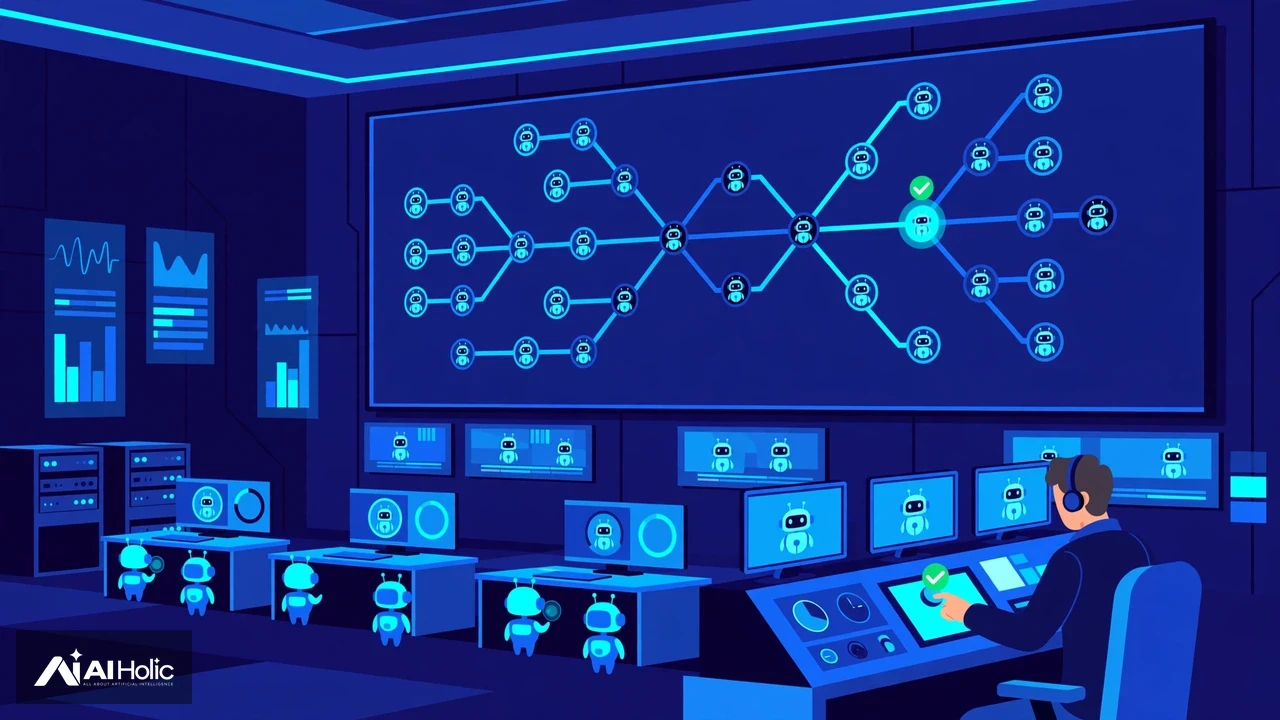
- Multi-agent architecture and orchestration: an orchestrator splits the goal, hands tasks to specialist agents, and merges the results.
- Custom agent logic and tool calling: agents get scoped access to your CRM, ticketing, databases, and other systems through APIs.
- Data engineering and RAG: your documents and records feed a retrieval layer so answers come from your own facts.
- LLM operations: model choice, prompt tuning, and cost control so each task stays inside a budget.
- Governance and safety: approval gates for risky actions, audit logs, and limits on what each agent may touch.
- Deployment and support: monitoring, retraining, and fixes after launch, since agents need care like any live software.
| Service area | What you get | Why it matters |
|---|---|---|
| Strategy and roadmap | Ranked use cases, ROI model, build plan | Stops you from automating the wrong workflow first |
| Architecture and orchestration | Orchestrator, specialist agents, shared memory | Keeps multi-step work reliable across systems |
| Tool and data integration | API links, MCP servers, RAG pipelines | Lets agents read and write in your real systems |
| Evaluation and testing | Test sets from your cases, pass marks, re-scoring | Proves the agent works before it goes live |
| Governance and safety | Approval gates, audit logs, scoped permissions | Limits harm when the agent gets something wrong |
| Running and support | Monitoring, cost tracking, retraining, fixes | Keeps the agent useful after launch day |
Ask any vendor to name each block in its quote. A quote that skips evaluation or monitoring is a warning sign, since those two blocks decide whether the system stays safe after launch.
What They Cost
No firm publishes a fixed price, since the cost depends on your systems and the number of agents. The figures below come from vendor pages and one independent cost guide, so treat them as reported ranges and ask for a fixed quote after the scoping stage. Most agentic ai development services price the build and the running costs as separate lines, and the running costs never stop.
| Engagement | Reported build range | Reported timeline | Source |
|---|---|---|---|
| Strategy and roadmap | $15,000 | 2 to 3 weeks | SoluLab |
| Single-agent pilot | $25,000 to $50,000 | 6 to 10 weeks | SoluLab |
| Multi-agent system, small | $18,000 to $38,000 | 3 to 6 weeks | Groooh |
| Enterprise multi-agent system | $50,000 to six figures | 3 to 6 months | SoluLab |
| Simple FAQ-style agent | $20,000 to $35,000 | Weeks | Cleveroad, via the-ai-future.com |
| Enterprise agent, legacy integration | $100,000 to $200,000 or more | Months | Cleveroad, via the-ai-future.com |
Integration work drives much of the bill. One agency estimates a basic connection to one system at $1,000 to $3,000 or more, real-time sync with a calendar or CRM at $2,000 to $6,000 or more, and multi-agent orchestration at $4,000 to $10,000 or more. Model fees, monitoring, and retraining then add a monthly cost on top of the build.
At the top of the market, OpenAI sells hands-on builds through forward-deployed engineers, reportedly from $10 million per client. That tier suits governments and very large firms, not small teams. For most buyers, the realistic range is a pilot in the tens of thousands and a production system in the low six figures.
How Long a Build Takes
Timelines follow the same pattern as prices: small pilots move fast, and enterprise systems take months. A single agent with two to four tool connections can ship in 4 to 6 weeks, while a production multi-agent system with governance and checks often takes 8 to 16 weeks. Legacy systems stretch both ends of that range.
Plan for a second round of work too. A Monte Carlo survey reported by IT Brief found 70% of buyers expect to rebuild systems they already shipped. A pilot that proves value in weeks is a safer first step than a large contract signed on a demo.
When You Do Not Need Them
Not every job needs an agent, and a good firm will tell you so. Anthropic advises teams to start with direct model calls and simple workflows, and to add agents only when flexibility is worth the extra cost and slower replies. If a fixed script or a better form can do the job, it will cost less and break less often.
Gartner warns that many products sold as agents are really rebranded chatbots or automation tools, a practice it calls agent washing. The firm counts only about 130 real agentic AI companies among the thousands that use the label, and it expects over 40% of agentic projects to be scrapped by the end of 2027. Ask a vendor to show the agent choosing its own next step, since a demo that only answers questions proves nothing.
Our guide to what the backend of an agentic AI system means explains the parts that sit behind the chat window, from memory to tool access. Read it before your first vendor call so you can ask about the parts that matter.
Engagement Models
The way agentic ai development services are sold matters as much as the price. Four models cover most deals, and each one fits a different kind of buyer.
| Model | How it works | Best for |
|---|---|---|
| Fixed-scope pilot | One agent, one workflow, fixed price and date | Teams that want proof before a bigger spend |
| Project build | Full system built to a written scope | Firms with a clear workflow and deadline |
| Dedicated team | Engineers and agent specialists on tap each month | Firms with a pipeline of agent work |
| Outcome-based pod | Pay tied to agreed results, not hours | Buyers who want the vendor to share the risk |
A fixed-scope pilot is the safest start for most buyers. It gives you a working agent on your own data, a real cost per task, and a clean exit if the result is weak. Avoid open-ended hourly deals for a first project, since they hide the true cost until the bill arrives.
How to Choose a Vendor
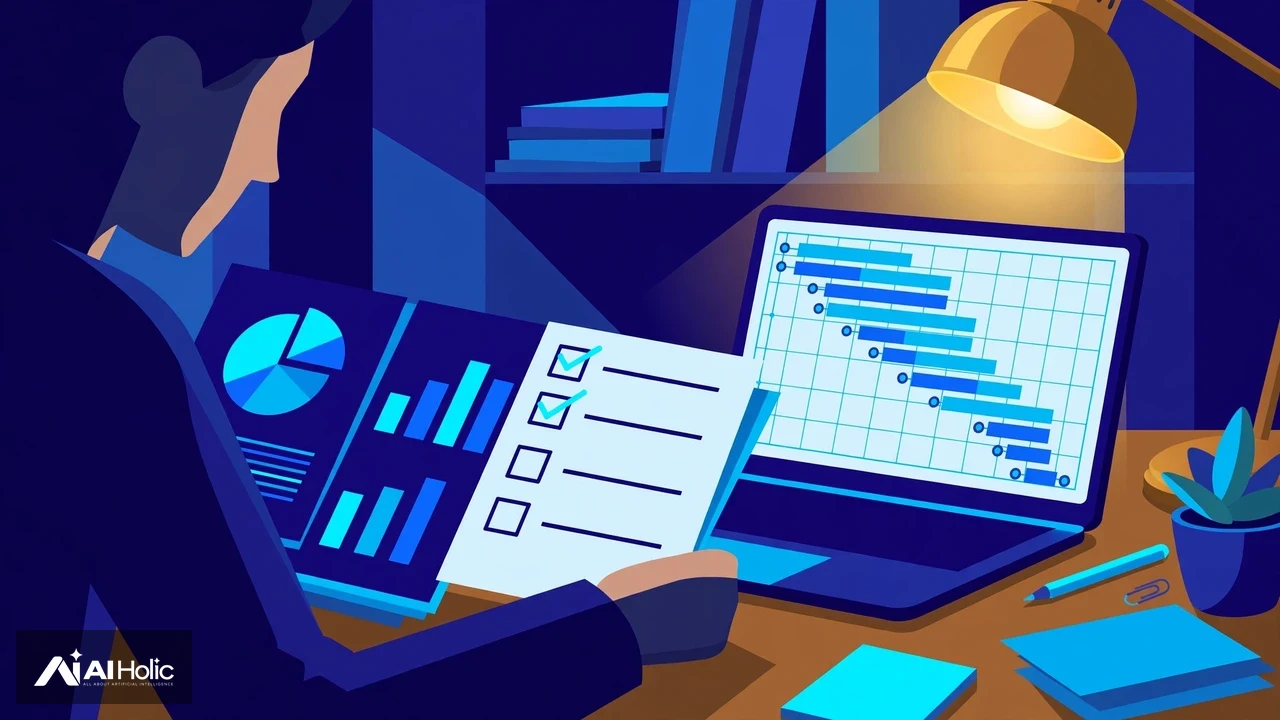
Judge agentic ai development services on proof, not on demos. Every vendor demo looks good, so the questions below test the parts a demo cannot show: testing, safety, ownership, and support. Ask every vendor the same questions and compare the answers in writing.
- Which agents are running in production today, and for how long?
- Can I talk to a technical owner at a reference client, not only the executive sponsor?
- What did you ship that failed, and what changed after it?
- Where does my data live, and which sub-processors touch it?
- Who owns the code, prompts, and test sets when the contract ends?
- What access does the agent need, and how do you limit it?
- What ships in week one, and what does the first test set look like?
- How do you test the agent, and what pass mark must it hit before launch?
- Which actions run alone, and which need a human to approve them?
- What happens after launch, and who answers when the agent fails at night?
Red flags are easy to spot once you know them. A vendor that answers with a demo instead of a production agent, promises accuracy before seeing your data, or keeps the prompts and test sets is selling confidence, not engineering. Our guide to AI agent memory in enterprise use cases shows how memory and data handling shape what an agent can safely do.
What to Put in the Contract
A contract for agentic ai development services should name the facts that matter, not just the price. Get these points in writing before you sign, and have your own lawyer review the final terms.
- The workflow and the full list of actions the agent may take, with a risk level for each action.
- The test set, the pass mark, and how many repeated runs count as a pass.
- Who owns the code, prompts, test sets, and data at the end of the contract.
- A kill switch, scoped permissions, and a log of every tool call the agent makes.
- Fixed build price, monthly running costs, and response times for support.
- An exit plan that covers handover, data return, and how the agent is switched off.
A vendor that answered well on a call should have no trouble writing the same answers down. If a point stays vague in the contract, treat it as a risk you are accepting.
Frequently Asked Questions
How much do agentic ai development services cost?
Reported ranges start near $15,000 for a strategy and roadmap, $25,000 to $50,000 for a single-agent pilot, and $50,000 to six figures for an enterprise multi-agent system. Simple FAQ-style agents run about $20,000 to $35,000, while enterprise builds with legacy integration reach $100,000 to $200,000 or more. Model fees and monitoring add monthly costs on top of the build, so always ask for a fixed quote after the scoping stage.
How long does it take to build an agentic AI system?
A single agent with a few tool connections can ship in 4 to 6 weeks, and a production multi-agent system with governance often takes 8 to 16 weeks. Enterprise builds with legacy systems take 3 to 6 months or more. Timelines depend more on your integrations than on the model, so a vendor that quotes a date before seeing your systems is guessing.
What is the difference between an AI agent and a chatbot?
A chatbot mostly answers questions, while an agent takes actions: it plans steps, calls tools like your CRM or order system, and completes a task. Anthropic separates fixed workflows, where the model follows set code paths, from true agents, where the model directs its own steps. Agents trade higher cost and slower replies for better results on hard tasks.
Do I need a multi-agent system, or is one agent enough?
One agent is enough when the job has one clear goal and a small set of tools. A multi-agent system earns its extra cost when the work has distinct stages, several systems, and waiting periods between steps. Add a second agent only when a stage needs its own instructions, tools, or permissions, since each new agent adds cost and failure points.
What should I check before I hire a vendor?
Ask for a production agent you can inspect, a test set built from your real cases, and a written pass mark. Check who owns the code and prompts, where your data goes, and which actions need a human to approve them. Start with a small fixed-scope pilot, price the monthly running costs apart from the build, and agree on an exit plan on day one.
Conclusion
Agentic ai development services are worth the money only when the job truly needs an agent. Start with a small pilot, judge vendors on production proof and written tests, and get ownership and exit terms in the contract. Pick the firm that argues against building an agent when a simpler tool will do.