AI Governance Skills and Capabilities: What Teams Need to Govern AI Well
If you don’t want to read the whole guide or have difficulty reading, you can listen to this guide instead.
A team that can write a policy is not the same as a team that can govern AI. The gap shows up the first time a system ships and someone asks who approved it, what it was tested against, and what happens if it fails.
This guide explains the ai governance skills and capabilities your team needs to close that gap, in plain language. You will get the eight skills that matter most, the frameworks that organize them, and a simple way to build them one at a time.
At AI Holic, we read the top guides on governance hiring and team building and pulled out the patterns that repeat. This guide is for managers, analysts, and builders who need governance to work in practice, not only on paper.
What AI Governance Skills and Capabilities Mean
In short, ai governance skills and capabilities are the mix of knowledge, judgment, and working habits that let a team run AI systems safely and accountably. Skills live in people. Capabilities live in the team and its routines.
A skill might be reading an evaluation result and knowing if it supports a release. A capability might be the intake step, the risk register, and the monitoring that run even when one person is on leave.
Governance covers the full life of a system, from the first idea to retirement. AI governance is described on Wikipedia as the way AI systems are directed and overseen, covering who is accountable, what is governed, and how it is done through frameworks and tools. That broad scope is why no single hire can cover it.
Why These Skills Matter Now
AI moved from pilots to daily work faster than most teams could hire for it. Systems now answer customers, draft documents, and take actions, so a missed risk reaches people in minutes, not months.
Coursera’s 2026 Job Skills Report lists responsible AI, information privacy, and cybersecurity among the ten fastest-growing skills across data, IT, and software work. Employers want people who can run governance, not only describe it.
Rules add pressure too. The EU AI Act was adopted in 2024 and sorts systems by risk, so higher-risk uses carry heavier duties. Teams that build these skills now will not have to rush when a deadline arrives.
AI Governance Skills and Capabilities: The 8 Skills That Matter Most
The list below covers the ai governance skills and capabilities that show up most often in job posts and hiring guides. You do not need all eight in one person. A good team spreads them across roles and shares the work.
Skill 1: AI Lifecycle Literacy
You need to picture how a system moves from an idea to a product people use. That path runs through use-case definition, data, model choice, testing, deployment, monitoring, and retirement. A hiring guide from ai-governance-jobs.com calls this the first skill employers screen for, and notes that you need enough fluency to ask sharp questions, not to build the model yourself.
Ask which failure modes were tested and whether the test used the production setup. A vague answer to that question tells you more than a clean slide deck.
Skill 2: Risk Tiering and Materiality Judgment
No team can review two hundred use cases the same way. This skill is deciding which ones need close review and which can pass with light notes. The test is simple: who is affected, what decision the system shapes, how much freedom it has, and whether a bad result can be undone.
A meeting-notes summarizer and an agent that can issue refunds are not the same risk. Treat them the same and your process will be ignored within a quarter.
Skill 3: Policy-to-Control Translation
A rule that says human oversight must exist does nothing on its own. Someone has to turn it into a control: which transactions need approval, what the record must capture, how samples are tested, and how often override rates are reported.
The chain runs requirement, control, evidence, test, and monitoring. If you can walk through that chain for one real duty, you have shown more than any certificate can.
Skill 4: Evaluation and Testing Literacy
Governance staff now need to read a test result and judge if it supports a release. Learn the working words: baselines, acceptance thresholds, subgroup results, hallucination rate, retrieval quality, red teaming, prompt injection, drift, and regression.
You may never write a test yourself. You still need to know when a result is thin and when it is solid enough to sign off on.
Skill 5: Evidence Engineering
Old compliance asked for proof after the fact. AI governance needs proof as a byproduct of the work: inventory entries, risk tiers, approval records, test results, model versions, data sources, access logs, and incident notes.
This matters most with agents that take thousands of actions. No one can rebuild that history by hand after a failure, so the evidence has to collect itself. Our guide to the AI governance audit trail shows how an immutable ledger keeps that record intact.
Skill 6: Workflow and Program Design
Production governance is a workflow problem before it is a policy problem. Someone has to design who submits a use case, what they must provide, who sets the risk tier, what blocks a launch, and who can switch a system off.
Get this wrong and the program turns into a queue people route around. Get it right and governance becomes the fastest path to production.
Skill 7: Framework Fluency
The NIST AI Risk Management Framework gives you a shared vocabulary: Govern, Map, Measure, and Manage. ISO/IEC 42001 gives you a management system you can certify. The EU AI Act gives you duties that change with risk class.
Fluency means knowing what each one is for and where they overlap, so one control can serve three needs at once. It does not mean memorizing clause numbers.
Skill 8: Cross-Functional Translation
One AI project can touch engineering, data science, security, privacy, legal, compliance, procurement, audit, and product. The governance person is often the only one who talks to all of them.
The skill is keeping the facts the same while changing the words and the level of detail for each group. An engineer needs the constraint, counsel needs the exposure, and an executive needs the decision.
Skills or Capabilities: What Is the Difference?
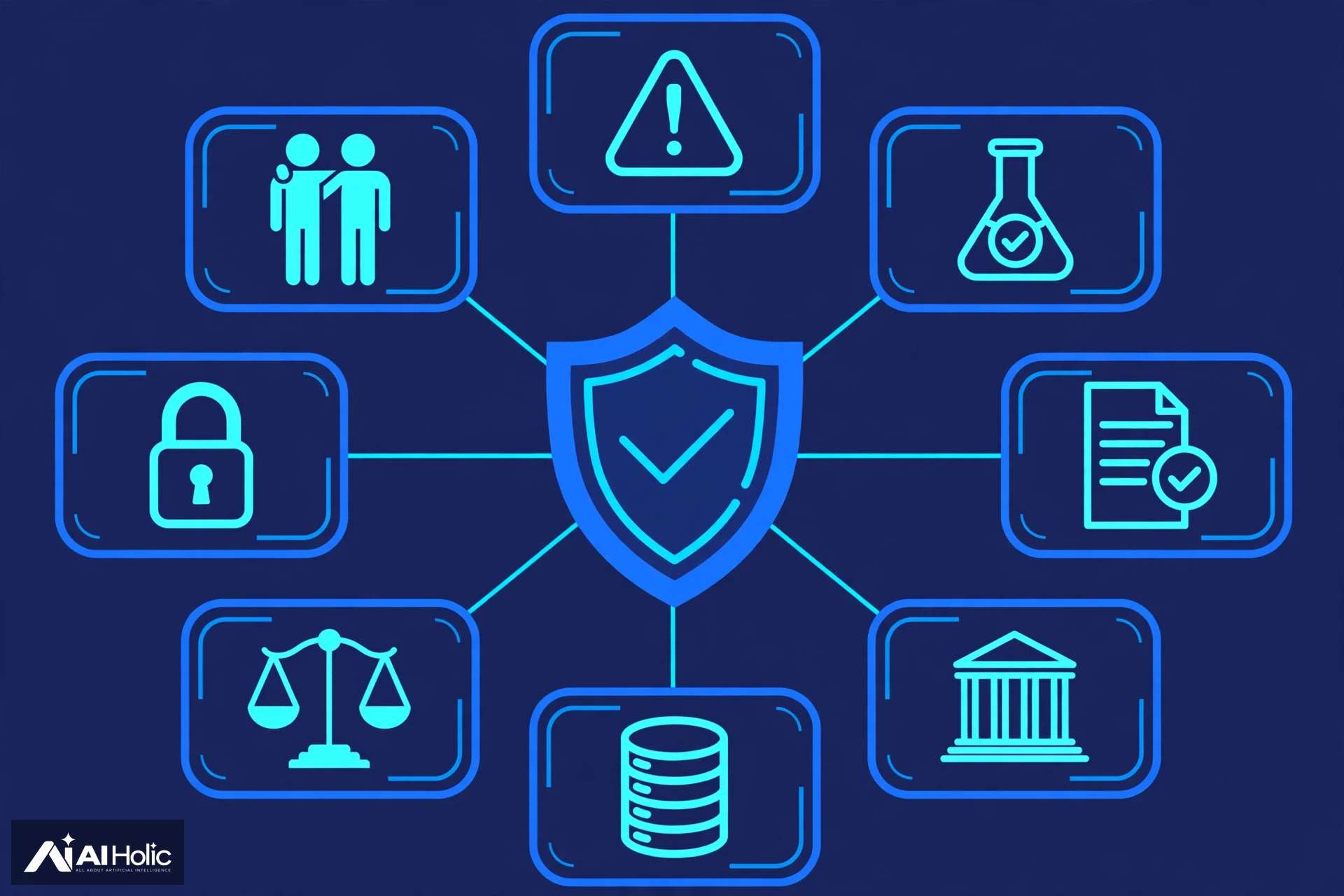
That split is why ai governance skills and capabilities belong in one phrase, even though they are not the same thing. A skill is what a person can do. A capability is what a team can do again and again, with named owners, written steps, and tools that hold the work.
Think of it this way: one analyst can write a good risk assessment, and that is a skill. A team that runs intake, tiering, review, monitoring, and incident response on every system, every time, has a capability.
Hiring builds skills. Design builds capabilities. You need both, and the mix changes as your program grows.
Frameworks That Organize the Work
Frameworks do not replace ai governance skills and capabilities. They give those skills a shared shape, so teams stop inventing their own terms for the same work.
The NIST AI Risk Management Framework (AI RMF 1.0) was released on January 26, 2023, and it is voluntary. It organizes risk work into four functions: Govern, Map, Measure, and Manage. NIST released a Generative AI Profile for the framework on July 26, 2024, which covers the extra risks of generative systems.
You can read the framework on the NIST AI Risk Management Framework page. ISO/IEC 42001 takes a different route: it sets out a management system for AI that an organization can certify. The EU AI Act takes a third route, since it is law, and its duties rise with the risk class of the system.
Use one framework as your spine and map the others to it. That keeps your controls simple and your evidence in one place. Our guide to the integrated AI governance model shows how ethics, law, risk, and operational controls can sit in one structure.
What Each Role Needs First
No role needs every skill at the same depth. The table below shows where each role should start, so training time goes to the skill that pays off first.
| Role | Start with | Why it matters |
|---|---|---|
| Governance analyst | Risk tiering, evidence engineering | They run intake and keep the record straight |
| AI program manager | Workflow design, cross-functional translation | They keep reviews moving and owners aligned |
| Data scientist | Evaluation literacy, lifecycle literacy | They can explain what was tested and what was not |
| Security engineer | Technology assurance, evaluation literacy | They test the system against attacks and misuse |
| Legal and privacy counsel | Framework fluency, legal interpretation | They turn duties into rules teams can follow |
| Executive sponsor | Risk tiering, framework fluency | They set risk appetite and approve the hard calls |
GAGE lists 63 competencies across 10 domains for governance roles, which shows how wide the field runs. Pick the one or two that match your role and build them further this quarter.
How to Build These Capabilities in Your Team
You build ai governance skills and capabilities the same way you build any work habit: one system, one routine, then the next. Start with a single live use case and run the full loop on it.
- Pick one system and write down its purpose, owner, data, and risk tier.
- Run one risk assessment and turn each duty into a control with evidence.
- Set one monitoring check and one review date.
- Write the incident playbook for that system in one page.
- Repeat the loop on the next system and keep what worked.
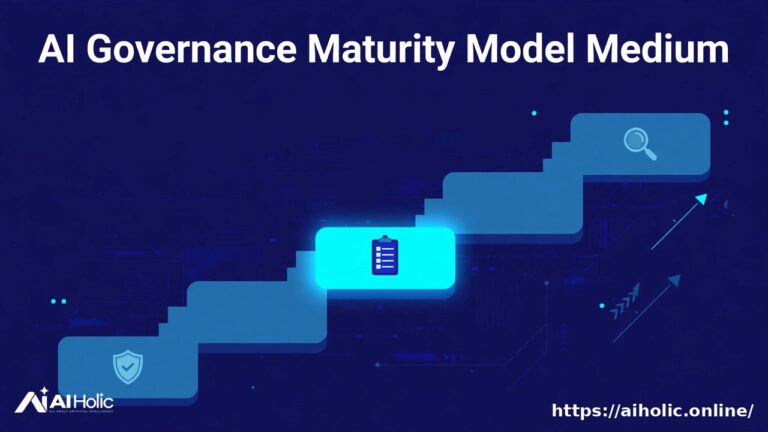
A maturity check helps you see where you stand. Our guide to the AI governance maturity model walks through the middle stage, where rules exist on paper but much of the work still runs by hand.
Training helps, but a portfolio artifact proves more. Build a governance package for one use case: intake form, risk assessment, tiering rationale, control matrix, test plan, oversight design, release checklist, and monitoring notes. That single package shows all eight skills at once.
How to Measure Whether Governance Works
Strong ai governance skills and capabilities show up in numbers, not in meeting counts. Track the measures below and review them each month with the team that owns them.
| Measure | What good looks like |
|---|---|
| Inventory coverage | Every AI system in use has an owner and a risk tier |
| Intake time | New uses get a tier and an approval within days, not weeks |
| Review backlog | No high-risk system waits past its review date |
| Evidence completeness | Each control has a record an auditor can follow |
| Incident response | Every incident has a named owner and a fix date |
| Override rate | Human overrides are logged and reviewed each month |
If the first measures improve while review times fall, the program is working. If approvals speed up but evidence stays thin, the team is cutting corners, not gaining skill.
Common Mistakes and How to Avoid Them
Most failures in ai governance skills and capabilities are process gaps, not talent gaps. The list below covers the ones hiring guides name most often.
- Hiring one expert and calling the program done: one person cannot hold eight skills and run every review.
- Treating framework knowledge as the job: knowing the NIST AI RMF is the start, not the proof.
- Writing policy no one can follow: if a rule has no owner and no test, it is a wish, not a control.
- Skipping monitoring after launch: drift and misuse show up after release, not before it.
- Letting human review turn into a rubber stamp: reviewers need time, context, and the power to stop a release.
- Building a second governance team: fold oversight into the forums and processes that already exist.
Watch: NIST AI RMF Explained in Plain Language
The Skillthropic team explains the NIST AI RMF in about four minutes: what it is, what it is not, and how Govern, Map, Measure, and Manage fit together. Watch it before your next governance meeting.
Frequently Asked Questions
What are AI governance skills and capabilities?
ai governance skills and capabilities are the mix of knowledge, judgment, and routines that let a team run AI systems safely and accountably. Skills sit with people, such as reading a test result or turning a rule into a control. Capabilities sit with the team, such as intake, tiering, review, monitoring, and incident response that run on every system.
Do I need to code to work in AI governance?
Usually no. Most governance managers write no code, and the job centers on judgment, evidence, and clear writing. You still need enough technical fluency to ask precise questions about what was tested, which data was used, and whether the test ran on the production setup, although evaluation specialists often work in Python and SQL.
Which framework should I learn first?
Start with the NIST AI Risk Management Framework, since it gives you the vocabulary and the four functions that most teams use. Add ISO/IEC 42001 if your organization wants a certifiable management system. Add the EU AI Act if you operate in Europe or sell into it, since its duties change with risk class.
How long does it take to build these skills?
A small team can run a first governance loop on one system in a few weeks: intake, tiering, one risk assessment, and one monitoring check. Real skill comes from repeating that loop across more systems and learning from each review. Most guides suggest giving the program a full quarter before judging it.
What is the best way to prove these skills to an employer?
Build a governance package for one realistic use case and walk an interviewer through it. Include the intake form, risk assessment, tiering rationale, control matrix, test plan, oversight design, release checklist, and monitoring notes. One coherent artifact shows more than a certificate line, since it proves you can run the work.
Conclusion
Skills get you started and capabilities keep you going. Pick one skill from this guide, run it on one live system, and let the results shape the next step. That is how ai governance skills and capabilities grow: one system at a time.