AI Lifecycle Management Medium: A Practical Guide to the Full AI Lifecycle
If you don’t want to read the whole guide or have difficulty reading, you can listen to this guide instead.
An AI system does not end when the model ships. It keeps changing as data shifts, users find new ways to use it, and rules change around it. This guide to ai lifecycle management medium walks you through that full path, from the first plan to the final switch-off, in plain words.
At AI Holic, we write plain-language guides to AI tools and governance. Here you will learn the seven stages of the lifecycle, the checks that keep each stage honest, and the signs that tell you when to retire a system.
You do not need a technical background to follow along. Each stage gets a short explanation, a real example, and one governance check you can copy into your own work.
What Is AI Lifecycle Management Medium?
ai lifecycle management medium is a plain-language way to talk about running an AI system from start to finish. It covers planning, data, building, testing, deployment, monitoring, and retirement. Each stage has its own work, its own risks, and its own records to keep.
Think of it like caring for a car. You plan the trip, check the fuel, drive, watch the gauges, and service it on time.
Skip one step and the whole trip suffers. AI works the same way, except the stakes can include privacy, fairness, and legal risk.
The word medium in the keyword comes from Medium, the publishing platform where many writers explain this topic. You will find long explainers there from engineers, product leads, and governance teams. This guide gives you the same ground in one place, without the jargon.
- An inventory of every AI system you run
- A named owner for each system
- Tests that run before any launch
- Monitoring that keeps running after launch
- A clear plan for retiring old systems
The Seven Stages of AI Lifecycle Management Medium
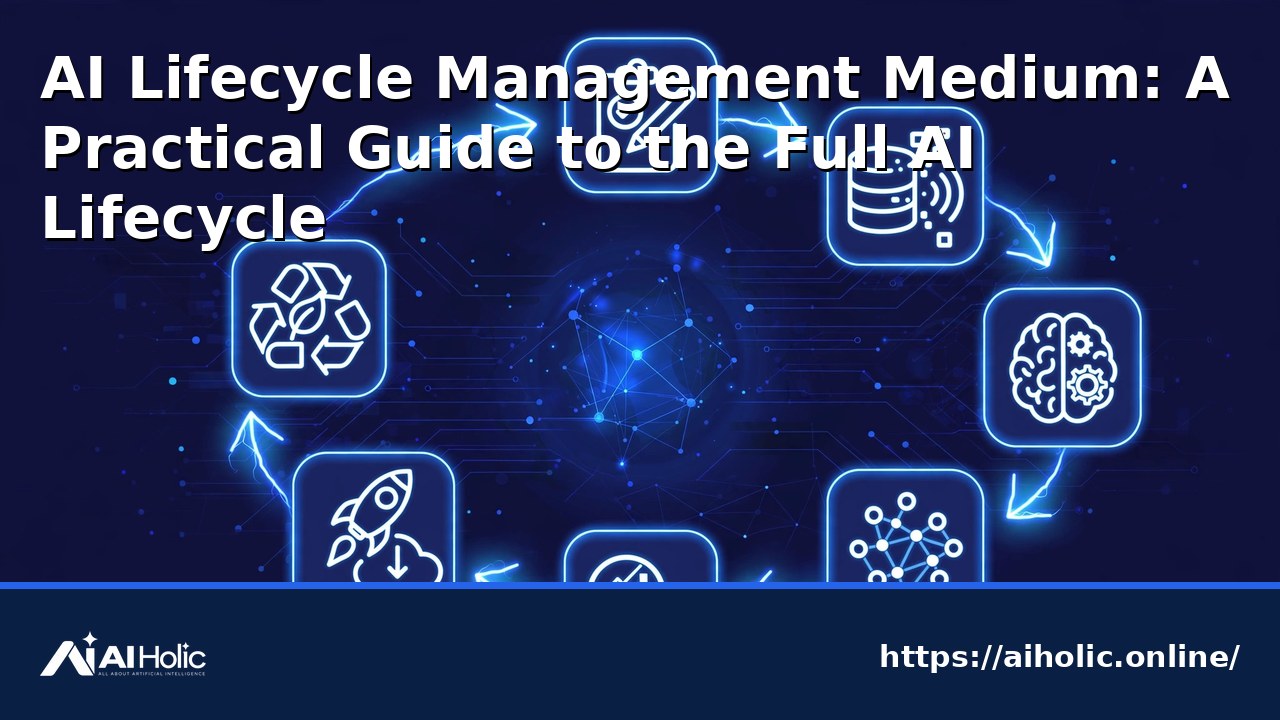
Most guides split the lifecycle into seven stages. The names vary a little from one framework to another, but the work stays the same. This seven-stage view of ai lifecycle management medium keeps the work simple, with one governance check at each stage.
| Stage | What happens | Governance check |
|---|---|---|
| Plan | Define the problem, the users, and the success measure | One named owner and a written goal |
| Data | Gather, clean, and label the data the system will learn from | Consent, sources, and bias checks on file |
| Build | Train the model and wire it into the product | Every version saved with its settings |
| Test | Check the system on fresh cases before launch | Pass marks met and failures logged |
| Deploy | Release the system to real users in stages | Rollback plan ready before go-live |
| Monitor | Track accuracy, speed, and complaints in production | Regular reviews with a fix or retire trigger |
| Retire | Archive the system and switch it off cleanly | Data deleted or archived per policy |
The stages run in a loop, not a straight line. What you learn while monitoring feeds back into planning and data work. A system that passed its tests at launch can still drift months later, so the loop never fully closes.
Plan First: Define the Problem and the Owner
Every lifecycle starts with a clear problem. Write down what the system should do, who will use it, and how you will know it works. A vague goal produces a vague system, and no amount of tuning fixes that later.
Name one owner for the system. That person answers for its results, its risks, and its records. Without a named owner, problems bounce between teams and nothing gets fixed.
Set the success measure before you build. Pick one or two numbers that matter, such as accuracy on real user cases or time saved per task. Write them down and use them at every gate that follows.
- What problem does this system solve, in one sentence?
- Who uses it, and who could it harm if it fails?
- What number tells you it works?
- Who owns it, and who can stop it?
- What data will it touch, and who gave permission?
Data: The Fuel and the Risk
AI learns from data, so bad data makes a bad system. Check where your data comes from, who gave permission to use it, and whether it covers the people the system will serve. Most modern systems use machine learning, a branch of artificial intelligence that learns patterns from data instead of following fixed rules.
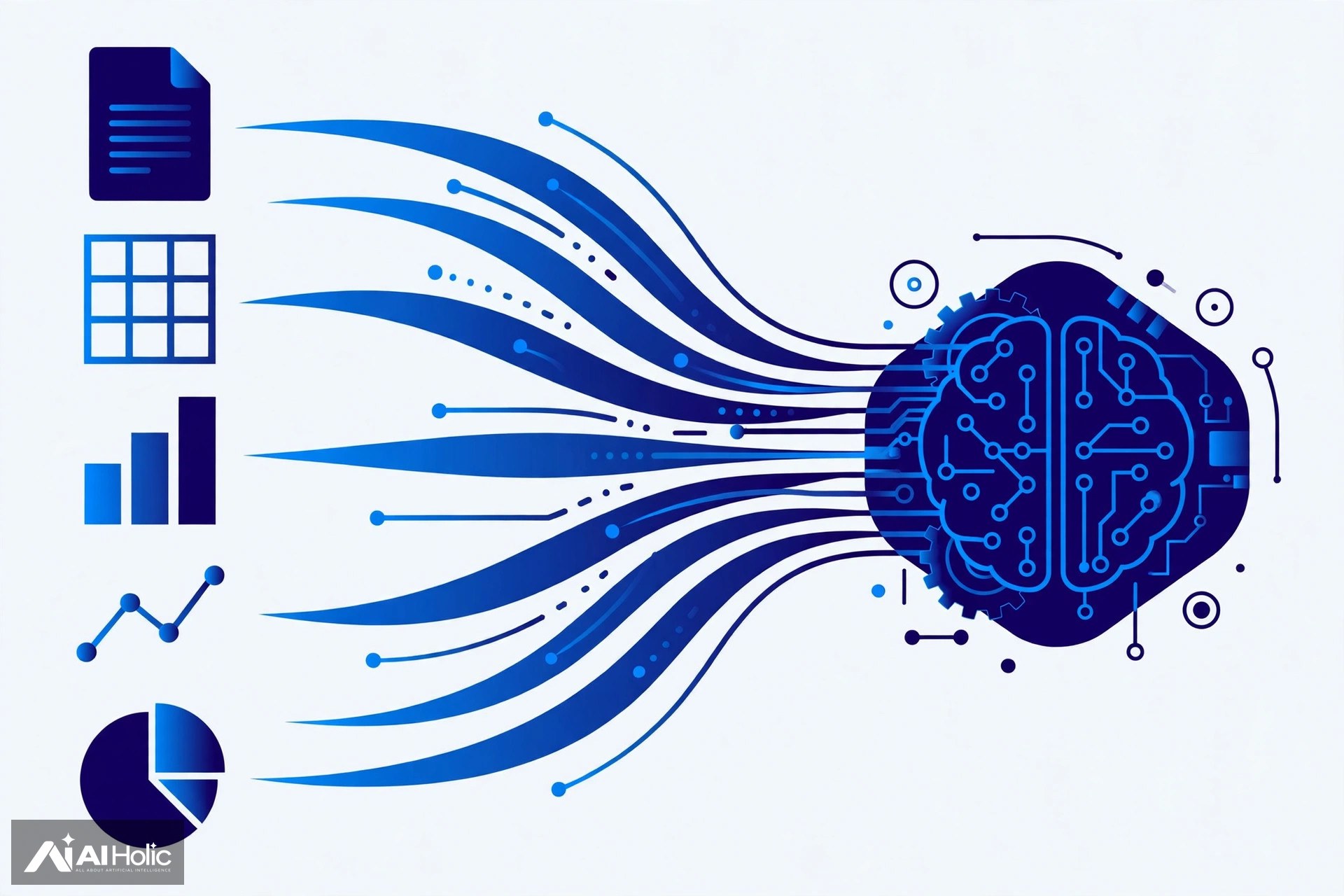
Clean the data before you train. Remove duplicates, fix wrong labels, and fill gaps where you can. Keep a record of every change so you can trace a bad output back to its source.
Watch for bias in the data. If one group is missing or mislabeled, the system will treat that group badly in production. Test for this early, when fixes are still cheap.
Data work also carries privacy risk. Personal data needs a legal basis, a clear purpose, and a limit on how long you keep it. If you cannot explain why you hold a field, drop it before training starts.
Build and Test: Prove It Before You Ship
Building means training the model and wiring it into the product. Keep every version of the model, the data, and the settings that produced it. If you cannot rebuild a version, you cannot explain its behavior.
Test on data the model has never seen. A model that only passes on its training data has memorized answers, not learned the task. Use fresh cases that match real user input.
Test for more than accuracy. Check how the system handles odd inputs, hostile prompts, and edge cases. Log every failure and fix the worst ones before launch.
- Accuracy tests on fresh, real-world cases
- Fairness tests across user groups
- Stress tests with odd and hostile inputs
- Speed and cost tests under normal load
- A human review of the worst failures
Deploy, Monitor, and Retire
Deployment is not the finish line. It is the day real users start to stress the system in ways your tests never did. Roll out in stages, watch the first results closely, and keep a rollback plan ready.
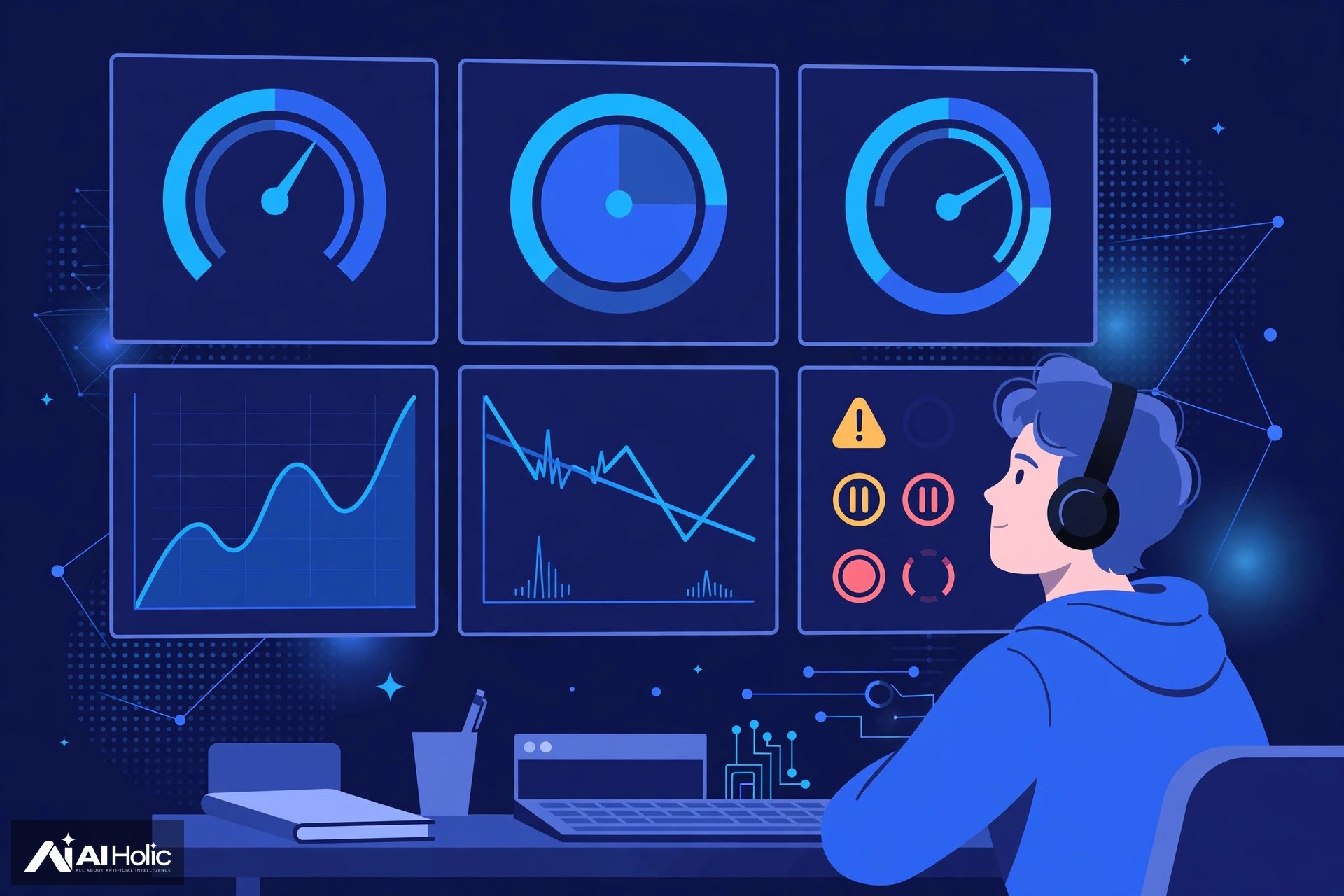
Monitoring never stops while the system runs. Track accuracy, response time, and complaints.
When the numbers move, find out why before the drift grows into a failure. Many public AI governance failures trace back to weak monitoring after launch.
Retire a system when it no longer serves its purpose. Old models can leak stale data, break under new rules, or cost more than they save. Archive the model, the data, and the records, then switch the system off cleanly.
Governance at Every Stage
Governance is the set of rules, roles, and records that keeps an AI system honest. It is not a single review at the end. It runs through every stage, from the first plan to the final archive.
The NIST AI Risk Management Framework gives teams a shared way to do this. It was released on January 26, 2023, and it organizes risk work into four functions: Govern, Map, Measure, and Manage. Govern sets the policies and roles, Map frames the system and its risks, Measure tests and tracks those risks, and Manage acts on what the tests find.
Larger teams may also follow ISO/IEC 42001, an international standard for AI management systems. Small teams can borrow the same ideas without the full standard: one owner, one inventory, and one record per decision.
That is what good lifecycle management looks like in practice: small checks, clear owners, and records you can show. A simple AI governance maturity model helps you see where your team stands today and what to fix next.
Keep three records for every system: an inventory of what you run, the lineage of each version, and a log of decisions and incidents. These records are the proof that your checks happened, and they save you when an auditor or a user asks hard questions. Teams that run several AI systems often need one unified AI governance architecture to keep those records in one place.
Common Mistakes Teams Make
Most teams fail in the same few ways, and each one is easy to avoid once you know it. The first is skipping the plan and building before the problem is clear. The second is training on dirty data and hoping the model will sort it out.
The third is testing only on training data, which hides real weakness until launch. The fourth is shipping without monitoring, so drift goes unnoticed for months. The fifth is having no owner, so nobody acts when a problem shows up.
The last mistake is never retiring anything. Old systems pile up, each one a quiet risk. Put a review date on every system at launch, and honor it when the date arrives.
- Building before the problem is written down
- Training on data nobody checked
- Testing only on data the model already saw
- Shipping with no monitoring and no rollback plan
- Running a system with no named owner
- Keeping retired systems alive with no review date
A Simple Checklist to Start
You do not need a big program to start. Pick one system, run this checklist on it, and fix what is missing. Then copy what works to the next system.
| Stage | Owner | Record to keep |
|---|---|---|
| Plan | Product lead | Written goal and success measure |
| Data | Data lead | Source list, consent notes, bias check |
| Build | Engineer | Model version, data version, settings |
| Test | QA lead | Test results and failure log |
| Deploy | Release lead | Rollout plan and rollback steps |
| Monitor | System owner | Monthly review notes and drift alerts |
| Retire | System owner | Archive list and switch-off date |
Start with one system, not ten. Run the checklist on it for a month, then copy what works to the next system. Small teams can run the whole lifecycle on a single page.
Frequently Asked Questions
What does AI lifecycle management cover?
ai lifecycle management medium is the practice of running an AI system through seven stages: plan, data, build, test, deploy, monitor, and retire, with a governance check at each stage. The word medium points to Medium, where many writers explain the topic. The goal is a system you can trace, test, and defend at every step.
How many stages are in the AI lifecycle?
Most guides use seven stages: plan, data, build, test, deploy, monitor, and retire. Some frameworks group the work into fewer stages, such as the four functions in the NIST AI Risk Management Framework. The count matters less than the checks, since each stage needs an owner, a pass mark, and a record.
Who owns AI lifecycle management in a small team?
One person should own each system, even in a team of three. That owner answers for results, risks, and records, and can stop the system if it misbehaves. Other people can help with data, tests, or reviews, but the owner holds the final call, so write the name down.
What is the NIST AI Risk Management Framework, and do I need it?
It is voluntary guidance from the National Institute of Standards and Technology, released on January 26, 2023. It organizes AI risk work into Govern, Map, Measure, and Manage. You do not need to adopt it in full, but its four functions give any team a clear way to frame risk, test it, and act on it.
When should I retire an AI model?
Retire a model when its accuracy drops and retraining no longer helps, when it costs more than the value it returns, or when new rules make its data or use unsafe. Set a review date at launch so the decision comes on a schedule, not after a failure. Archive the model and its records before you switch it off.
Conclusion
Good ai lifecycle management medium practice is mostly habit: plan with a named owner, keep clean data, test before you ship, watch the system live, and retire it cleanly. Pick one system this week and run the checklist on it. The records you keep today are the proof you will need tomorrow.