AI Transformation Is a Problem of Governance: Why Control Decides Whether AI Scales
If you don’t want to read the whole guide or have difficulty reading, you can listen to this guide instead.
Most companies can buy a good AI model in an afternoon. The hard part starts after that, when the model needs data, approvals, and someone to answer for its output. That is why ai transformation is a problem of governance: the models work, but the rules around them do not.
At AI Holic, we read the top guides on this claim and checked the numbers behind them. The pattern is steady across every source: pilots stall on ownership, data, and oversight, not on model quality.
This guide explains what the phrase means, where it comes from, the five ways governance fails, and the simple plan that fixes it. You will finish with a clear test for your own AI work.
AI Transformation Is a Problem of Governance: The Short Answer
In short, ai transformation is a problem of governance because the model is no longer the hard part. Capable models can be rented by the token, and a good engineer can wire one up in an afternoon. What almost no one has is a clear answer to who controls the system, what risk is acceptable, and how fast a decision about it can be made.
Governance is the set of answers to those practical questions. It names who approves a system, who owns its output, what data it may touch, and who can stop it. Without those answers, a pilot can look great in a demo and still never reach production.
The numbers back the claim. MIT’s Project NANDA report, The GenAI Divide, found that around 95 percent of enterprise generative AI pilots delivered no measurable profit impact, and the cause was organizational, not technical. Boston Consulting Group research puts nearly 70 percent of AI transformation challenges down to people and process issues, not technology limits.
What the Phrase Means, and Where It Comes From
The phrase ai transformation is a problem of governance circulates widely on X, formerly Twitter, and in blog posts, threads, and conference slides. It is usually attached to one claim: AI projects do not fail because the models are too weak. They fail because nobody governs them properly.
One honesty note belongs up front. No single verified author, tweet, or date could be confirmed as the origin of the phrase. This guide therefore treats it as a popular argument, not as a quote from a named person, and it invents no tweet, author, or date to dress it up.
That honesty matters because the argument stands on its own. AI transformation means changing how an organization works so AI becomes part of daily decisions, products, and services, safely and at scale. That change has three layers: the technology layer, the process layer, and the people layer.
The technology layer is the models, data pipelines, and tools. The process layer is the workflows, approvals, and quality checks around them.
The people layer is the skills, roles, and habits of the staff who use them. Governance is the work that holds all three layers together.
Why AI Pilots Stall: Five Failure Modes
A pilot makes the imbalance visible. A small team builds a promising demo with a good model and clean sample data, and leaders applaud. Then the pilot must move into production, where real data is messy, real users behave in odd ways, and real regulators ask questions.
Suddenly the project needs data owners, privacy review, security checks, monitoring, and a support process, none of which the pilot needed. If those structures do not exist, the pilot stalls. These five failures are why ai transformation is a problem of governance in practice.
| Failure mode | What it looks like | The governance fix |
|---|---|---|
| No owner of the outcome | A bad output ships and no one knows who investigates or answers for it | Name a business owner, a technical owner, and a risk owner for every system |
| Shadow AI | Staff paste work data into unapproved tools on personal accounts | Fast intake that approves or blocks a tool in days, not months |
| Ungoverned data and retrieval | The model reads old, copied, or permission-blind data and answers with confidence | Permission-aware retrieval with lineage for every source |
| Oversight by habit, not risk | Low-risk drafts need approval at every step while high-risk actions run free | Match the check to the harm: light for low risk, human sign-off for high risk |
| Governance bolted on after the build | Controls arrive at launch and need rework, or never arrive at all | Build the checks into the workflow from day one |
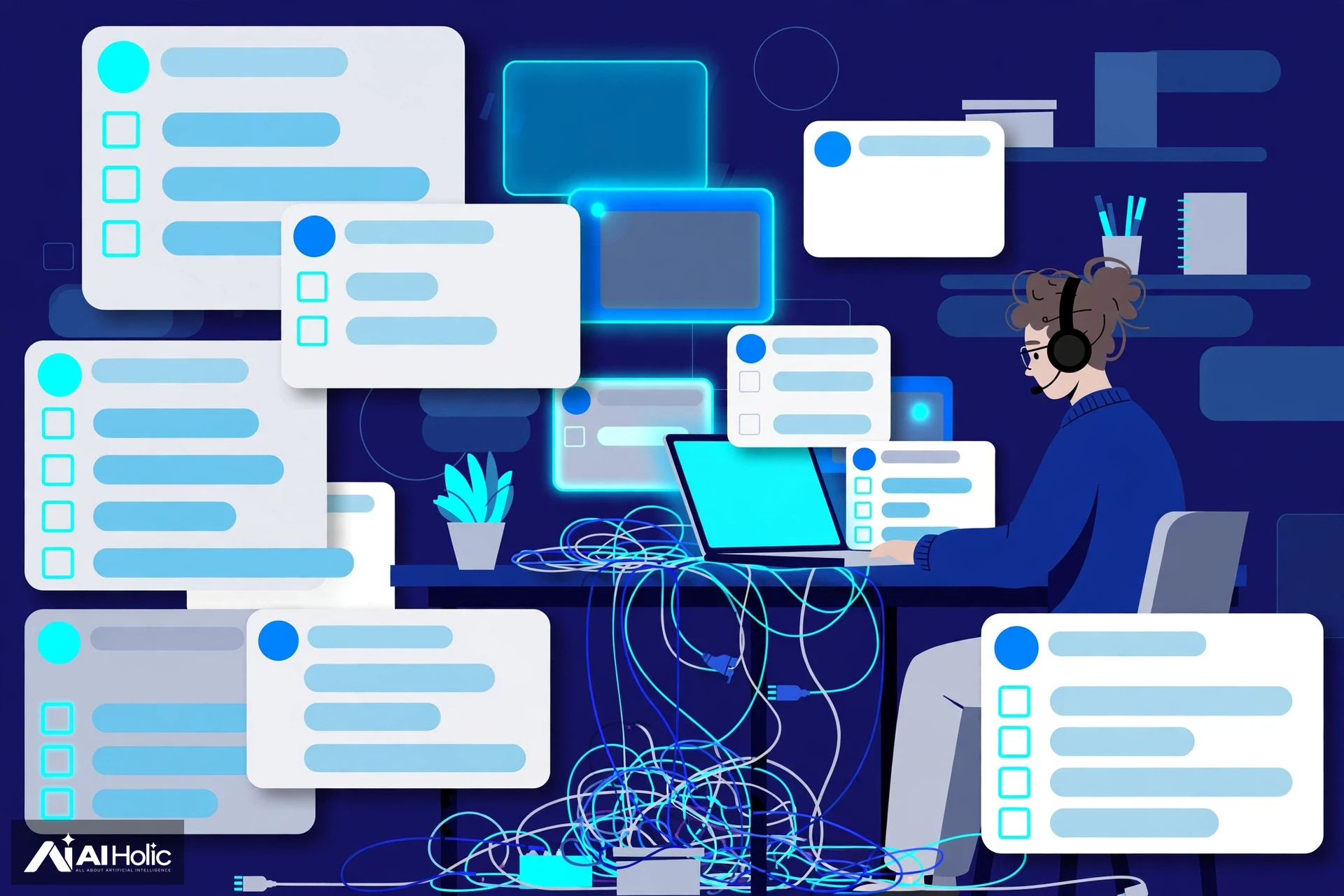
Shadow AI deserves a closer look because it hides. Staff adopt whichever model or copilot solves the task in front of them, often through personal accounts and without approval to use company data. Over time you hold dozens of ungoverned tools, mixed security habits, and sensitive data flowing through systems your security team has never reviewed.
The problem can stay hidden until an incident exposes it, and by then the data may already sit outside your control. If that sounds familiar, our AI governance wake-up call guide gives a five-part response plan for the moment a company learns its AI use has outgrown its controls.
Permissions, not parameters, decide what AI can do. A model’s settings shape what it can do, but its permissions decide what it can access and change. Two companies can run the same model at very different levels of risk: one limits it to read-only access in a test area, while the other lets it change live records.
Fine-tuning cannot fix an ungoverned workflow either. It adjusts how a model behaves, but it does not set workflow ownership, access permissions, logging, or human oversight.
If a workflow lacks those controls, a better-tuned model simply runs the ungoverned process more smoothly. Fix the workflow first. These stalls are often caused by ai leadership blind spots, the habits that keep leaders from seeing the real problem.
The Four Pillars of AI Governance
The pillars below are the working answer to the claim that ai transformation is a problem of governance. Each pillar answers a question that a pilot must answer before it scales.
| Pillar | What it covers | First check |
|---|---|---|
| Data governance | Quality, ownership, access, and lineage of the data the model reads | Can you list every source and who may see it? |
| Accountability | Named owners, clear roles, and sign-off before launch | Does every system have a named business owner? |
| Oversight | Audits, limits, human review, and monitoring after launch | Who checks high-risk output, and how often? |
| Change management | Training, process redesign, and support so people adopt the new way of working | Has the workflow been rebuilt around the AI, or just pasted on top? |

Data governance comes first because the model is only as trustworthy as the data it reads. If retrieval pulls from outdated, copied, or permission-blind sources, the model can give confident answers from wrong data or show data a user should never have seen. Provenance lets you trace a wrong answer back to its source and show auditors exactly what the system was allowed to read. That is why data quality data architecture asset management ai transformation starts with the data foundation itself, not with the model.
Oversight must match the risk, not the habit. Some workflows need human approval at every step, while others can run free, and nobody has ever assessed which approach fits each task.
That mix leaves low-risk work slow and high-risk work unchecked at the same time. Our guide to a unified AI governance architecture shows how these controls can live in one shared layer, so the same rule gives the same answer everywhere.
Change management is the pillar teams skip most often. A new tool fails when staff do not trust it, do not know how to use it, or quietly work around it. Training, clear roles, and a rebuilt workflow turn a pilot into a habit, and a habit is what survives after the launch excitement fades.
Three Frameworks That Anchor the Work
Three frameworks recur in every guide on why ai transformation is a problem of governance. None of them is about the model. All three are about control.
The NIST AI Risk Management Framework, released in January 2023, is the voluntary starting point for most teams. It organizes the work into four functions: Govern, Map, Measure, and Manage. A Generative AI Profile followed in July 2024 and adds guidance for generative models.
ISO/IEC 42001, published in December 2023, is the first international management-system standard for AI. It can be certified by a third-party audit, and its Annex A lists 38 AI-specific controls that cover policy, lifecycle, data quality, and human oversight.
The EU AI Act is the binding counterpart. The Act, Regulation (EU) 2024/1689, entered into force on 1 August 2024 and sorts AI applications into four risk levels: unacceptable, high, limited, and minimal, with an extra category for general-purpose AI. You can read the full text of the EU AI Act on Wikipedia, and the regulation of AI in the United States page covers the US side, including the NIST framework.
The ideas behind that law came from people, not only from lawmakers. Our guide to leading ai ethics professors europe names the ten professors whose work shaped the EU AI Act, from Oxford and Delft to Vienna, Berlin and Umea, so you can trace each rule back to the scholar who argued for it.
Start with NIST if you want a free, practical checklist. Add ISO/IEC 42001 if your customers ask for a certificate they can trust. Track the EU AI Act if you serve users in Europe, since its duties apply in stages and its fines reach EUR 35 million or 7 percent of global annual turnover for the most serious breaches.
A Governance-First Plan in Five Steps
This plan turns the idea that ai transformation is a problem of governance into daily work. Each step is small, and each one can start this week.
- Take an inventory. List every AI tool, vendor, and model in use, with its owner and the data it touches.
- Sort tools into risk tiers. A grammar checker and a hiring tool should never wait in the same approval queue.
- Name an owner for every system. One person owns the outcome, one owns the build, and one owns the risk.
- Put checks at runtime, not on paper. Approvals, allow lists, and kill switches must work while the system runs.
- Keep an evidence log. Record what the system did, which model version ran, and who approved it.
Our governance quick wins guide covers policy, intake, risk tiering, and a register in a short, usable form, and it is the fastest way to start steps one and two.
Match the check to the harm. A chatbot that drafts marketing copy needs a light check, while an agent that can issue refunds or move money needs a full review and a human sign-off. One rule for both either slows the harmless tool to a crawl or lets the risky one through unchecked.

Run the plan in order, and do not skip the inventory. Teams that jump to buying a governance platform before they know which tools they run end up governing a list that is already out of date. The inventory is the foundation, and every later step stands on it.
What Weak Governance Costs
The cost of weak governance rarely shows up as a single bill. It builds over time through pilots that never reach production, work that has to be repeated, incidents that could have been prevented, and trust that takes years to rebuild.
Deloitte’s 2026 State of AI in the Enterprise report found that 74 percent of enterprise leaders plan to deploy agentic AI within two years, yet only 21 percent report a mature governance model in place. That gap is the risk: the tools arrive faster than the controls.
IBM’s Cost of a Data Breach Report adds a sharper warning. Among organizations that suffered a breach of an AI model or application, 97 percent had no AI access controls in place, and 63 percent either had no AI governance policy or were still drafting one. Gartner predicts that by 2027, 40 percent of enterprises will demote or retire autonomous AI agents because of governance gaps found only after a production incident.
The fix is cheaper than the failure. A register, a tier list, and a named owner cost days to set up, while a stalled program costs months. Start with the highest-risk tools first, since those touch customers, money, hiring, or safety, and pause any high-risk tool that has no owner, no tier, or no human check.
Frequently Asked Questions
Why Is AI Transformation a Problem of Governance and Not Technology?
AI transformation is a problem of governance because modern models are already capable enough for most enterprise work. What stalls deployment is unclear ownership, policies that are not enforced at runtime, ungoverned data, and no evidence trail. A better model cannot fix a workflow that nobody owns, a dataset nobody checks, or a decision nobody can explain.
Who Said “AI Transformation Is a Problem of Governance” First?
No single author has been verified. The phrase circulates widely on X and in blog posts and conference slides, but no original tweet, author, or date could be confirmed. Treat it as a popular argument about governance, not as a quote from a named person, and be wary of any article that names an author without a source.
What Are the Four Pillars of AI Governance?
Data governance, accountability, oversight, and change management. Data governance covers quality, ownership, access, and lineage. Accountability names the owners and the sign-off.
Oversight covers audits, limits, human review, and monitoring. Change management covers training and process redesign so people actually adopt the new way of working.
Which Frameworks Should a Small Team Start With?
Start with the NIST AI Risk Management Framework, since it is free, voluntary, and practical, and it organizes the work into Govern, Map, Measure, and Manage. Add a simple register and three risk tiers first, then look at ISO/IEC 42001 if customers ask for certification. Check the EU AI Act only if you serve users in Europe.
How Do I Know If My AI Governance Is Working?
Ask five questions in one meeting: what AI tools are in use, what data do they touch, what risk tier is each tool, who approved it, and what happens if it fails. If those answers take days, emails, and guesses, the system is not working yet. A working system answers them from a register in minutes.
Conclusion
AI transformation is a problem of governance, and that is good news: governance is work you can start this week. Take an inventory, sort tools by risk, name an owner for each one, and put checks at runtime.
The models are ready. Make sure your controls are too.