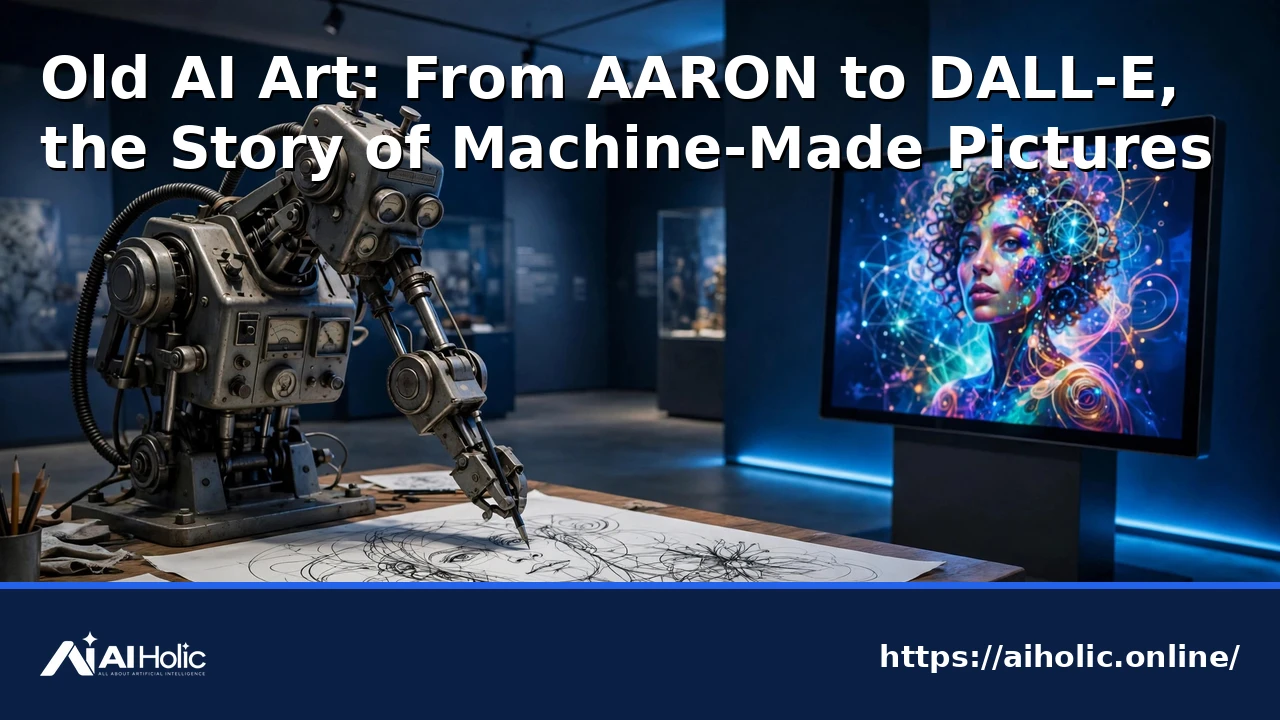
Old AI Art: From AARON to DALL-E, the Story of Machine-Made Pictures
If you don’t want to read the whole guide or have difficulty reading, you can listen to this guide instead.
Some AI pictures look old already, even though the tools that made them are only a few years old. Others are fifty years old and still hang in major museums. old ai art covers both, and the phrase means two different things depending on who says it.
At AI Holic, we traced the story from the first drawing program in the late 1960s to the image generators you can open today. This guide explains what counts as early machine-made art, who made the first pieces, and where you can see them.
You will also learn how to spot the style of each era, why 2022 images already look dated, and why these early works still matter.
The Short Answer: What Old AI Art Means
Old AI art has two meanings, and both are in common use. The first meaning is art made by early AI systems, starting with Harold Cohen’s AARON program in the late 1960s. The second meaning is newer: images made by early text-to-image tools in 2021 and 2022, which already look dated next to what current tools make.
That split is why old ai art is hard to pin down in one sentence. A drawing from 1974 and a grainy portrait from 2022 come from different worlds, yet both belong in this story. This guide covers both, in order, so you can tell them apart.
The short version is simple. Machines have been making pictures for more than fifty years. The tools changed, the look changed, and the arguments about whether it counts as art never went away.
A Short Timeline: From AARON to DALL-E
The table below gives the whole story in one place. Each row marks a step that changed what machine-made pictures could do.
| Year | What happened | Why it matters |
|---|---|---|
| Late 1960s | Harold Cohen starts AARON at UC San Diego | First AI program built to make art on its own |
| 1972 | AARON drawings shown at Los Angeles County Museum of Art | Machine art enters a major museum |
| 1997 | Karl Sims shows Galapagos in Tokyo | Visitors breed art by choosing what they like |
| 1999 | Scott Draves releases Electric Sheep | AI art becomes a screensaver on home computers |
| 2014 | Ian Goodfellow and colleagues publish the GAN | Machines learn a style from examples instead of rules |
| 2018 | Edmond de Belamy sells for $432,500 at Christie’s | AI art gets its first big auction price |
| 2021 | OpenAI releases DALL-E 1 | Text-to-image art reaches the public |
| 2022 | Stable Diffusion and Midjourney launch | Anyone can make AI images in seconds |
Wikipedia’s overview of AI art covers the same timeline in reference form, with images of the key works. Keep this timeline in mind as you read on. Every section below fills in one row of it.
The 1970s and 1980s: AARON Draws by Rules
Harold Cohen was a British painter who had already shown his work around the world. In the late 1960s, while teaching at the University of California, San Diego, he started building a program he called AARON. His aim was to code the act of drawing itself, not to copy existing pictures.
AARON worked from rules Cohen wrote by hand. He gave it knowledge about shapes, space, and how a drawing moves from foreground to background. The program then made its own choices within those rules, so no two drawings came out the same.
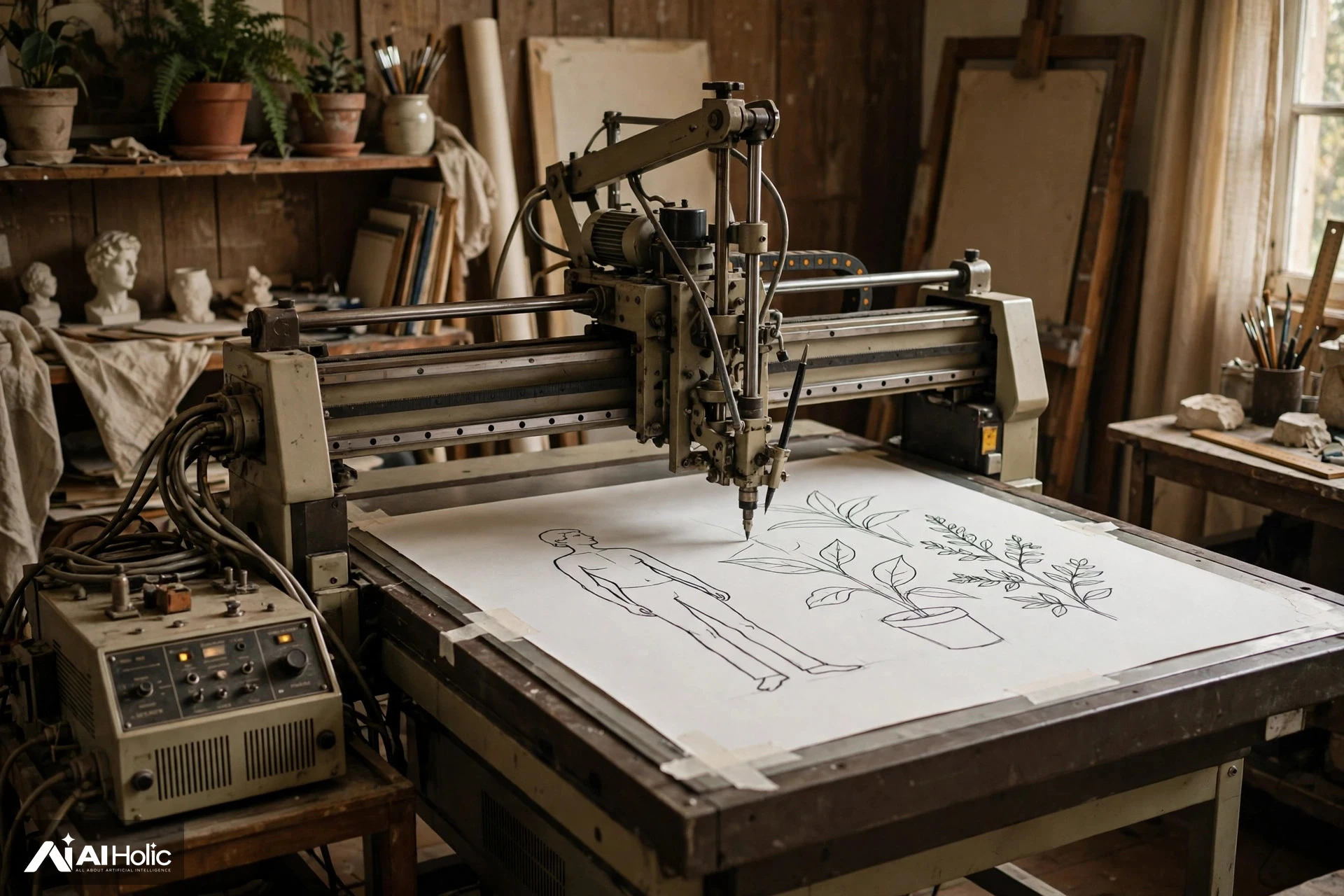
The early results were black-and-white line drawings, simple at first and more complex through the 1970s. AARON’s work was shown at the Los Angeles County Museum of Art in 1972. Later versions learned colour, then figures and plants, and a 2001 version called Aaron KCAT drew people next to potted plants.
Cohen kept working on AARON for the rest of his life, until his death in 2016. The Whitney Museum of American Art ran a full exhibition of his work in 2024, with the software drawing live in the gallery. Anything made after Cohen’s death is not counted as authentic AARON work, since the artist was no longer guiding it.
AARON matters because it did the opposite of what modern tools do. Today’s generators learn from millions of pictures made by other people. AARON learned nothing from other pictures, and everything it knew came from rules its maker wrote.
The 1990s: Evolution, Screensavers, and Robots
In the 1990s, artists started letting audiences shape the art. Karl Sims built Galapagos, an installation shown in Tokyo in 1997, where visitors picked the animated forms they liked best. The chosen forms bred new ones, so the art evolved by public taste.
Sims had already won the Golden Nica award at Prix Ars Electronica in 1991 and 1992 for videos made with artificial evolution. His work showed that a machine could explore visual ideas the artist had never drawn by hand.
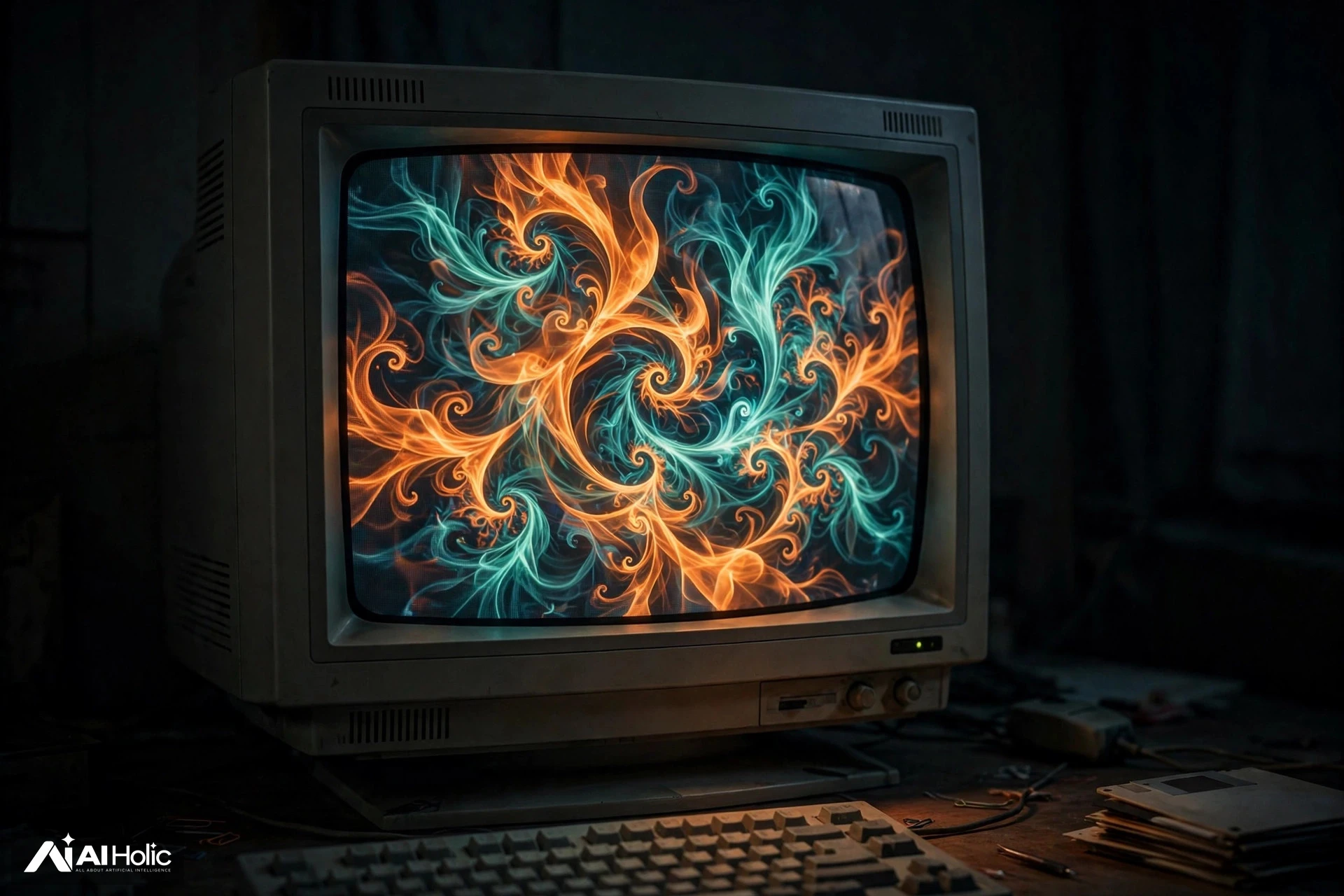
In 1999, Scott Draves released Electric Sheep as a free screensaver. It animated and evolved fractal flames on networked computers, learning from what viewers liked. It won a prize from the Telefonica Foundation in 2001, and it put AI art on ordinary home computers for the first time.
The BBC also filmed AARON at work in 1996, for an episode of It’ll Never Work? called Can a Computer Produce Art? The cameras showed the program drawing line by line, then a robot painting the result on paper.
One piece took about seven hours to finish.
2014 to 2018: GANs and the First Auction
The next big change came in 2014, when Ian Goodfellow and colleagues published the generative adversarial network, or GAN. A GAN has two parts that train against each other: one makes images and the other judges them. That contest lets the machine learn a visual style from examples, instead of following hand-written rules.
Google’s DeepDream followed in 2015, turning ordinary photos into dream-like images full of repeated patterns. Artists and the public loved the strange results, and DeepDream images spread fast online. By 2018, a site called Artbreeder let anyone blend faces and landscapes with GAN models.
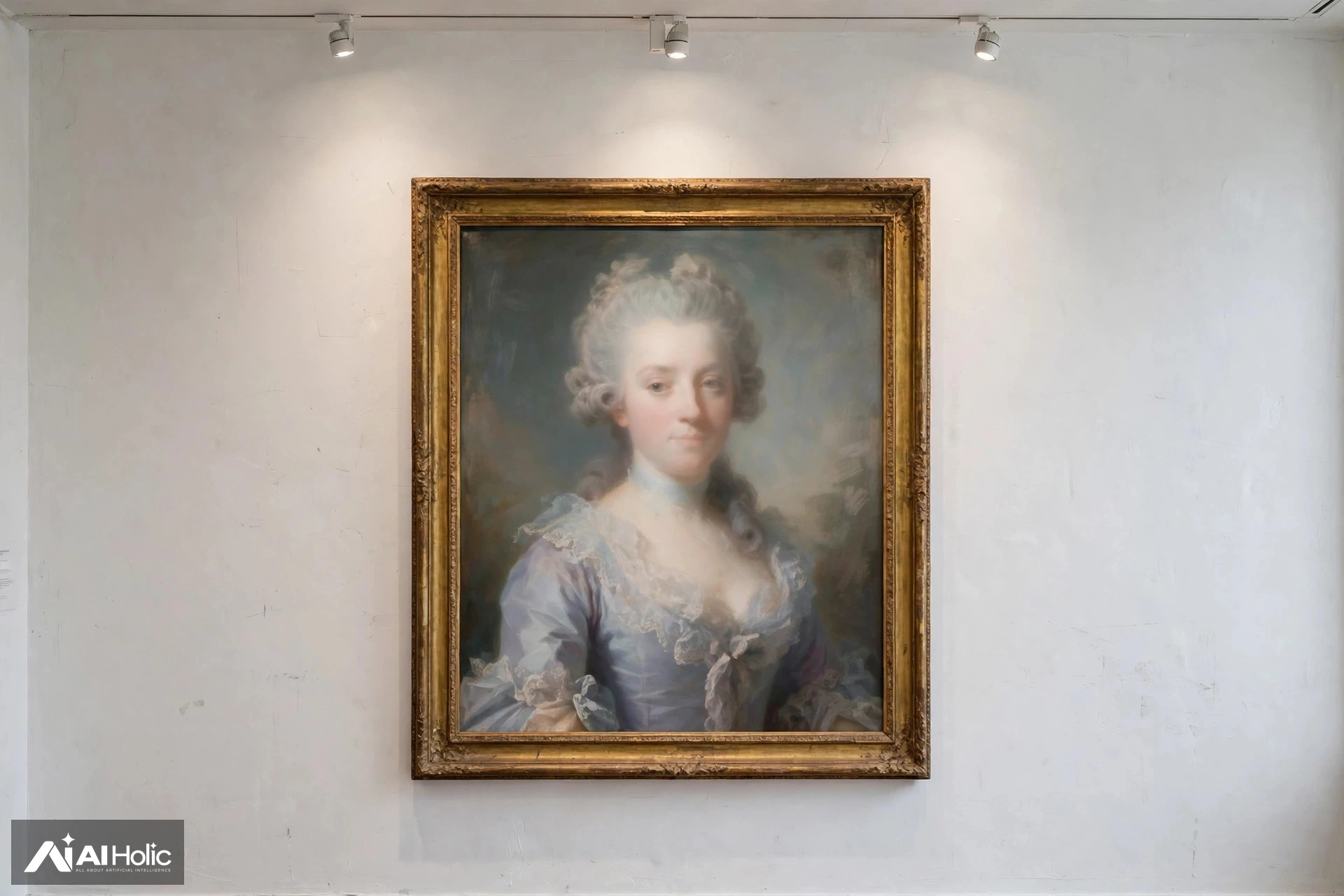
Then came the auction. In October 2018, Christie’s in New York sold Edmond de Belamy, a portrait made with a GAN by the Paris collective Obvious, for US$432,500.
The estimate had been US$7,000 to US$10,000, so the sale price was about 45 times higher. By 2018, old ai art had its first headline price, and the art world had to take it seriously.
The sale also started the argument that still runs today. Critics asked who the artist was: the people who wrote the code, the people who picked the training images, or the machine itself. No clean answer has emerged since, and courts are still working through the question.
2021 to 2023: Diffusion Takes Over
In 2021, OpenAI released DALL-E 1, which made images from text prompts. A year later, Stable Diffusion arrived in August 2022, and Midjourney launched the same year. Suddenly anyone could type a sentence and get a picture in seconds, with no code and no training.
These tools used diffusion models, a method first proposed in 2015 that only overtook GANs in early 2021. Diffusion starts with noise and clears it away step by step until a picture appears. The results were sharper and more flexible than GANs, and they could follow a written prompt closely.
The public noticed fast. Theatre D’opera Spatial, a Midjourney image by Jason Allen, won the 2022 Colorado State Fair fine art competition in the digital arts category. That is when old ai art stopped being a museum topic and became a dinner-table argument about jobs, credit, and what counts as art.
The law moved too. In August 2023, a United States district court ruled that AI art is ineligible for copyright because it lacks human authorship. The ruling did not end the debate.
Why 2022 AI Images Already Look Like Old AI Art
Here is the strange part. Images made in 2022 already look old, and you can spot them at a glance.
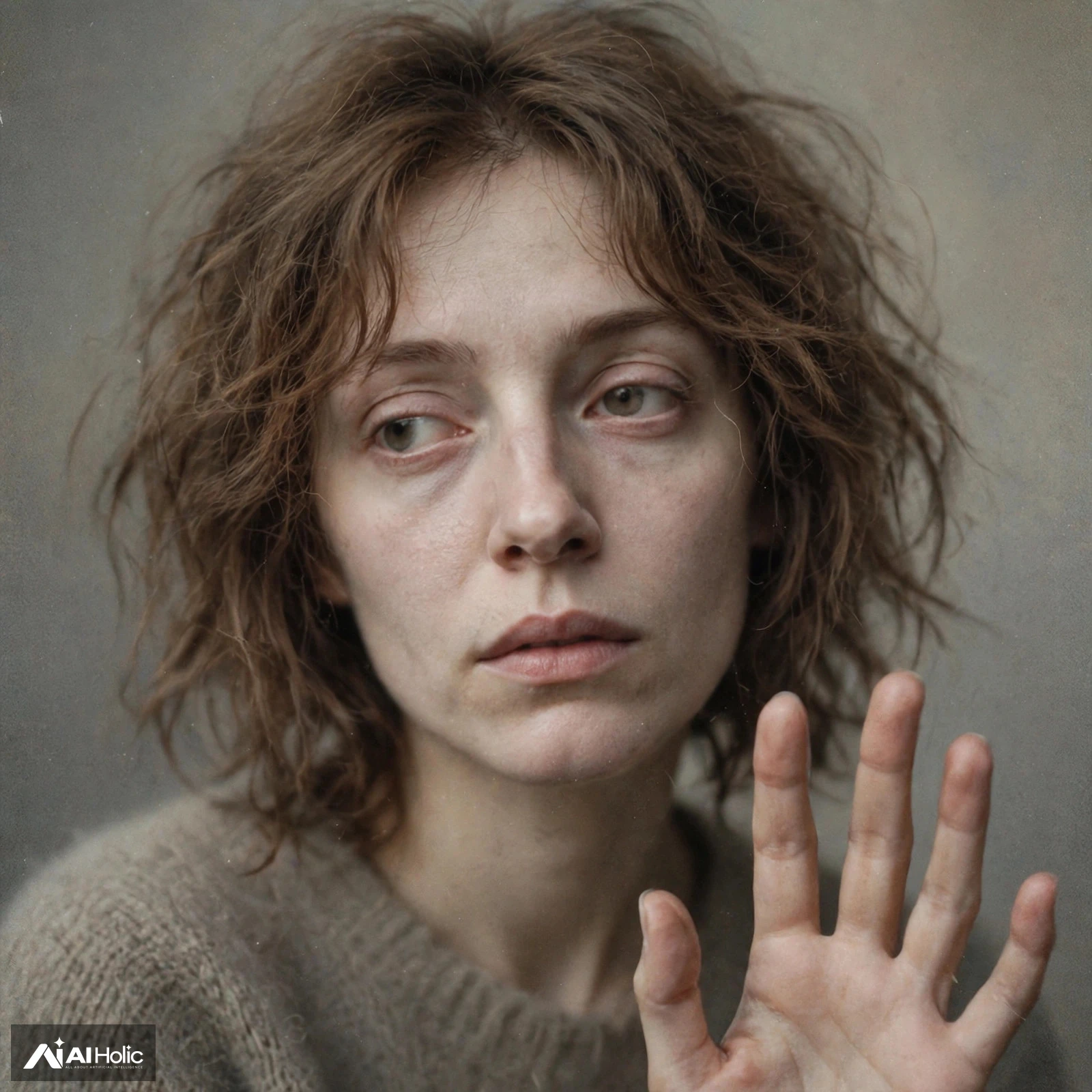
They are grainy, the hands have too many fingers, faces melt at the edges, and the light looks flat. Each tool had its own look, and DALL-E images from that year look like nothing else.
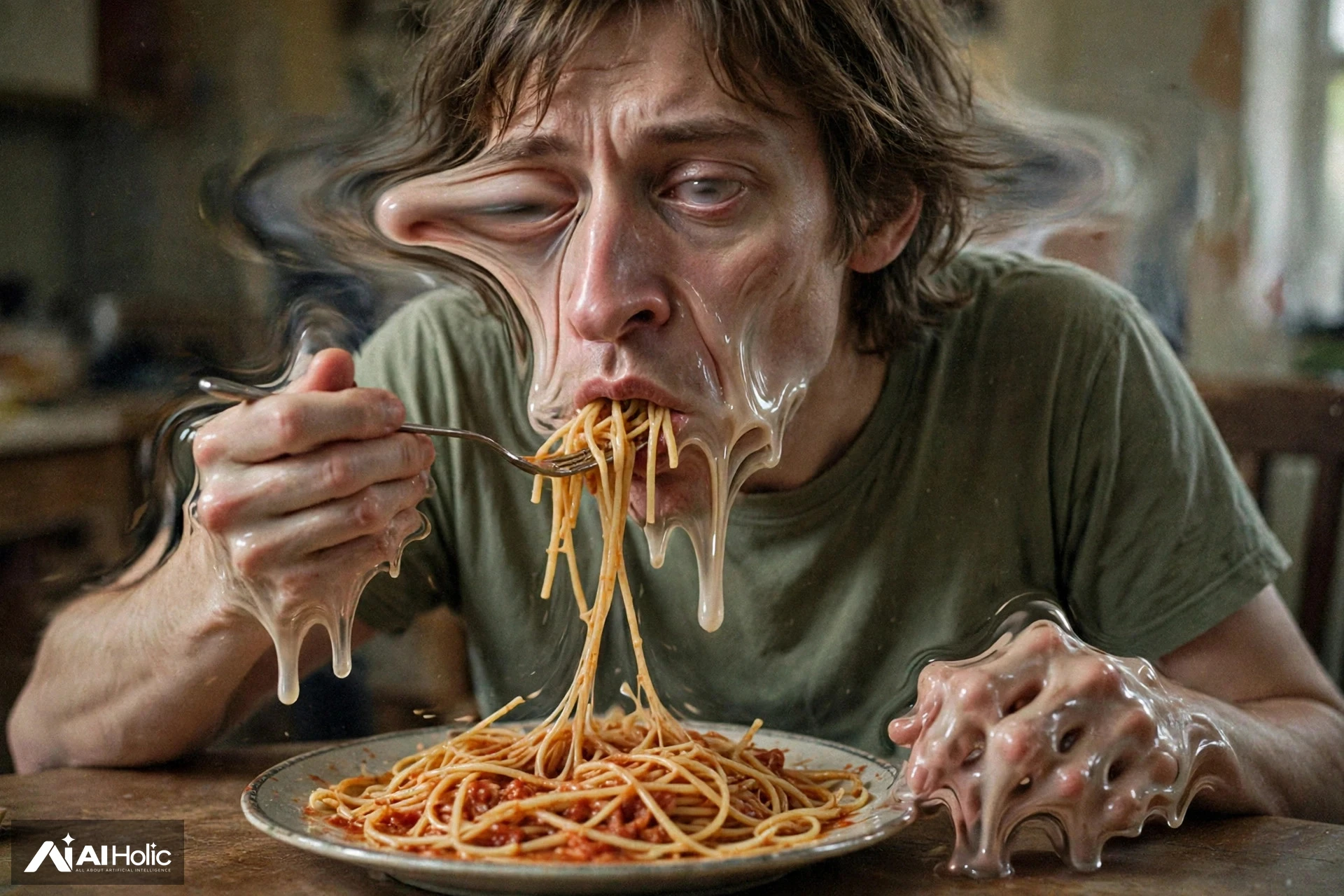
The most famous example is a short clip of Will Smith eating spaghetti, made with a text-to-video tool and posted on Reddit on 23 March 2023. The face and hands fall apart in every frame, and the clip became a running test for new video models. If a new model could make a person eat spaghetti without melting, it had improved.
That is why old ai art from 2022 feels like a time capsule now. The tools improved so fast that their early look became a marker of its year, the way film grain marks the 1970s. People are already nostalgic for it, and that nostalgia arrived while the tools were still new.
The same pattern shows up in the images that spread on Facebook in 2024, like the Shrimp Jesus pictures. They were clumsy and easy to spot, and they still spread because they were strange enough to share. Today the same tools make smooth, polished images, and the strange early look is mostly gone.
Where to See Old AI Art Today
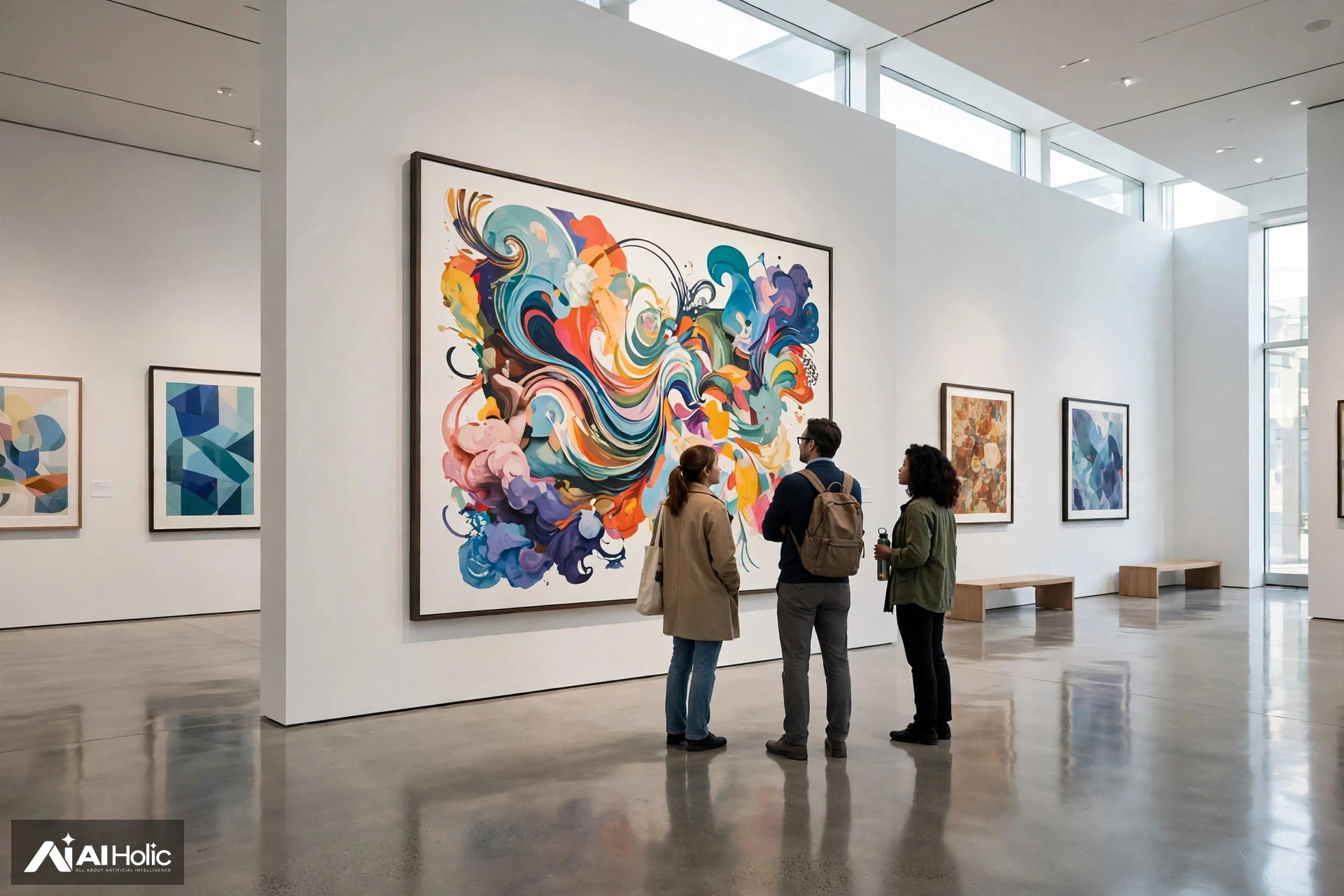
You do not need a time machine to see these works. Museums hold them, and some are on show right now. The list below starts with the places that hold the most important pieces.
- Whitney Museum of American Art, New York, holds versions of the AARON software and ran the Harold Cohen: Aaron exhibition in 2024.
- Tate, London, holds AARON drawings from across Cohen’s career.
- Victoria and Albert Museum, London, holds computer-generated drawings by Cohen, including work from 1974.
- San Francisco Museum of Modern Art has shown AARON work across its history.
- Online archives: the BBC Archive clip from 1996 shows AARON drawing and painting, and Wikimedia Commons hosts public images of early AI art.
Check each museum’s site before you travel, since AI art is rarely on permanent display. Special exhibitions are the best time to see AARON running live, which is how the Whitney showed it in 2024.
If you want to try the tools yourself, start with a modern generator and compare its output with the early work above. Our guide to the best free AI image generators lists current tools you can open and test today.
How to Spot AI Art by Era
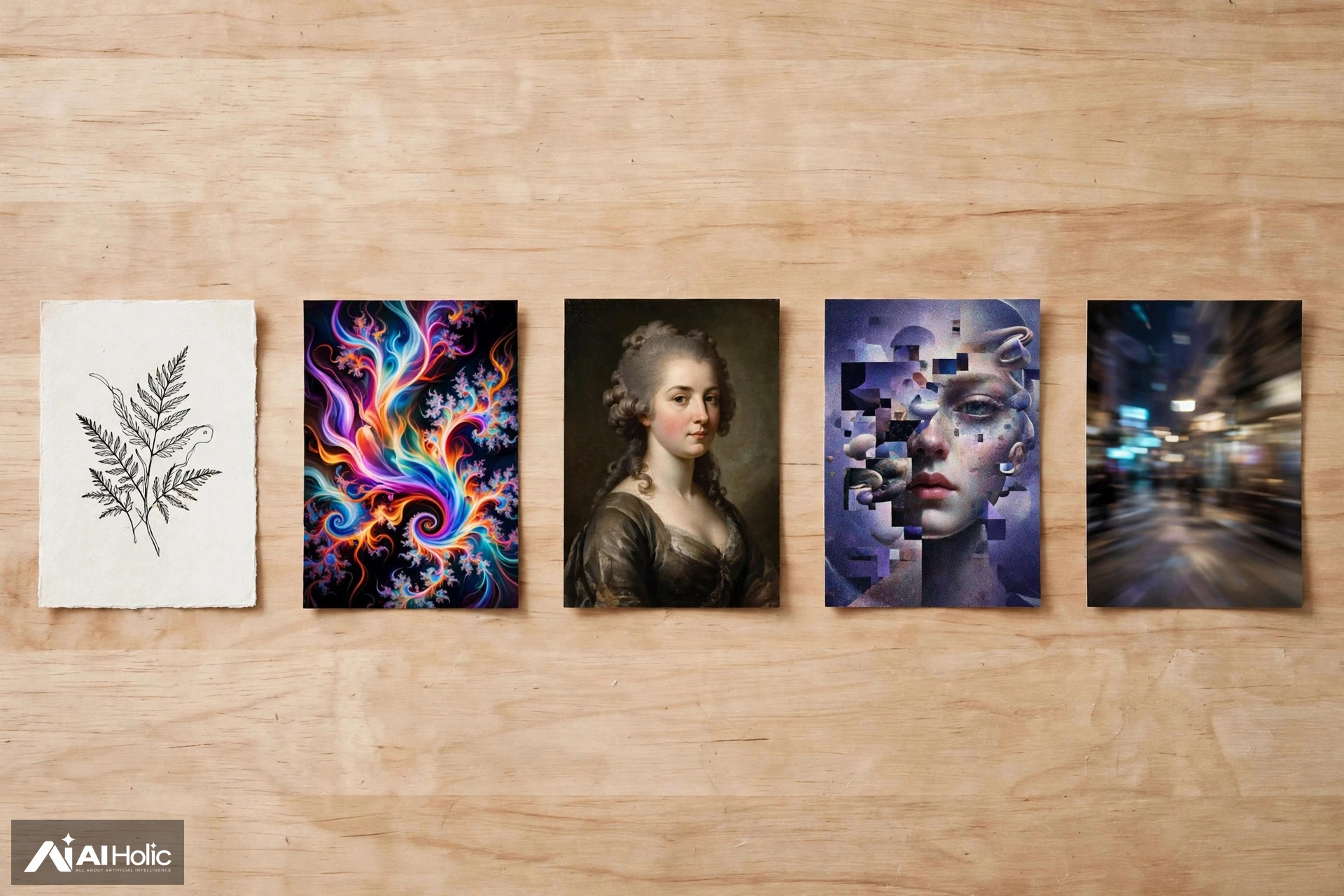
Each era of AI art has a look, and you can learn to read it. The table below gives the quick tells.
| Era | The tell | Example |
|---|---|---|
| 1970s-1980s | Thin black line drawings, simple shapes, no shading | AARON early drawings |
| 1990s | Evolving forms, fractal flames, screensaver motion | Electric Sheep, Galapagos |
| 2015-2018 | Dream-like patterns, repeated eyes and dogs, painterly GAN portraits | DeepDream, Edmond de Belamy |
| 2021-2022 | Grainy texture, extra fingers, melting faces, flat light | Early DALL-E and Midjourney images |
| 2023 | Wobbly video, faces that fall apart in motion | Will Smith eating spaghetti clip |
The rule is simple. The older the tool, the more the image shows the tool’s limits. AARON shows its rules, GANs show their training data, and early diffusion shows its struggle with hands and faces.
Modern tools hide those limits better, which is why their output looks smooth. That smoothness is also why the early images feel more human to many viewers: you can see the machine trying, and failing, in ways you can follow.
Making Vintage-Style AI Art With Modern Tools
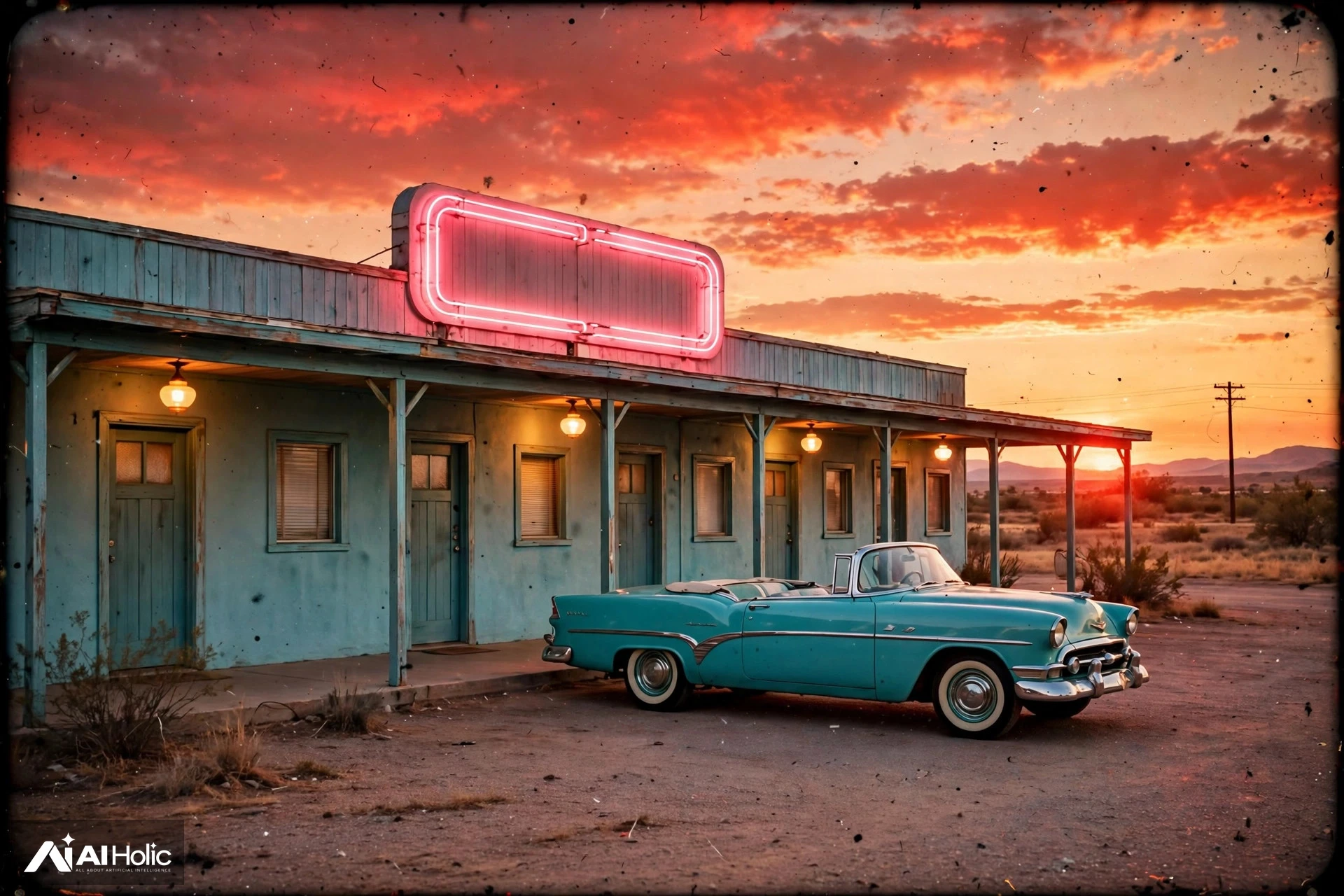
The third meaning is different again: new images made to look old. Modern generators can copy the look of Kodachrome slides, faded Polaroids, and VHS tapes. People use the style for posters, album covers, and social posts that need a retro feel.
The trick is to name the medium in your prompt, not just the decade. Ask for a 1950s Kodachrome slide photo, a Polaroid SX-70 instant photo, or a VHS still with scan lines. Name the flaws too: dust specks, colour shift, soft focus, and a cardboard slide mount edge.
Keep the subject simple and the era consistent. A 1970s roadside motel works with warm reds and a neon sign. A Victorian engraving works with pen lines and cream paper.
Mixing eras in one image usually looks wrong, so pick one look and hold it.
Our Opendream AI art guide walks through one current generator you can use for this kind of image, with its strengths and limits explained.
Early AI Art vs Modern AI Art: What Changed
The gap between the first machine pictures and the ones you can make today is wide. The table below shows how much changed in fifty years, and what stayed the same.
| Point | Early AI art (1960s-2010s) | Modern AI art (2021 onward) |
|---|---|---|
| How it was made | Hand-written rules or training on small sets of images | Models trained on huge image collections, guided by text prompts |
| Who could make it | Artists and researchers with access to rare machines | Anyone with a phone and a free account |
| Time per image | Hours, sometimes days, including physical painting by robot | Seconds |
| Typical look | Line drawings, evolving forms, painterly GAN portraits | Sharp, polished, often photographic |
| Main argument | Can a machine make art at all? | Who owns it, and what happens to working artists? |
One thing did not change. Each new tool looked like the end of the story when it arrived, and each one looks dated a few years later. The early work keeps its value because it shows the first steps, not because it looks like today’s output.
Why Early AI Art Still Matters
Early AI art matters because it asked the questions we still argue about. Who is the artist when a machine makes the picture? Who owns the result?
What happens to working artists when a tool can copy a style in seconds? AARON raised all of these in the 1970s, long before the public noticed.
It also matters for collectors. The Christie’s sale in 2018 showed that early AI work can hold real market value.
Pieces with a clear story, a known maker, and a place in the timeline are the ones buyers chase. Work made after Cohen’s death, or with no clear maker, does not carry the same weight.
The clearest lesson is about the tools themselves. Every generation of AI art looked final when it arrived, and every one looks dated a few years later. If you build with today’s tools, expect the same, and keep the work that shows your own choices, not just the tool’s.
For the wider picture of what generative AI still struggles with, see our guide to what challenges generative AI faces with data.
Frequently Asked Questions
What is old ai art?
It means two things. It means art made by early AI systems, from Harold Cohen’s AARON in the late 1960s through GANs and early diffusion tools. It also means images made by the first text-to-image tools in 2021 and 2022, which already look dated today.
Who made the first AI art?
Harold Cohen, a British painter, built the AARON program in the late 1960s at the University of California, San Diego. AARON is widely described as the first AI software in fine art, and its drawings were shown at the Los Angeles County Museum of Art in 1972.
Where can I see early AI art in person?
The Whitney Museum of American Art in New York holds versions of the AARON software, and the Tate and the Victoria and Albert Museum in London hold Cohen’s drawings. Check each museum’s site first, since these works are usually shown in special exhibitions rather than on permanent display.
How much did the first AI artwork sell for at auction?
Edmond de Belamy, a GAN portrait by the Paris collective Obvious, sold for US$432,500 at Christie’s in New York in October 2018. The estimate had been US$7,000 to US$10,000.
Why do 2022 AI images look old already?
The tools improved very fast, so their early look became a marker of its year. Grainy texture, extra fingers, and melting faces were normal in 2022, and current tools rarely make those mistakes.
Can I make vintage-style AI art today?
Yes. Modern generators can copy Kodachrome, Polaroid, and VHS looks when you name the medium and its flaws in your prompt. Keep one era per image, and name the flaws you want, like dust, colour shift, or scan lines.
Conclusion
Old AI art runs from AARON’s line drawings in the 1970s to the grainy images of 2022, and both kinds are worth a look. Visit a museum show when you can, and compare what you see with what today’s tools make.