
Towards Automated Error Discovery: A Study in Conversational AI, Explained in Plain Words
If you don’t want to read the whole guide or have difficulty reading, you can listen to this guide instead.
Chatbots sound smooth, but smooth is not the same as right. A reply can read well and still contradict the user, miss the question, or invent a fact. A new study from Germany asks how we can catch those mistakes on our own, even when the mistake is new to us.
towards automated error discovery: a study in conversational ai is the title of that study, and this guide explains it in plain words. At AI Holic, we read the full paper so you can get the key points without wading through academic text. You will learn what the researchers built, how they tested it, and where its limits sit.
The short version is simple. The team built a system called SEEED that groups chatbot replies by the kind of mistake they show. It then writes a plain definition for any new mistake group it finds.
What Towards Automated Error Discovery: A Study in Conversational AI Is About
The paper comes from Dominic Petrak, Thy Thy Tran, and Iryna Gurevych at the Technical University of Darmstadt in Germany. They work in the Ubiquitous Knowledge Processing Lab, known as the UKP Lab. Their paper appeared at EMNLP 2025, a major language technology conference, and the full text sits on arXiv under number 2509.10833.
The team behind towards automated error discovery: a study in conversational ai starts from a plain problem. Chatbots now write fluent replies, yet fluent replies can still carry faults that reach users. The paper asks how a system can spot faults it was never taught to name.
That question matters because chatbots change fast. A model update or a shift in what users ask can bring new kinds of faults. A checker that only knows old fault types will miss them, so the team wanted a checker that can learn new types as it goes.
You can read the full paper on arXiv if you want the technical detail. The team also shared its public code on GitHub for other researchers to test and build on.
What Counts as an Error in a Chatbot
In this study, an error is any unwanted behaviour in a chatbot reply. That covers replies that clash with facts, clash with earlier turns, ignore the user, or break social norms. The paper treats these as faults to name, not as random glitches.
The study uses three dialogue sets that already label faults. Each set names fault types in its own way, so the same bad reply might carry a different label in each set. The table below shows what each set holds.
| Dialogue set | What it holds | Real or built |
|---|---|---|
| FEDI-Error | Task and document-based chats built to show errors | Built (synthetic) |
| Soda-Eval | Open-domain chats taken from the SODA collection | Built (synthetic) |
| ABCEval | Open chats between people and bots | Real |
A few fault types show up again and again. A reply can ignore the request, repeat itself, state something false, or answer a question nobody asked. Our guide to the different types of AI gives more background on how chatbots differ, which helps explain why their faults differ too.
Examples You Can Picture
Picture a user who asks a bot to book a train for Friday. The bot replies with a cheerful summary of a hotel stay instead. That is an Ignore Request fault, since the reply skips the task the user actually set.
Now picture a bot that tells a user two opposite things in one chat. First it says the shop closes at six, then it says the shop closes at nine. That is a self-contradiction fault, and it is easy to miss when you only read the last reply on its own.
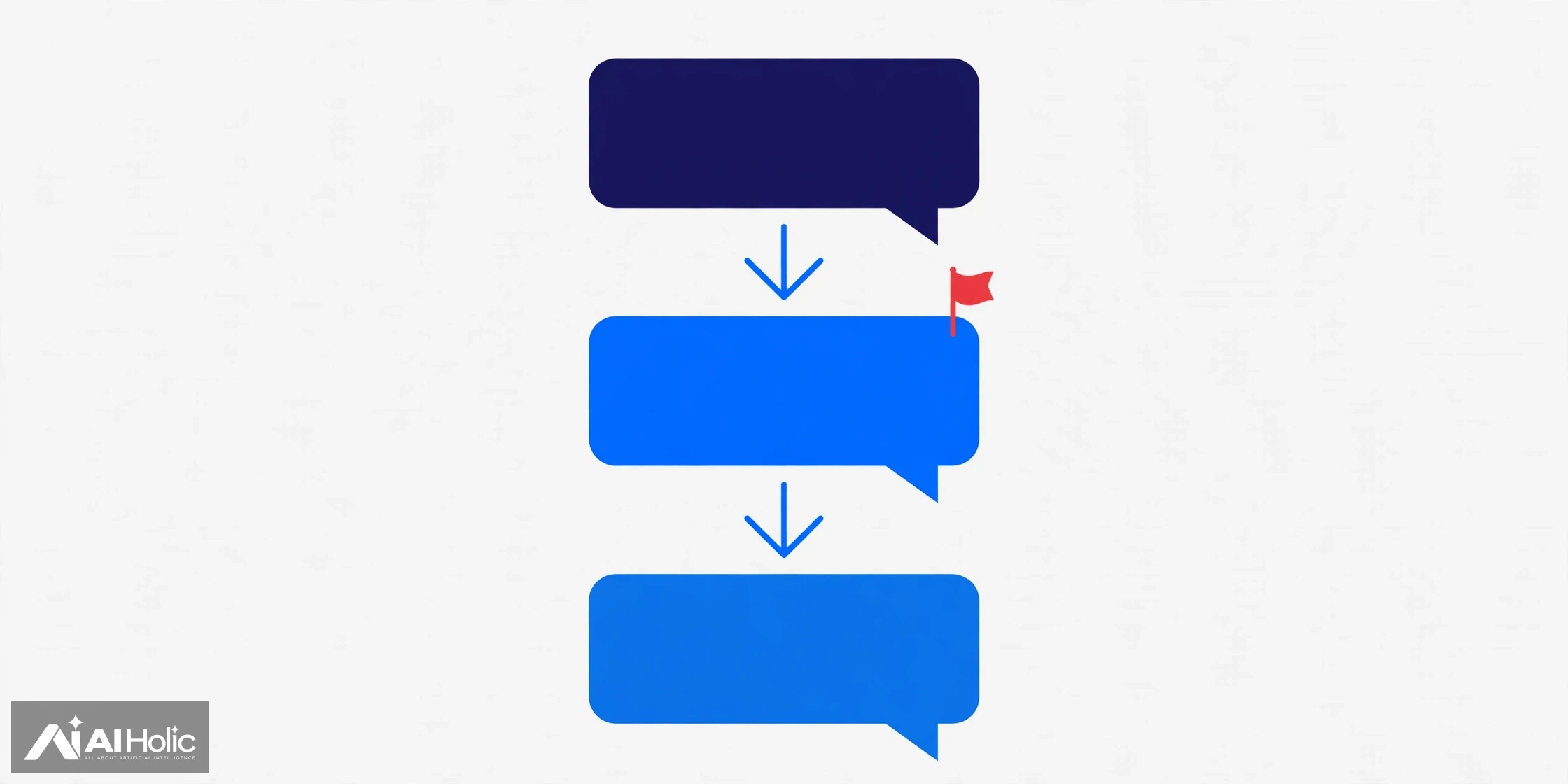
One useful point from the paper is that faults are often close cousins. Ignore Expectation and Ignore Request look alike, for example, since both leave the user request unmet. The first looks at the task, while the second looks at the limits of the reply system, and that closeness is one reason automatic checks get confused.
Why Unknown Errors Are the Hard Part
Most checkers today work like a second model that reads a reply and judges it. That setup works well when the fault is already named in the instructions. It breaks down when the fault is new, since the checker has no name or hint for it.
The usual fix is feedback-guided reply building. The reply model writes a draft, a second model checks it, and the feedback guides a better reply. This loop helps, but it still leans on the checker knowing what to look for, so a fault outside its list can pass through untouched.
The paper frames this as a gap in category learning. In normal training, a model only sees part of the full set of fault types. The test then asks it to handle types it never saw, which is the core challenge the study takes on.
Known Errors vs Unknown Errors
| Fault kind | What it means | How hard it is to spot |
|---|---|---|
| Known error | Seen in training, with a label and examples | Easier, since the checker knows the pattern |
| Unknown error | Never seen in training, with no label yet | Harder, since it needs grouping and a new name |
Think of it like a clinic that only knows ten illnesses. A patient with an eleventh illness still needs a name and a treatment plan. The study wants the clinic to group new symptoms, name the illness, and add it to the books.
How SEEED Works in Three Steps
The method at the heart of towards automated error discovery: a study in conversational ai is called SEEED, short for Soft Clustering Extended Encoder-Based Error Detection. It pairs a small open model with light encoders instead of asking one giant model to do all the judging. The design has three steps, and each one does a different job.
Step 1: Write a Short Summary of the Chat
First, the system asks Llama 3.1 8B-Instruct to sum up the chat, with a focus on signs of a fault in the last reply. A long chat holds much that does not matter, so the summary keeps the parts that point at the fault. The summary is built without naming any fault types, so the system cannot take shortcuts from known labels.
This step matters because long chats confuse classifiers. Extra turns add noise, and the fault can hide in the middle of the talk. A short summary gives the next step a cleaner view of what went wrong.
Step 2: Group Replies With Soft Clustering
Next, the chat and its summary pass through encoders based on BERT, and their outputs join into one shared picture of the talk. The system then uses NNK-Means, a soft clustering method, to place the reply in a fault group. Soft clustering lets a reply sit near more than one group, which fits chats where faults overlap.
The training also uses two ideas the team added. A margin term in the Soft Nearest Neighbor Loss pushes unlike replies further apart, and a sampling plan called Label-Based Sample Ranking picks the most telling examples to learn from. Both aim to sharpen the borders between fault groups.
Step 3: Write a Definition for a New Fault
When a reply lands in a group with no known name, the system asks the same open model to write a definition for it. The prompt holds the chat summaries and a few known fault definitions as a guide. The new definition joins the known set, so the system can name that fault next time it appears.
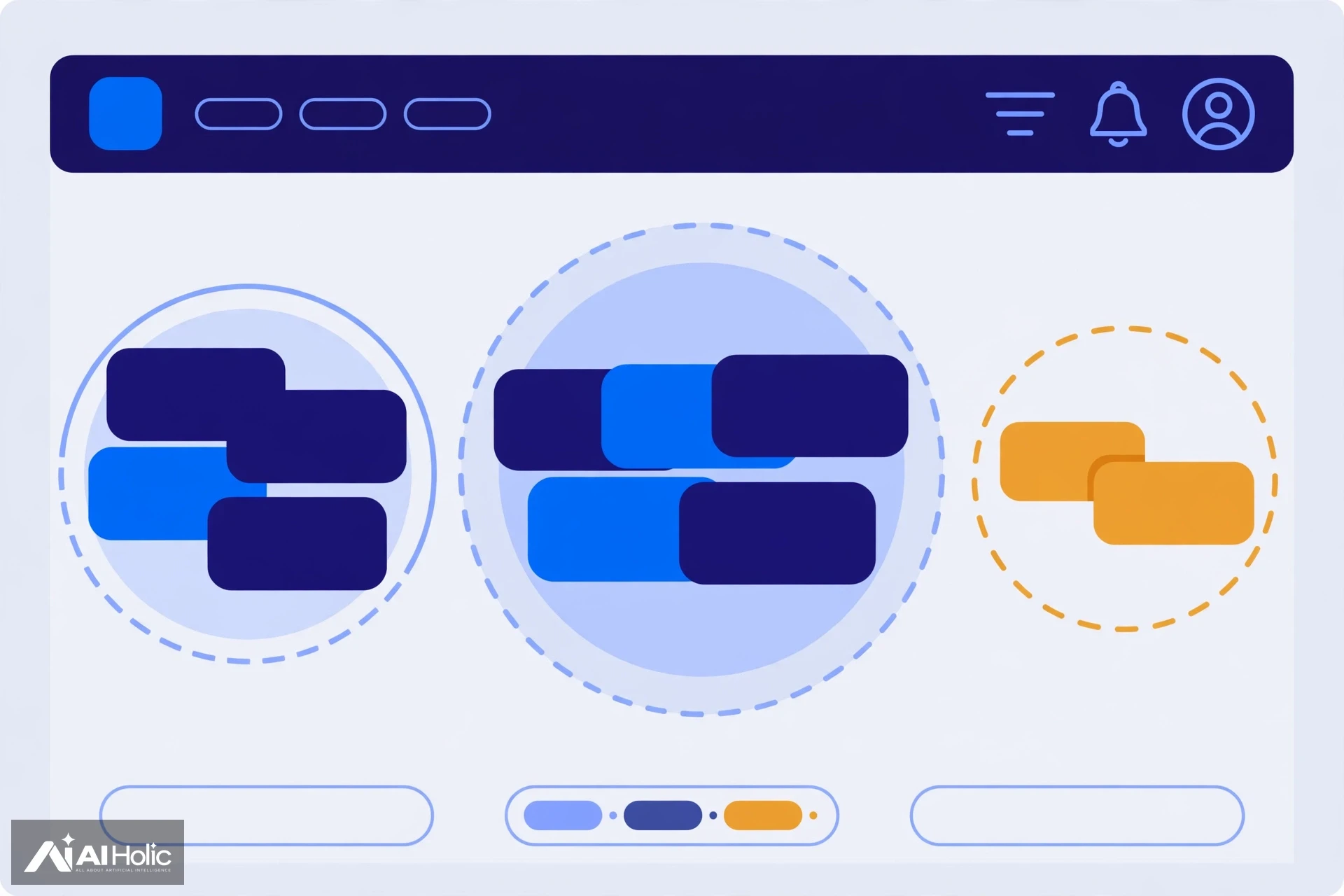
That loop is the heart of the idea. Known faults get names from training, while new faults earn names from their own examples. Over time, the list of known faults grows without a person having to label every new case by hand.
What the Tests Showed
In the tests reported in towards automated error discovery: a study in conversational ai, the team varied how many fault types were hidden from training. They hid 25 percent, 50 percent, and 75 percent in turn, so the system always faced faults it had never seen. They ran each test three times and averaged the scores.
SEEED beat the adapted baselines in most settings. Against GPT-4o and Phi-4, it improved accuracy on unknown faults by up to 8 points across the three dialogue sets. That gap is the headline result, since unknown faults are the ones other methods miss most.
The team also tested the method on intent detection, a related task where a system must guess what a user wants. There, SEEED improved accuracy on unknown intents by up to 17 points against prior methods on the CLINC, BANKING, and StackOverflow sets. That result suggests the idea travels beyond fault checks.
| Test | What SEEED did, in plain words |
|---|---|
| Unknown chatbot faults | Up to 8 points better than GPT-4o and Phi-4 |
| Unknown user intents | Up to 17 points better than prior methods |
| Known faults | Strong in most settings, best at high openness |
Scores were still modest in absolute terms, and the paper is open about that. Unknown fault accuracy stayed well below known fault accuracy in every set. The win is relative: a small encoder setup beat large models at the hardest part of the task, not that the task is solved.
It helps to read the 8-point gain the right way. The gain is measured on faults the system never trained on, which is a much harder test than the usual one. A method that wins there is doing something the big models struggle with, even if its raw scores still leave room to grow.
What the Study Does Not Claim
The authors list clear limits, and they matter for anyone who wants to use this work. First, the study treats each reply as having one fault, but real replies can carry two or more at once. A reply can be both rude and wrong, and the current setup forces a single label.
Second, two of the three dialogue sets are synthetic, which means they were built to show faults rather than taken from real chats. ABCEval uses real human-bot chats, but it is much smaller. All three sets hold English chats only, so the results may not carry to other languages.
Third, the test setup assumes each chat ends with a faulty reply, which is not how real chats work. The clustering step also needs to know, or guess, how many fault types exist in total. Those are fair limits for a first study, and the authors name them plainly.
There is one more honest limit worth noting. The summaries and definitions come from a language model, so their quality leans on what that model already knows. The team checked the generated definitions by hand and found them useful, but a different summary model could shift the results.
What This Means for Chatbot Builders and Users
The main lesson of towards automated error discovery: a study in conversational ai is that a checker must plan for faults it has not named yet. A checker that only knows a fixed list will age fast as models and users change. A system that groups new faults and names them gives teams a way to track what is going wrong in live chats.
For builders, the practical step is to log and group bad replies, not just count them. A weekly review of grouped faults shows which new patterns are growing. That review can then feed new labels, new tests, and better prompts for the reply model.
For users, the lesson is simpler: a fluent reply is not proof of a right reply. Ask for the source, check key facts, and treat confident wording with care. If you are new to how chatbots answer, our guide to AI questions explains the basics that sit under every reply.
School chatbots show the same pattern in a small setting. Our guide to school AI chatbots looks at how they answer pupils and where their limits sit, and the fault types in this study map onto those chats in a direct way.
The study also points to a cheaper path. SEEED uses a small open model plus light encoders, not a giant model for every check. That mix beat GPT-4o on unknown faults in the tests, which suggests smaller setups can do serious quality work when they are built for the task.
Frequently Asked Questions
What is automated error discovery in conversational AI?
It is a way to find and name faults in chatbot replies without a fixed list of fault types. The system spots known faults from training and groups new ones so it can name them. The goal is to catch faults that appear after a model update or a change in user habits.
Who wrote the study?
Dominic Petrak, Thy Thy Tran, and Iryna Gurevych wrote it at the Technical University of Darmstadt in Germany. They work in the UKP Lab, and the paper appeared at EMNLP 2025. The full text is on arXiv under number 2509.10833.
What is SEEED?
SEEED is the method the paper proposes, and its name spells out Soft Clustering Extended Encoder-Based Error Detection. It sums up a chat, groups the last reply with soft clustering, and writes a definition for any new fault group. It uses Llama 3.1 8B-Instruct for the summaries and definitions, with BERT encoders for the grouping step.
How well did SEEED do in the tests?
It beat GPT-4o and Phi-4 on unknown faults by up to 8 points across three dialogue sets. It also beat prior methods on unknown intents by up to 17 points. Known fault scores were strong too, but unknown fault scores stayed lower in absolute terms, so the task is far from solved.
What are the main limits of the study?
It assumes one fault per reply, while real replies can carry several at once. Two of the three dialogue sets are synthetic, and all three cover English chats only. The clustering step also needs the total number of fault types to be known or estimated in advance.
Can I use SEEED on my own chatbot?
The code is public, so a team with machine learning skills can test it on their own chat logs. It is research code, not a ready-made product, so it needs setup, tuning, and a labelled set of known faults to start from. Small teams may get more value from the idea itself: group bad replies, name the new groups, and track them week by week.
Conclusion
Chatbots will keep making mistakes, and some of those mistakes will be new. The core of towards automated error discovery: a study in conversational ai is a system that groups new mistakes and names them, so teams can fix what they could not list in advance. Read the paper, test your own chatbot, and check every answer that matters.