How Accurate Is Cal AI: What the 2026 NIH Test and Cal AI’s Own Numbers Show
If you don’t want to read the whole guide or have difficulty reading, you can listen to this guide instead.
You snap a photo of your lunch, and how accurate is cal ai is the first question that matters. The app gives you a calorie number in seconds, and that number shapes what you eat next. If the number is off by a third, your whole day of tracking is off too.
Cal AI says its own scans are about 80% accurate. A 2026 test by NIH researchers found a bigger miss, with Cal AI undercounting meals by 345 calories on average. This guide puts both numbers side by side so you can judge how accurate is cal ai for your own meals.
At AI Holic, we check AI tools against real evidence. Here you will find the study method, the per-app results, and simple steps that make your scans more accurate.
The Short Answer
The short answer to how accurate is cal ai is that it is close enough for rough tracking, and not exact enough for strict plans. Its own FAQ puts it at about 80% accurate, and its terms call each result an automated approximation. The best independent test so far found it undercounted real meals by about a third.
Use it to watch broad trends, like whether your weeks are getting lighter or heavier. Do not use it to hit an exact daily calorie target. The rest of this guide shows why the gap exists and how to shrink it.
| Key Number | Result |
|---|---|
| Cal AI own claim | About 80% accurate (FAQ) |
| NIH test undercount, Cal AI | 345 kcal per meal on average |
| Meals tested | 102, from a metabolic kitchen |
| Average meal size | 918 kcal (range 592 to 1,211) |
| Fat missed per meal | About 30 g, all four apps |
| Peer review status | Conference abstract, not yet peer reviewed |
What Cal AI Is and How It Works
Cal AI is an AI calorie-tracking app built around your phone camera. You snap a photo of a meal, and the app identifies the foods and estimates calories and macros. You can also scan a barcode or type a short description of what you ate.
Its site also mentions a depth-sensor estimate of food volume, which is meant to help judge portion size from a single photo. A photo still cannot weigh food, and weight is what turns a food name into a calorie number.
AI can now read photos in fine detail, and our guide to the best AI photo editing tools of 2026 shows how far image tools have come. Food photos are harder, because the app must guess both the dish and the amount.
The app is owned by MyFitnessPal, which gives it access to a large food database. Scan results need a subscription, and the site promotes a 3-day free trial. If you want to save on that subscription, our cal ai referral code guide shows how to find, share, and use a code before you pay.
What Cal AI Says About Its Own Accuracy
Cal AI’s own FAQ is honest about the limit. It says CalAI is about 80% accurate, and it adds that no food tracking app is perfect. Calories and nutrition values can vary, even for the same dish cooked two ways.
The app’s terms go further, and they are worth reading. They call every estimate an automated approximation that may be incomplete or inaccurate. In plain words, the app tells you the number is a guess, not a measurement.
Its marketing has also quoted 90% on visible foods, and that word visible does a lot of work. A plain bowl of rice is visible, but the oil it was fried in is not. The gap between those two cases explains most of the test results below.
The 2026 NIH Test: How the Study Worked
The best independent test so far comes from the NIH. Researchers Aaron Hengist and Olivia Charles, from the National Institute of Diabetes and Digestive and Kidney Diseases, ran the test and presented it at NUTRITION 2026 in July 2026. The work is a conference abstract, and it has not been peer reviewed yet, so treat the exact figures as early evidence.
The team cooked 102 meals in a metabolic kitchen and weighed every ingredient to 0.1 grams. The meals averaged 918 calories, with a range of 592 to 1,211 calories. They then took standardised photos of each meal and ran them through four apps: Cal AI, MyFitnessPal, Lose It!, and Appediet.
The photos were logged with no portion edits, which is the worst case for the apps. In real life you can fix a wrong portion, but the test did not.
The study method matters, and our guide to the latest AI tools for qualitative research shows how researchers use AI tools today. You can read the study details in the NIDDK press release on photo-based calorie apps.
A systematic review of 52 AI food-image studies found average calorie errors from 0.10% to 38.3% across systems and test sets. No single universal accuracy number exists for consumer apps, and Cal AI is no exception.
What the NIH Test Found
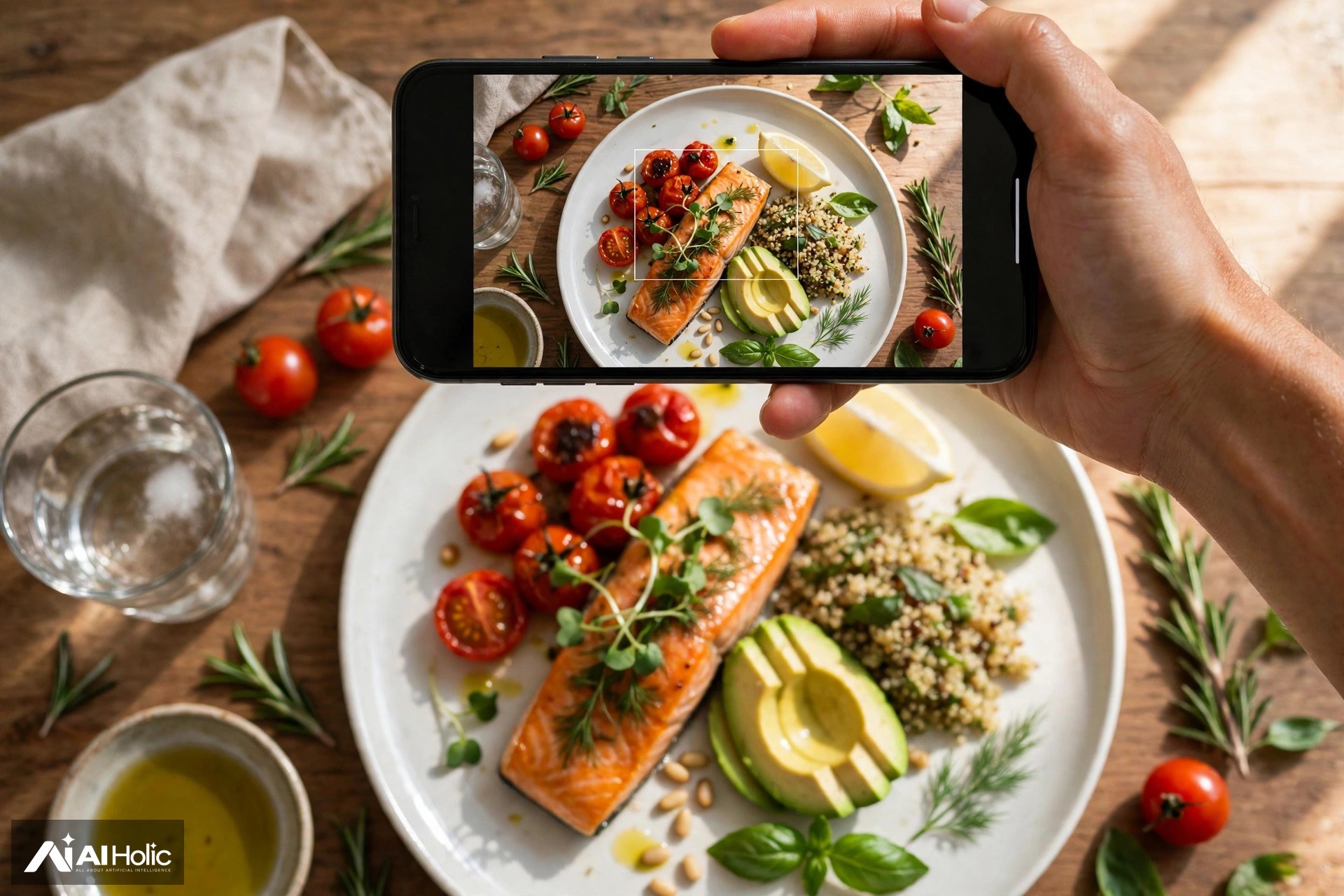
The test gives the clearest public answer to how accurate is cal ai, and the answer is a clear undercount. All four apps underestimated calories by 252 to 345 calories per meal on average, which is about a third of the meal. All four also underestimated fat by about 30 grams per meal, and fat is the nutrient a photo hides best.
| App | Average Calories Missed Per Meal |
|---|---|
| Cal AI | 345 kcal under |
| Lose It! | 333 kcal under |
| MyFitnessPal | 327 kcal under |
| Appediet | 252 kcal under |
Cal AI had the largest average miss of the four, at 345 calories per meal. The gap to Appediet, the best app in the test, was 93 calories. The gap to MyFitnessPal and Lose It! was only 12 to 18 calories.
The researchers gave plain advice with the results. People who do not adjust portions should take photo-app results with a grain of salt.
The same care applies across health AI, and our guide to AI-generated doctors and patients for healthcare marketing compliance explains how AI health content is checked.
How Accurate Is Cal AI Compared With Other Apps
On the NIH numbers, Cal AI is the weakest of the four, but only just. Its 345-calorie miss sits 12 calories behind Lose It! and 18 behind MyFitnessPal. The real story is that all four apps miss by about a third, so switching apps will not fix the problem.
That pattern matches the wider research. The 52-study review found errors from near zero to 38.3% depending on the system and the test set. A single percentage never tells the full story.
If you want a wider view of the field, our list of the best AI tools covers the apps people actually use each day. For most people the choice comes down to habit, not a few calories of test error. If you already use MyFitnessPal, its app scored nearly the same as Cal AI.
Why Photo Apps Miss Calories
A photo shows the surface of a meal, and calories hide below it. Oil, butter, and sauces add hundreds of calories without changing how a plate looks. A spoon of oil holds about 120 calories, and a camera cannot see it at all.
Fat holds 9 calories per gram, and the Wikipedia page on the calorie explains how food energy is counted. That is why the NIH test found fat to be the biggest miss, at about 30 grams per meal across all four apps.
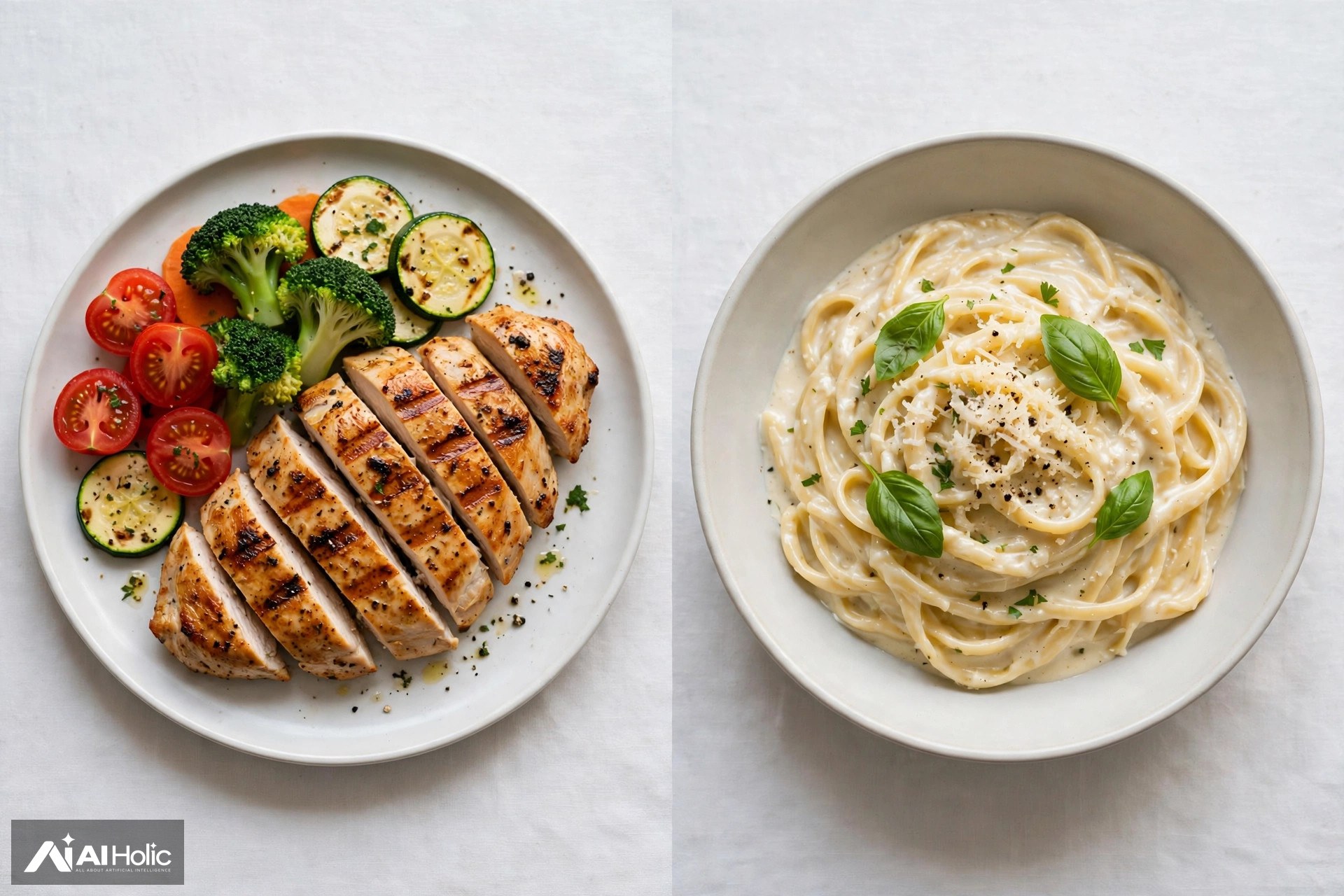
Mixed dishes make the job harder still. A curry, a stew, or a sandwich hides its parts inside one shape, and the app must guess the recipe. A plain piece of grilled chicken is easy to read, while a creamy pasta bake is mostly guesswork.
Portion size is the third problem, and it is the biggest one. A photo cannot weigh food, and calories scale with weight. A serving that looks small can weigh twice what the app assumes.
The photo itself matters too, and our guide on how to send pictures to an AI assistant covers how clear photos help AI read images better. A clear top-down shot gives the app its best chance.
When Cal AI Is Most Accurate
Cal AI does best with simple, visible foods. A single item on a plate, like an apple, a boiled egg, or a plain chicken breast, gives the app a clear shape and a known food. Meals with one or two foods and no sauce are the easiest case.
It does worst with restaurant plates, fried food, and mixed dishes. These meals hide oil, butter, and sauces, and their portions are larger than home servings. That is why how accurate is cal ai depends more on the meal than on the app.
- Best case: single foods, plain plates, and packaged food with a barcode.
- Worst case: fried food, creamy sauces, mixed dishes, and restaurant portions.
- Middle case: home-cooked meals with two or three plain parts on the plate.
How to Get More Accurate Results From Cal AI
You can shrink the error with a few habits, and none of them take long. Edit the portion after every scan, and weigh your food for one week to learn what a real serving looks like. That week of weighing teaches your eye more than a month of guessing.
If you want to know how accurate is cal ai for your own meals, test it against a kitchen scale for a week. Weigh each meal, scan it, and write both numbers down. The gap you see is your real accuracy.
- Edit the portion size after each scan instead of accepting the first guess.
- Weigh food on a kitchen scale for a week and compare it with the app’s guess.
- Split mixed dishes into parts and log each part on its own.
- Add oil, butter, and sauces by hand, since the camera cannot see them.
- Scan the barcode on packaged food instead of photographing it.
These steps will not make the app exact, and no photo app is exact. They will move your numbers closer to the truth.
Cost and Trial: What to Know Before You Pay
The scan feature needs a subscription, so the free version will not give you full results. The site promotes a 3-day free trial, which is enough time to test the app on your normal meals.
Use the trial to run a real check. Weigh three or four of your usual meals, scan them, and compare the numbers. If the gap is small and the app saves you time, it may be worth the price.
Photo recognition keeps getting better, and our guide to AI image tools explains how image AI reads pictures today. Judge the app on your own trial results, not on the marketing line.
Frequently Asked Questions
How Accurate Is Cal AI for Simple Meals?
For simple, visible foods it is fairly close, and Cal AI’s own FAQ puts the app at about 80% accurate. A plain plate with one or two foods gives the app a clear read.
What Did the NIH Test Find About Cal AI?
The NIH team ran photos of 102 weighed meals through four apps, and Cal AI undercounted by 345 calories per meal on average. All four apps missed by 252 to 345 calories, and all four missed fat by about 30 grams.
Why Does Cal AI Undercount Calories?
A photo cannot see hidden fat or weigh food. Oil, butter, and sauces add calories without changing how a plate looks. Portion size is the biggest source of error, since calories scale with weight.
Is Cal AI Free to Use?
You can download the app for free, but scan results need a subscription. The site promotes a 3-day free trial, so you can test the scan feature on your own meals before you pay.
Should I Trust Cal AI for Weight Loss?
Use it as a rough log, not as an exact count. Edit portions, add hidden fats by hand, and weigh food for a week to calibrate your eye. If you need exact macros for medical reasons, talk to a doctor or dietitian first.
Conclusion
In short, how accurate is cal ai is a fair question with a mixed answer. Its own claim is about 80%, and the best independent test found it undercounted meals by 345 calories on average. Use it for rough tracking, edit your portions, and weigh food when the number matters.