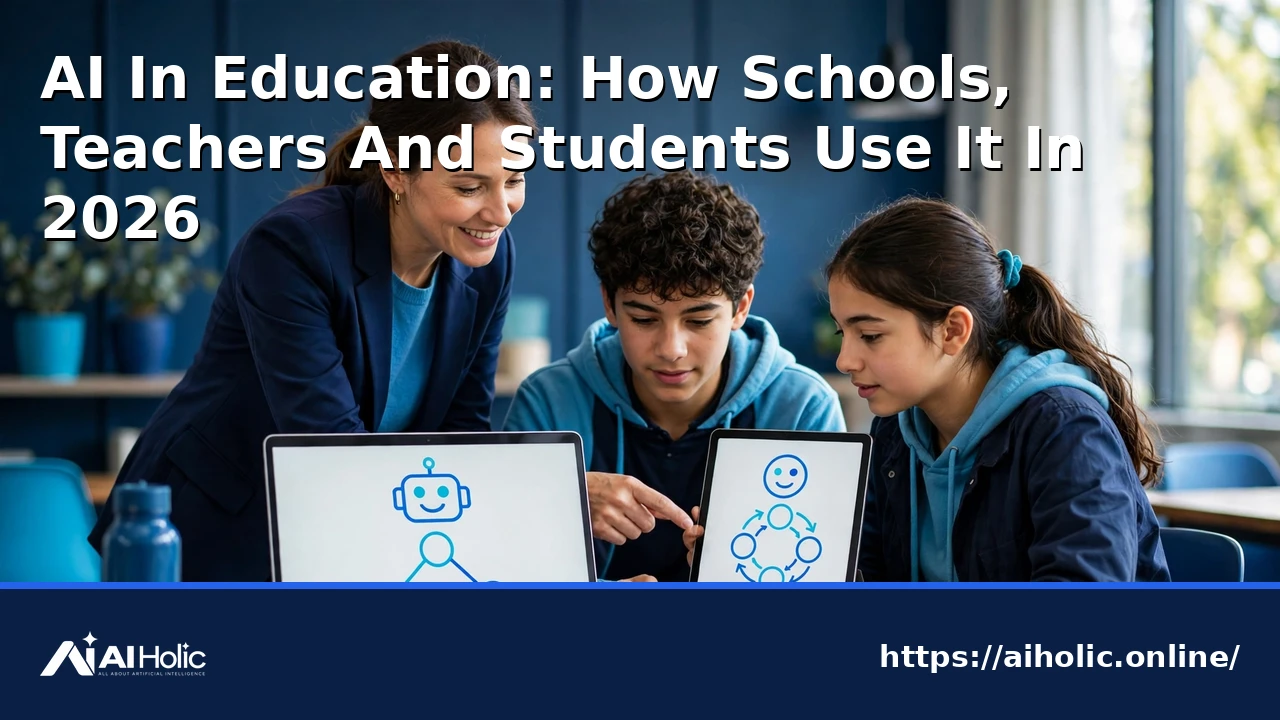
AI In Education: How Schools, Teachers And Students Use It In 2026
If you don’t want to read the whole guide or have difficulty reading, you can listen to this guide instead.
ai in education is now part of daily school life, from a tutor that explains a math problem at midnight to a grading tool that returns feedback in minutes instead of days. At AI Holic, we hear the same questions from teachers, parents, and students: what does it actually do, does it help learning, and where should schools draw the line. This guide answers those questions in plain terms, with real tools, real numbers, and honest limits.
You will learn what the term covers, how students and teachers use it today, what the benefits and risks are, what a good school policy looks like, and what to watch in 2026.
The Short Answer
AI in education means software that adapts to a learner, creates learning material, or makes a judgment call, such as grading a quiz or flagging a student who may need help. It covers three jobs at once: helping students learn, helping teachers teach, and helping schools run. For a closer look at the kind that changes each lesson to fit the learner, see our guide to ai in education adaptive learning platforms 2026.
Used well, it gives each student more practice at the right level and gives teachers hours back each week. Used badly, it can weaken writing skills, leak student data, or widen the gap between well funded schools and the rest. The tool is not the plan, so the plan is how a school chooses, trains for, and checks it.
If you want one focused tool for writing and long readings, our guide to Claude AI for students shows how Learning Mode turns it into a study partner.
What AI In Education Means
The term is narrower than most people think. A grade book that stores marks is not AI, and a video call app is not AI either. The field of artificial intelligence in education covers systems that learn from data and then predict, personalize, or generate something new.
Think of it in three layers. The first layer is learning itself, where a tutor adjusts question difficulty as a student answers, while the second layer is teacher support, where software drafts a lesson plan or scores a first pass of an assignment. The third layer is administration, where a school spots patterns in attendance, enrollment, or engagement that a person would take weeks to find.
Those layers matter because each one raises different questions. A tutoring app raises questions about learning and screen time, a grading tool raises questions about fairness and bias, and an admin dashboard raises questions about student privacy. A school that treats them as one purchase will miss all three.
How Students Use AI
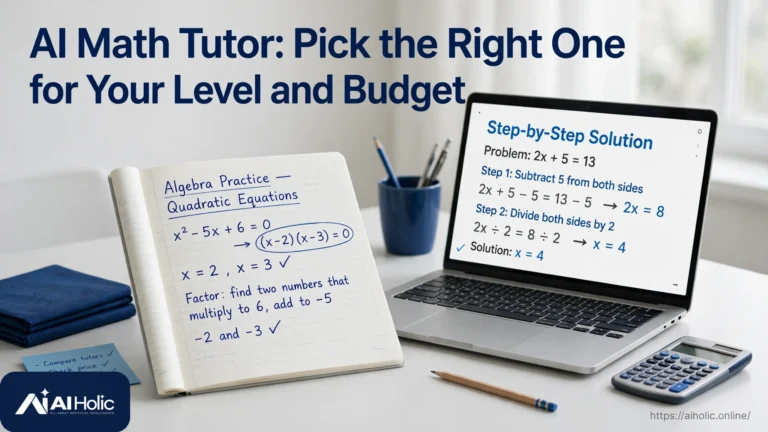
For students, the most common use is a tutor that never sleeps. A student stuck on a math problem can ask for a hint, get a worked example, and try again, without waiting for the next class. Language learners get instant correction and extra practice, and students with dyslexia or poor eyesight get text read aloud or simplified on the spot.
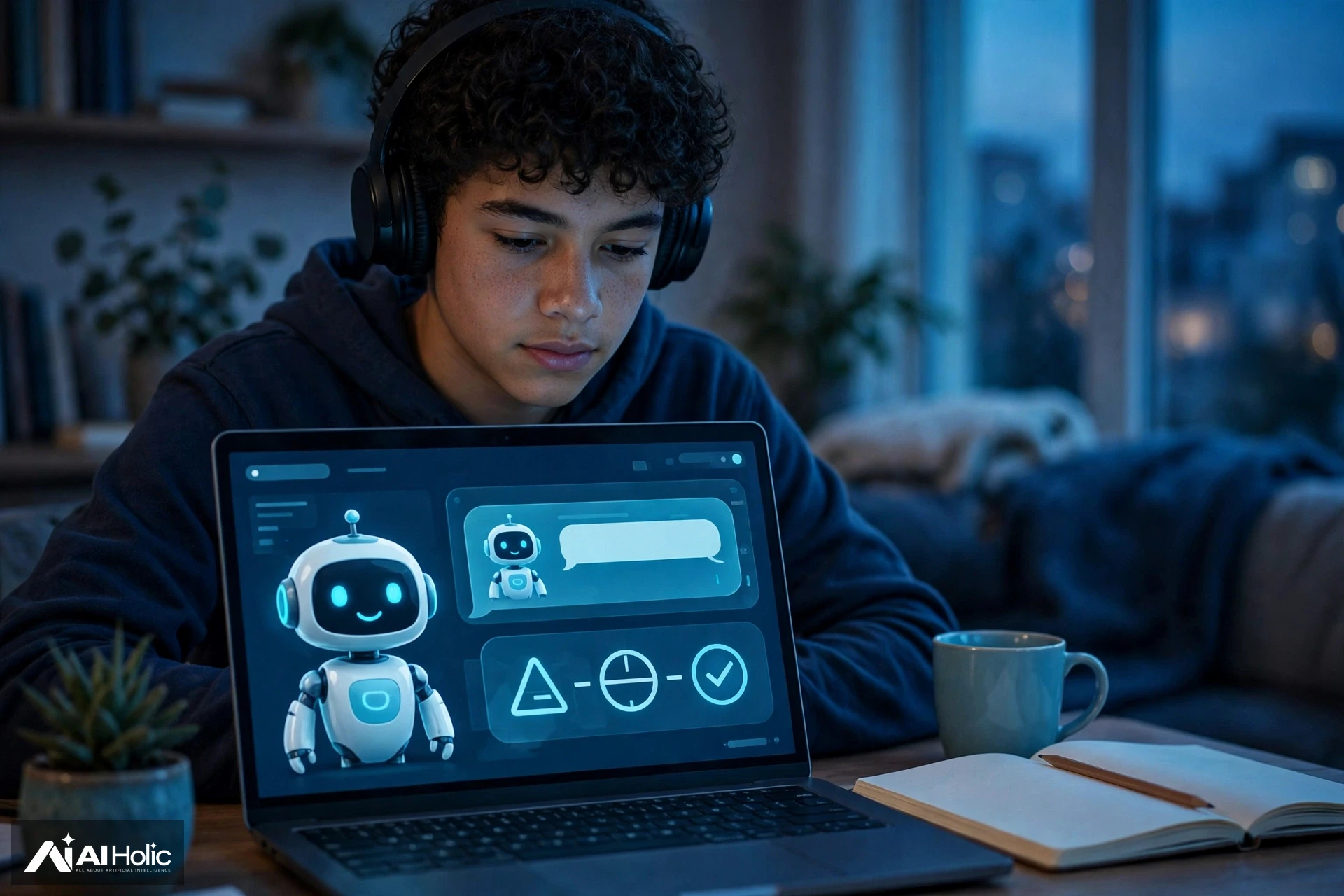
Chatbots play a big part in that after hours support. A school AI chatbot can answer common questions about homework, deadlines, or school rules at any hour, so small doubts do not turn into lost evenings. The best ones point students back to the lesson instead of handing over a finished answer.
Students also use AI to plan and revise. It can turn a long chapter into practice questions, build flashcards from class notes, or quiz a student on the exact topics they got wrong last week. That kind of targeted practice is hard for one teacher to give to thirty students, and it is where the technology earns its keep.
The risk sits on the other side of the same coin. When a student pastes an essay prompt into a chatbot and submits the result, no learning happens, and a 2025 survey by Inside Higher Ed found that 85 percent of higher education students use generative AI in some way, with 25 percent using it to complete assignments for them. Schools have to teach students where help ends and cheating starts.
How Teachers Use AI
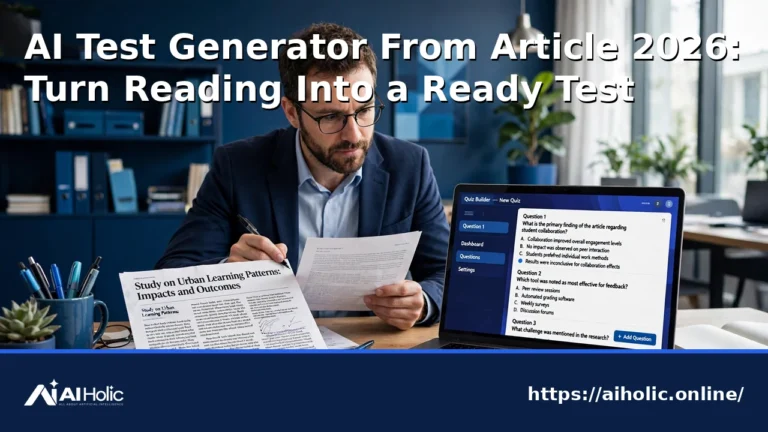
Teachers save the most time on routine work. AI in education tools can draft a lesson plan from a curriculum goal, write ten quiz questions at three difficulty levels, or give a first pass on a pile of short answers. A Gallup and Walton Family Foundation study found that teachers who use AI tools weekly save close to six hours of work per week, and many put that time back into direct help for students. For a practical walkthrough of lesson planning, grading and feedback, see our guide to ai for teachers.
Feedback gets faster too, since a student can get comments on structure and clarity the same day instead of waiting a week for a marked essay, while the teacher checks the judgment calls that software should not make. That split matters. The tool handles surface errors, and the teacher handles argument, originality, and care.
Music teachers use the same idea in a more hands-on way. In our guide to ai in music education, practice apps listen while a student plays and point out pitch and timing slips at once, and composing tools let students turn a short idea into a full song. The pattern is the same as in any subject: the tool handles the routine check, and the teacher keeps the judgment.
AI also helps teachers spot trouble early. When a platform tracks quiz scores, logins, and time on task, it can flag a student whose pattern has changed before the next test makes it obvious. A teacher can then check in, ask what changed, and offer help while it still counts, since no dashboard replaces that conversation, but it can start it sooner.

How Schools Use AI Behind The Scenes
Outside the classroom, schools use AI to run the building. Timetable software can balance teacher availability, room size, and student choices in minutes, and attendance systems can record who is present without taking ten minutes from a lesson. Enrollment teams can see which courses fill up and which ones quietly lose students each term.
Early warning systems are the most sensitive use. By combining attendance, grades, and engagement data, a school can predict which students are at risk of dropping out and offer support early. That only works if the data is clean, the model is checked for bias, and a human reviews every flag before any action is taken.
These admin uses rarely make headlines, but they shape budgets and staffing. A district that knows its numbers can put support staff where the need is greatest instead of spreading them thin. The same data in careless hands can label a child unfairly, so the rules around it matter as much as the software.
Tools Schools Actually Use
A few names show up in almost every classroom discussion, and each one does a different job. Khanmigo, from Khan Academy, acts as a tutor that asks guiding questions instead of giving direct answers, and in a published pilot, students who used it for at least ten hours in the 2023-24 school year scored about eight percentile points higher in math than similar students who did not.
Duolingo uses AI to set lesson difficulty and review timing for each language learner. Grammarly flags grammar, tone, and clarity in student writing so teachers can focus on ideas. ALEKS builds a personal math path from what a student already knows, and Turnitin runs AI detection on submitted work, though its scores are best treated as a signal for a conversation, not proof of cheating.
General chatbots such as ChatGPT, Claude, and Gemini are also in wide use, since students reach for them first. ChatGPT arrived in November 2022 and spread through schools fast, Claude followed in March 2023, and Gemini arrived in December 2023. Schools that treat these tools as drafting aids, with clear rules on checking their output, get far more value from them than schools that simply ban them and hope students obey.
No tool fits every school. A primary school needs guided tutoring and parent visibility, while a university needs research support and writing help. Price, data handling, and fit with the existing learning platform usually matter more than the newest feature on a sales page. If you want a tool-by-tool list for your own classes, our guide to the best ai for college students walks through twelve picks by coursework job.
Benefits Of AI In Education
The clearest benefit is personal attention at a scale no single teacher can match. A platform can track hundreds of students at once and adjust the next question for each one. The rest of the gains follow from that same idea, applied to feedback, access, and decisions.
| Benefit | What it looks like in practice |
|---|---|
| Personal learning paths | Software adjusts difficulty and pace for each student |
| Faster feedback | Grading and comments return in minutes, not days |
| Help at any hour | Chatbots answer common questions outside school hours |
| Less admin load | Teachers save hours weekly on prep and marking |
| Better access | Speech, translation, and reading tools support more learners |
| Earlier warnings | Data flags struggling students before a failed test |
Adoption has moved fast, which is why these benefits are now normal rather than novel. Research from the Digital Education Council found that 88 percent of students and 77 percent of faculty now use AI in their coursework or teaching. That scale means schools can no longer treat AI as an experiment on the side.
None of these benefits arrive on their own. A personalization engine only works with enough clean data, and a chatbot only cuts workload if staff trust it enough to route questions through it. Training and setup decide whether a school gets the benefit or just the bill.
Paying for college is the other half of the story, and an ai scholarship for aspiring college students can cover part or all of tuition for students who plan to study artificial intelligence. Our guide names the real programs, explains who can apply, and walks through the application step by step.
Risks And Problems To Watch
Cheating is the most visible problem. Generative AI can produce a passable essay in seconds, and telling AI assisted work from a student’s own writing is genuinely hard, even with detection software. Detection tools give false positives and false negatives, so a score alone should never decide a misconduct case, and it helps to know what AI detector Canvas uses and what its limits are before a school leans on it.
Bias is quieter but just as real. A model trained on past data can repeat the gaps in that data, and a grading or admissions tool can then mark some groups of students down for reasons nobody planned. Schools should ask vendors how a model was tested, on whose data, and what happens when it gets a student wrong.
Privacy is the risk parents ask about most. AI tools often need student work, voice, or behavior data to function, and that data has to live somewhere, under someone’s rules. In the United States, the FERPA law governs student records and applies to AI tools that collect student information, so a school should check data storage, access, and retention before signing any contract, not after.
Equity and over reliance round out the list. Students without a device or reliable internet at home are shut out of AI powered learning entirely, and students who lean on chatbots for every answer can lose practice in thinking, writing, and checking their own work. A school that buys tools without fixing access gaps is buying a wider divide.
What A Good School AI Policy Covers
Policy has lagged far behind use. UNESCO reported in its 2023 guidance that fewer than 10 percent of education institutions had formal policies on generative AI at the time, and most schools since then have written policy after adoption, not before it. A short, clear policy beats a long one nobody reads.
| Policy area | What it should say |
|---|---|
| Allowed uses | Where AI may help and where it must not, by subject and grade |
| Student data | What is collected, where it is stored, and who can see it |
| Academic honesty | How AI help must be cited and what counts as cheating |
| Detection limits | Scores are signals, never proof, and humans decide |
| Training | Teachers and students learn the tools before they must use them |
| Review date | The policy is revisited each term as tools change |
The UNESCO guidance on AI in education is a useful starting point for any school writing its first policy, since it frames the work around inclusion, equity, and human centered teaching. A school can borrow that framing and then write its own rules in plain language its students can actually follow.
What To Watch In 2026
The biggest shift for ai in education in 2026 is that tools are being built for schools rather than borrowed from general chatbots. Anthropic launched a version of Claude for teachers in July 2026, and Google added Gemini to its Classroom app for selected schools in August 2026. Expect more tools with teacher controls, age limits, and admin dashboards built in from the start.
Detection is also changing. As writing tools get better, detection scores get less reliable, so more schools are moving toward process based checks, such as drafts, revision history, and in class writing samples. That shift is healthy, since it judges learning instead of chasing a score.
Finally, watch the training gap. Most teachers still have had no formal training in AI tools, and that gap decides whether a school gets value or confusion from its purchases. The schools that gain the most from ai in education in 2026 will likely be the ones that train staff first and buy software second.
Frequently Asked Questions
Will AI replace teachers?
No. AI in education handles routine work such as drafting, grading first passes, and answering common questions, while teachers keep the parts that need judgment, care, and knowledge of each student. No major research supports the idea that teachers are being replaced, and the schools seeing the best results use AI to give teachers more time with students, not less.
Is it cheating for a student to use AI for homework?
It depends on the school’s rules and on how the tool was used. Asking for an explanation, a hint, or practice questions is usually fine, while submitting AI written work as your own is cheating in most schools. Students should check the policy, cite any AI help they used, and keep drafts that show their own thinking.
Can schools tell if work was written by AI?
Not reliably, since detection tools look for patterns in writing but produce both false positives and false negatives, and they struggle with mixed human and AI text. Studies of patterns of AI detection in Spanish academic texts show the same problem in other languages, where detection accuracy varies widely. Schools should pair any score with drafts, revision history, or a short conversation with the student.
What should parents ask before a school adopts an AI tool?
Ask what student data the tool collects, where that data is stored, how long it is kept, and who can access it. Then ask what training teachers received, whether students can opt out, and how the school will check if the tool actually helps learning. A school with clear answers to those questions is a school that has done the work.
Does AI work the same in every grade?
No. Younger students need guided tutoring with clear limits and parent visibility, while older students can handle more open ended research and writing help, and universities lean toward research support and independent study. The tool, the rules, and the level of freedom should all change with the age of the student.
Conclusion
AI in education works best as a helper, not a replacement: it personalizes practice, speeds feedback, and frees teachers for real teaching. Pick one clear problem, pilot a tool, protect student data, and check the results, and that is how a school gains from AI without losing what makes learning human.
If you work in a university and want to study AI in your own setting, our guide to ai in higher education research design case study walks through the method step by step, from bounding your case to reporting your limits, with real cases from Oxford, Queensland, and the Open University.